How to Clean Earrings at Home: Gold, Silver and More
Learn how to clean earrings at home: step-by-step methods for gold, silver, fashion, pearl, kundan, and meenakari earrings. Includes what to never use and how often to clean.
TL;DR
- Earrings sit against your skin for hours. They collect oils, sweat, skincare residue, and bacteria faster than any other jewelry.
- Gold earrings: warm soapy water, soft brush, rinse, dry. Simple and effective.
- Silver earrings: soapy water for light tarnish, baking soda and aluminium foil for heavy tarnish.
- Fashion and plated earrings: wipe only. No soaking, no water, no alcohol. Ever.
- Pearl earrings: damp cloth only. They are porous and chemicals destroy them.
- Kundan, polki, and meenakari earrings: dry clean only. Water damages the lac base and enamel work.
- The most neglected part of any earring? The back and the post. Clean them every time.
- How often: daily wear earrings need cleaning once a week. Occasional wear earrings need cleaning before and after each use.
What We Cover
- Why cleaning earrings is a hygiene habit, not just a beauty one
- What you need before you start (simple tools, all at home)
- How to clean gold earrings: solid, plated, and white gold
- How to clean silver earrings: light tarnish and heavy tarnish
- How to clean fashion and plated earrings without damaging them
- How to clean diamond and gemstone earrings
- How to clean pearl earrings
- How to clean Indian ethnic earrings: jhumkas, kundan, polki, meenakari
- Cleaning earring backs and posts (the part everyone skips)
- What to never use on earrings
- How often to clean each type
- Storage habits that keep earrings clean longer
- FAQs from real searches
Why Clean Earrings Matter More Than You Think
Most people clean their earrings when they look dull. That is too late and too infrequent.
Earrings sit inside a piercing channel, pressed against skin for hours at a time. Every hour of wear means skin oils, sweat, product residue from perfume, moisturiser, and dry shampoo, and airborne dust all accumulating on the metal surface and the post. The post in particular sits inside the piercing itself, which makes it the most bacteria-prone surface of any accessory you own.
Dirty earrings cause two problems. The first is aesthetic: the metal dulls, gemstones cloud over, and plated earrings wear faster. The second is physical: bacteria and residue buildup on posts and backs is a direct path to piercing irritation, redness, and in persistent cases, infection.
Cleaning earrings regularly is not extra. It is basic upkeep, like washing your face before bed. Once you build the habit, it takes less than five minutes.
Before getting into specific methods, make sure you have the right tools.
What You Need (All Already at Home)
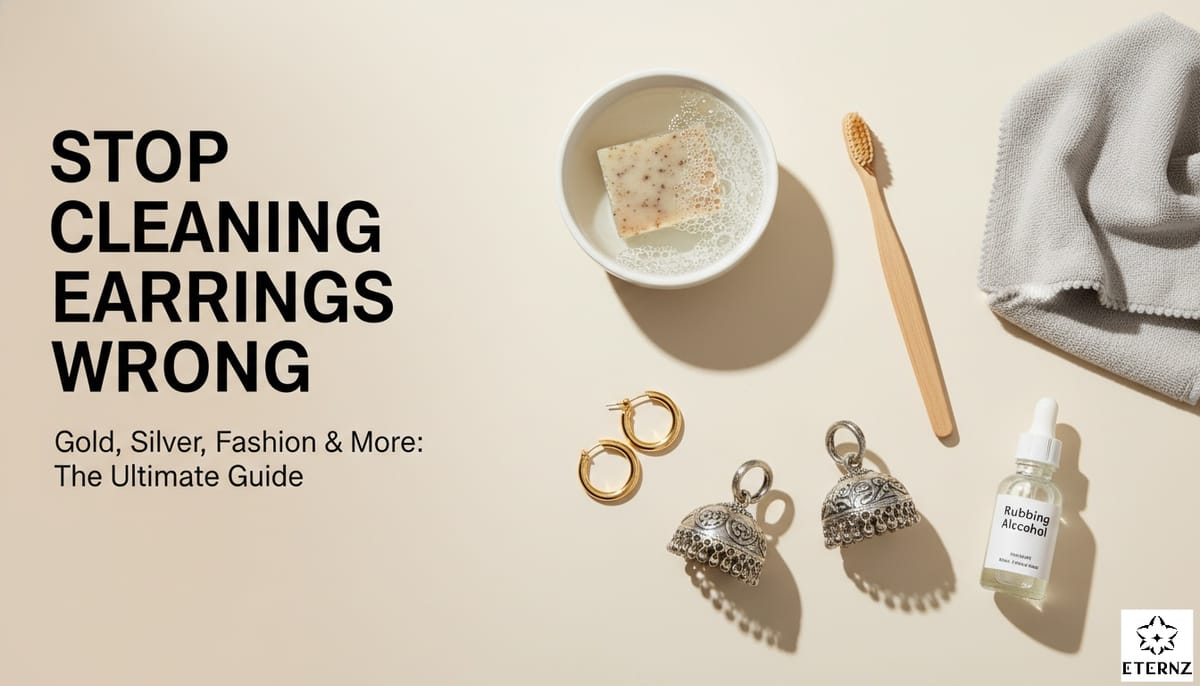
You do not need expensive jewelry cleaning solutions for most earrings. Here is what covers almost every method in this guide:
- Small bowl
- Mild dish soap or baby shampoo (fragrance-free preferred)
- Lukewarm water
- Soft-bristle toothbrush (dedicated, not your regular one)
- Microfibre cloth or lint-free cloth
- Cotton swabs
- Silver polishing cloth (for silver earrings specifically)
- Aluminium foil and baking soda (for heavy silver tarnish)
- Rubbing alcohol (for disinfecting metal posts only)
That is the full toolkit. Now, the cleaning methods by earring type.
How to Clean Gold Earrings at Home
Gold is the easiest earring metal to clean because it does not tarnish and tolerates mild cleaning solutions well. The method changes slightly depending on whether the earring is solid gold or gold-plated.
Solid Gold Earrings (14K, 18K, 22K)
This method works for gold studs, jhumkas, hoops, drops, and any solid gold design without porous stones.
What you need: Mild dish soap, lukewarm water, soft toothbrush, lint-free cloth.
Steps:
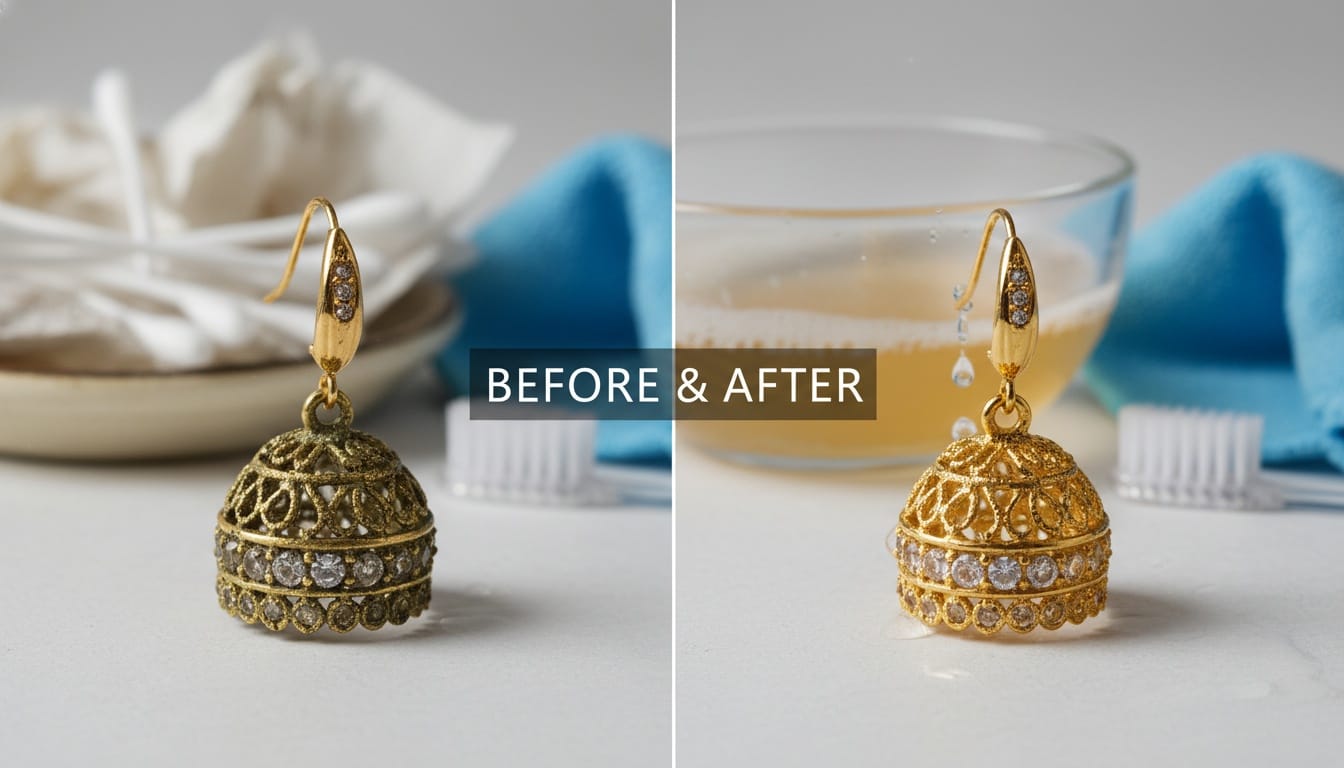
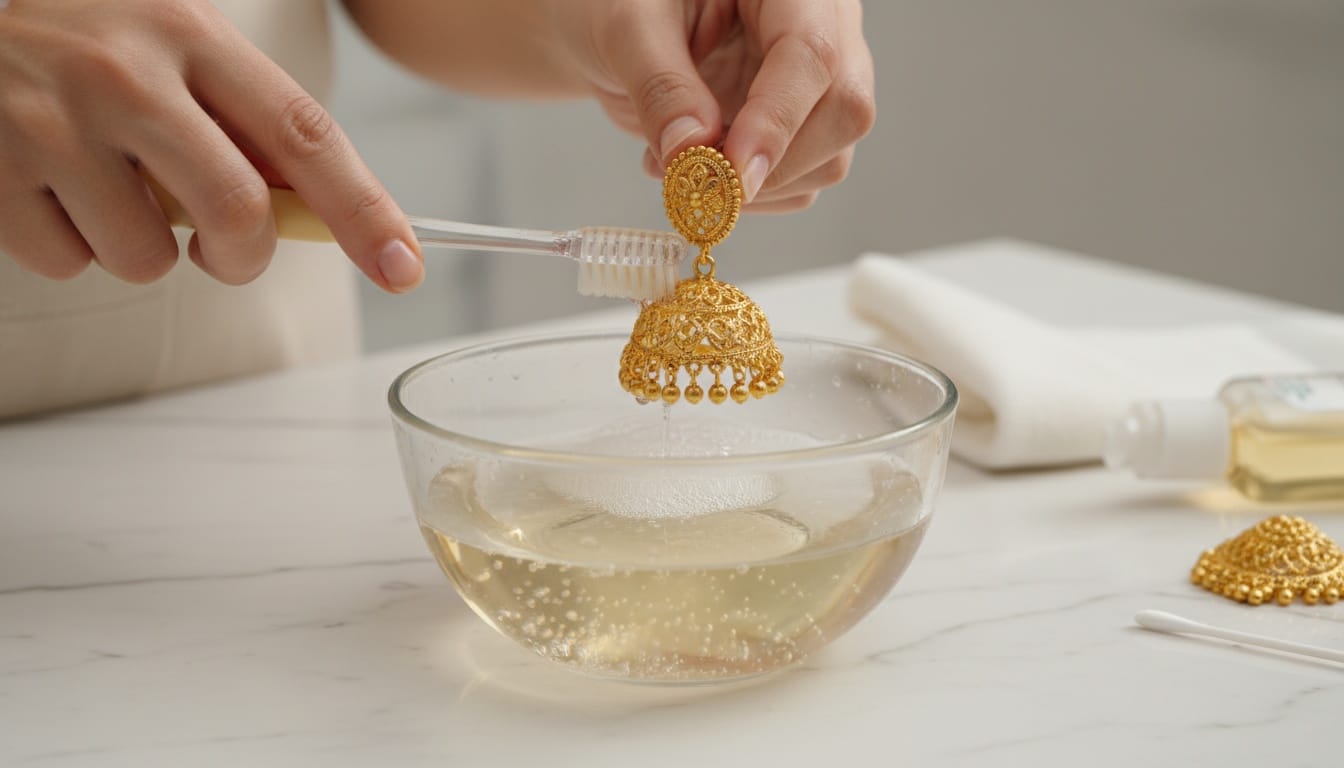
- Fill a small bowl with lukewarm water. Add two to three drops of mild dish soap and mix gently.
- Place gold earrings in the solution and let them soak for 10 to 15 minutes. This loosens accumulated oils and residue without any scrubbing needed yet.
- Remove the earrings. Using a soft toothbrush, gently brush around settings, under stones, and along the post. These are the areas where buildup hides.
- Rinse thoroughly under lukewarm running water. Hold them over a cloth rather than directly over the drain.
- Pat dry with a lint-free cloth immediately. Do not air dry. Water sitting on gold leaves spots.
- Buff gently with the cloth in small circular motions for extra shine.
For 22K gold specifically: Be more gentle with the toothbrush. Higher karat gold is softer and scratches more easily than 18K or 14K.
Gold-Plated Earrings
Gold-plated earrings need a different approach because the gold layer is thin and aggressive cleaning strips it faster.
What you need: Mild soap, lukewarm water, cotton swab or soft cloth. No soaking.
Steps:
- Dip a cotton swab or the corner of a soft cloth in mildly soapy lukewarm water.
- Gently wipe the surface of the earring. Do not scrub.
- Use a clean damp cloth to remove soap residue.
- Dry immediately and completely with a soft lint-free cloth.
No soaking. No toothbrush. No alcohol. These three damage plating faster than regular wear does.
White Gold Earrings
Use the same method as solid gold: mild soapy water, soft brush, rinse, dry. The one additional note: if white gold earrings start to look slightly yellowish over time, that is the rhodium plating wearing thin. Home cleaning cannot fix this. It requires professional re-plating.
Different metals age, tarnish, and react to moisture differently over time. Read Gold vs Silver vs Platinum Earrings to compare maintenance, durability, and daily wear.
How to Clean Silver Earrings at Home
Silver tarnishes faster than any other jewelry metal because it reacts with sulphur compounds in air and moisture. The good news is that tarnish is entirely reversible at home, and regular cleaning prevents it from building to a point where more effort is needed.
Light Tarnish: Soapy Water Method
This works for silver earrings that have gone slightly dull but have not turned visibly dark or black.
Steps:
- Mix a few drops of mild dish soap in a bowl of lukewarm water.
- Soak silver earrings for 5 to 10 minutes.
- Gently brush with a soft toothbrush, paying attention to crevices and settings.
- Rinse thoroughly under lukewarm water.
- Dry completely with a lint-free cloth. Any remaining moisture accelerates tarnish.
- Finish with a silver polishing cloth to restore brightness.
Heavy Tarnish: Baking Soda and Aluminium Foil Method
This is the most effective home method for darkly tarnished silver earrings. It works through an electrochemical reaction that draws the tarnish off the silver and onto the foil.
Steps:
- Line a small bowl with aluminium foil, shiny side facing up.
- Place silver earrings on the foil so they are touching it.
- Sprinkle one to two teaspoons of baking soda over the earrings.
- Pour hot (not boiling) water over the earrings until they are submerged. You will see light fizzing. This is the reaction working.
- Leave for 5 to 10 minutes.
- Remove with tongs or a spoon. Brush gently with a soft toothbrush.
- Rinse thoroughly and dry completely.
Important: Do not use this method on silver earrings with pearls, opals, turquoise, or other porous or soft stones. The heat and reaction can damage them.
Oxidised Silver Earrings
Oxidised silver (the intentionally darkened, antique-finish silver popular in Indian tribal and contemporary jewelry) should never be cleaned with the baking soda method. That method removes oxidation deliberately, which means it will strip the dark finish that defines the earring's design.
For oxidised silver, use only a dry or barely damp soft cloth to wipe surface dust and oils. No soaking. No polishing cloths. The goal is to preserve the dark finish, not reverse it.
How to Clean Fashion and Plated Earrings
Fashion earrings and heavily plated pieces are the most delicate to clean because the base metal (often brass, copper, or alloy) is reactive, and the coating over it is thin. Water, alcohol, and soaking are the three fastest ways to ruin them.
The only safe method for fashion earrings:
- Wipe with a dry, soft microfibre cloth after every wear to remove oils and residue before they build up.
- For slight tarnish or dullness, dampen the cloth with the smallest amount of water, wipe gently, and dry immediately.
- For the post and back, use a dry cotton swab to clean the metal.
What to never do with fashion earrings:
- Soak in any liquid, including water
- Use alcohol, which can strip coatings and discolour the metal
- Use a toothbrush, which scratches soft plating
- Store while damp
Fashion earrings have a shorter lifespan than fine metals by design. Regular gentle wiping significantly extends how long they stay presentable.
How to Clean Diamond Earrings
Diamonds are the hardest gemstone, but the setting they sit in (gold or platinum) still needs careful handling. The cleaning method is the same as solid gold but with extra attention to the area directly under and around the stone.
Steps:
- Soak in mild soapy lukewarm water for 15 to 20 minutes.
- Use a soft toothbrush to clean under the diamond and around the prongs. This is where skin oils and product residue accumulate most.
- Rinse thoroughly and dry completely.
- Hold the earring up to light after cleaning. If the diamond still looks cloudy, repeat the soak. If cloudiness persists, it may need professional ultrasonic cleaning.
Note on ultrasonic cleaners: These are effective for diamonds in solid metal settings. Do not use them for diamonds with visible inclusions or fractures, as the vibration can widen fractures.
How to Clean Pearl Earrings
Pearls are organic gemstones and one of the most delicate earring materials in existence. They are porous, which means they absorb chemicals, and they are soft, which means they scratch from abrasive contact.
The only safe method for pearls:
- After each wear, wipe pearls with a clean, dry or barely damp soft cloth to remove any cosmetic or skin residue.
- For deeper cleaning, dampen a soft cloth with plain water (no soap). Wipe gently.
- Pat dry immediately. Never let pearls air dry while damp.
- Store flat in a soft pouch, not hanging, to prevent the string from stretching.
What to never use on pearls: Dish soap, alcohol, ammonia, baking soda, ultrasonic cleaners, steam cleaners, or any chemical cleaner. All of these damage the nacre (the outer coating that gives pearls their characteristic glow) either immediately or over repeated use.
How to Clean Indian Ethnic Earrings: Jhumkas, Kundan, Polki, Meenakari
This section is almost entirely absent from every other earring cleaning guide online, despite being one of the most important for Indian jewelry wardrobes. Indian ethnic earring styles use construction techniques that make water-based cleaning dangerous.
Jhumkas (Plain Gold)
Plain gold jhumkas follow the solid gold cleaning method: mild soapy water, soft brush, rinse, dry completely. Pay extra attention to the bell cavity inside the jhumka, where dust and residue accumulate and are hidden from casual view.
Kundan and Polki Earrings
Kundan and polki earrings are set using a lac base (a natural resin) that holds the stones in place. Water weakens and softens this lac base over time, which causes stones to loosen and fall out.
Cleaning method: dry only.
- Use a dry, very soft cloth or a dry, soft makeup brush to dust the surface.
- Use a dry cotton swab to clean around individual stones.
- Never submerge in water, never use soapy water, and never use alcohol.
- If the gold base needs cleaning, use a barely damp cloth on the metal portions only, keeping moisture away from the stone settings.
Meenakari Earrings
Meenakari enamel work is delicate and can chip or dull with harsh cleaning. The enamel fills are prone to cracking under abrasive contact.
Cleaning method:
- Use a dry, soft cloth to wipe the enamel surface gently.
- For light cleaning of the gold base, a barely damp cloth on metal-only areas is acceptable.
- No soaking, no toothbrush, no alcohol.
Oxidised Silver Jhumkas and Tribal Earrings
As covered in the silver section: dry cloth only. The oxidised finish is intentional. Any polishing method will remove it.
Different earring styles use different materials and construction techniques, which affects how they should be cleaned. Explore Earrings and Its Types for a complete breakdown of popular styles.
The Part Everyone Skips: Cleaning Posts and Backs
Earring posts and backs are the most bacteria-laden part of any earring because they make direct contact with the inside of the piercing channel. Most people clean the front decorative element and ignore the post entirely. This is the part that actually matters for hygiene.
To clean posts and backs:
- Remove the earring back and set it aside.
- Dip a cotton swab in rubbing alcohol.
- Wipe the post thoroughly, front to back. The residue you see on the swab is exactly what was sitting inside your piercing.
- Wipe the back piece the same way.
- Let both air dry for 30 seconds before reinserting.
Do this weekly for daily-wear earrings. Do it before and after wearing any earrings that have been stored for a while.
For fashion earrings with plated posts, use a dry cotton swab or one barely dipped in water rather than alcohol, since alcohol can discolour plated metals.
What to Never Use on Earrings
This list is as important as any cleaning method because the damage from wrong products is often irreversible.
| Never Use | Why |
|---|---|
| Toothpaste | Abrasive particles scratch metal surfaces, including gold |
| Bleach | Damages metal finishes and degrades settings permanently |
| Boiling water | Expands metal, loosens settings, and cracks porous stones |
| Alcohol on fashion/plated earrings | Strips plating and discolours alloy base metals |
| Ammonia-based cleaners | Corrosive to many metals and destroys organic stones like pearls |
| Baking soda on pearls or porous stones | Abrasive and drying, damages nacre and soft stone surfaces |
| Soaking any earring with a lac base (kundan, polki) | Softens the lac, loosens stones permanently |
| Paper towels or tissues | Microscopic fibres scratch polished metal surfaces |
| Ultrasonic cleaner on pearls, opals, or fractured stones | Vibration cracks these materials |
How Often Should You Clean Each Earring Type?
| Earring Type | How Often |
|---|---|
| Daily wear gold or silver earrings | Once a week |
| Daily wear fashion or plated earrings | Wipe after every wear |
| Occasional wear earrings | Before and after each use |
| Post and back cleaning | Weekly for daily wear, every use for occasional pieces |
| Kundan, polki, meenakari | After every festive occasion, dry clean only |
| Pearl earrings | Wipe after every wear, damp cloth monthly |
| Diamond earrings | Every 2 to 3 weeks for daily wear |
Storage Habits That Keep Earrings Cleaner Longer
Cleaning removes what has already built up. Storage determines how fast it builds up again.
- Store silver earrings in airtight pouches or zip-lock bags to slow oxidation. Air is the primary cause of tarnish.
- Keep each earring pair in a separate pouch or compartment. Contact between metals causes scratches.
- Never store earrings damp. Moisture accelerates tarnish and weakens lac-based ethnic earrings.
- Put earrings on last when getting ready, after perfume, hairspray, and moisturiser. These products are the primary source of buildup.
- Take earrings off first when returning home, before washing your face or showering.
- Keep earring backs attached to the post during storage so the back does not go missing and the post does not scratch other pieces.
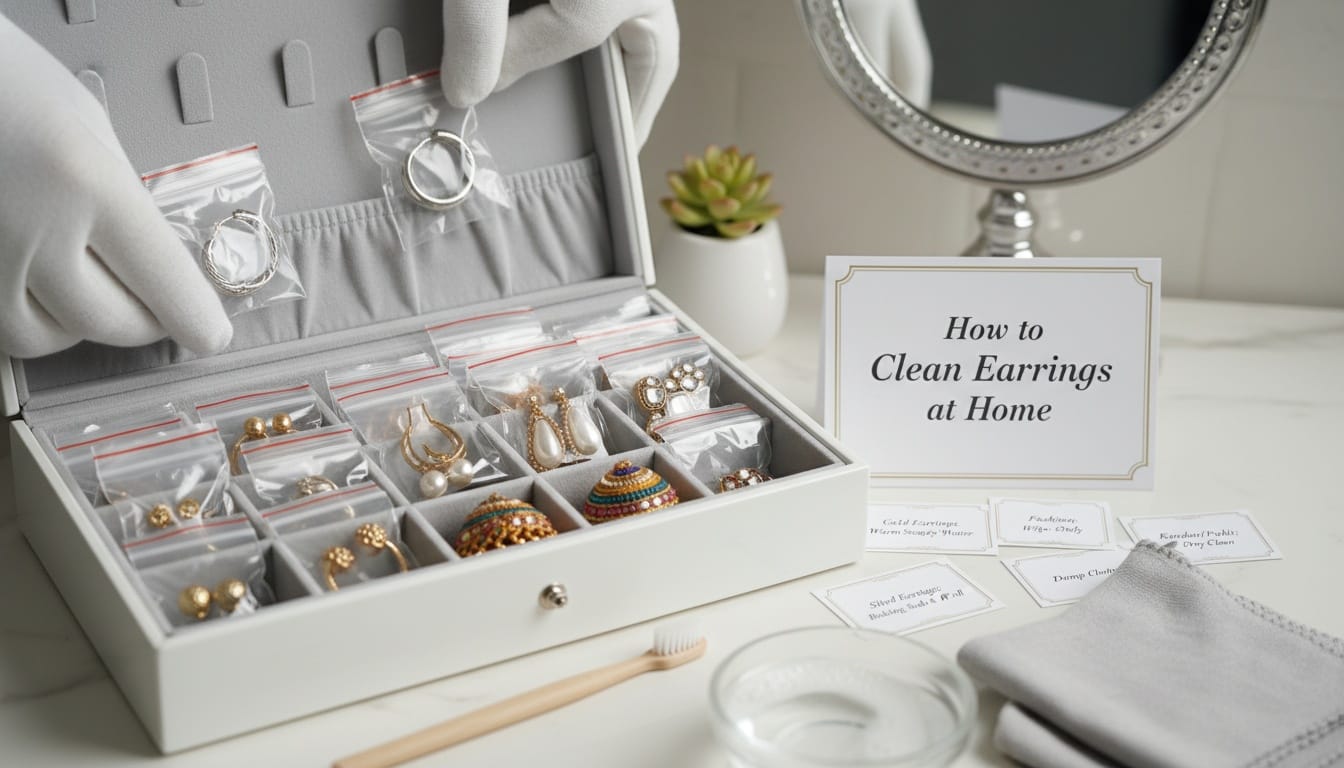
Some earring styles are easier to maintain and rewear than others. Explore Must-Have Earring Pieces in Every Jewelry Wardrobe for timeless essentials.
Decision Framework: Which Method for Which Earring?
Before cleaning any pair, ask three questions:
Question 1: Is the earring solid metal or plated?
Solid gold, solid silver, or solid platinum: use the relevant soapy water method with a soft brush. Plated, fashion, or costume jewelry: wipe only. No soaking, no brushing, no alcohol.
Question 2: Does it have stones?
No stones: follow the metal-specific method freely. Diamonds in solid metal settings: soapy water method is safe. Pearls, opals, turquoise, or porous stones: damp cloth only. Kundan or polki settings with lac: dry clean only.
Question 3: How much tarnish or buildup?
Light dullness on gold: soapy water and a cloth. Light tarnish on silver: soapy water and a polishing cloth. Heavy tarnish on silver: baking soda and aluminium foil method. Heavy buildup on any fine metal earring: professional cleaning is worth the visit if home methods have not restored them fully.
If you are shopping for new earrings that are easier to maintain, Eternz brings together 300+ jewelry brands including Giva, Palmonas, and Kushal's, covering solid gold, 925 silver, and fashion earrings across every style and occasion.
Want a deeper understanding of earring styles, materials, and styling? Read the Ultimate Guide to Earrings for the complete overview.
Conclusion
Earring cleaning is not complicated once you know which method belongs to which metal. Solid gold and silver tolerate gentle soapy water and a soft brush. Fashion and plated earrings need nothing more than a wipe. Pearls need moisture kept away. Kundan and polki need water kept away entirely. Posts and backs need alcohol and a cotton swab weekly.
Clean the backs as often as the fronts. Store earrings dry and separated. Put them on last and take them off first.
That is the entire system. Five minutes a week and your earrings stay bright, your piercings stay clean, and every pair in your collection lasts significantly longer than it would otherwise.
FAQs
1. How do you clean earrings at home without damaging them?
Use mild soapy lukewarm water and a soft toothbrush for solid gold and silver. For fashion and plated earrings, wipe with a dry soft cloth only. Never soak plated or kundan earrings and never use toothpaste, bleach, or boiling water on any earring type.
2. How do you clean gold earrings at home?
Soak in mild soapy lukewarm water for 10 to 15 minutes, gently brush with a soft toothbrush, rinse under lukewarm water, and dry immediately with a lint-free cloth. This works for 14K, 18K, and 22K solid gold earrings.
3. How do you remove tarnish from silver earrings at home?
For light tarnish, use soapy water and a silver polishing cloth. For heavy tarnish, line a bowl with aluminium foil, add your earrings, sprinkle baking soda, pour hot water over them, wait 5 to 10 minutes, then rinse and dry completely.
4. Can you use rubbing alcohol to clean earrings?
Yes, but for disinfecting posts and backs only. Use a cotton swab dipped in rubbing alcohol and wipe the post thoroughly. Do not use alcohol on plated earrings, pearls, kundan, or any porous stones, as it damages their finish or coating.
5. How do you clean earrings that have turned green?
The green discolouration is from the base metal (usually copper or brass) oxidising. Clean with a soft cloth dipped in a small amount of white vinegar, wipe gently, and rinse quickly with plain water. This works for metal surfaces only. If the earrings continue turning green with wear, the plating has worn through and the base metal is now in direct contact with your skin.
6. How often should you clean your earrings?
Daily wear earrings should be cleaned once a week. Wipe the posts with alcohol weekly. Occasional wear earrings should be cleaned before and after each use. Fashion earrings should be wiped with a dry cloth after every single wear to prevent buildup from damaging the finish.
7. How do you clean kundan or meenakari earrings at home?
Dry clean only. Use a dry soft cloth or a dry makeup brush to remove dust from the surface. A dry cotton swab works for cleaning around individual stones. Never submerge kundan or meenakari earrings in water as it softens the lac base that holds the stones and can cause them to fall out.