Earrings and Its Types: Every Western and Indian Style Explained
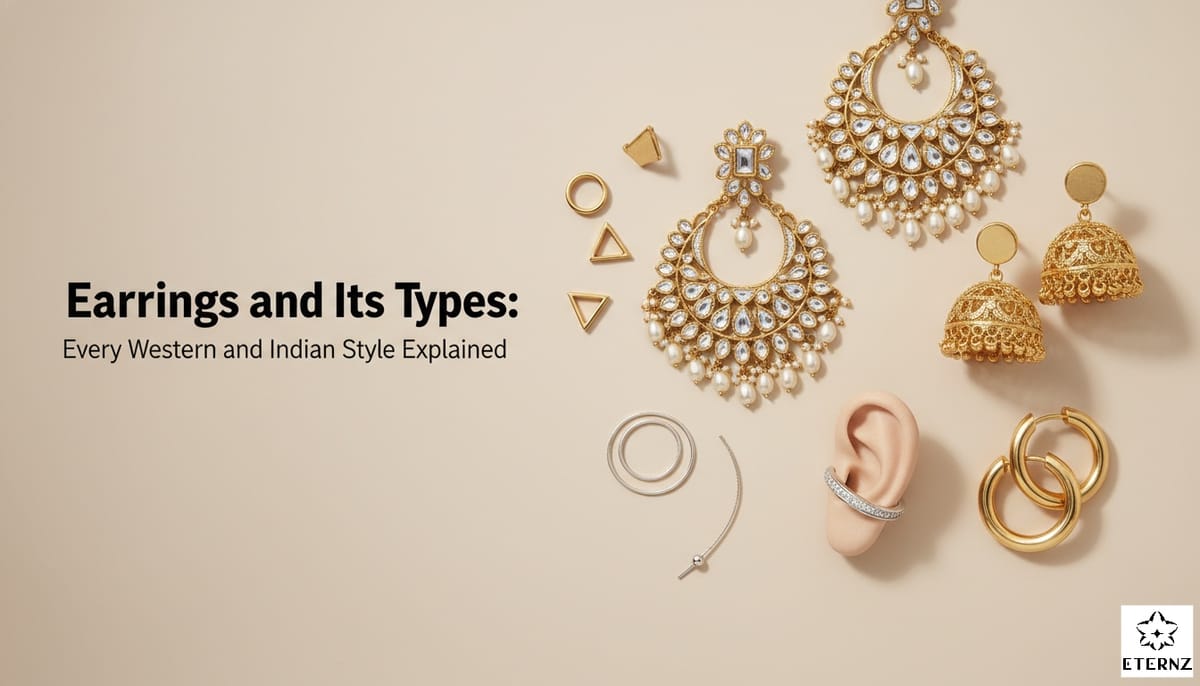
Discover every type of earring, from studs and hoops to jhumkas, chandbalis, and ear cuffs. Includes backs, best occasions, face shape tips, and an earring wardrobe guide.
TL;DR
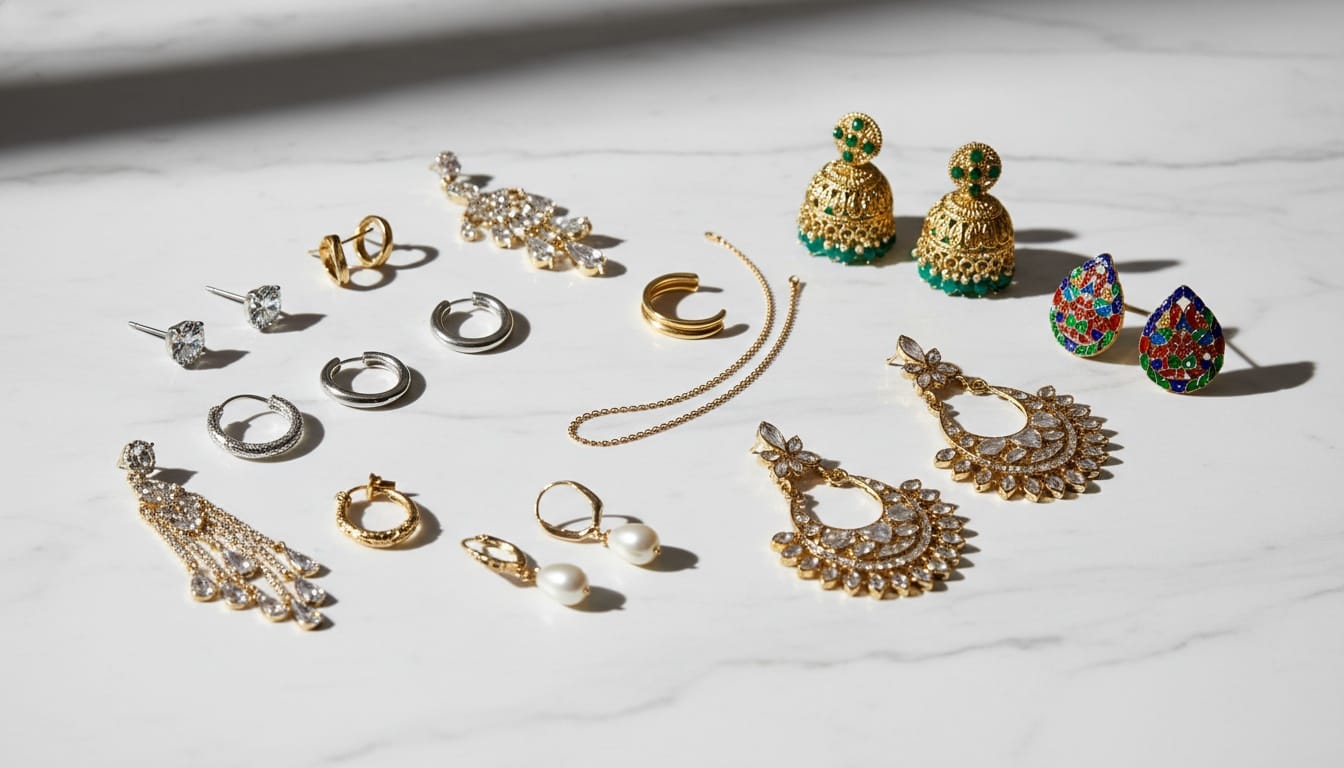
- Earrings fall into three broad categories: close-to-ear styles (studs, huggies), drop and dangle styles (drops, danglers, chandeliers), and structural styles (hoops, ear cuffs, threaders, climbers).
- Indian earring types, including jhumkas, chandbalis, kundan, polki, and bahubali earrings, follow the same visual logic but carry their own cultural context and styling vocabulary.
- Each earring type has a natural occasion, a face shape it flatters best, and an earring back that suits it. Knowing all three turns a casual choice into an intentional one.
- No-piercing options exist for every style category. Clip-ons, ear cuffs, and magnetic backs are all widely available.
- The right starting point for any earring wardrobe: one pair of studs, one pair of hoops, one pair of drops. Everything else builds from there.
What We Cover
- What earrings actually are and why the type matters
- 8 core western earring types with descriptions, best uses, and ideal backs
- 6 Indian earring types with styling context and occasion guide
- Non-piercing earring options
- A comparison table of all types at a glance
- How to pick your starting type based on lifestyle and budget
- FAQs based on real search queries
Before we start, let me tell you about Eternz: a trusted jewelry marketplace featuring 300+ brands. Every piece comes with authenticity certification. They offer fast, same-day delivery in major cities, and a special "WELCOME20" discount for first-time buyers.
An earring type is defined by three things: where it sits on the ear, how much it moves, and how much visual space it occupies. Studs sit flush and still. Drops hang but stay stable. Danglers swing and move. Hoops loop through. Once you understand what each type does physically, knowing which one suits your face, outfit, or occasion becomes straightforward.
Walk into any jewelry store or open any jewelry website and the options feel endless. Studs, hoops, jhumkas, chandbalis, threaders, ear cuffs, chandeliers. Each looks different, sits differently, and suits a different situation. Without a clear sense of what each type actually is and how it behaves, shopping for earrings is mostly guesswork.
It does not have to be.
Earring types follow a simple logic. They differ in three ways: placement on the ear, movement, and visual weight. Understanding those three variables makes every type instantly readable. You stop seeing a wall of options and start seeing a set of clear, purposeful choices.
This guide covers every major earring type in both western and Indian jewelry, explains what makes each one distinct, and tells you exactly when and why to reach for it.
Ultimate Guide to Earrings: Types, Styles, Trends, Care, and How to Choose the Perfect Pair
How Earring Types Are Categorized
Before going type by type, it helps to see the three-tier structure they all fall into.
- Close-to-ear styles sit at or near the lobe with minimal drop. These are your studs, huggies, and ear cuffs. They are the everyday category: lightweight, low-maintenance, and universally wearable.
- Drop and dangle styles extend below the earlobe with varying degrees of movement. Drops stay relatively still. Danglers move with the body. Chandeliers are the most dramatic version of this category. These are your occasion and statement pieces.
- Structural styles are defined by their shape or mechanism rather than their drop length. Hoops loop through the ear. Threaders pass through the piercing from front to back. Climbers travel upward along the ear's curve. These are the design-forward category.
Every earring type fits into one of these three groups. Keep that structure in mind as you go through what follows.
Western Earring Types
1. Stud Earrings
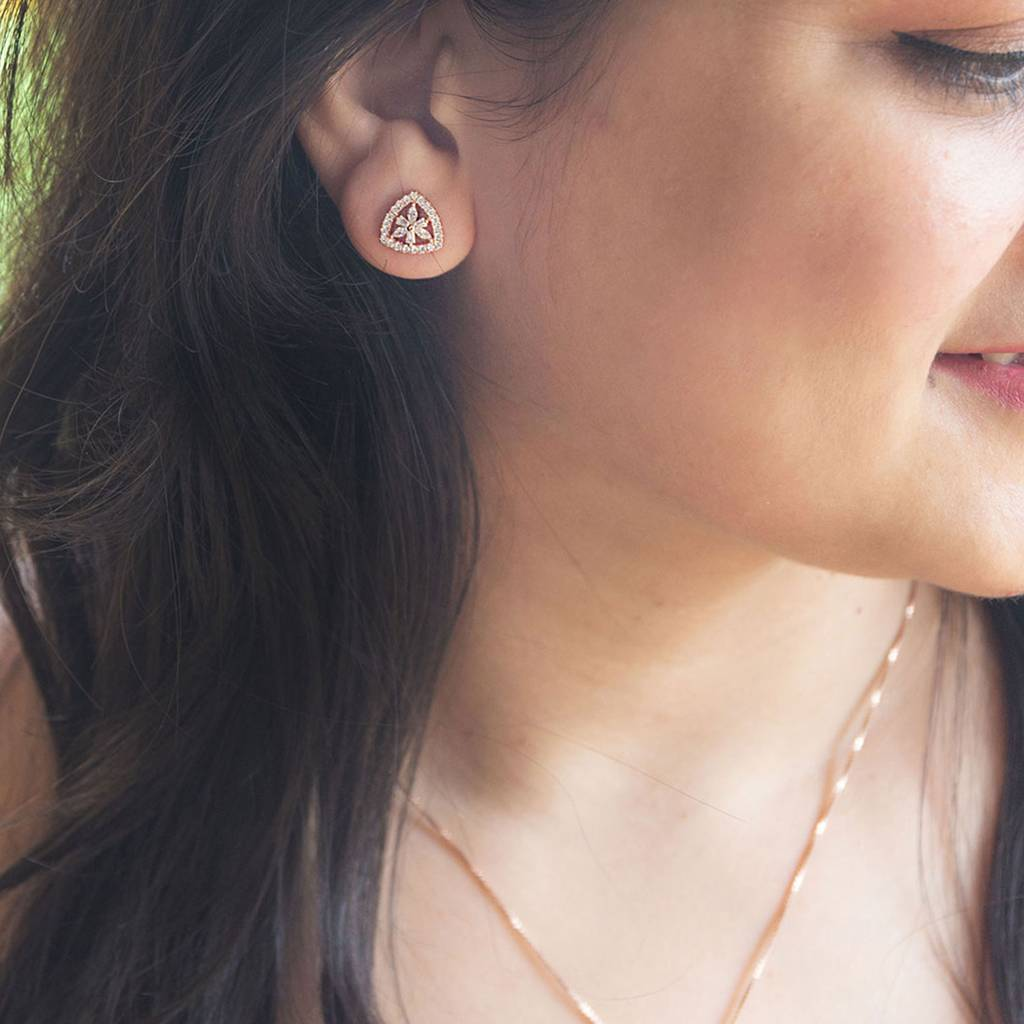
A stud earring consists of a single decorative element mounted on a post that passes through the piercing and is secured by a backing on the other side. The front piece sits flush against the earlobe with no drop or dangle below it.
Studs are the most universally worn earring type in the world. Their close-to-ear placement makes them appropriate for virtually every occasion, face shape, and outfit. They draw the eye directly to the face without directing it anywhere else, which is why they are the default choice for professional settings, first piercings, and everyday wear.
- Common stud varieties: Diamond solitaire studs, pearl studs, gemstone studs, gold studs or silver ball studs, bezel-set studs, halo studs (a central stone surrounded by a ring of smaller stones), novelty shapes such as stars, hearts, or initials.
- Best for: Office wear, daily use, formal occasions where understated elegance is appropriate, sensitive or newly pierced ears.
- Face shapes: Works for all face shapes. For round faces, look for angular or geometric stud designs rather than circular ones.
- Best earring back: Screw back for high-value studs (most secure). Butterfly or friction back for everyday fashion studs. Push-back locking clasps for medium-weight pieces.
Studs are the foundation of any earring wardrobe. If you own only one type, this is it. From there, everything else builds. Read our guide on how face shape affects your earring choices.
2. Hoop Earrings
Hoops are circular or semi-circular earrings that loop completely or partially through the piercing to form a continuous ring. The loop passes from the front of the lobe to the back, and the earring is secured by a clasp, click, or tension mechanism.
Size is the defining variable with hoops. Small hoops (under 20mm diameter) sit close to the ear and read as refined and understated. Medium hoops (30–50mm) add personality without demanding attention. Large hoops (60mm and above) make a deliberate statement and suit evening wear, events, and fashion-forward casual styling.
- Common hoop varieties: Thin plain gold or silver hoops, thick tube hoops, pavé diamond hoops, twisted wire hoops, geometric square or oval hoops, huggie hoops (covered separately below).
- Best for: Casual and social wear at medium size, statement and event wear at large size, office wear at small size with a slim profile.
- Face shapes: Large hoops suit long or rectangular faces by adding width. Medium hoops are the most universally flattering. Avoid very large, circular hoops on round faces as they visually amplify the face's rounded shape.
- Best earring back: Hinged clicker or snap closure for most hoops. Lever back for heavier hoop styles.
The one rule with hoops: Match the size to the occasion and the scale of the outfit. A large hoop with a simple outfit creates a deliberate focal point. The same hoop with a busy, embellished outfit creates visual competition.
3. Huggie Earrings
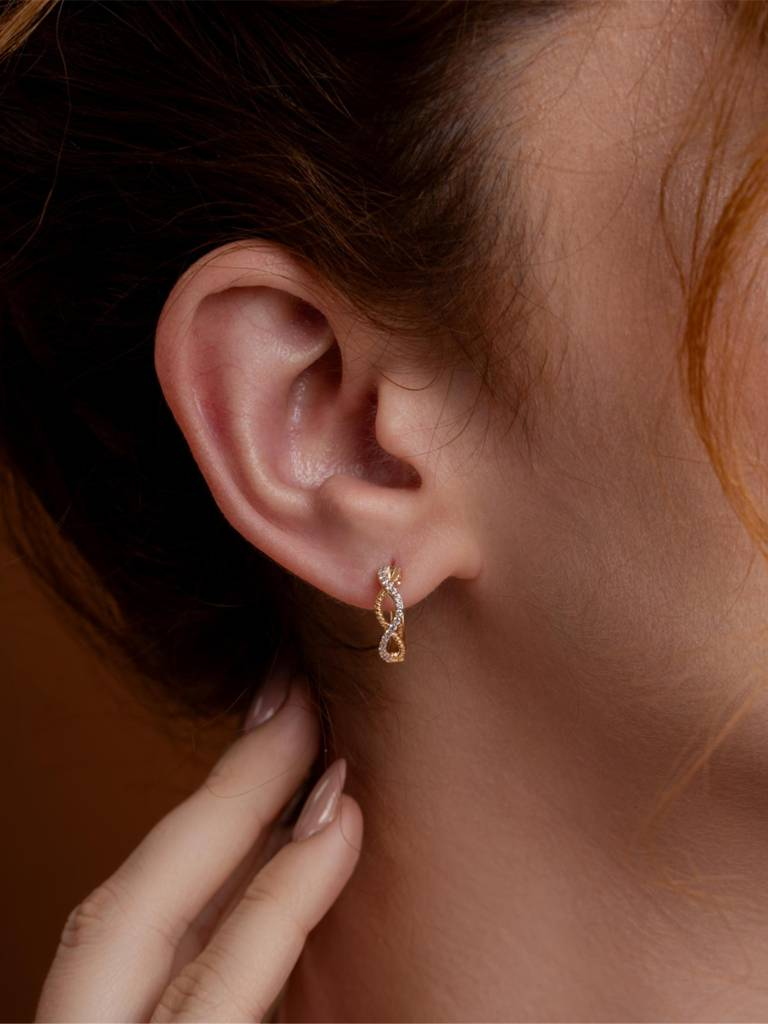
Huggies are a smaller, more fitted version of hoop earrings. They sit very close to the earlobe, encircling it snugly rather than hanging away from it. The name describes the fit exactly: they hug the ear.
What distinguishes huggies from standard small hoops is their depth. Huggies are wider front to back, which gives them more visual presence despite their small circumference. They are among the most comfortable earrings for long-wear because of how securely they sit against the lobe with no movement.
- Common huggie varieties: Plain gold or silver huggies, pavé diamond huggies, pearl-set huggies, charm huggies (with a small pendant hanging from the bottom), mismatched huggie pairs.
- Best for: All-day daily wear, office environments, curated ear stacks (huggies are the most popular base layer for multi-piercing looks), and as a comfortable alternative to standard hoops.
- Face shapes: Works across all face shapes. Their small scale means they rarely overpower or create imbalance.
- Best earring back: Hinged clicker closure. This is the standard for huggies and makes them easy to open and close securely.
Huggies are the single most underrated earring type in everyday jewelry. If you find standard studs too minimal but large hoops too much for daily wear, huggies sit exactly in that middle ground.
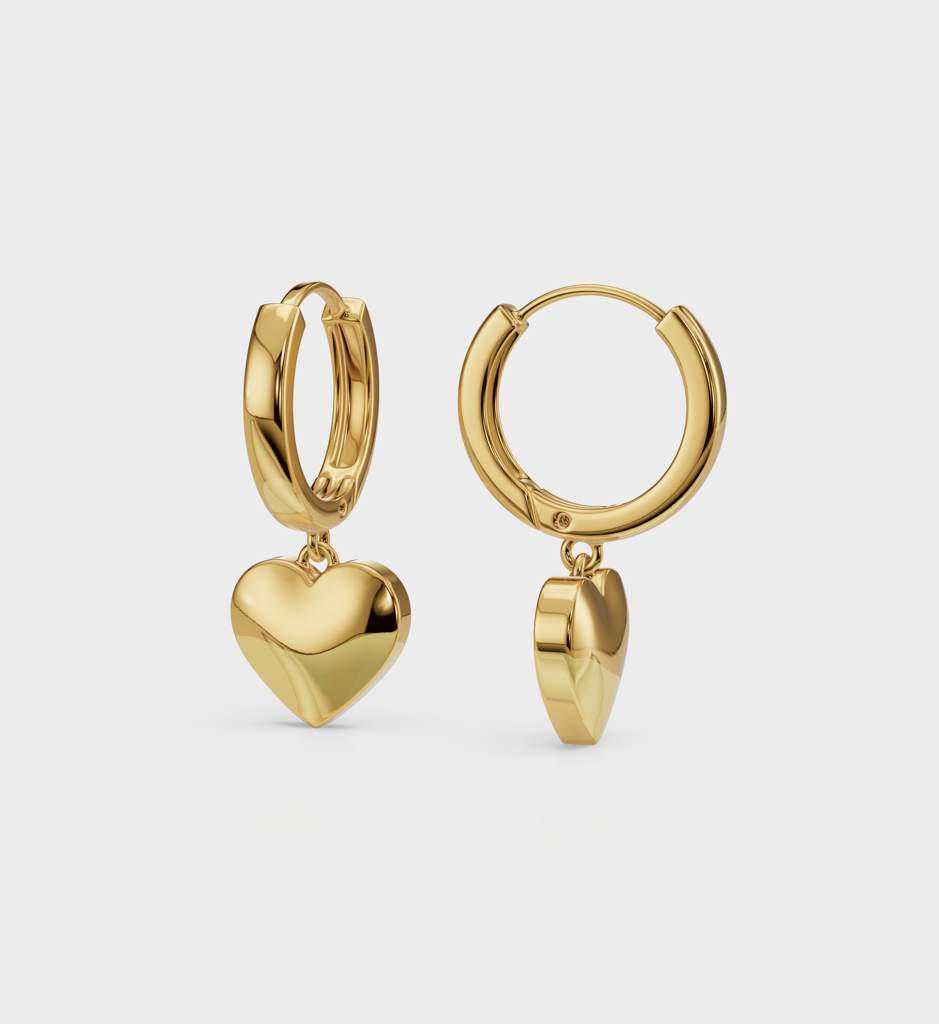
4. Drop Earrings
Drop earrings hang below the earlobe by a fixed distance, typically featuring a single decorative element (a gemstone, pearl, or shaped metal piece) suspended from a post, hook, or wire. The key characteristic of drop earrings is that the hanging element does not swing or move independently. It hangs in a fixed position.
This stability is what makes drop earrings so versatile. They add visual length and elegance without the movement of danglers, which means they are appropriate for a wider range of settings including workplaces and formal events where restraint is expected.
- Common drop varieties: Gemstone drops (single or cluster), pearl drops, teardrop shapes (rounded at top, pointed at bottom), geometric metal drops, bezel-set diamond drops.
- Best for: Office wear with a polish upgrade, formal dinners, weddings as a guest, festive occasions where full chandeliers would feel excessive.
- Face shapes: Particularly flattering for round faces, as the downward line of the drop visually elongates the face. Works well for most other face shapes too.
- Best earring back: Lever back or shepherd hook for most drop earrings. Lever back is more secure for heavier pieces.
Drop earrings are the most versatile entry point into statement jewelry. They have the visual impact of a longer earring without the movement and weight of a full dangler.
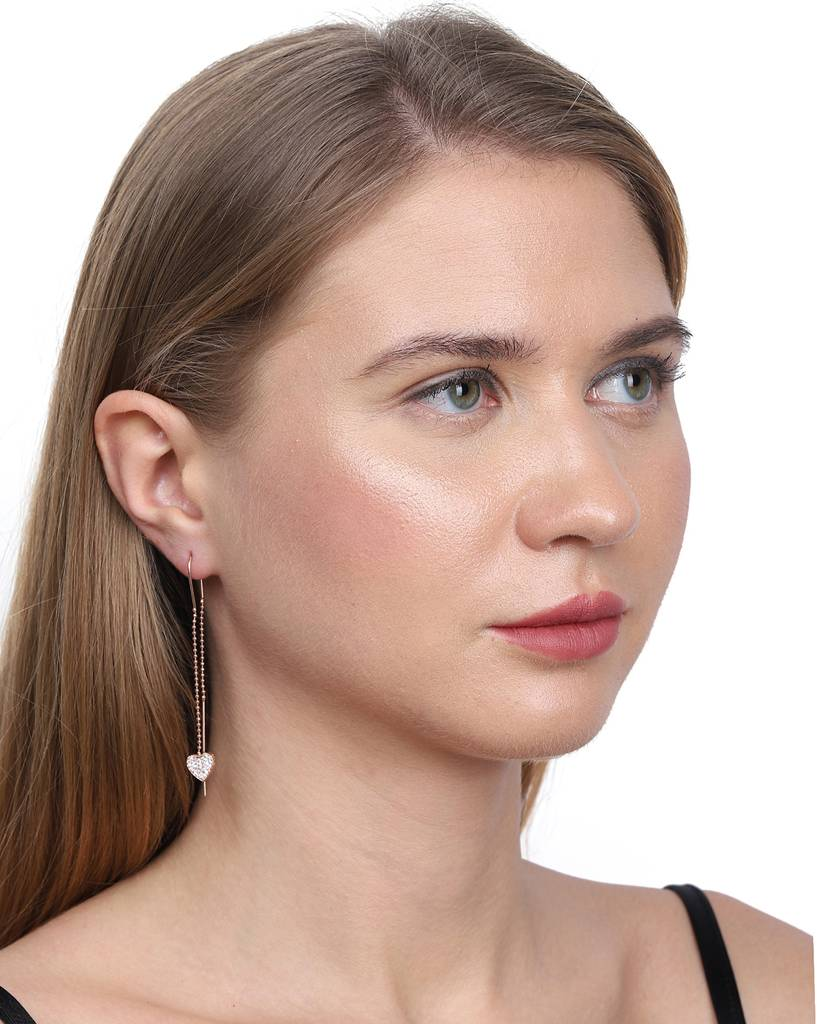
5. Dangle Earrings
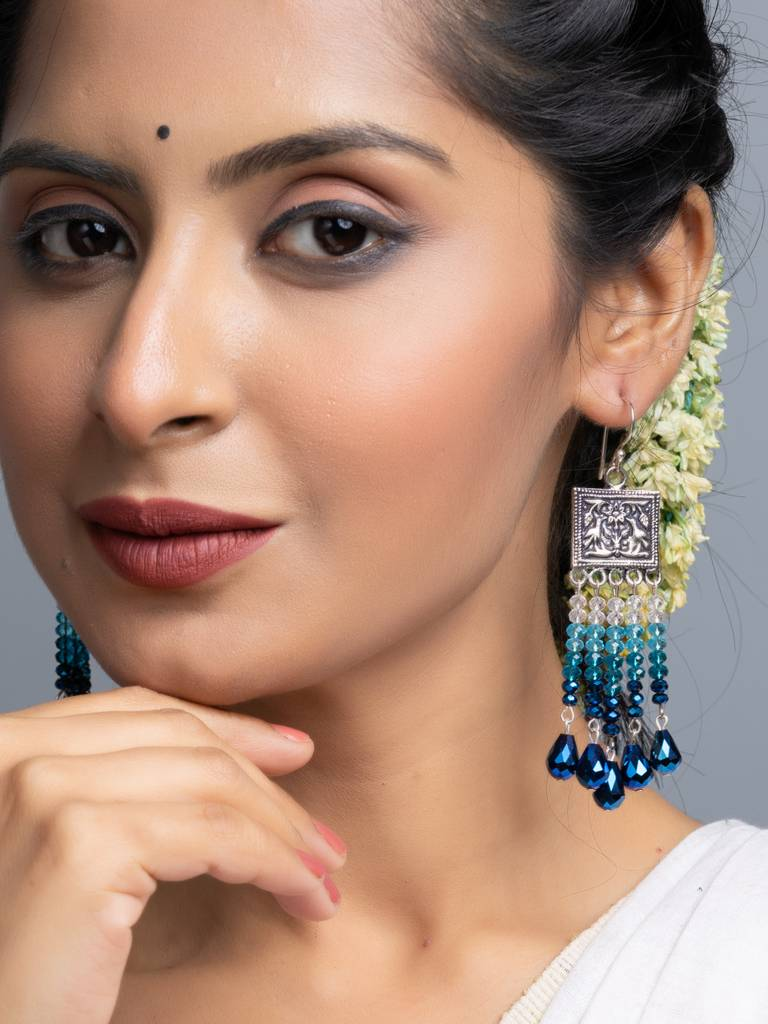
Dangle earrings are the free-moving counterpart to drop earrings. They hang below the earlobe and feature components that swing and move independently with the body. This movement is intentional and is exactly what gives danglers their visual appeal: they catch light as they move and create a dynamic, animated quality that static earrings cannot replicate.
Danglers range from subtle (a single gemstone on a thin chain that sways slightly) to dramatic (multi-tiered chandelier designs with several moving elements). What unites them is the free movement of at least one element.
- Common dangle varieties: Chain danglers with single pendant, multi-tier danglers, tassel earrings (bundles of thread, beads, or metal chains), beaded danglers, chandelier earrings (covered separately below as the most elaborate form).
- Best for: Evenings out, parties, festive occasions, social events where you want your jewelry to contribute movement and energy to the look.
- Face shapes: Long, linear danglers flatter round and square faces. Wider, fan-shaped danglers suit long or rectangular faces. Avoid very long danglers on very short faces or very petite frames where the proportions can feel overwhelming.
- Best earring back: Lever back or shepherd hook. For heavier multi-tier danglers, a lever back with additional omega support distributes weight more comfortably.
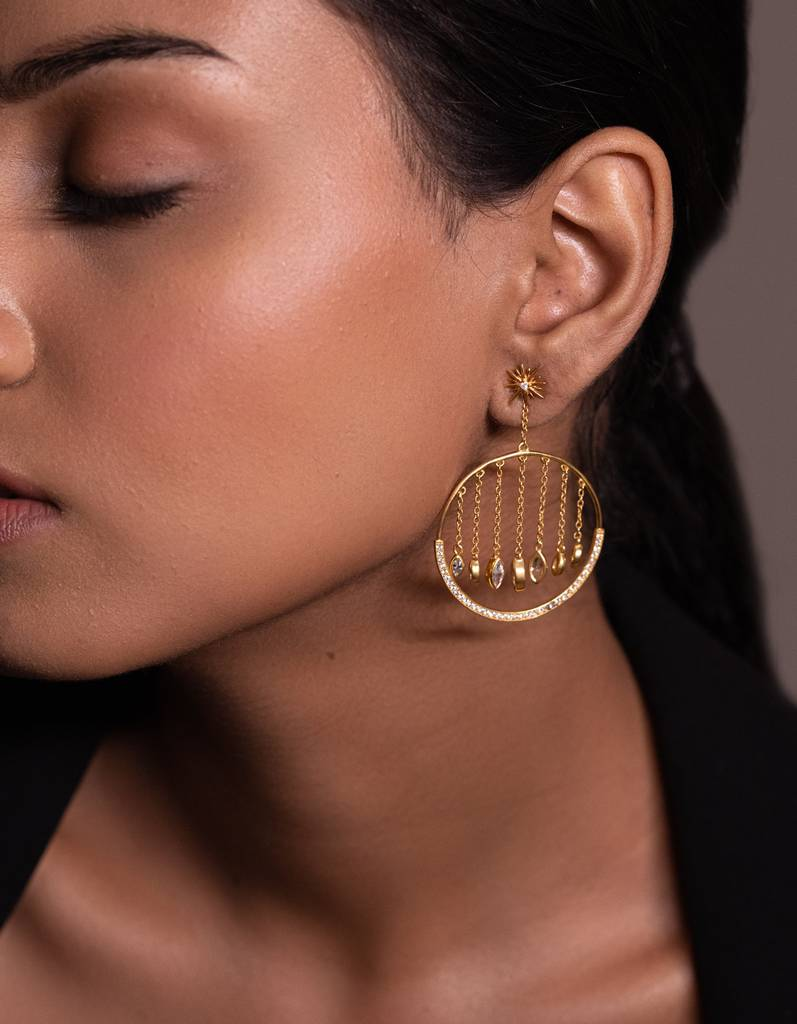
6. Chandelier Earrings
Chandelier earrings are the most elaborate form of dangle earring. They feature a branching, tiered structure that widens as it descends, resembling the ornate ceiling fixtures they are named after. They typically incorporate multiple gemstones, metal elements, or beads arranged in a layered, cascading design.
Chandeliers are unambiguously occasion earrings. Their scale and complexity make them suited to formal events, weddings, galas, and any setting where making a considered, dramatic impression is appropriate. They are not everyday pieces and are not designed to be.
- Common chandelier varieties: Diamond chandeliers, crystal-set chandeliers, bohemian bead chandeliers, gold filigree chandeliers, colored gemstone chandeliers.
- Best for: Formal events, weddings (both as bridal and guest jewelry), galas, black-tie occasions. Pair with simple, unembellished outfits to give the earrings the full frame they need.
- Face shapes: Most flattering for round and square faces, where the downward and widening structure adds length and softness respectively. For heart-shaped faces, wider chandelier styles balance the narrower chin. Avoid very long, heavy chandeliers for short faces or petite frames.
- Best earring back: Lever back with push-back support. For very heavy chandeliers, an omega back or comfort back distributes weight more evenly across the lobe.
7. Threader and Climber Earrings
These two styles are grouped together because they are both defined by their mechanism rather than their visual effect.
Threader earrings consist of a thin chain or wire that passes directly through the piercing and hangs at different lengths on both sides of the ear. There is no backing. The chain itself, sometimes plain and sometimes set with small stones or charms, hangs freely on the front and back of the lobe. Threaders are exceptionally lightweight and create a delicate, modern look.
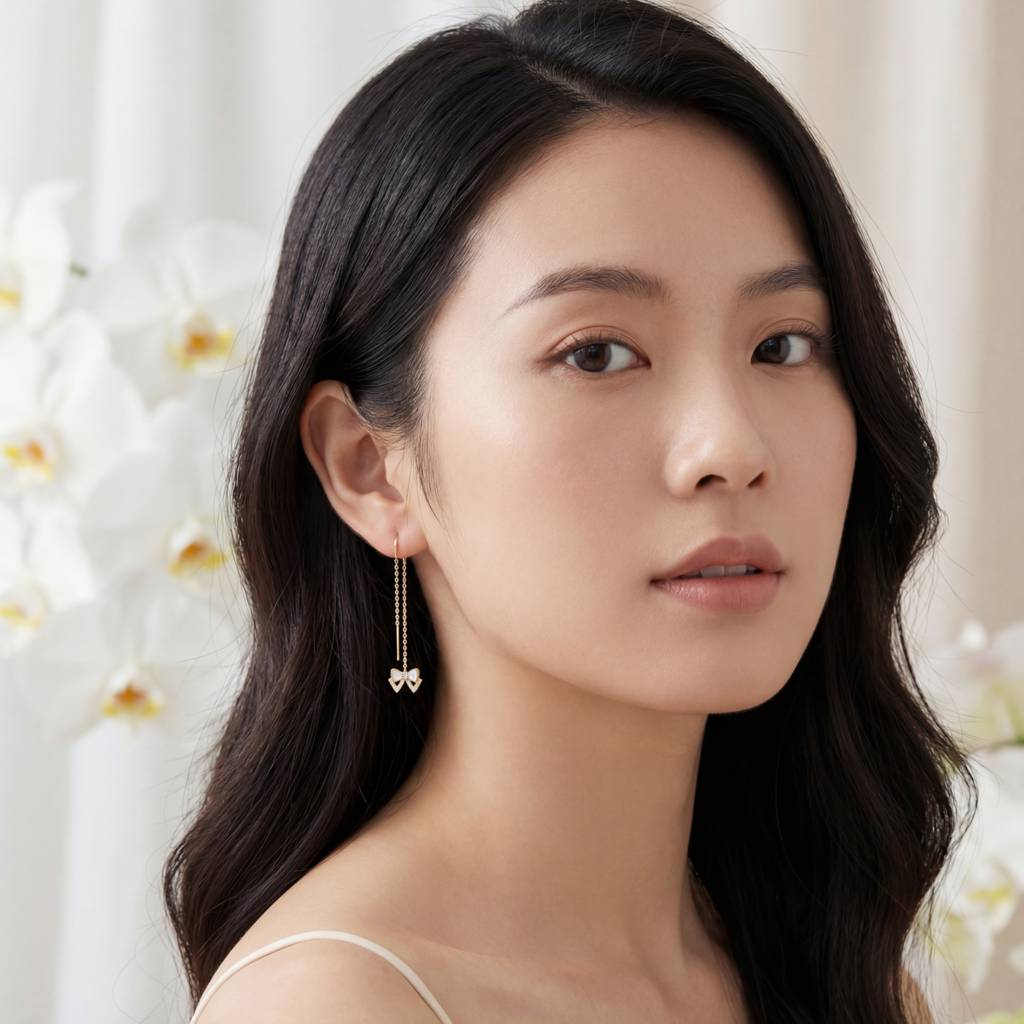
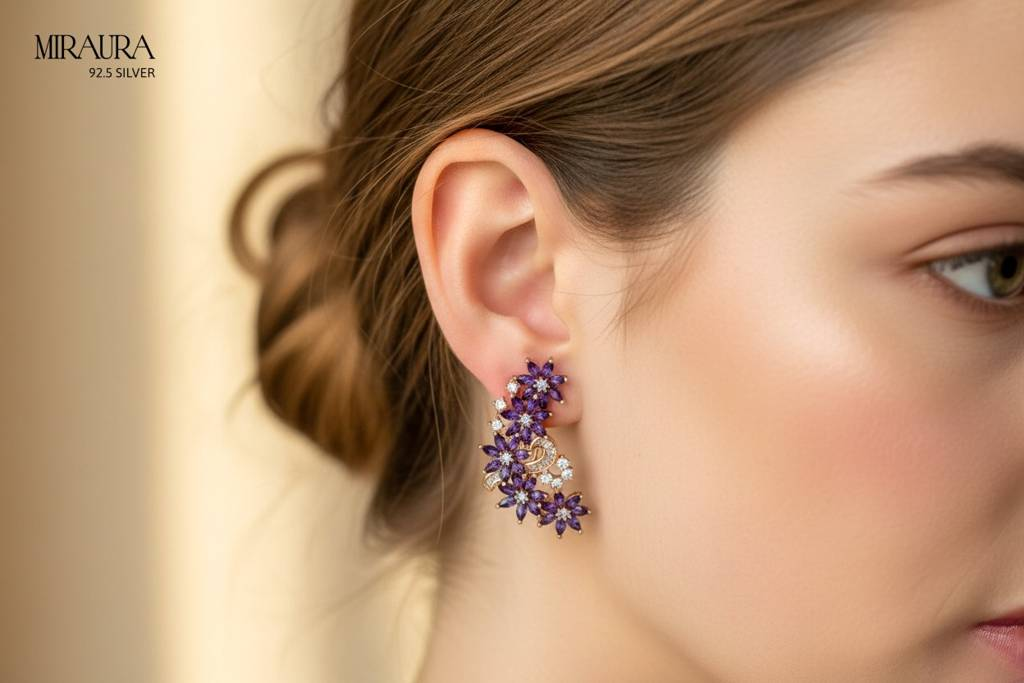
Climber earrings (also called crawlers) follow the curve of the ear upward from the lobe. They are attached by a curved post that bends with the ear's natural shape, creating the visual effect of multiple piercings travelling up the ear from a single hole. They are one of the most visually striking of all earring types when worn correctly.
- Best for: Both styles suit fashion-forward and contemporary looks. Threaders work beautifully for minimal, everyday styling. Climbers are stronger statement pieces and suit events, social occasions, and curated ear stacks.
- Face shapes: Climbers are particularly effective for round faces because the upward movement creates vertical visual length. Threaders suit most face shapes.
- Best earring back: Threaders use no traditional back. Climbers use a curved post with a small backing nut.
8. Ear Cuffs
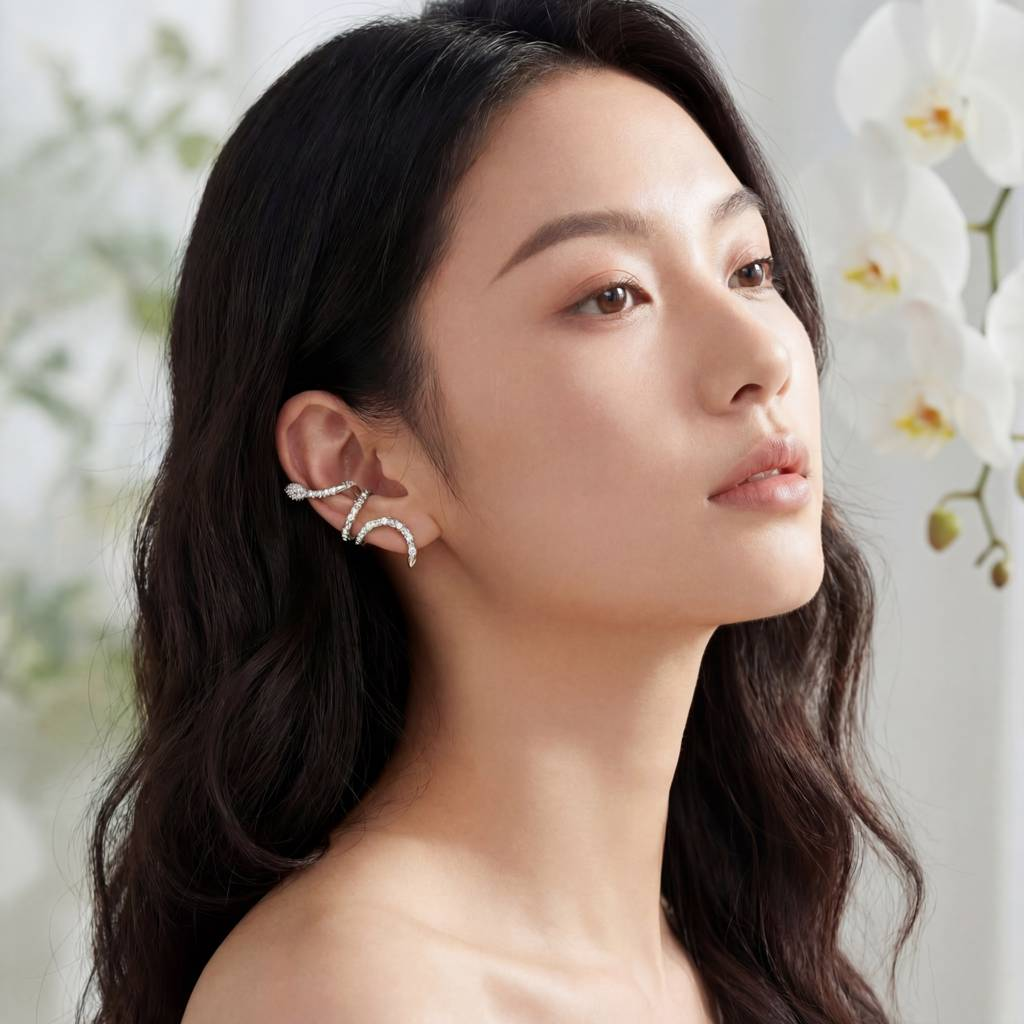
Ear cuffs wrap around the cartilage or the edge of the earlobe without requiring a piercing. They grip the ear through tension and are fully adjustable. Their no-piercing nature has made them one of the fastest-growing earring types in contemporary jewelry, particularly in curated ear aesthetics where they are combined with studs and huggies.
- Common ear cuff varieties: Simple metallic bands, gemstone-set cuffs, multi-band stacked cuffs, chain-linked cuffs that connect to a lobe stud, and wide architectural cuffs that cover a significant portion of the ear.
- Best for: Fashion-forward casual and social wear, curated ear aesthetics, anyone who wants to experiment with an editorial look without committing to a new piercing.
- Face shapes: Works across most face shapes. Larger, more dramatic cuffs add visual width at the ear, which benefits long or rectangular faces more than round ones.
- Best earring back: No traditional back needed. Most are simply adjusted by gently pressing the cuff to increase or reduce grip.
Indian Earring Types
Indian jewelry has one of the richest and most distinct earring vocabularies in the world. The styles below are not western types adapted for Indian fashion. They are original forms with their own history, craft techniques, and styling context.
1. Jhumka Earrings
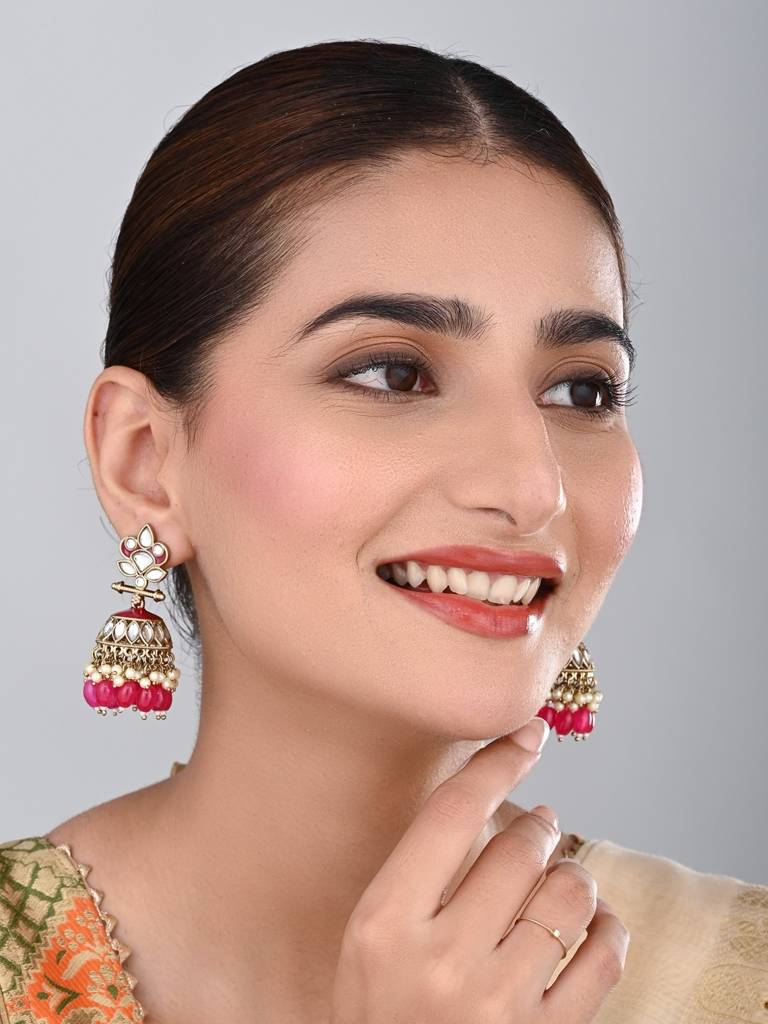
The jhumka is the most iconic Indian earring type. It features a rounded dome at the top (the kamane) and a flared, bell-shaped body below it, often with small hanging beads or chains (called jhale) at the base. The traditional sound of jhumkas lightly ringing as the wearer moves is part of their identity.
Jhumkas exist at every price point: simple gold jhumkas for everyday ethnic wear, stone-set and meenakari jhumkas for festive occasions, and heavily embellished kundan or polki jhumkas for bridal wear. No Indian jewelry wardrobe is complete without at least one pair.
- Best for: All ethnic occasions, from casual kurtis to festive sarees and bridal lehengas. The level of embellishment should match the formality of the occasion.
- Neckline pairing: Works best with round-neck and V-neck Indian outfits. For deep V necklines, a longer jhumka with additional drop length creates the strongest look.
2. Chandbali Earrings
Chandbali means "moon-shaped" in Hindi. These earrings feature a prominent crescent or half-moon shape as their central design element, often heavily set with kundan stones, pearls, or meenakari enamel work. They typically include pearl or bead drops at the lower edge.
Chandbalis are more formal and ornate than jhumkas and suit festive, wedding, and bridal occasions rather than everyday ethnic wear. They are one of the most photogenic Indian earring styles because of their architectural crescent silhouette.
- Best for: Weddings, receptions, festive occasions, traditional ceremonies.
- Neckline pairing: Particularly strong with round-neck kurtis and blouses where they add the vertical length and visual richness the neckline needs.
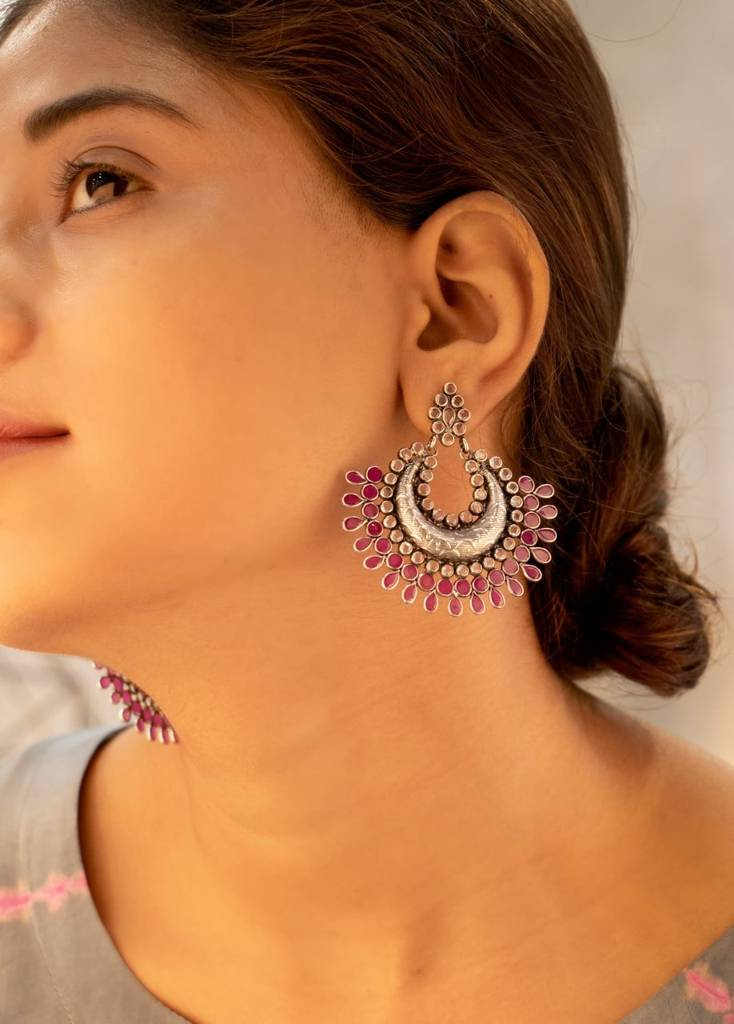
3. Kundan Earrings
Kundan is a jewelry-making technique rather than a shape. It involves setting uncut gemstones into a refined gold foil base using a process that originated in Mughal-era Rajasthan. The result is a flat-surfaced, richly coloured earring with a distinctly regal quality.
Kundan earrings come in jhumka, chandbali, drop, and stud forms. What identifies them as kundan is the setting style: flat, uncut stones set flush into the gold foil base with visible gold borders around each stone.
- Best for: Bridal wear, formal festive occasions, traditional ceremonies. The richness of kundan work is suited to equally rich fabrics: silk, brocade, and heavily embroidered textiles.
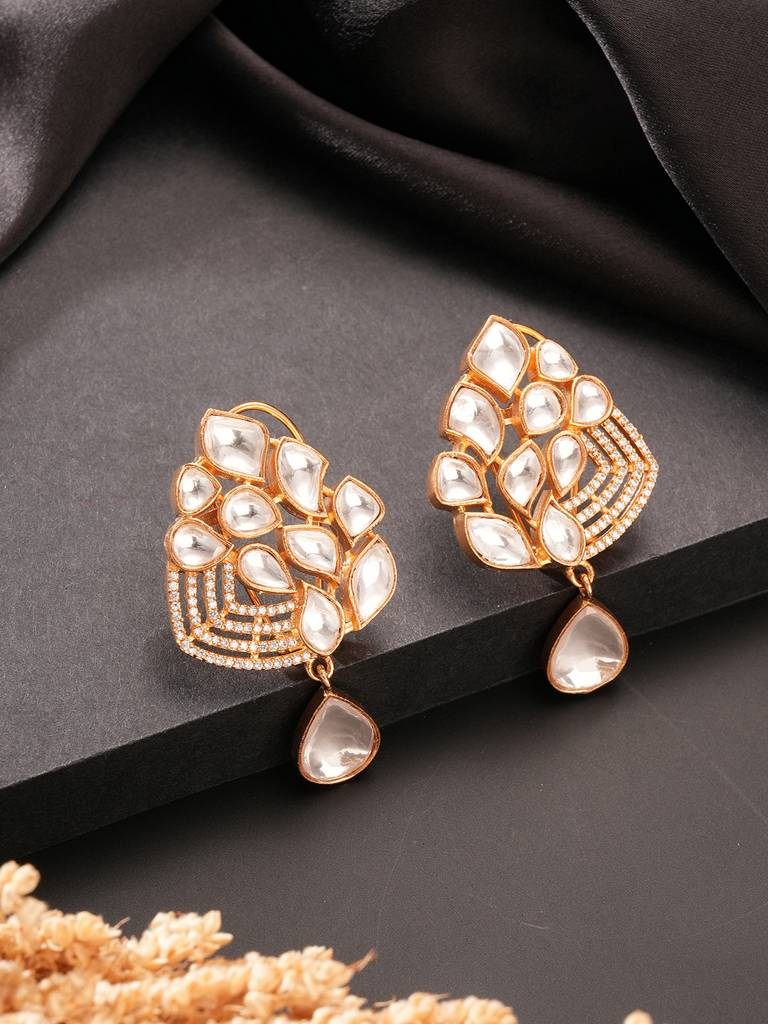
4. Polki Earrings
Polki earrings use uncut, unpolished diamonds set in gold. Where kundan uses coloured gemstones, polki uses raw diamond faces that give the earring a soft, luminous warmth rather than the sharp sparkle of cut diamonds. Polki is considered one of the most heritage-forward jewelry choices in Indian bridal fashion.
- Best for: Indian bridal looks, high-end festive occasions. Polki earrings are investment pieces rather than everyday wear.
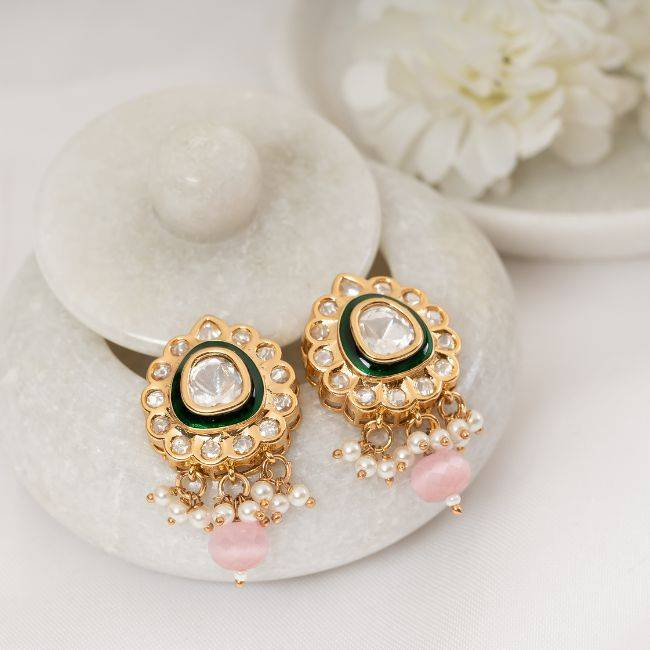
5. Meenakari Earrings
Meenakari refers to the art of colouring metal surfaces with enamel in vivid, intricate patterns. Meenakari earrings are identifiable by their bright enamel detailing, typically in red, green, blue, and white, against a gold base. They originated in Rajasthan and are deeply associated with north Indian festive jewelry traditions.
- Best for: Festive occasions, Navratri, Diwali, haldi and mehendi functions. Meenakari earrings pair particularly well with bright, colourful ethnic outfits because the enamel colours can be coordinated with the outfit's palette.
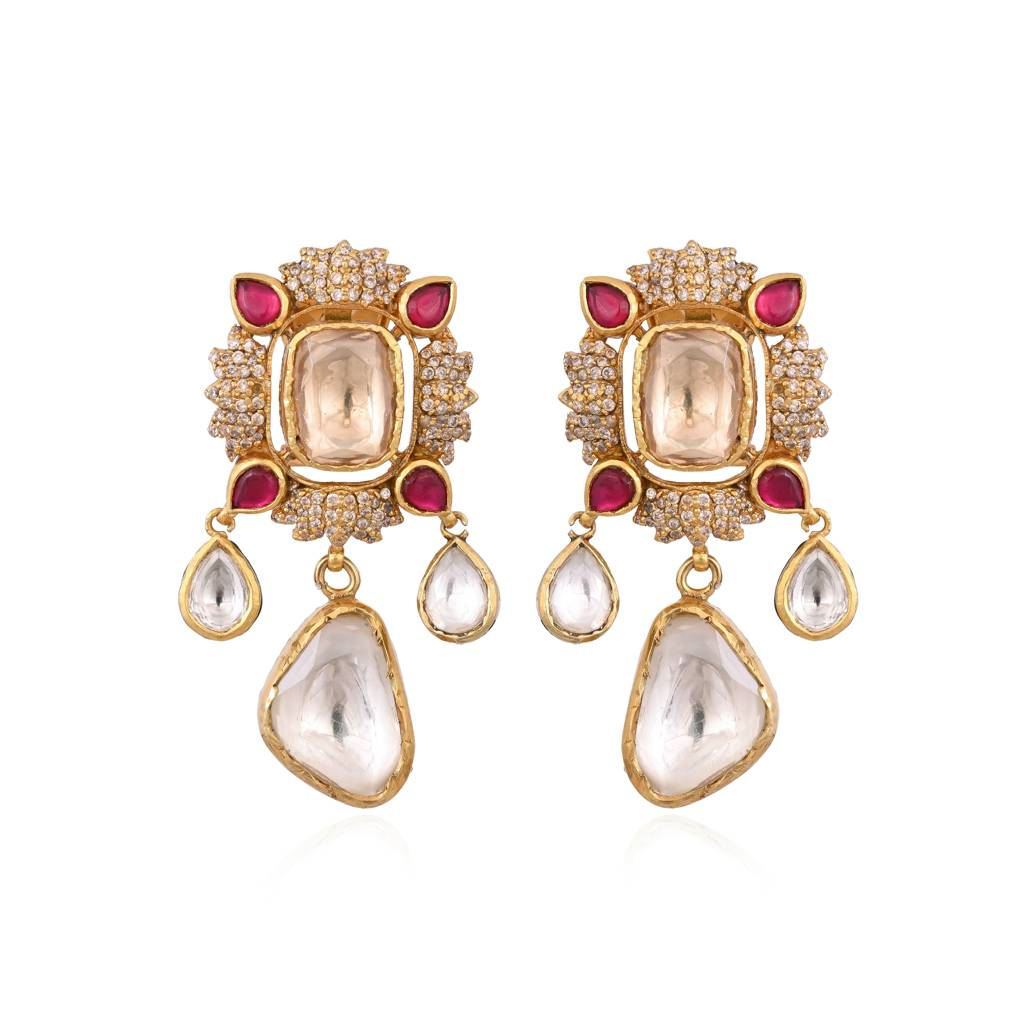
6. Bahubali Earrings
Named after the iconic film, bahubali earrings are large, layered, multi-element statement earrings that combine chains, pearls, stones, and drops into a single dramatically scaled piece. They are heavier than most Indian earring styles and are designed to be worn as the centrepiece of an entire look.
- Best for: Bridal wear, pre-wedding functions, sangeet and reception looks where maximum visual impact is the goal.
Important: Bahubali earrings are heavy. If wearing for extended periods, look for versions built on lightweight base metals or resin frames that replicate the visual weight of the original without the physical strain on the earlobes.
Non-Piercing Earring Types
Not every earring requires a pierced ear. These options exist across all the major style categories.
- Clip-on earrings use a hinged metal clip that pinches the earlobe to hold the earring in place. High-quality clip-ons with padded or rubber-cushioned clips are comfortable for several hours of wear. Available in stud, drop, and chandelier designs.
- Magnetic earrings use two small magnets that sandwich the earlobe. They are the easiest to put on and remove but are not suited to heavy designs as the magnet grip cannot support significant weight.
- Ear cuffs as described above require no piercing at all and are available in a wide range of styles from minimal to dramatic.
- Stick-on or adhesive earrings are a temporary option primarily used for children's costume jewelry and specific fashion shoots. They are not intended for regular wear.
All Earring Types at a Glance
| Earring Type | Placement | Movement | Best Occasion | Key Back Type |
|---|---|---|---|---|
| Stud | Flush on lobe | None | Daily, office, formal | Butterfly / screw back |
| Hoop | Through lobe, loops | Slight sway | Casual to statement | Hinged clicker |
| Huggie | Hugs lobe closely | Minimal | Daily, stacking | Hinged clicker |
| Drop | Just below lobe | None | Office, formal, casual | Lever back / hook |
| Dangle | Below lobe | Free movement | Evening, festive | Lever back / hook |
| Chandelier | Well below lobe | Free movement | Formal, bridal | Lever back + support |
| Threader | Through piercing | Chain sways | Casual, fashion | No back (chain-through) |
| Climber | Travels up the ear | None | Statement, social | Curved post + nut |
| Ear Cuff | Cartilage / lobe edge | None | Fashion, curated ear | No back (tension grip) |
| Jhumka | Below lobe | Bell sways | Ethnic, festive | Hook |
| Chandbali | Below lobe | Slight sway | Festive, bridal | Hook |
| Kundan Drop | Below lobe | Minimal | Bridal, formal festive | Hook |
| Polki Drop | Below lobe | Minimal | Bridal | Hook |
| Meenakari | Below lobe | Minimal to sway | Festive | Hook |
| Bahubali | Well below lobe | Free movement | Bridal, sangeet | Heavy hook |
Where to Start: Building Your Earring Wardrobe by Type
If you are starting from scratch or rebuilding your collection intentionally, here is the order that makes the most practical sense.
Layer 1: The Foundation (buy these first)
One pair of diamond or pearl studs. One pair of gold or silver hoops in a medium size. These two pairs cover the majority of your daily, professional, and formal needs before you add anything else.
Layer 2: The Versatile Statement (buy these second)
One pair of drop earrings in a metal or gemstone that suits your most common outfit palette. For Indian ethnic wear, add one pair of gold jhumkas at a richness level appropriate for your most common festive occasion.
Layer 3: The Occasion Pieces (buy when needed)
Chandeliers, chandbalis, kundan or polki earrings, bahubali sets. These are situation-specific and should be purchased with a specific event in mind rather than speculatively.
Layer 4: The Fashion Experiments
Threaders, climbers, ear cuffs, mismatched pairs, tassel earrings. These are the trend and personality layer. Add them after the foundation is solid.
If you want to explore all of these earring types in one place, Eternz brings together 300+ jewelry brands including Giva, Palmonas, and Kushal's, covering everything from everyday studs and huggies to bridal chandbalis and polki sets.
Decision Framework: Which Type Should You Start With?
You want something for daily wear and nothing feels right yet: Start with studs. They are the most forgiving type across face shapes, occasions, and outfits. A pair of gold ball studs or pearl studs will serve you better than any other single purchase.
You find studs too minimal but chandeliers too much: Drop earrings or huggies. Both sit comfortably between minimal and statement without crossing into occasion-only territory.
You wear Indian ethnic outfits regularly: A pair of gold jhumkas is non-negotiable as a starting point. From there, chandbalis for festive occasions.
You have sensitive ears or a new piercing: Start with titanium studs. No other type until the piercing is fully healed (6–8 weeks for lobe piercings).
You want to experiment without committing to a new piercing: Ear cuffs or clip-on earrings. Both are available in styles that closely replicate pierced earring aesthetics.
You want a curated ear look with one piercing: A huggie as the lobe base, combined with an ear cuff on the cartilage above it. This creates a stacked look without requiring additional piercings.
Conclusion
Every earring type exists for a reason. Studs sit still and stay out of the way. Hoops loop through and create a continuous frame. Drops add length without movement. Danglers add movement and drama. Chandeliers amplify that drama to its maximum. Threaders and climbers redefine the ear as a design surface. Jhumkas and chandbalis carry centuries of craft tradition into a single pair.
Knowing what each type does and why it was designed that way removes the guesswork from every earring decision. You stop buying randomly and start building a collection that has something for every version of your day, your occasion, and your outfit.
Start with your foundation. Build from there. And use the type, not just the look, as your first decision filter every time.
FAQs
1. What are the different types of earrings?
The main types are studs, hoops, huggies, drop earrings, dangle earrings, chandelier earrings, threader earrings, ear climbers, and ear cuffs. Indian jewelry adds jhumkas, chandbalis, kundan, polki, meenakari, and bahubali earrings. Each type differs in where it sits on the ear, how much it moves, and the visual weight it carries.
2. What is the difference between drop and dangle earrings?
Drop earrings hang below the earlobe in a fixed position and do not move independently. Dangle earrings also hang below the lobe but feature components that swing and move freely with the body. Drops are the more versatile of the two and suit a wider range of settings including formal and office environments.
3. What type of earring is best for everyday wear?
Studs and huggies are the most practical for daily wear. They are lightweight, close-fitting, do not snag on clothing or hair, and are appropriate for professional environments. Small hoops and delicate drops are also strong choices for everyday styling.
4. What earrings do not need piercing?
Ear cuffs, clip-on earrings, and magnetic earrings do not require a piercing. Ear cuffs wrap around the cartilage and are secured by tension. Clip-ons use a hinged clamp. Magnetic earrings use opposing magnets on either side of the earlobe. Ear cuffs are the most fashion-forward of the three and are widely available in contemporary jewelry.
5. What is a jhumka earring?
A jhumka is a traditional Indian earring with a rounded dome top (kamane) and a flared bell-shaped body below it, often with small bead or chain drops at the base. It is the most versatile and widely worn Indian earring type and is suited to ethnic wear across all occasions from casual to bridal.
6. What is the difference between kundan and polki earrings?
Kundan earrings use coloured uncut gemstones set in gold foil. Polki earrings use uncut, unpolished diamonds set in gold. Both are traditional Indian fine jewelry techniques with origins in Mughal-era Rajasthan. Polki tends to have a warmer, softer glow due to the raw diamond faces, while kundan is more colourful and vibrant.
7. Which earring back is the most secure?
Screw backs are the most secure for studs. They physically screw onto the post and cannot loosen accidentally. Hinged clicker closures are the most secure for hoops and huggies. Lever backs provide strong security for drop and dangle earrings. For high-value or heavily embellished earrings, always prioritise a more secure back over the convenience of a standard butterfly or friction back.