Which Earring Metal Is Safe for a Child’s Sensitive Ears?
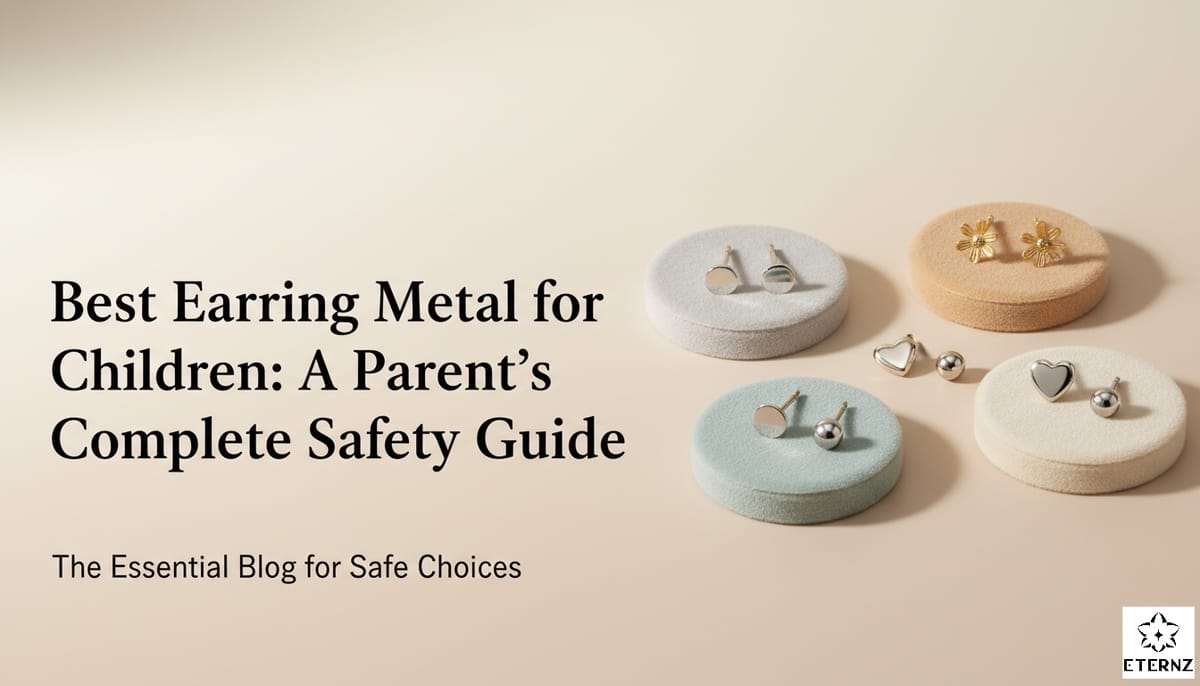
Which earring metal is safest for your child? This guide covers titanium, gold, silver, surgical steel, what to avoid, age-based advice, and Indian traditions explained.
TL;DR
Here is what every parent needs to know upfront:
- Children's skin is more reactive than adult skin. The wrong earring metal causes redness, itching, swelling, and infection, especially in newly pierced ears.
- Titanium (implant-grade) is the safest metal for children's earrings, particularly for new piercings and sensitive skin. It is nickel-free, lightweight, and biocompatible.
- 14K or 18K solid gold (yellow or rose, not white) is the best traditional option and the most common choice for first earrings in Indian households.
- Surgical-grade stainless steel (316L) is a reliable mid-range option but contains trace nickel, so it is not ideal for children with confirmed nickel allergy.
- Sterling silver tarnishes, requires maintenance, and can contain trace nickel in lower-quality versions. It is not the best first-earring metal.
- Avoid: nickel, brass, copper, plated metals, and anything without a disclosed metal composition. These are the most common causes of earring reactions in children.
What We Will Cover in This Guide
Here is a complete roadmap for parents:
- Why children's ears need a different metal standard than adults
- The #1 cause of earring reactions in kids: nickel
- Safe metals ranked: titanium, gold, surgical steel, and more
- Metals to strictly avoid for children
- Age-based guide: what metal is right at each stage
- Indian context: gold and silver traditions explained
- Earring back safety for kids
- Warning signs of a metal reaction
- Decision framework for parents
- FAQs pulled from real parent searches
The safest earring metal for your child is implant-grade titanium for new piercings, and 14K or 18K solid gold for healed ears. Both are nickel-free, skin-safe, and comfortable for extended wear. Every other metal on the market either contains nickel, requires more careful vetting, or comes with conditions that make it a less reliable first choice for children's sensitive skin.

Why Children's Ears Need a Different Standard
Adults and children wear earrings very differently. An adult with healed, seasoned piercings has a layer of established skin lining the piercing channel. A child, especially one with a new piercing, has open, healing tissue in direct contact with whatever metal is sitting in that hole.
That contact is constant. The earring does not come out for weeks during healing. This makes the metal choice for a child's earring less of a style preference and more of a health decision.
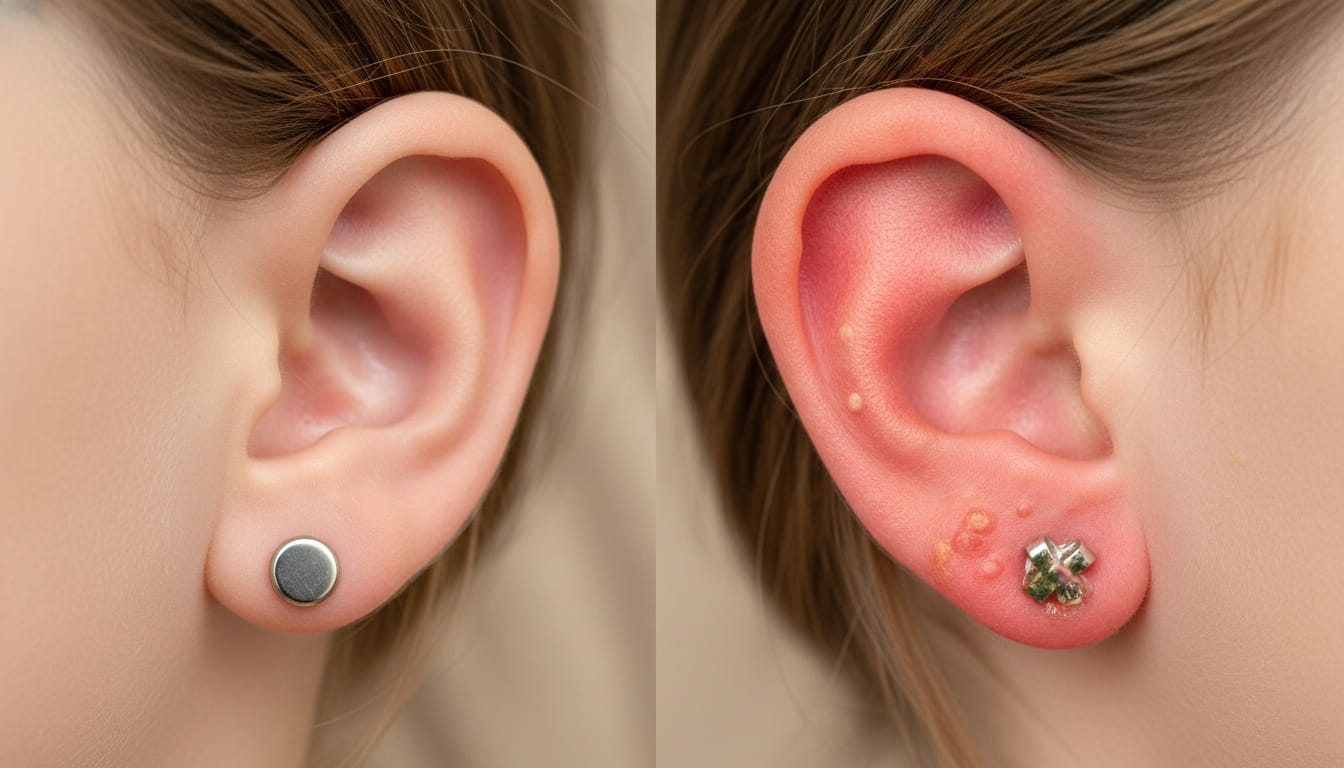
Children's immune systems are also still developing, which makes them more prone to metal sensitivities and contact dermatitis than adults. A metal that an adult wears without issue can trigger a visible, uncomfortable reaction in a child's ear within 24 to 72 hours of contact.
Understanding what causes reactions is the first step. And it almost always comes back to one metal.
The Biggest Culprit: Why Nickel Is the Problem
Nickel is the most common cause of contact dermatitis from earrings in both children and adults. It is cheap, strong, and widely used in fashion jewelry, costume jewelry, and even some earrings marketed specifically for children.
The Challenge with Nickel Reactions
The challenge is that nickel reactions are delayed. Symptoms typically appear 24 to 72 hours after contact, not immediately. This means a child can wear earrings for a day, seem fine, and then develop redness, itching, and swelling by the third day. By that point, the cause is not always obvious.
Where Nickel Hides
Nickel is present in many metals that sound safe on the surface:
- White gold often contains nickel in its alloy
- Lower-quality sterling silver can contain trace nickel
- Surgical stainless steel, despite its clinical name, contains 8 to 14 percent nickel as part of its alloy composition
- Even some metals labeled "nickel-free" have not been independently verified
The Statistics
The American Academy of Dermatology estimates that nickel allergy affects approximately 11 million children in the United States alone. In India, the prevalence of nickel allergy in children is similarly significant, partly because of widespread use of inexpensive fashion jewelry with undisclosed alloy compositions.
The Safest Approach
The safest approach is not to look for low-nickel metals. It is to choose metals that contain no nickel at all. There are several that qualify.
Safe Metals for Children's Earrings
Here are the metals you can trust for your child's ears, ranked from safest to conditional.
1. Implant-Grade Titanium: The Safest Choice for New Piercings
Implant-grade titanium (ASTM F-136) is the metal most recommended by professional piercers, pediatric dermatologists, and ear-piercing specialists for children, especially for first piercings.
Why it is so safe:
- 100 percent nickel-free
- Biocompatible (meaning the body does not treat it as a foreign threat)
- Lightweight
- Corrosion-resistant
The "implant-grade" distinction matters. There are titanium earrings on the market that are titanium-plated or made from titanium alloys that may contain other reactive metals. True implant-grade titanium is the solid metal in its verified medical form, and reputable sellers disclose this clearly.
Why titanium specifically works for children:
- It does not corrode or tarnish, which means it stays clean and does not leach reactive compounds into the healing piercing channel
- It is extremely lightweight, which reduces the physical strain on a small lobe
- Its biocompatibility is backed by decades of use in medical implants, not just jewelry marketing
Best for: First earrings for newly pierced ears, children with known or suspected metal sensitivity, children under 5 where minimizing any reaction risk is the priority.
What to look for: The label "implant-grade titanium" or "ASTM F-136 titanium." Flat-back stud designs (labret style) are the safest shape for children as there are no protruding backs to press into the skin during sleep or play.
2. 14K or 18K Solid Gold: The Best Traditional Option
Solid gold has been used for children's earrings across Indian households and many other cultures for centuries, and the tradition holds up scientifically. High-karat solid gold is nickel-free (in its yellow and rose forms), durable, and well-tolerated by most skin types, including sensitive children's skin.
The karat matters significantly here.
| Karat | Purity | Safety for Children |
|---|---|---|
| 22K and 24K gold | Very high gold content | Safe, but relatively soft. Can bend or deform with physical activity. |
| 18K gold | 75% pure gold | Strongest sweet spot. Durable enough for active wear and gentle on skin. Yellow and rose gold at 18K contain no nickel. |
| 14K gold | 58.3% pure gold | Generally safe for most children, but contains a higher proportion of alloy metals than 18K, which can occasionally cause reactions in very sensitive skin. |
Important warning about gold-plated earrings:
Gold-plated earrings are not the same as solid gold. Plating wears off, especially with children's active wear. Once the plating is gone, the underlying base metal (often brass or copper) is exposed directly to the piercing. This is a common cause of delayed reactions in children whose parents assumed gold-plated earrings were safe.
Best for: Children with healed piercings, first earrings in the Indian tradition (particularly 22K or 18K yellow gold), and long-term daily wear earrings.
What to look for: A hallmark stamp (22K, 18K, or 14K) on the earring. Absence of a stamp is a red flag. For Indian parents, BIS-hallmarked gold is the reliable standard.
3. Surgical-Grade Stainless Steel (316L): A Reliable But Conditional Option
Surgical-grade stainless steel (specifically 316L grade) is a widely used and generally safe option for children's earrings in healed piercings. It is affordable, durable, and corrosion-resistant.
The important caveat: Surgical stainless steel contains 8 to 14 percent nickel as part of its alloy. In most cases, this nickel is tightly bound within the metal structure and does not leach significantly. For children without a confirmed nickel allergy, 316L stainless steel is generally safe and well-tolerated.
For children with a known or suspected nickel allergy, it should be avoided in favour of titanium or solid gold.
The "surgical" label warning: The term "surgical steel" is not regulated. Earrings sold as surgical steel without a grade specification (316L or 316LVM) may contain significantly higher nickel levels than true implant-quality steel. Always verify the grade before purchasing.
Best for: Children with healed piercings and no known nickel sensitivity, as an affordable middle-ground option between fashion jewelry and fine metals.
4. Sterling Silver (925): Use With Caution
Sterling silver (92.5 percent pure silver, 7.5 percent other metals) is a popular choice for children's earrings and appears frequently in Indian fashion and silver jewelry traditions. The comfort it offers depends significantly on the quality of the specific piece.
The issue with the alloy: Pure silver is hypoallergenic. The issue is the 7.5 percent alloy component, which in lower-quality sterling silver can include trace nickel. High-quality 925 sterling silver from reputable manufacturers is usually nickel-free and safe for most children.
The tarnish problem: Sterling silver also tarnishes with exposure to air and moisture. A tarnished earring in a child's ear introduces oxidized metal compounds into contact with skin, which can cause irritation even in children with no formal metal allergy.
Best for: Children with healed piercings and no known nickel sensitivity, provided the silver is high-quality 925 with a nickel-free confirmation from the manufacturer.
Not recommended for: New piercings, children with sensitive or reactive skin, or any situation where the earring will not be cleaned and maintained regularly.
5. Platinum: Safe But Rarely Practical
Platinum is 100 percent hypoallergenic, highly durable, and completely nickel-free. It is one of the safest metals for earrings.
The limitation is price. Platinum earrings cost significantly more than gold or titanium and are rarely practical as everyday children's earrings. For parents who want the absolute highest-safety fine jewelry option and budget is not a constraint, platinum is a valid choice.
Metals to Strictly Avoid for Children's Earrings
Some metals should never be the material touching a child's piercing, regardless of how attractive the earring looks or how inexpensive it is.
| Metal | Why to Avoid |
|---|---|
| Nickel | The primary cause of earring reactions. Present in many fashion jewelry pieces, costume earrings, and lower-quality metals. |
| Brass | A copper-zinc alloy that often contains nickel and corrodes easily. Very commonly used in inexpensive children's fashion earrings. |
| Copper | Causes a greenish discoloration of the skin and can trigger contact dermatitis. Often present in alloys. |
| Any plated or coated metal without a disclosed base material | When the plating wears off, the base metal is in direct contact with the piercing. If the base metal is not disclosed, there is no way to confirm it is safe. |
| "Hypoallergenic" without metal disclosure | This label is not regulated. An earring can be marketed as hypoallergenic and still contain nickel. Always look for the actual metal composition, not just the marketing label. |
Quick Reference Table: Metals at a Glance
| Metal | Safe for Children? | Notes |
|---|---|---|
| Implant-grade titanium (ASTM F-136) | Yes, fully safe | Best for new piercings and sensitive skin |
| 22K / 18K solid yellow or rose gold | Yes, safe | Traditional Indian choice, nickel-free |
| 14K solid yellow or rose gold | Generally safe | Small nickel risk in very sensitive skin |
| 18K white gold | Use with caution | Often contains nickel in alloy |
| Surgical stainless steel (316L) | Conditional | Safe for healed ears, not for nickel allergy |
| 925 Sterling silver (quality verified) | Conditional | Safe if nickel-free confirmed, needs maintenance |
| Platinum | Yes, fully safe | Expensive, rarely used for children |
| Brass, copper, nickel | No | Common allergens, avoid entirely |
| Gold-plated or silver-plated | No | Plating wears off, exposes base metal |
| Unspecified "hypoallergenic" | No | Label not regulated, composition unclear |
Age-Based Guide: Which Metal at Each Stage
Children's earring needs are not the same across all ages. The right metal choice also depends on where the child is developmentally.
Infants and Babies (Under 2 Years)
This is the most delicate and highest-risk stage for earring wear. Healing tissue is most vulnerable, and the child cannot communicate discomfort.
- Recommended metals: Implant-grade titanium flat-back studs OR solid 22K / 18K gold studs
- Closure type: Screw-back closures are essential to prevent accidental removal and choking hazards
- Indian tradition context: It is common to pierce baby girl's ears within the first few months of life during the Karnavedha ceremony. In this context, 22K gold studs from a BIS-hallmarked jeweler are the culturally appropriate and clinically acceptable choice.
Toddlers and Young Children (2 to 6 Years)
Children in this age group are physically active and often touch their ears. The earring back security is as important as the metal at this stage.
- Recommended metals: Implant-grade titanium or 18K solid gold studs
- Closure type: Flat backs or screw backs are the safest combination
- Style warning: Avoid dangle or hoop earrings as they can be grabbed, pulled, or caught on clothing and hair
School-Age Children (6 to 12 Years)
By this stage, most children have had their piercings for some time. The piercing channel is established.
- Recommended metals: Solid gold (18K or 14K), surgical-grade stainless steel (316L), and high-quality 925 sterling silver all become viable options
- Style note: This is also the age when children start wanting more design variety, and the expanded range of titanium and silver earrings at this stage means there is no need to compromise on safety for style
Preteens (12 Years and Above)
Skin and immune response are closer to adult standards at this age.
- Recommended metals: The full range of safe metals is appropriate, including high-quality sterling silver, 14K gold, and titanium in design-forward styles
- Parenting tip: This is also typically when children want more input into their own earring choices, so involving them in the decision with a clear framework of what is safe makes the process easier for everyone
Indian Context: Gold and Silver Traditions
In India, gold and silver earrings for children carry cultural and religious significance well beyond the aesthetic. Understanding this context helps Indian parents make choices that are both traditional and safe.
Gold Earrings in Indian Tradition
The Karnavedha (ear-piercing ceremony) is a traditional rite of passage in many Hindu families, typically performed during infancy. Gold, particularly 22K gold, is the culturally and religiously prescribed metal.
From a skin safety standpoint, this tradition is well-founded. High-karat yellow gold is nickel-free and one of the safest metals for newly pierced ears. BIS-hallmarked gold from a certified jeweler is the standard to look for.
Silver Earrings in Indian Tradition
Silver payal, earrings, and accessories have long been worn by children in many Indian households, particularly in rural and traditional contexts. Pure silver is hypoallergenic.
The caution applies to lower-quality silver jewelry from unverified sources, which may contain nickel or other reactive metals in the alloy. For everyday silver earrings for children, look for 925-stamped pieces from quality jewelers.
Fashion and Costume Jewelry for Children
The widespread availability of inexpensive fashion jewelry for children in India, particularly at local markets and unregulated online platforms, carries a higher risk. These pieces often use brass, copper, or unspecified alloys with undisclosed nickel content.
For children's earrings specifically, quality-verified metals are worth the additional cost.
Earring Back Safety for Children
The metal of the earring post is only part of the safety equation. The earring back matters equally, particularly for children.
Ranking of Earring Backs for Safety
| Type | Safety Level | Best For |
|---|---|---|
| Screw backs | Safest option | Infants, toddlers, and young children. They physically screw onto the post and cannot be accidentally removed. Removes the choking hazard risk of a loose backing. |
| Flat backs (labret style) | Excellent alternative | Children who sleep with their earrings in (required during full healing period). The back sits flush against the skin inside the ear, with no protruding parts. |
| Butterfly backs | Least safe for young children | Most common but can loosen with active movement, become small choking hazards, and can press too tightly against the lobe if pushed in too far. |
| Hook backs, lever backs, open-loop closures | Avoid | Too easy to snag on hair, clothing, and bedding. |
Warning Signs of a Metal Reaction
Even with a safe metal, it is worth knowing what a reaction looks like so you can act quickly if one occurs.
Early Signs (24 to 72 hours after wearing)
- Redness or pinkness around the piercing that does not fade within a day
- Itching at the lobe or around the earring
- Slight swelling or warmth around the piercing
Signs That Require Removing the Earring and Consulting a Doctor
- Discharge (yellow, green, or clear fluid that is not part of normal healing)
- Significant swelling or pain
- A rash spreading beyond the immediate piercing area
- The earring back appearing to embed into the lobe (this happens when the back is pressed too tightly)
What to Do If a Reaction Occurs
- Remove the earring immediately.
- Clean the area with saline solution.
- Do not reinsert any earring until the reaction has fully resolved.
- When you do, switch to titanium or high-karat solid gold.
- A pediatrician or dermatologist can confirm whether the reaction is a nickel allergy through patch testing.
Decision Framework for Parents
Use this checklist before buying any earring for your child.
Step 1: Is the piercing new or healed?
- New piercing → Implant-grade titanium flat-back studs only. No exceptions during healing.
- Healed piercing → Titanium, 18K solid gold, or verified 316L surgical steel.
Step 2: Does your child have sensitive skin or a known metal reaction?
- Known nickel allergy → Titanium only. Avoid stainless steel.
- Sensitive skin with no confirmed allergy → Titanium or 18K solid gold. Avoid plated metals.
- No known sensitivity → Any verified safe metal from the list above.
Step 3: What is your child's age?
- Under 2 → Implant-grade titanium or 22K / 18K gold studs with screw backs.
- 2 to 6 → Same, with flat-back or screw-back priority for active wear.
- 6 to 12 → Full range of safe metals. Still avoid fashion jewelry with unverified composition.
- 12 and above → Adult-equivalent safe metal range.
Step 4: Is the metal composition disclosed by the seller?
- Composition clearly disclosed and verified → Proceed.
- Labelled only as "hypoallergenic" with no metal specifics → Do not buy.
- No metal information provided → Do not buy.
Run through these four questions and the right earring for your child will be clear before you shop.
Where to Find Safe Earrings for Children
If you want to browse safe, quality earrings for children across all of these metal categories, Eternz brings together 300+ jewelry brands including Giva, Palmonas, and Kushal's, covering everything from BIS-hallmarked gold studs to titanium and sterling silver options for children.
For a deeper understanding of metals, styles, closures, and long-term care, explore this ultimate guide to earrings before making your final purchase decision.
Conclusion
The metal of your child's earring is not a minor styling detail. For a newly pierced ear especially, it is a health decision that affects healing, comfort, and long-term skin sensitivity.
The Bottom Line
- Start with the safest option: Implant-grade titanium for new piercings, 18K or 22K solid gold for the Indian tradition.
- Once the piercing is healed, verified surgical steel and quality sterling silver become reasonable options for children without nickel sensitivity.
- Avoid anything with an undisclosed metal composition, any plated earring for everyday wear, and anything marketed purely as "hypoallergenic" without telling you the actual metal.
The composition is the only information that matters.
Your child's earring will sit in contact with their skin for most of their waking hours. Getting the metal right from the beginning makes everything else—comfort, healing, and long-term wear—significantly easier.
Frequently Asked Questions (FAQs)
1. Which metal is safest for a child's first earrings?
Implant-grade titanium (ASTM F-136) is the safest choice for a child's first earrings, especially for a new piercing. It is 100 percent nickel-free, biocompatible, and lightweight. For Indian families following the tradition of gold, 22K or 18K solid yellow gold from a BIS-certified jeweler is equally safe and culturally appropriate.
2. Is gold or silver better for children's earrings?
Solid gold (18K or 22K) is generally safer than sterling silver for children. High-karat yellow and rose gold are nickel-free and skin-safe. Sterling silver can be safe in high-quality 925 form, but it tarnishes, requires maintenance, and may contain trace nickel in lower-quality versions. For a child with sensitive skin, solid gold is the more reliable choice.
3. Is surgical steel safe for kids' ears?
316L surgical-grade stainless steel is safe for most children with healed piercings and no nickel allergy. However, it does contain 8 to 14 percent nickel as part of its alloy, which is tightly bound and does not typically leach. For children with a confirmed nickel allergy or for new piercings, titanium is the safer choice.
4. Can children wear sterling silver earrings?
Yes, with conditions. High-quality 925 sterling silver that is verified nickel-free is generally safe for children with healed piercings and no nickel sensitivity. Avoid lower-quality silver earrings without a 925 stamp and avoid sterling silver for newly pierced ears. Silver also requires regular cleaning to prevent tarnish build-up, which can irritate the ear.
5. How do I know if my child is allergic to their earring metal?
The most common signs appear 24 to 72 hours after wearing: redness, itching, swelling, or discharge around the piercing. If these appear, remove the earring, clean the area with saline, and switch to titanium or solid gold once healed. A pediatrician or dermatologist can confirm a nickel allergy through a simple patch test.
6. What earrings are safe for a newly pierced child's ear?
Implant-grade titanium flat-back studs or 18K / 22K solid gold studs with screw backs are the safest choices for a newly pierced child's ear. The earrings should not be removed during the full healing period, which is 6 to 8 weeks for lobe piercings. Avoid any earring with an undisclosed metal composition or a plated finish.
7. What earring backs are safest for children?
Screw backs and flat backs (labret-style) are the safest earring backs for children. Screw backs physically thread onto the post and cannot be accidentally removed, eliminating choking hazard risk. Flat backs sit flush against the skin, making them comfortable for sleep and active wear. Butterfly backs are the least safe for young children as they can loosen and fall off.