Ultimate Guide to Earrings: Types, Styles, Trends, Care, and How to Choose the Perfect Pair
The ultimate guide to earrings: covers all types, face shape tips, occasion styling, metals, Indian styles, earring care, sensitive ears, and a full decision framework.
TL;DR
- Earrings are the single most face-altering accessory you own. The right pair sharpens your features. The wrong one works against them.
- There are 10 core earring types every shopper should know, from studs and hoops to jhumkas, chandbalis, and ear cuffs.
- Your face shape, neckline, hair length, and occasion are the four filters that lead you to the right pair every time.
- Metal choice matters for more than aesthetics. Gold, silver, platinum, and titanium each have different skin compatibility, durability, and care needs.
- Earring care is simple but often ignored. Most damage happens through storage, not wear.
- Trends come and go. Studs, hoops, and jhumkas have never left and never will. Build your wardrobe around these first.
What We Cover:
- The 10 essential earring types with clear descriptions
- Earring backs: what they are and why they matter
- How face shape determines which earring style flatters you
- Earrings by occasion: office, festive, bridal, and everyday
- Hair length and how it changes your earring choice
- Metals guide: gold, silver, platinum, titanium, and what suits sensitive skin
- Indian earring styles and when they belong
- How to care for your earrings at home
- Sensitive ears, hypoallergenic options, and ear health
- Current earring trends and which ones are here to stay
- Men's earrings: what is trending and what to know
- Earrings for kids and newly pierced ears
- A complete decision framework before you buy
Earrings are the closest accessory to your face. They frame your eyes, define your jawline, and set the tone for every other styling decision you make. No other piece of jewelry has that kind of direct influence over how your features read.
And yet most people choose earrings the same way they choose a snack. They pick what looks good in the moment without thinking about whether it actually suits them. The result is a jewelry box full of beautiful pieces that rarely leave the drawer because they never quite feel right on.
This guide changes that. It is the only earrings reference you need, whether you are buying your first pair, rebuilding your collection, shopping for a wedding, or figuring out what works for sensitive ears, a child's new piercing, or a festive Indian outfit.
Every major topic is covered here. Where there is more to explore, this guide links you directly to the in-depth resource so you can go as deep as you need to on any subject.
Part 1: The 10 Essential Earring Types
Understanding earring types is the foundation of everything else. Once you know what each style is and how it behaves visually, every pairing and styling decision becomes much easier.
1. Stud Earrings
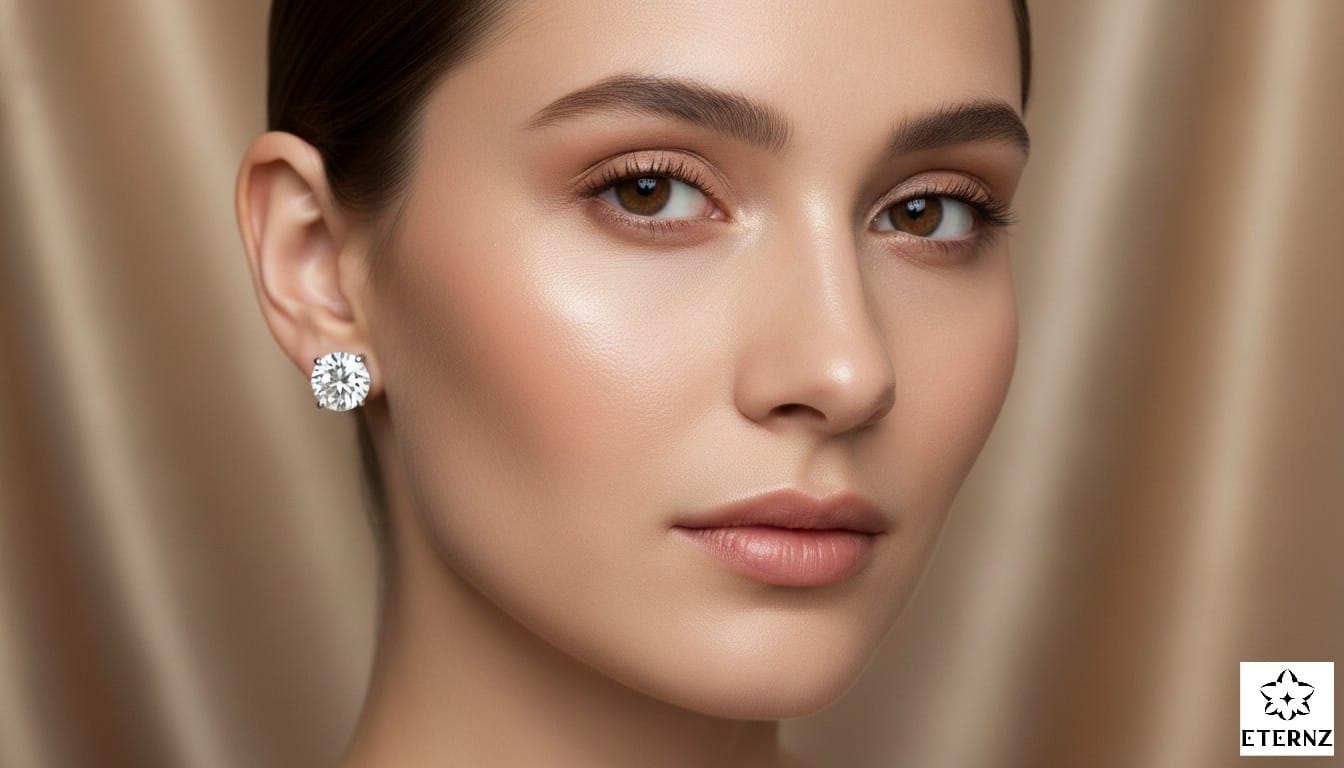
Studs are the most fundamental earring in any wardrobe. They sit flat against the earlobe with no drop or dangle, held in place by a post and back. The design is minimal, which makes studs universally wearable across every face shape, age group, and occasion.
Diamond studs, pearl studs, and simple gold ball studs are the three most versatile investments in earrings. They work equally well at a Monday morning meeting and a Saturday wedding.
2. Hoop Earrings
Hoops are circular or semi-circular earrings that form a complete loop through the lobe. Size determines everything with hoops: small hoops (under 20mm) are understated and office-friendly, medium hoops (30–50mm) work for most casual and social occasions, and large hoops (60mm and above) make a bold statement suited for evenings and events.
Hoops have never gone out of style. They are one of the safest investments in earrings because they remain relevant through every trend cycle.
3. Drop Earrings
Drop earrings hang just below the earlobe, typically featuring a single element like a gemstone, pearl, or metal shape suspended from a post or hook. They add visual length to the neck without the movement of danglers, making them versatile for both work and evening wear.
4. Dangle Earrings
Dangler earrings move. They feature multiple components or chains that swing freely below the ear and catch light as you move. This movement is exactly what makes them suited for events and occasions rather than everyday wear.
5. Chandelier Earrings
Chandeliers are the most dramatic earring in western jewelry. They feature a tiered, branching structure that widens as it descends, often set with multiple gemstones or metal elements. They are occasion pieces by definition, best suited to formal events, weddings, and parties where the outfit is simple enough for the earrings to lead.
6. Huggie Earrings
Huggies are small hoop earrings designed to sit snugly against the earlobe. They are among the most comfortable earrings to wear for long hours and are a popular choice for everyday wear and curated ear stacks. Often pavé-set with diamonds or gemstones, huggies are one of the most versatile fine jewelry earring styles available.
7. Ear Cuffs
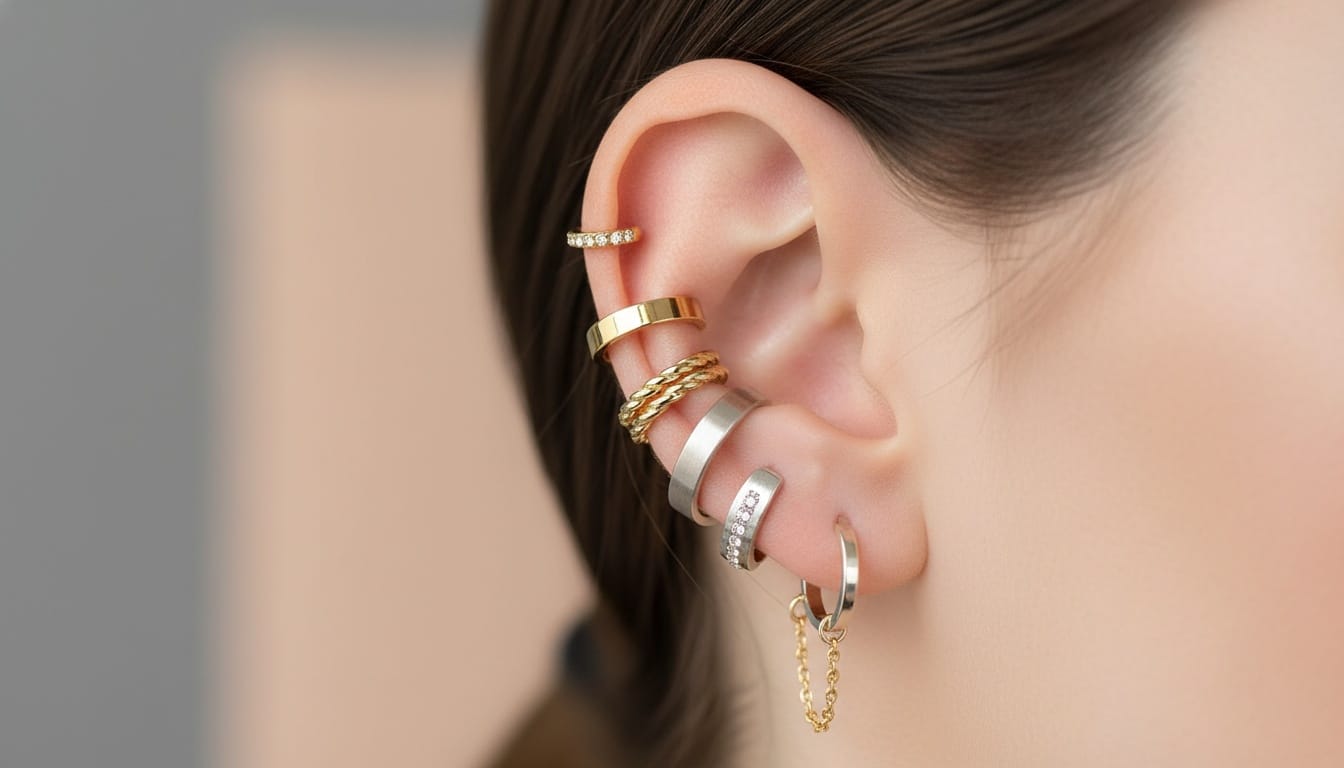
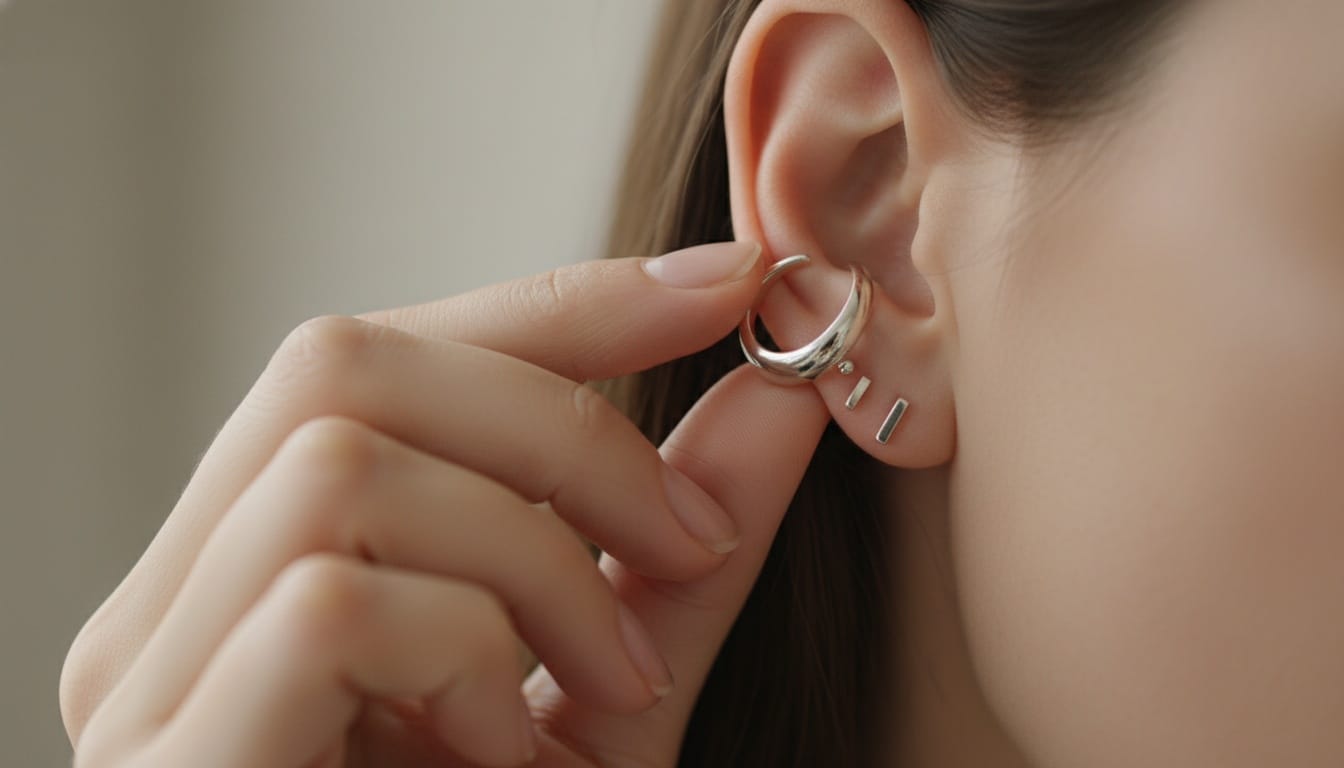
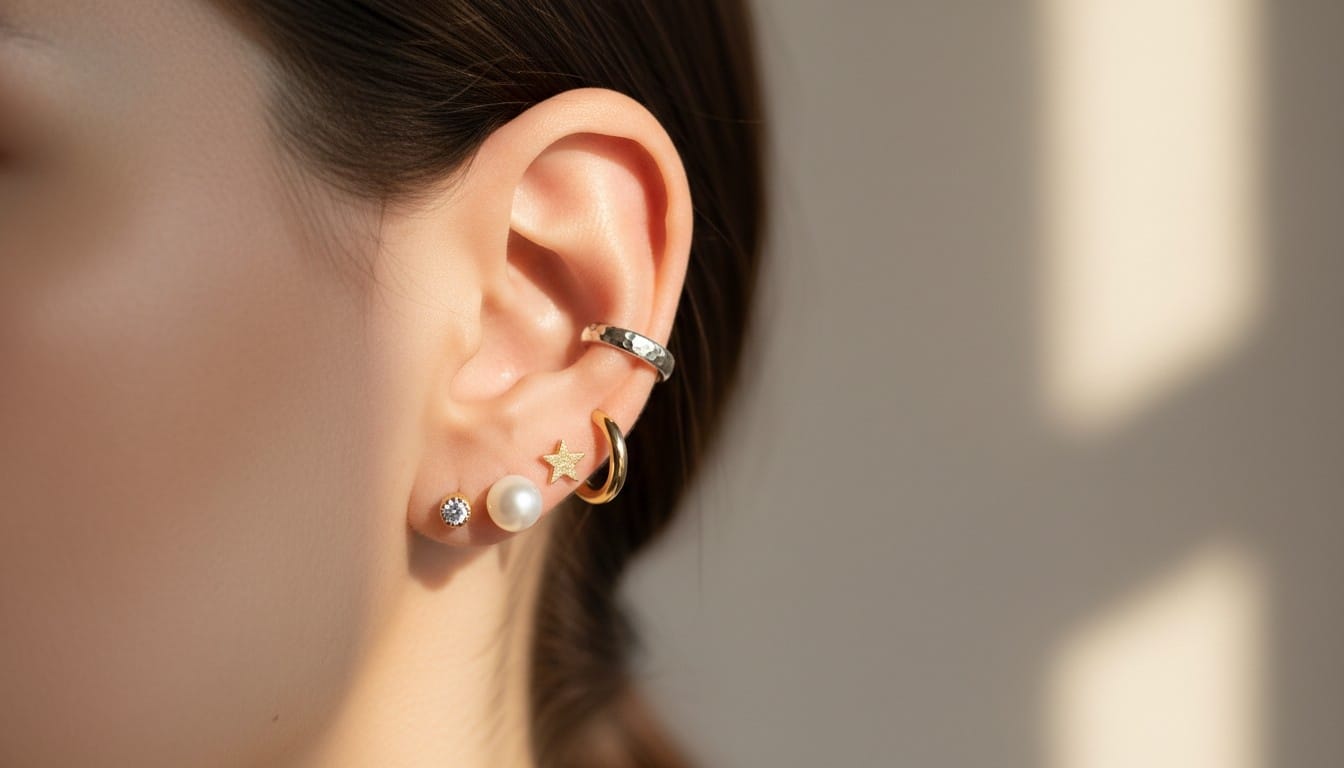
Ear cuffs clip onto the outer edge of the ear without needing a piercing. They range from minimal single bands to elaborate gem-set designs. Their ability to be worn without a piercing makes them increasingly popular, and they work particularly well layered with studs and small hoops for a curated ear look.
8. Jhumkas
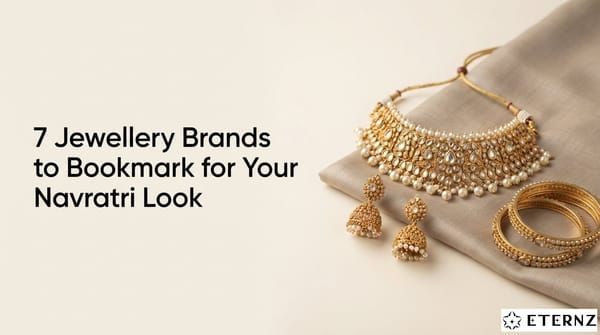
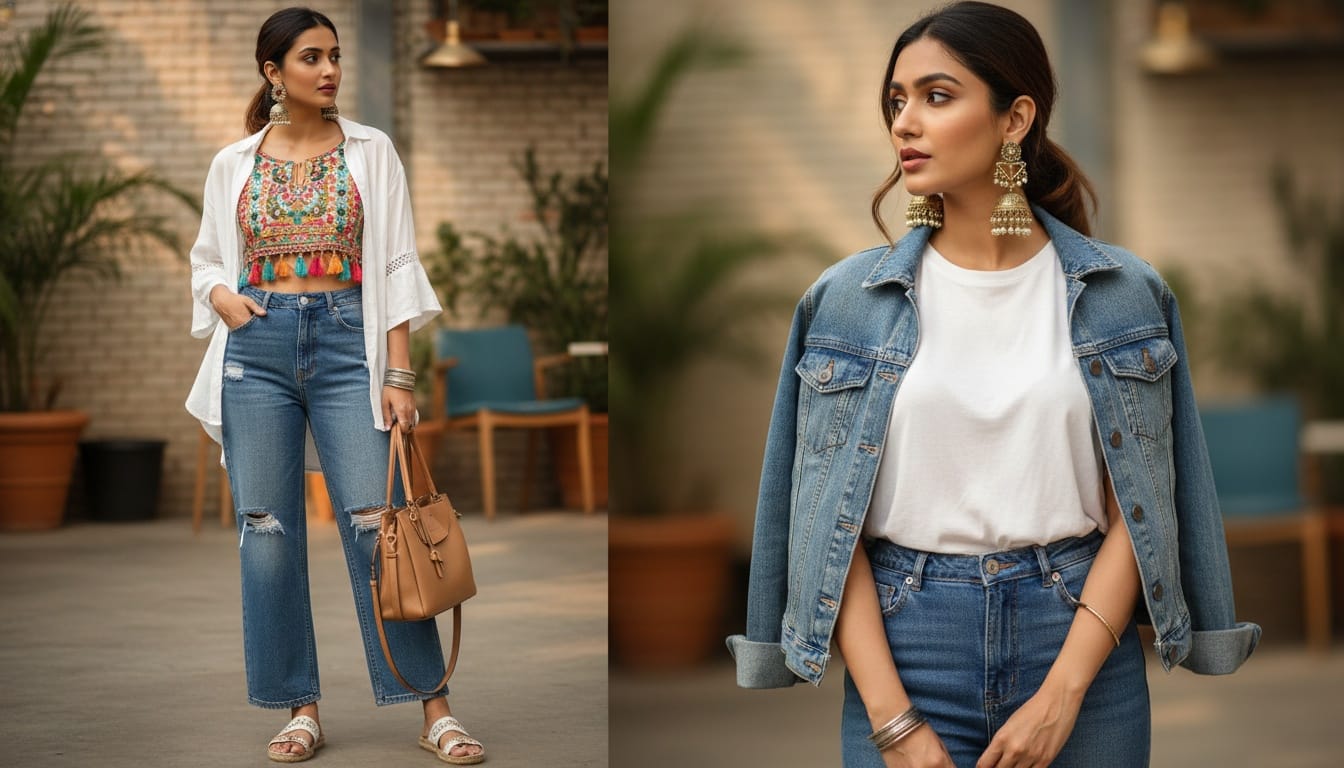
Jhumkas are bell-shaped drop earrings with a rounded dome at the top and a flared, hanging portion below. They are one of the oldest and most iconic earring forms in Indian jewelry and exist across every price point, from simple gold jhumkas to heavily embellished kundan and polki versions. No Indian jewelry wardrobe is complete without at least one pair.
9. Chandbalis
Chandbalis are crescent-shaped earrings originating in Mughal-era Indian jewelry. The name literally means "moon-shaped." They typically feature intricate stonework, meenakari detailing, or pearl drops and are one of the most striking traditional earring styles in Indian fashion. They are a stronger styling statement than jhumkas and suit formal, festive, and bridal contexts.
10. Threader and Climber Earrings
Threaders are thin chains that pass through the piercing and hang at different lengths on both sides. Climbers, also called crawler earrings, follow the curve of the earlobe upward, creating the effect of multiple piercings with a single piece. Both are contemporary styles that have grown significantly in popularity as curated ear aesthetics have become mainstream.
Part 2: Earring Backs — The Detail That Determines Comfort
Most people ignore earring backs until one goes missing or starts hurting. Understanding backs before you buy saves you from both problems.
Butterfly / Friction Back: The most common type. Easy to put on, suits studs and small earrings. Can loosen over time with regular use. Replace them if they feel loose.
Screw Back: Screws onto the post for a much more secure hold. Standard on high-value diamond and gold studs. Takes slightly more time to fasten but does not loosen unexpectedly.
Lever Back: A hinged mechanism that clips shut behind the ear. Found on drop and dangle earrings. Elegant, secure, and easy to open and close.
Latch Back / Hinged Clicker: Common in hoops and huggies. Snaps shut cleanly and creates a seamless look. Very secure and well-suited for daily wear.
Push Back / La Pousette: A spring-loaded back that clicks onto the post. More secure than a standard butterfly back. Preferred by many for heavier earrings.
The rule of thumb: the heavier and more valuable the earring, the more secure the back needs to be. For diamond studs and heavy chandeliers, screw backs and latch backs are worth the extra few seconds they take to fasten.
Part 3: How to Choose Earrings for Your Face Shape
Face shape is one of the two most important factors in earring selection. Your earrings sit at eye level and directly frame your features. The wrong shape creates imbalance. The right one works with your bone structure in a way that feels effortless.
Round Face: The goal is to add vertical length and reduce the visual width of the face. Long drop earrings, slim danglers, and angular geometric styles all work in your favor. Avoid round hoops and wide circular designs that mirror and amplify the face's shape.
Oval Face: The most forgiving face shape for earrings. Nearly every style works. Use neckline, occasion, and personal preference as your primary decision filters.
Square Face: The goal is to soften the strong, angular jawline. Hoops, circular drops, teardrop shapes, and curved designs introduce softness. Avoid very angular or geometric earrings that add more hard lines to an already strong jaw.
Heart-Shaped Face: Wider at the forehead, narrower at the chin. Earrings wider at the bottom, such as teardrop and chandelier styles, balance the proportions. Avoid very wide top-heavy earrings that echo the broad forehead.
Long or Rectangular Face: Wider styles like large hoops, cluster studs, and short drops add horizontal width and balance the face's length. Very long earrings can elongate the face further.
Diamond Face: High cheekbones, narrow forehead and chin. Curved, soft designs and teardrop shapes complement the angular cheekbones. Avoid styles that emphasize the widest point of the face.
Part 4: Earrings by Occasion
Occasion is the second major filter after face shape. The same earring style can look perfectly appropriate in one setting and completely out of place in another.
Everyday and Office Wear
For everyday & office wear Studs, huggies, and small hoops are the workhorses of an earring wardrobe. They add polish without demanding attention. For office environments, keep the length at or just below the earlobe and the design simple. Slim gold or silver hoops, pearl studs, and diamond studs are the three safest choices for professional settings.
Lightweight is key. Earrings worn for eight or more hours need to be comfortable. Heavy chandeliers and long danglers are not daily wear pieces regardless of how beautiful they are.
Festive and Party Wear
This is where statement earrings come in. Chandeliers, large hoops, long jhumkas, and bold colored gemstone drops all fit here. The principle is simple: the more the occasion invites attention, the more your earrings can contribute to that attention.
For Indian festive occasions like Diwali, Navratri, Eid, and Puja, jhumkas, chandbalis, and polki or kundan drops are the natural choice. Match the richness of the earring to the richness of the fabric.
Bridal and Wedding
Bridal earring selection depends on two factors: the wedding outfit and the neckline of the blouse or dress.
For Indian bridal wear, the neckline of the blouse determines the earring before anything else. Deep V blouses take long jhumkas or chandbalis. Round neck blouses take chandbalis or long drops. Covered blouses take bold statement pieces with strong presence. For western bridal looks, the dress neckline applies the same logic: open and low means longer and bolder, high or covered means closer to the face.
Casual and Weekend Wear
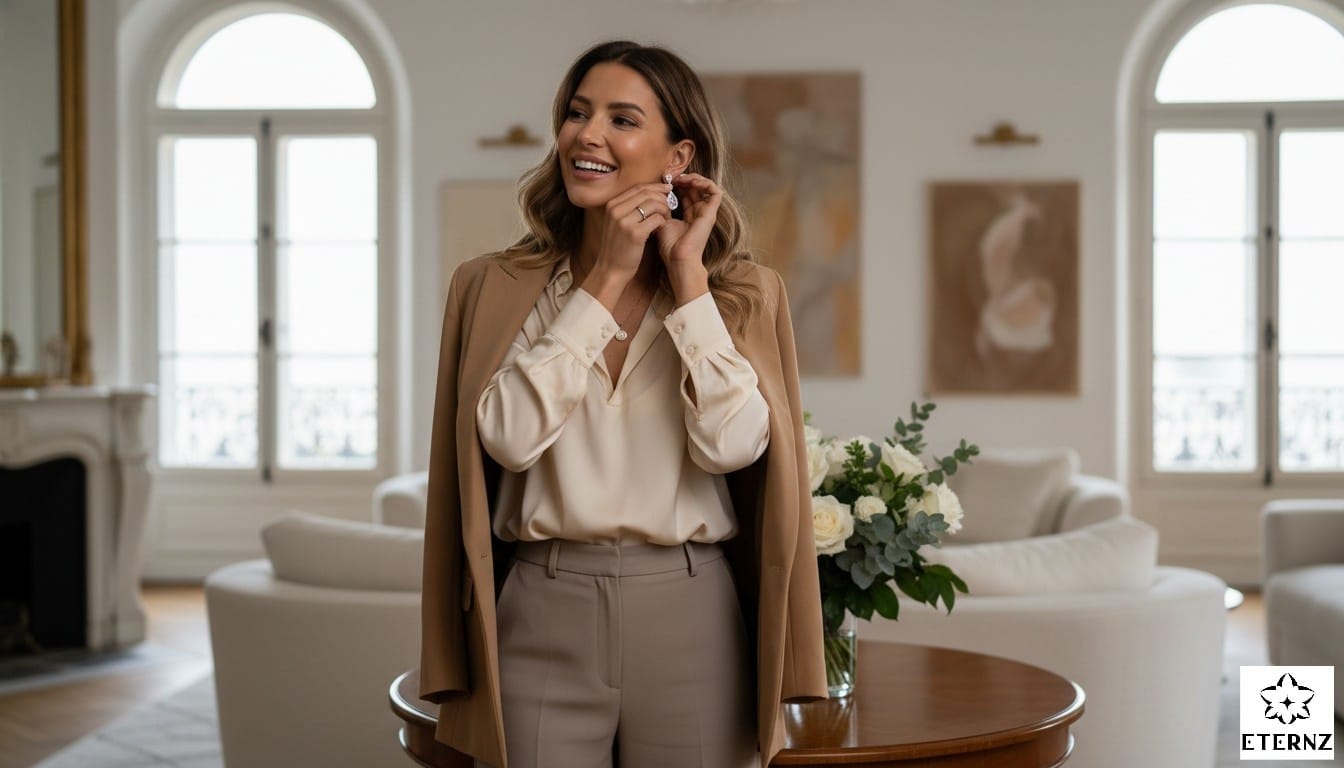
This is the most personal and experimental category. Threaders, mismatched pairs, tassel earrings, geometric shapes, and colorful beaded styles all find their place here. Casual wear has the lowest styling stakes, which makes it the best time to try styles outside your comfort zone.
Part 5: Hair Length and Earring Choice
Hair is the immediate context your earrings live in. It affects what is visible, what is hidden, and how much visual space your earrings have to work with.
Short Hair (Pixie, Bob, Cropped): The ears are fully visible with no hair competing for attention. This is actually the most powerful hair length for earrings because your chosen pair gets the entire stage. Statement hoops, long danglers, and bold chandeliers all look exceptionally strong with short hair.
Medium Hair (Collarbone Length): The ear is often partially covered depending on styling. Earrings with presence, either through size, length, or color, work better than very delicate pieces that get lost. Medium drops, hoops, and jhumkas all navigate this length well.
Long Hair (Below the Shoulder): Long, open hair covers the ear most of the time. Earrings need either size or length (or both) to peek through. Large hoops, long danglers, and shoulder-grazing jhumkas work. Very small studs disappear entirely under long hair. If wearing hair down, pull it behind one ear to give at least one earring full visibility.
Hair Tied Up (Updo, Bun, Ponytail): This is the equivalent of short hair for earring visibility. Full visibility means full freedom. Use it for your boldest, most statement pairs.
Part 6: Metals and Materials — What to Know Before You Buy
The metal your earrings are made of affects how they look, how long they last, how they feel on your skin, and whether they are safe for sensitive ears.
Gold
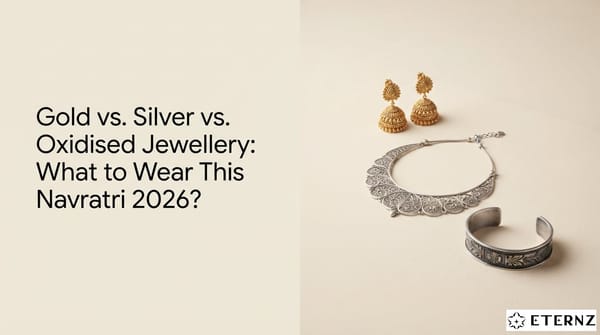
Gold is the standard for fine jewelry earrings. Its resistance to tarnish and its skin compatibility make it ideal for long-term wear. Gold earrings are measured in karats: 24K is pure gold (too soft for most jewelry), 22K is the most common in Indian traditional jewelry, and 18K and 14K are the most common in fine jewelry globally. Lower karats contain more alloy metals, which occasionally causes reactions in sensitive skin.
Yellow gold works with warm skin tones. White gold suits cooler tones. Rose gold is among the most universally flattering and has remained a consistent seller through every trend cycle.
Silver
Sterling silver (92.5% pure silver) is the most common silver used in jewelry. It is significantly more affordable than gold and works beautifully in both traditional and contemporary designs. The catch: silver tarnishes with air and moisture exposure and requires regular cleaning to stay bright. It is a practical choice for everyday fashion jewelry but requires more maintenance than gold.
Platinum
Platinum is denser, rarer, and more durable than gold. It does not tarnish, does not require rhodium plating, and is naturally white. It is hypoallergenic, making it one of the safest choices for sensitive skin. The trade-off is price: platinum earrings are significantly more expensive than gold equivalents.
Titanium and Surgical Steel
For newly pierced ears, sensitive ears, and children, titanium and implant-grade surgical steel are the recommended materials. They are hypoallergenic, lightweight, and highly resistant to corrosion. Titanium in particular is the go-to recommendation for those who react to most metals.
What to Avoid for Sensitive Skin
Nickel is the most common cause of metal allergies in earrings. It is often used in lower-cost fashion jewelry as a base metal. If you or your child experiences redness, itching, or discharge from earrings, nickel is usually the first suspect. Switch to titanium, surgical steel, or 18K+ gold and the reaction will typically resolve.
Part 7: Indian Earring Styles — A Vocabulary of Their Own
Indian jewelry has one of the richest earring vocabularies in the world. Each style carries its own regional identity, cultural context, and styling logic.
Jhumka: The bell-shaped drop earring. Available across every price point and suitable for everything from casual ethnic wear to bridal looks. The single most versatile Indian earring style.
Chandbali: The crescent-shaped statement earring. More formal and ornate than jhumkas. Suits festive and bridal occasions. Pairs exceptionally well with round-neck and off-shoulder necklines by adding the vertical length those necklines need.
Kundan Earrings: Feature uncut gemstones set in refined gold foil. One of the oldest jewelry techniques in India and a cornerstone of Rajasthani and Mughal jewelry traditions. Kundan earrings are a common choice for weddings and formal festive events.
Polki Earrings: Similar to kundan but feature uncut, unpolished diamonds set in gold. The raw diamond faces give polki its characteristic soft, warm glow. Often used in bridal sets.
Meenakari Earrings: Distinguish themselves through enamel detailing in vivid colors: red, green, blue, and white are the most traditional. Meenakari work originated in Rajasthan and remains a defining feature of north Indian festive jewelry.
Bahubali Earrings: Named after the film, these are large, layered statement earrings that combine multiple design elements: chains, pearls, stones, and drops. They are heavy, dramatic, and suited to strong necklines and bridal occasions.
Ear Chains / Kaan Chain: Earrings that attach at the lobe and connect via a chain to a hair pin or maang tikka. A traditional South Indian and Rajasthani style that has seen significant revival in contemporary bridal fashion.
Understanding these styles helps you shop with precision and style Indian outfits with the right earring vocabulary rather than defaulting to the same pair for every occasion.
Part 8: Earring Care at Home
Earrings are often the last accessory people think about when it comes to maintenance. A few simple habits extend the life of any pair significantly.
General Rules for All Earrings
Put earrings on last, after makeup, perfume, and hairspray. Chemicals in these products accelerate tarnishing and damage gemstone finishes. Remove earrings first when coming home, before washing your face or showering. Store earrings individually, ideally in a fabric-lined box or small zip pouches, to prevent scratching and tangling.
Gold Earrings
Warm water, a drop of mild dish soap, and a soft cloth or a very soft toothbrush is all you need. Gently clean around settings and stones. Rinse thoroughly and dry completely before storing. Avoid ultrasonic cleaners for gold earrings with fragile or porous gemstones.
Silver Earrings
Silver tarnishes faster than any other jewelry metal because it reacts to sulfur compounds in the air. Clean with a silver polishing cloth regularly. For heavier tarnish, a paste of baking soda and water applied gently with a soft cloth works effectively. Rinse thoroughly and dry completely. Store silver earrings in airtight pouches or anti-tarnish cloth bags to slow the tarnishing process between wears.
Fashion and Plated Earrings
These require the gentlest care. Wipe clean with a soft, dry cloth after each wear. Avoid water and moisture entirely, as it accelerates the wearing off of the plating. Never use chemical cleaners or abrasive cloths on fashion jewelry.
Part 9: Sensitive Ears, Hypoallergenic Metals, and Ear Health
Earring-related ear irritation is more common than most people realize, and most cases are preventable with the right material choice.
The most frequent cause of irritation is nickel allergy, which affects a significant portion of the population. Symptoms include redness, itching, swelling, and discharge around the piercing. If you have experienced any of these, nickel is almost certainly the culprit.
Safe metals for sensitive ears: Implant-grade titanium, surgical-grade stainless steel (316L), 18K or higher gold, and platinum. These metals contain little to no nickel and are the recommended first choice for anyone with sensitive skin.
For children's earrings: Titanium is the safest option. Children's immune systems are still developing and their skin is more reactive than adults. First earrings after a new piercing should always be titanium or surgical steel studs, worn for the full healing period, which is typically 6–8 weeks for lobe piercings.
Earring sinking into the earlobe: This is a separate issue from allergies. It happens when the earring back sits too tight against the skin, restricting airflow and blood flow to the lobe. The fix is simple: use a larger earring back and make sure the back is not pressed flush against the lobe. There should always be a small gap between the back and the skin.
Part 10: Earring Trends — What Is Relevant Right Now
Trends in earrings move in two categories: styles that cycle in and out, and styles that have never actually left. Knowing the difference tells you where to spend and where to wait.
Trends That Have Never Left (Buy These First)
Diamond and pearl studs. These have been worn on red carpets, in offices, and at weddings for decades without interruption. They are not trend pieces. They are wardrobe foundations.
Gold and silver hoop earrings. In various sizes and finishes, hoops appear in every trend forecast every year because they are already present in every wardrobe. They are not coming back. They never left.
Jhumkas. The jhumka has survived every decade of Indian fashion without becoming dated. It adapts: plain gold for casual wear, stone-set for festive, kundan for bridal. It is the gold standard of Indian earring investment.
Current Trends Worth Noting (2025–2026)
Curated ear aesthetics. The practice of styling multiple piercings deliberately across the ear, combining studs, huggies, and cuffs at different points. This has moved from niche fashion to mainstream practice and has significantly increased the demand for huggies and ear cuffs.
Sculptural and geometric earrings. Abstract, architectural shapes in bold metals. These lean editorial but have crossed into accessible jewelry at multiple price points.
Mismatched earring pairs. Wearing intentionally different earrings in each ear. This began as a fashion-forward experiment and is now widely accepted as a standard styling choice.
Lightweight statement earrings. The demand for earrings that look large and dramatic but are built from lightweight materials is a direct response to the pain and discomfort of heavy chandeliers worn for long hours.
Polki and kundan revival in Indian bridal jewelry. Heritage craftsmanship in Indian jewelry is experiencing significant renewed interest, particularly among younger brides who want traditional aesthetics without the full weight of traditional gold jewelry.
Part 11: Men's Earrings
Earrings for men are no longer an exception. They are a mainstream styling choice across age groups, cultures, and style sensibilities.
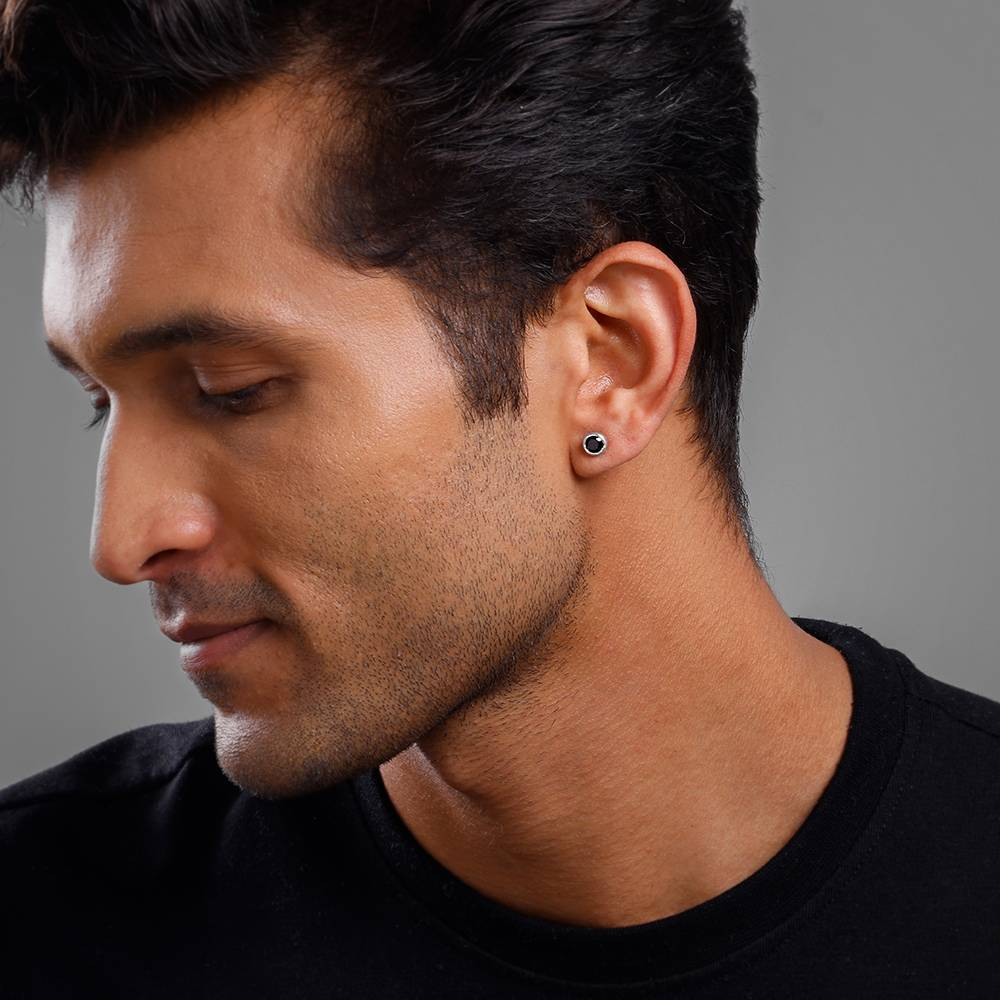
The most common earring choice for men is a single stud, typically worn in the left ear. The cultural association of the left ear with earrings in men has roots in several traditions, though in contemporary fashion the distinction carries much less weight. Most men today wear what they prefer without adhering to any particular convention.
Beyond studs, men's earrings include small hoops and huggies (particularly popular in urban and streetwear contexts), ear cuffs, and simple bar or geometric studs. The trend for 2025–2026 is leaning toward clean, minimal metals: single gold or silver studs, thin gold hoops, and subtle geometric designs.
For Indian men, gold studs hold cultural significance in several communities and are worn at weddings, religious ceremonies, and family events. Contemporary Indian men are increasingly pairing simple gold or diamond studs with ethnic wear.
The key principle for men's earring styling is the same as for women: one focal point, appropriate to the occasion, complementary to the outfit.
Part 12: Earrings for Kids
Children's earrings require a different set of considerations than adult jewelry. Safety, material, and size are the three non-negotiable factors.
Material first: Titanium is the safest first earring material for children. It is hypoallergenic, lightweight, and durable. Surgical steel (316L grade) is the acceptable alternative. Avoid silver, plated metals, and any metal containing nickel for newly pierced ears.
Size and design: Small, flat-back studs are the safest design for children. They do not catch on hair, clothing, or bedding. Avoid dangling or hooped earrings for young children as they pose a snagging risk during play.
For non-pierced options: Clip-on and magnetic earrings exist for children who are not yet pierced. These should fit comfortably without pinching and should be checked regularly to ensure they have not tightened during wear.
Healing period: A new lobe piercing in a child takes 6–8 weeks to fully heal. During this period, the first earrings should not be removed. Keep the area clean and check regularly for any signs of irritation or infection.

Decision Framework: Choose Before You Shop
Use this before opening any jewelry website. Answer these four questions in order.
Question 1: What is the occasion?
- Daily wear or office → studs, huggies, small hoops. Lightweight, minimal, comfortable.
- Festive or social → medium to bold drops, jhumkas, chandbalis, larger hoops.
- Bridal or formal → statement pieces matched to the outfit and neckline.
Question 2: What is your face shape?
- Round → long drops and slim danglers. Avoid wide hoops.
- Square → curved hoops and soft drops. Avoid angular geometric.
- Heart → wider at the bottom. Teardrop and chandeliers.
- Oval → most styles work. Decide by occasion and neckline.
- Long → shorter, wider styles. Hoops and clusters over long danglers.
Question 3: What is your neckline?
- Open and low (V-neck, off-shoulder) → longer statement earrings.
- Wide and horizontal (boat neck, square neck) → vertical drop styles.
- High or covered → bold studs or short drops near the face.
- Round neck → chandbalis or medium drops to add vertical length.
Question 4: What metal suits your skin?
- No sensitivity → gold, silver, or platinum based on budget and preference.
- Sensitive skin or new piercing → titanium or implant-grade surgical steel.
- Children's first earrings → titanium only.
Run through all four questions and your decision will be significantly narrowed before you browse a single page.
If you want to explore earrings across all of these categories, Eternz brings together 300+ jewelry brands in one place, including Giva, Palmonas, Kushal's, and more, covering everything from everyday studs and huggies to bridal jhumkas and polki sets.
Conclusion
Earrings are the most face-specific accessory you own. The difference between an earring that elevates your look and one that simply exists near your face comes down to four decisions: occasion, face shape, neckline, and metal. Get those four right and the specific style, size, and design become much easier choices.
Build your wardrobe in layers. Start with the foundations: a pair of diamond or pearl studs, a pair of gold hoops, and a pair of jhumkas (if you wear Indian ethnic wear). These three cover the vast majority of your styling needs before you add anything else.
Then add statement pieces for specific occasions. Then experiment with trends from what is left of your budget. In that order. Not the other way around.
Earring knowledge compounds. The more you understand about why certain styles work in certain contexts, the more confident and intentional every purchase becomes. This guide gives you that foundation. The deep dives linked throughout cover everything else.
FAQs
1. What are the different types of earrings?
The 10 essential types are studs, hoops, drop earrings, dangle earrings, chandelier earrings, huggie earrings, ear cuffs, jhumkas, chandbalis, and threader or climber earrings. Each serves a different visual purpose and suits different occasions and face shapes.
2. Which earrings suit a round face?
Long drop earrings, slim danglers, and geometric designs that add vertical length work best for round faces. Avoid wide, circular hoops that mirror and amplify the rounded shape. Angular or elongated styles are the most flattering.
3. What metal is best for sensitive ears?
Implant-grade titanium is the safest choice for sensitive ears and newly pierced ears. Surgical-grade stainless steel (316L) and 18K or higher gold are also good options. Avoid fashion jewelry with nickel content, which is the most common cause of earring-related skin reactions.
4. How should I clean gold earrings at home?
Warm water, a small drop of mild dish soap, and a soft-bristle toothbrush are all you need. Gently scrub around settings and stones, rinse thoroughly, and dry completely before storing. Never use harsh chemical cleaners on gold with porous or delicate gemstones.
5. Which earrings are best for everyday office wear?
Studs, huggies, and small hoops are the most appropriate for professional settings. Keep the length at or just below the earlobe and choose designs that are polished without being distracting. Pearl studs, small diamond studs, and thin gold hoops are the three strongest everyday choices.
6. Can men wear earrings in both ears?
Yes. Cultural conventions around which ear men pierce have largely faded in contemporary fashion. Wearing earrings in one or both ears is a personal style choice. Single studs and small hoops are the most common styles for men.
7. What earrings are safe for a child's newly pierced ears?
Titanium flat-back studs are the safest first earring for children. They are hypoallergenic, lightweight, and do not snag on hair or clothing. The earrings should stay in place for the full healing period (6–8 weeks for lobe piercings) without being removed. Avoid silver, gold-plated, or nickel-containing metals during healing.