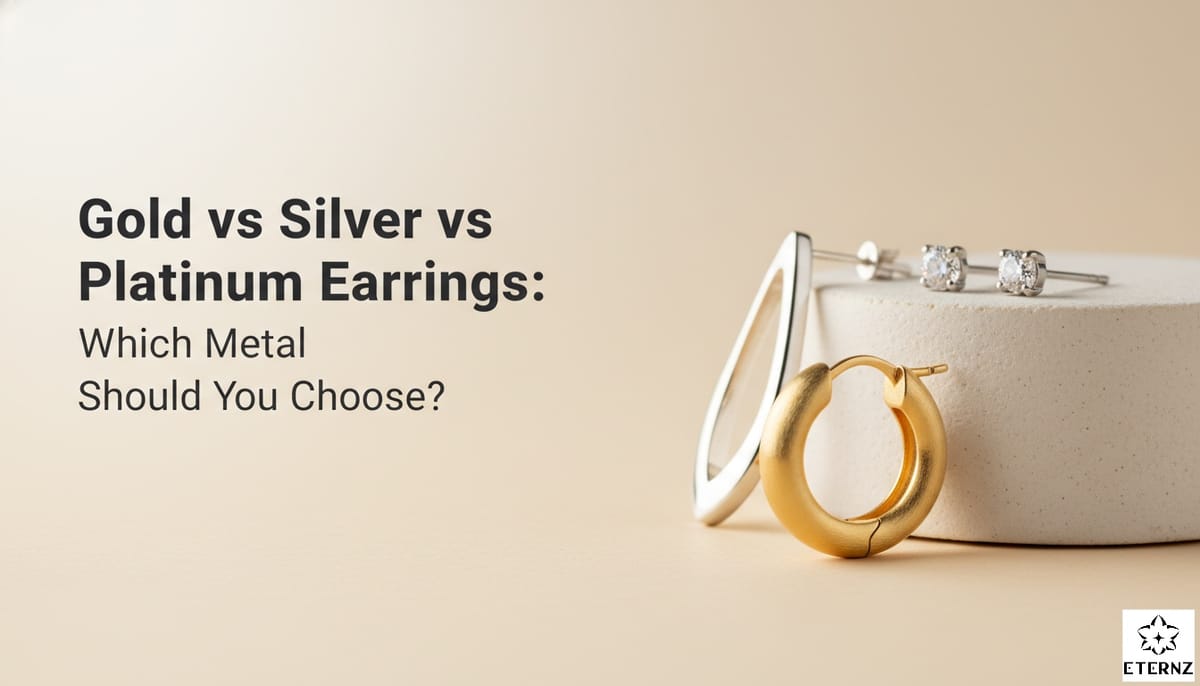
Gold vs Silver vs Platinum Earrings: Which Should You Choose?
Gold vs silver vs platinum earrings: compare durability, skin tone suitability, sensitive ear safety, Indian market price, and maintenance. Includes a clear decision framework.
TL;DR
Choosing the right earring metal comes down to three things: your skin, your habits, and your budget.
- Gold is the most versatile. It is warm, durable, and skin friendly at 18K or higher. Ideal for daily wear and festivals.
- Silver is the most affordable. It works beautifully for fashion and casual earrings. However, it tarnishes and needs regular cleaning.
- Platinum is the most durable and hypoallergenic. But it is significantly more expensive and heavier than gold or silver.
For Indian skin tones: Yellow and rose gold flatter warm and wheatish skin. White metals like silver, platinum, and white gold suit cooler or fairer tones.
For sensitive skin: Platinum is the safest. 18K or higher solid gold is a close second. Avoid nickel containing white gold and unverified silver.
No single metal wins for everyone. Your skin tone, budget, daily habits, and the occasion will decide the best choice for you.
What You Will Learn in This Guide
- A quick breakdown of each metal: what it is and how it behaves
- Gold earrings: types, karats, and when to choose them
- Silver earrings: benefits, limitations, and best use cases
- Platinum earrings: why they cost more and when they are worth it
- How each metal looks on different skin tones
- Durability and maintenance compared side by side
- Skin sensitivity: which metal is safest for your ears
- Price comparison for the Indian market
- A simple decision framework to help you choose
- Answers to frequently asked questions
Gold is the best all round earring metal for most people. Silver is the smart choice for fashion and budget conscious buys. Platinum is the right call when skin sensitivity and long term durability are your priority and budget is not a constraint. Each metal has a specific job. This guide helps you match the right metal to your actual life.
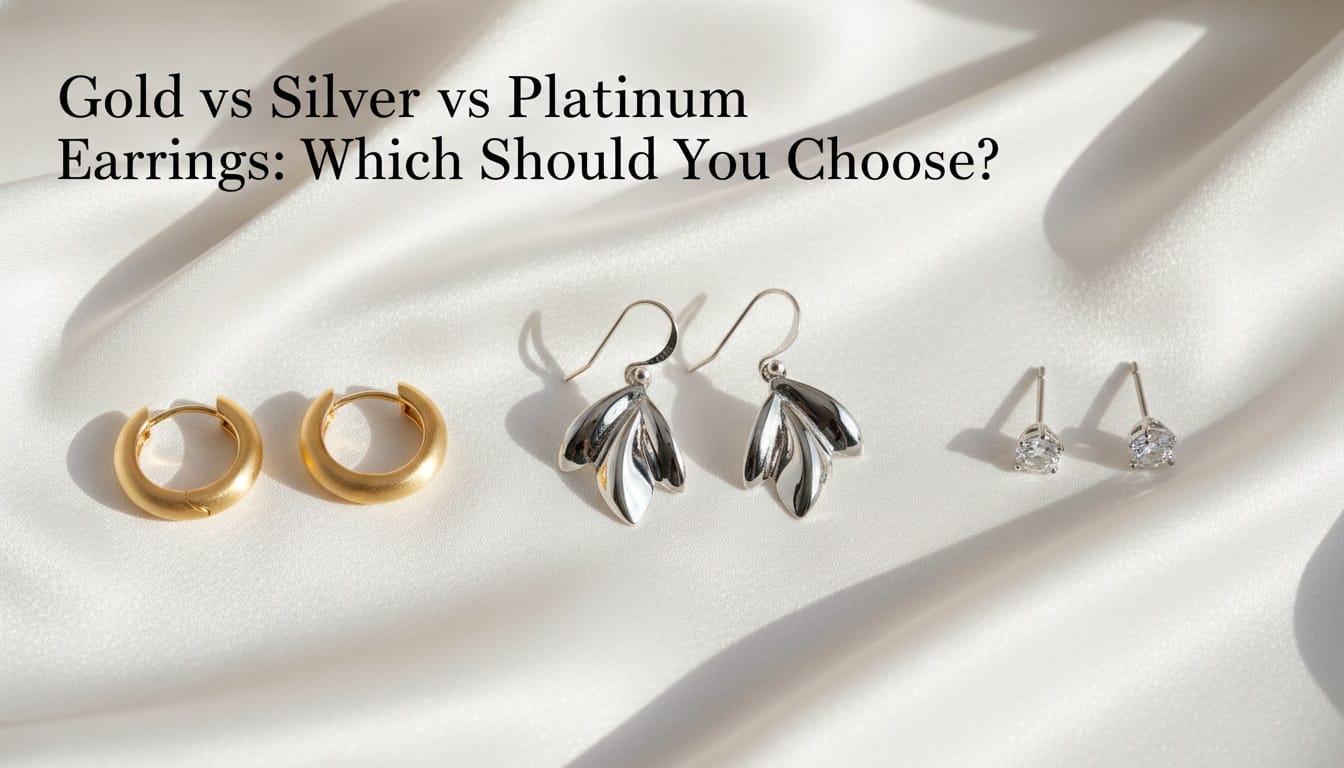
First, Understand What You Are Actually Comparing
Before comparing metals, it helps to know what each one is made of. This changes everything about how they look, how long they last, and how they feel on your skin.
Gold in jewelry is rarely pure. Pure 24K gold is too soft for everyday earrings. It is mixed with other metals for strength.
- 22K gold: 91.6% gold. Common in Indian traditional jewelry. Rich colour, slightly soft.
- 18K gold: 75% gold. The best balance of purity and durability for daily earrings.
- 14K gold: 58.3% gold. Most common globally. More durable but higher alloy content.
Gold comes in three colours. Yellow gold is mixed with copper and silver. Rose gold is mixed with copper to produce the pink tone. White gold is mixed with palladium or nickel and then rhodium coated.
Silver in jewelry is almost always sterling silver (925). That means 92.5% pure silver and 7.5% copper for strength. Pure silver is too soft to hold its shape in earrings.
Platinum jewelry is typically 95% pure platinum. It is mixed with other platinum group metals like iridium. Platinum is significantly denser than gold and silver, which explains both its weight and its durability.
With that foundation clear, let us look at how each metal performs specifically as earrings.
If you are still exploring styles before choosing a metal, this complete guide to earrings and earring types breaks down every major design from studs and hoops to jhumkas and chandbalis.
Gold Earrings: The Most Versatile Choice for Daily and Festive Wear
Gold has been the default earring metal across most cultures for centuries. In India, it carries cultural, religious, and emotional weight that goes well beyond aesthetics.
Why Gold Works So Well for Earrings
- Available in three colours to suit different skin tones and outfit palettes
- 18K and above is hypoallergenic for most people
- Does not tarnish, so it requires far less maintenance than silver
- Holds resale value, making fine gold earrings a dual purpose investment
- BIS hallmarked 22K gold is widely available and trusted across India
Yellow Gold Earrings
Yellow gold earrings are the warmest and most traditional. They pair beautifully with Indian ethnic wear, warm skin tones, and festive occasions. Jhumkas, chandbalis, and kundan earrings are almost always set in yellow gold because the warmth of the metal enhances the richness of the design.
Rose Gold Earrings
Rose gold earrings have a soft pinkish warmth that is universally flattering. They suit warm and neutral skin tones equally and feel contemporary enough for modern everyday earring styles.
White Gold Earrings
White gold earrings look similar to platinum at a lower price point. The catch is that white gold is rhodium plated, and that coating gradually wears off over time. For earrings, which have less contact wear than rings, this is manageable. One important note: white gold often contains nickel in its alloy, making it unsuitable for sensitive ears.
Best for: Daily wear, festive and bridal jewelry, Indian ethnic occasions, long term investment pieces, and anyone who wants colour variety in one metal category.

Silver Earrings: The Accessible, Fashion Forward Option
Silver earrings are where most fashion wardrobes begin, and for good reason. They are affordable, widely available, and work across a wide range of contemporary and casual styles.
Why Silver Earrings Make Sense
- Significantly more affordable than gold or platinum
- Cool, bright white shine pairs well with modern designs, gemstone settings, and minimalist styles
- Wide range of fashion, artisanal, and oxidised designs available in the Indian market
- 925 sterling silver is generally safe for healed ears without nickel sensitivity
The Honest Limitations of Silver Earrings
- Tarnishes with exposure to air, moisture, sweat, and perfume. A pair that looks bright on day one can turn dull within weeks without proper care.
- Scratches more easily than gold or platinum over time.
- Not ideal for newly pierced ears. Tarnish compounds can irritate healing tissue. Use titanium or solid gold for new piercings.
- Lower quality sterling silver can contain trace nickel. Always look for a 925 stamp from a reputable source.
Silver in Indian Wardrobes
Silver earrings occupy a culturally distinct space. Contemporary silver earrings with oxidised finishes, gemstone settings, and tribal inspired designs are popular for casual and fusion Indian dressing. They pair well with cotton and khadi outfits at an accessible price.
Best for: Casual and everyday fashion wear, contemporary and artisanal designs, budget conscious buyers, and building a varied fashion earring wardrobe without a large spend.
Building a versatile jewelry collection? These must-have earring pieces cover the essential styles every wardrobe should include for daily, festive, and formal dressing.
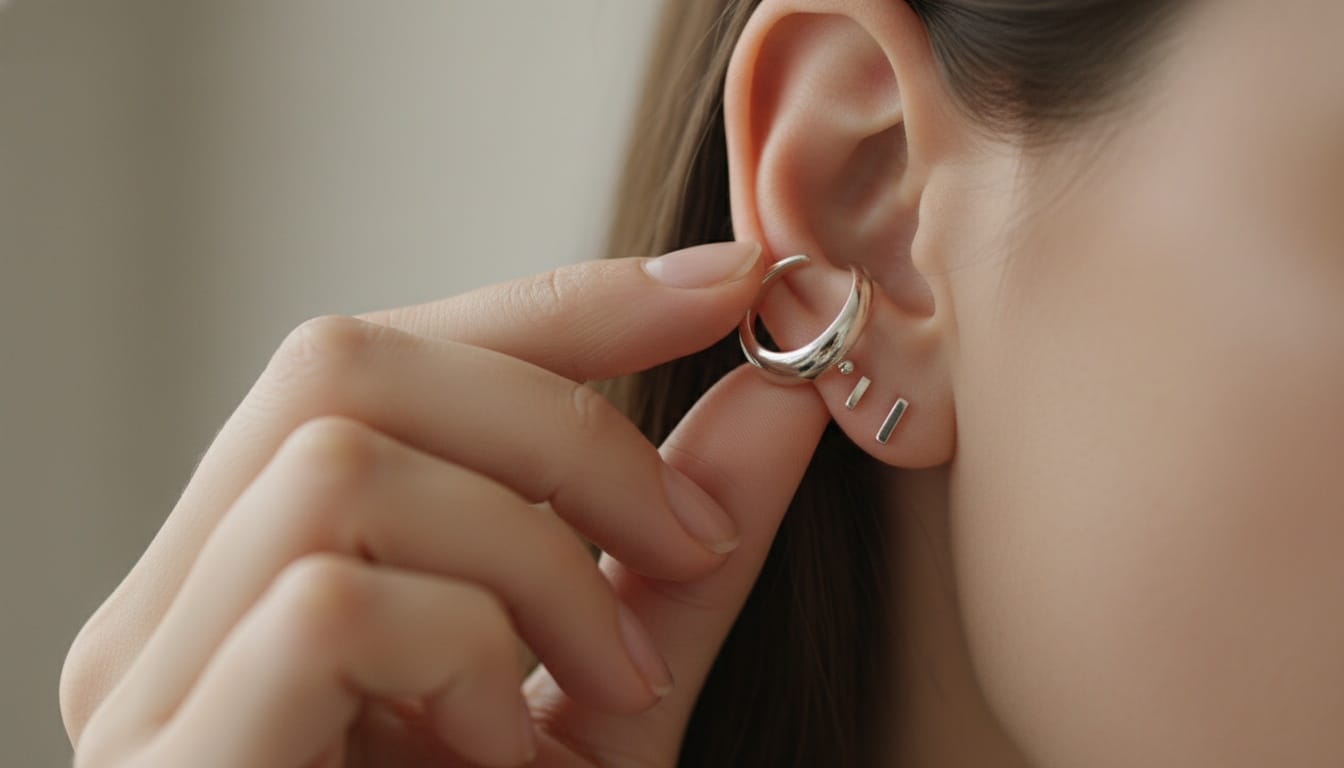
Platinum Earrings: The Premium, Set and Forget Option
Platinum is the most expensive, the most durable, and the most hypoallergenic earring metal in this comparison. It is not for everyone, but for the right person it is the clear best choice.
What Makes Platinum Different
- 95% pure metal, meaning fewer reactive alloy components touching your skin
- Naturally white with no rhodium plating needed. The colour is permanent.
- Does not tarnish or corrode
- Develops a natural patina (a soft, matte finish) over time rather than scratching in the conventional sense. It can be repolished to a high shine anytime.
- Heaviest of the three metals. For large drop or chandelier earring designs, this weight becomes a real comfort consideration during extended wear.
The Honest Limitations
- Three to five times more expensive than an equivalent 18K gold earring
- Weight becomes an issue for larger or longer earring styles
- Less widely available in Indian jewelry markets compared to gold and silver
Best for: People with reactive skin who cannot comfortably wear gold or silver, those who want a genuinely maintenance free fine metal, and anyone buying fine earrings with diamonds where long term setting durability matters.
Which Metal Suits Your Skin Tone? A Practical Guide for Indian Skin
This is one of the most practical questions in this comparison. Most guides do not cover this specifically for Indian skin tones.
Warm and Wheatish Skin Tones (most common in India)
Yellow gold is the most flattering. The warm undertone of the metal complements the warmth in the skin rather than contrasting with it. Rose gold is equally strong. White metals create a cooler contrast that works but is less naturally harmonious.
Dusky and Deeper Skin Tones
Yellow gold and rose gold both perform excellently. The richness of the metal reads with significant visual impact against deeper skin. This is part of why heavy gold jhumkas and chandbalis have always been most striking on deeper Indian complexions.
Fair and Cool Toned Skin
White metals perform best here. Silver, platinum, and white gold complement cool undertoned, lighter skin cleanly.
Neutral Undertones
Neutral undertones are the most versatile. Both yellow gold and white metals work. Rose gold is particularly flattering as it sits comfortably between warm and cool.
Quick check: Look at the veins on the inside of your wrist. Blue purple veins mean a cool undertone. Silver, platinum, and white gold will suit you best. Green veins mean a warm undertone. Yellow gold and rose gold are your friends. Blue green veins mean neutral. Anything works.
Durability and Maintenance Compared Side by Side
| Factor | Gold (18K) | Silver (925) | Platinum |
|---|---|---|---|
| Tarnishes? | No | Yes, regularly | No |
| Scratches easily? | Moderate | Yes | Low |
| Needs replating? | White gold only | No | No |
| Daily wear suitability | Excellent | Moderate | Excellent |
| Cleaning frequency | Occasional | Frequent | Occasional |
| Longevity | Decades | Years with care | Generations |
For earrings specifically: Earrings have far less contact wear than rings or bracelets. This makes silver more manageable as an earring metal than it would be as a ring. Even so, the maintenance hierarchy is consistent: platinum and gold require the least attention, silver requires the most.
Which Metal Is Safest for Sensitive Ears?
Platinum is the safest for reactive skin. With 95% purity and naturally nickel free composition, there is virtually zero risk of a metal reaction.
18K or 22K solid yellow or rose gold is the safest traditional option. At high karats, the alloy content is low enough that reactions are rare. Yellow and rose gold avoid nickel entirely in their alloy.
925 sterling silver is generally safe for healed piercings without confirmed nickel sensitivity. Lower quality silver can carry trace nickel, so the 925 stamp from a verified source matters.
White gold is the most variable. Some alloys use palladium, which is safe. Others use nickel, which is a common allergen. Always verify the alloy composition before buying white gold earrings for sensitive skin.
The bottom line: If you react to most metals, go with platinum or implant grade titanium. If you want a traditional option, 18K or higher solid yellow or rose gold is your answer.
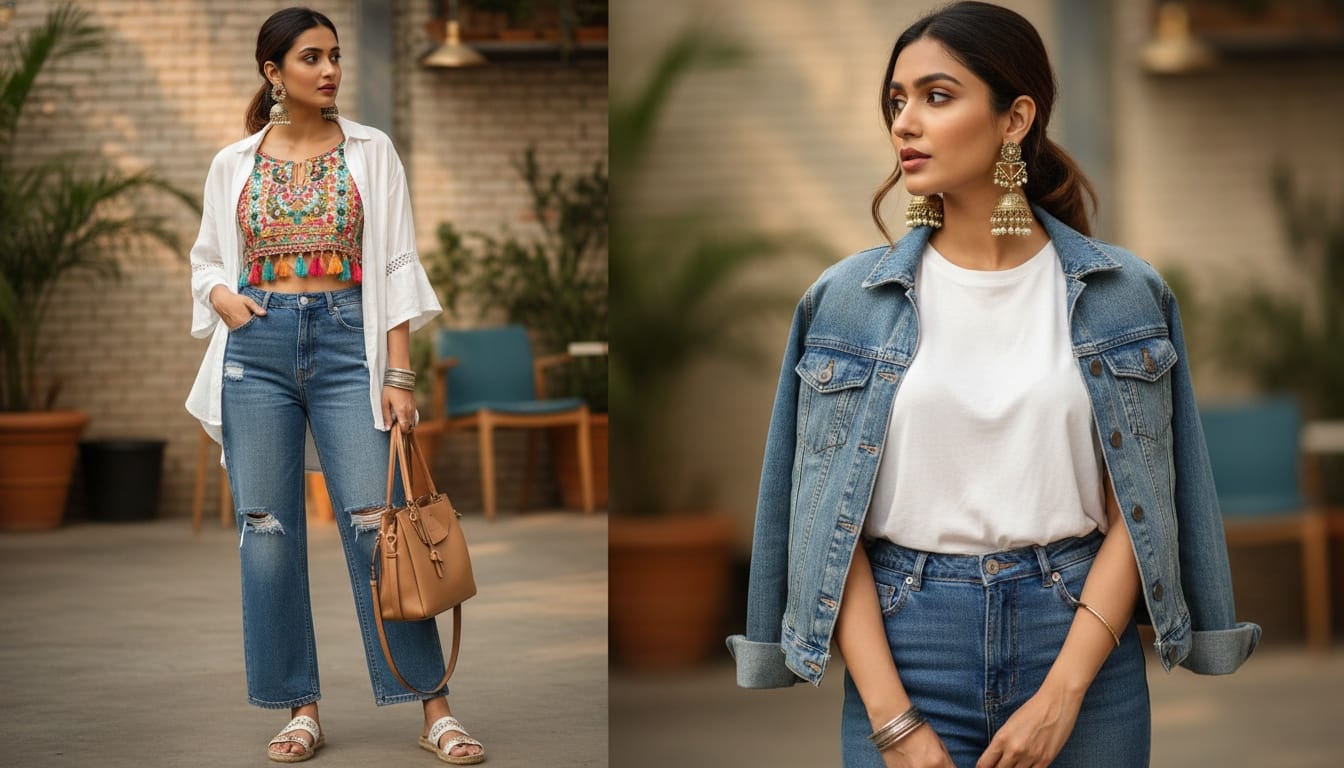
Price Comparison: Indian Market Reference
Gold Earrings
- Simple 22K gold studs: ₹3,000 to ₹15,000 or more
- 18K gold with stone setting: ₹5,000 to ₹50,000 or more
- Price tracks live gold rates updated daily. Always verify the BIS hallmark for purity.
Silver Earrings
- 925 sterling silver fashion earrings: ₹300 to ₹3,000
- Artisanal or gemstone set silver earrings: ₹1,000 to ₹8,000
Platinum Earrings
- Platinum studs: ₹8,000 to ₹30,000 or more
- Platinum with diamond setting: ₹20,000 to ₹1,00,000 or more
Resale Value Note
Gold holds strong resale value and is widely accepted at Indian jewelers for exchange. Silver has limited resale value. Platinum has international value but is less commonly bought back by Indian jewelers. If long term value retention matters to you, gold remains the most practical choice in the Indian market.
For a deeper understanding of metals, styles, closures, and long-term care, explore this ultimate guide to earrings before making your final purchase decision.
Decision Framework: Choose X If You Want Y
This framework helps you match the metal to your actual needs.
Choose Gold If
- You want one metal for daily wear, festive occasions, and Indian ethnic jewelry
- You have warm or wheatish Indian skin that yellow or rose gold flatters
- Long term resale value matters to you
- You wear jhumkas, chandbalis, or kundan earrings regularly
Choose Silver If
- Budget is a primary consideration
- You want variety in fashion and contemporary earring styles
- You are comfortable with regular cleaning and proper storage
- You are building a casual earring rotation
Choose Platinum If
- You have sensitive or reactive skin that reacts to most metals
- You want a maintenance free fine metal that stays white without replating
- You are buying fine earrings with high value gemstones
- Long term durability outweighs initial cost for you
Choose Rose Gold If
- You want a contemporary alternative to yellow gold
- Your style leans modern but you want a warm, flattering metal tone
- You have a neutral or mixed skin undertone
If you want to explore earrings across all three metals in one place, Eternz brings together 300+ jewelry brands including Giva, Palmonas, and Kushal's, covering everything from 22K gold jhumkas to 925 silver hoops and platinum stud earrings.
Conclusion: Match the Metal to the Role
Gold, silver, and platinum are three different tools for three different earring situations.
Gold is your everyday, festive, and long term investment metal.
Silver is your fashion, casual, and budget smart choice.
Platinum is your sensitive skin, fine jewelry, and forever piece decision.
Match the metal to the actual role the earrings will play in your life. If they are going in every day for eight hours, invest in gold. If they are fashion pieces you will rotate through seasons, silver delivers more variety per rupee. If they are fine earrings you want to wear for life without a second thought, platinum earns its premium.
Know your skin tone, your habits, your skin sensitivity, and your budget. Those four factors will point you to the right metal every time.
Frequently Asked Questions
1. Is gold or silver better for earrings?
Gold is better for daily wear, sensitive skin, and long term use because it does not tarnish and is more durable than silver. Silver is better for fashion earrings and budget conscious purchases. For Indian skin tones, yellow gold is typically more flattering, while silver suits cooler or fairer complexions.
2. Is platinum worth the price for earrings?
For people with sensitive or reactive skin, platinum is genuinely worth the premium because it is the most hypoallergenic metal available. For everyday earrings without a skin concern, 18K solid gold delivers similar durability and longevity at a significantly lower cost, making it the more practical choice for most buyers.
3. Which earring metal is best for sensitive ears?
Platinum is the safest option for reactive skin. 18K or 22K solid yellow or rose gold is the best traditional alternative. High quality 925 sterling silver is generally safe for healed piercings without confirmed nickel sensitivity. Avoid white gold unless the alloy is explicitly confirmed to be nickel free.
4. Does gold or silver suit Indian skin tones better?
Yellow and rose gold suit warm and wheatish Indian skin tones more naturally. The warmth of the metal complements warm undertones in the skin. Silver and white metals suit cooler or fairer skin tones more harmoniously, though personal preference always plays a role.
5. Can I wear silver earrings every day?
Yes, but maintenance is required. Silver tarnishes with exposure to air, moisture, and sweat. For effortless daily wear, store silver earrings in an airtight pouch when you are not wearing them and clean them regularly. If you want a genuinely low maintenance daily earring metal, 18K gold is more practical.
6. Which earring metal lasts the longest?
Platinum lasts the longest structurally. It displaces rather than loses metal when scratched and does not tarnish or corrode. 18K solid gold is a close second and significantly outlasts silver with far less upkeep. Sterling silver requires the most care to maintain its appearance over time.
7. What is the difference between white gold and platinum earrings?
White gold is yellow gold alloyed with white metals and coated with rhodium plating to achieve a bright white appearance. That plating fades over time and requires replating. Platinum is a naturally white metal at 95% purity that requires no plating, never yellows, and is more durable. Platinum is more expensive, hypoallergenic, and maintenance free compared to white gold.