What Jewellery Can You Wear After Your Wedding?
Your bridal jewellery isn't a one-day buy. Here is what to wear daily after marriage and how to re-wear your heavy set at festivals.

The jewellery to wear after marriage is usually simple: a light mangalsutra, a pair of toe rings, slim bangles or a kada, small studs and your engagement ring. These few pieces carry the meaning of being newly married and still fit into an office day, a metro ride and a weekend at your in-laws'. Your heavy bridal set doesn't have to disappear into a locker either. Split it into pieces, and the choker, earrings and tikka come back at every festival and family wedding.
Before we start, let me tell you about Eternz, a trusted jewellery marketplace featuring 400+ jewellery brands, with authenticity certification on every piece and fast, same-day delivery in major cities. First-time users can also save with ETERNZ5 for up to ₹50 off on ₹499+, ETERNZ10 for up to ₹100 off on ₹999+, or ETERNZ300 for up to ₹300 off on ₹2,500+, valid on both the app and website.
Everyday Jewellery to Wear After Marriage
The first morning after the wedding, the heavy jewellery comes off, but a few pieces stay. What those pieces are depends on your region and your family. Here are the ones most new brides wear, what each means, and how to wear it every day.
1. Mangalsutra
- What it means: In many families, the mangalsutra is the main symbol of marriage, tied by the groom during the wedding. In South India, the thali or thaali plays the same role.
- Everyday version: A short chain of black beads with a small pendant sits neatly under a kurta or a shirt collar. A 14K or 18K gold mangalsutra is tougher than 22K, so it handles daily wear better.
- Where to look: Browse mangalsutras by style, or read these popular mangalsutra designs explained.
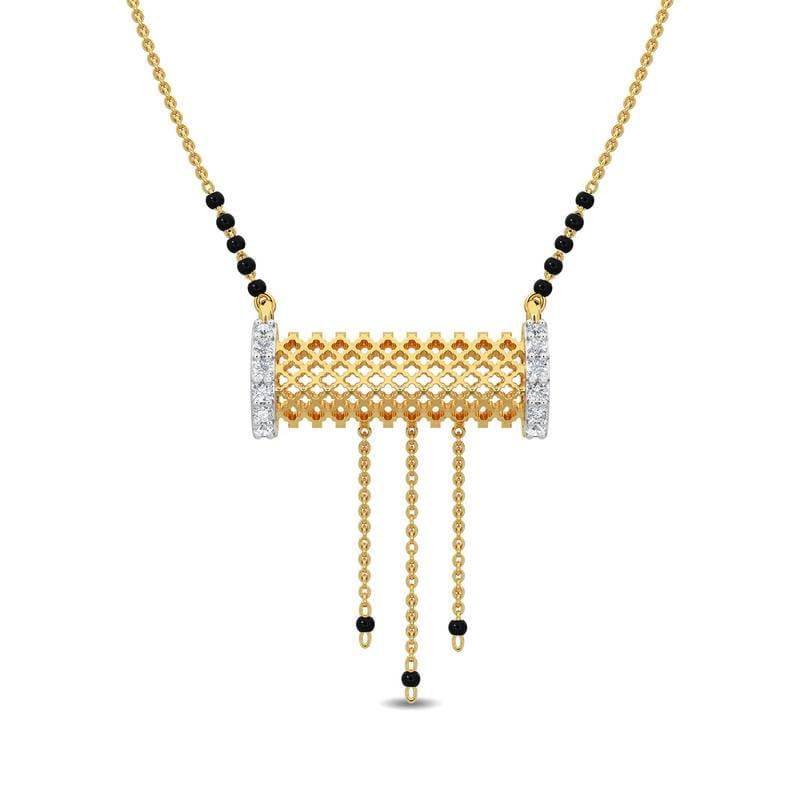
Here is a light 14K gold mangalsutra made for everyday wear. Check whether the black-bead chain is included, and the hallmark details, in the product description before you order:
2. Bichiya (Toe Rings)
- What it means: Toe rings are a sign of marriage in many Hindu families, usually worn on the second toe of both feet. In South India, they are called metti.
- Everyday version: A plain or lightly patterned adjustable pair in sterling silver is comfortable in shoes and sandals alike. Adjustable rings also cope with feet that swell in summer.
- Where to look: See the toe rings range, or this guide to the best toe rings.
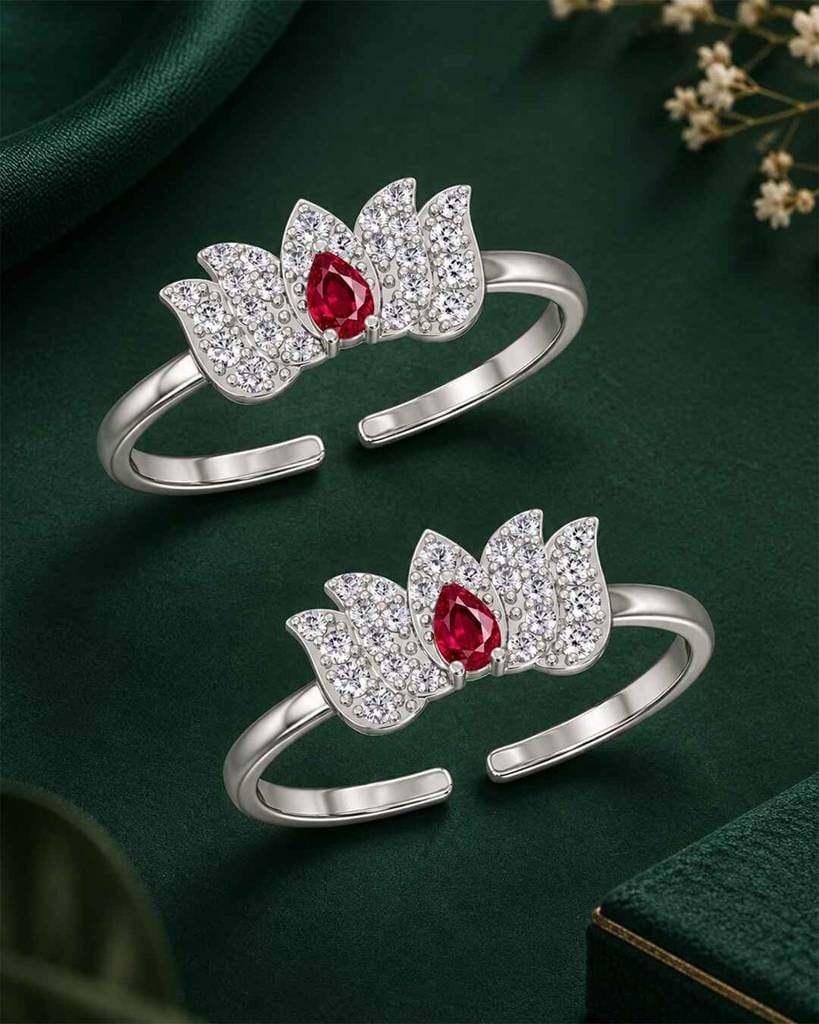
Here is a pair of adjustable sterling silver toe rings. Check that they are a pair, not a single ring, in the product details before you order:
Good to know: Toe rings and payals are usually silver, not gold. A common belief in many families is that gold, linked with Goddess Lakshmi, shouldn't be worn on the feet.
3. Payal (Anklets)
- What it means: Many new brides, especially in North India, wear silver payals with their toe rings. The soft chime of the ghungroo is part of the newly married look in many homes.
- Everyday version: A thin chain anklet with no bells is quieter for office days. Save the heavier ghungroo payal for festivals and pujas.
- Read more: The difference between an anklet and a payal, and how to style each.
4. Bangles
- What it means: Bangles carry different meanings in different communities. A Punjabi bride wears a red and white chooda, a Bengali bride wears shakha-pola and a loha, and a Maharashtrian bride wears green glass bangles.
- Everyday version: Once the ritual bangles come off, a slim kada or two or three thin stack bangles keep the look without clinking against a laptop.
- Tip: If your family expects glass bangles daily, wear just two on each wrist on office days.
5. Nose Pin
- What it means: In many communities, a nose pin is part of a married woman's daily look. The big bridal nath is for the wedding, and a small stud takes its place afterwards.
- Everyday version: A tiny diamond, a single stone or a plain gold stud. Browse simple nose pins for daily wear.
6. Engagement and Wedding Rings
- What it means: The ring is the newest part of the Indian bride's jewellery box, and for many couples it's the piece they never take off.
- Everyday version: If your engagement ring is a big solitaire that catches on clothes, add a slim band from the everyday rings range for daily wear and keep the solitaire for evenings.
7. Studs
- What it means: Nothing ritual, just practical. Heavy bridal earrings stretch the earlobes, and after weeks of functions, light studs give them a rest.
- Everyday version: Small gold, diamond or pearl studs that you can sleep in. For more choices, see the daily wear earrings.
Did you know? In many South Indian families, the thali is first tied on a yellow thread and later moved onto a gold chain in a small ceremony. From then on, it's worn every day.
Married-Woman Jewellery That Works at the Office
Going back to work a week after the wedding with mehendi still on your hands is a rite of passage. Here is how to keep the meaning of each piece without the noise:
| Piece | Office-friendly version | Avoid at work |
|---|---|---|
| Mangalsutra | A short chain or a bracelet mangalsutra | Long, heavy pendants that swing on the desk |
| Toe rings | Plain silver, adjustable | Big stone-set rings in closed shoes |
| Payal | A thin chain, no bells | Heavy ghungroo payals |
| Bangles | One kada or 2 to 3 slim bangles | A full arm of glass bangles that clinks on the keyboard |
| Earrings | Studs or small hoops | Jhumkas with a headset or phone |
| Rings | A slim band | A large solitaire that catches on clothes |
For more ideas, see these mangalsutras for working women and how to wear a mangalsutra with western clothes.
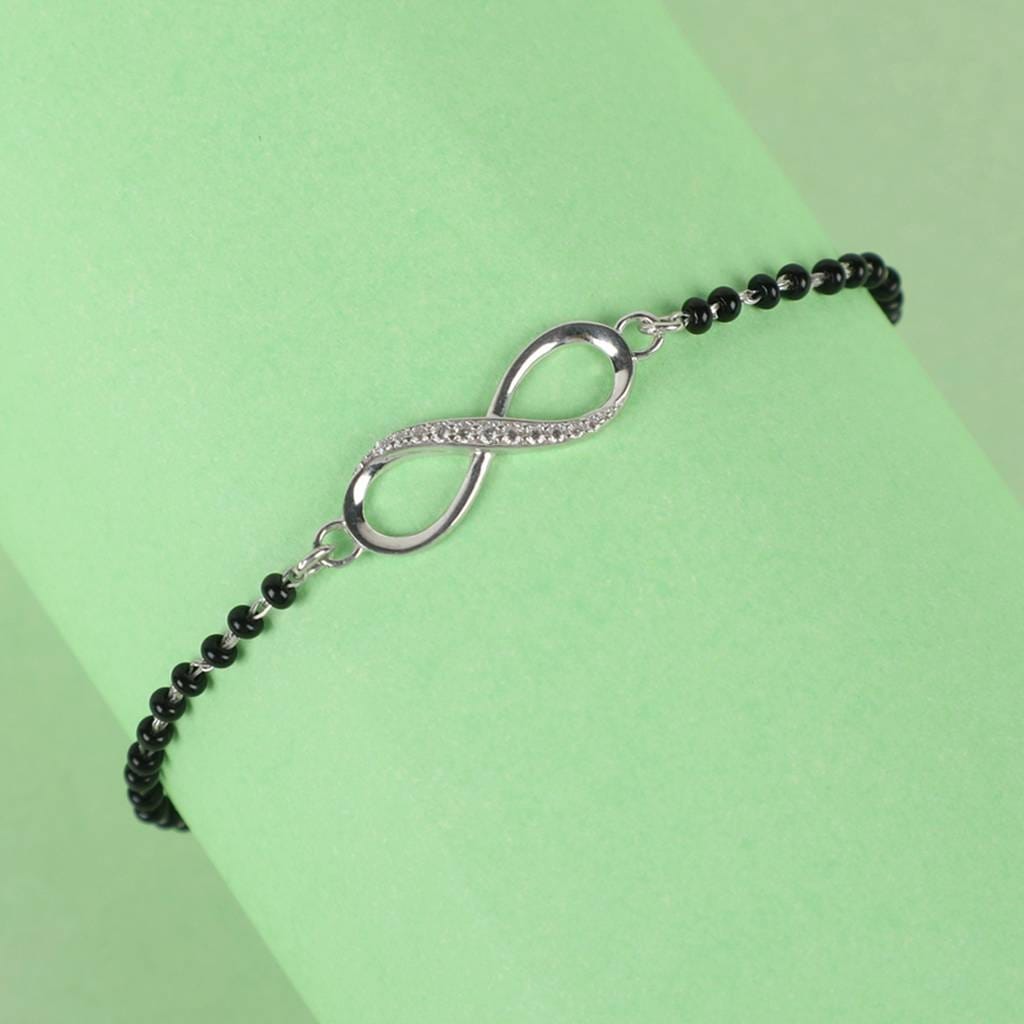
Here is a sterling silver bracelet mangalsutra that sits neatly beside a watch. Check the metal and the clasp in the product details before you order:
Quick tip: Keep a bracelet mangalsutra for days when a chain doesn't suit the outfit, like a high-neck top, a gym session or a western dress.
How Long Do You Wear the Chooda After the Wedding?
There is no single answer, because it depends on your family. Many Punjabi families follow a set period, often somewhere between 40 days and a year. Others take the chooda off after the first festival, the first Lohri or a small ceremony at home.
- Ask your elders: Your mother-in-law or your mother will know what your family follows.
- Ask about the ending: In many families, the chooda is taken off in a small ritual, sometimes with sweets, and replaced with glass or gold bangles.
- If you're back at work early: Many brides wear the chooda for the set days and switch to a slim kada for the office, with the family's blessing.
Bengali shakha-pola and the iron loha, by contrast, are traditionally worn for life in many families. In daily wear, they are often replaced with lighter versions.
How to Re-Wear Your Bridal Jewellery After the Wedding
This is where your bridal set earns back its place. The trick is to stop thinking of it as a set and start wearing it piece by piece:

- The choker with a plain saree at Diwali: A plain silk or cotton saree lets the choker be the hero, without the full bridal feel.
- The jhumkas with a kurta: Your bridal jhumkas with a simple cotton or chanderi kurta work for pujas, griha pravesh and family lunches.
- The tikka at a sister's sangeet: A tikka alone, with a lehenga and loose hair, looks festive without looking like the bride.
- The haram on Karwa Chauth: Your first Karwa Chauth is the perfect excuse to bring it out. Here is what jewellery to wear on Karwa Chauth with a red saree or lehenga.
- The bangles stacked with daily ones: Add two of your bridal bangles to your everyday kada for weddings and festivals.
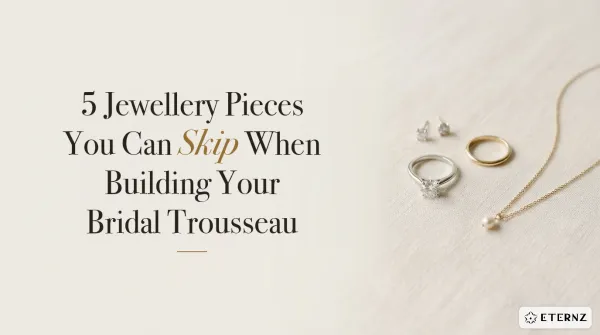
If your trousseau is still being built, buying fewer once-only pieces makes this easier. These pieces you can skip are a good place to start.
The one-liner to remember: The best bridal piece is the one you wear again.
Storing Bridal Jewellery Between Occasions
Re-wearing only works if the pieces still look good when you take them out. A few habits keep them ready:
- A separate pouch for each piece: Store the choker, earrings and tikka apart, so stones don't scratch and chains don't tangle.
- Anti-tarnish strips: Drop one into each box for silver and plated pieces.
- Keep plated pieces dry: Wipe off sweat and perfume after wearing, and never store them in a damp cupboard.
- A yearly check: Look at clasps, hooks and loose stones once a year, ideally before the festival season.
For more on looking after them, see these essential jewellery care tips.
Conclusion
Your wedding jewellery isn't a one-day buy. The everyday pieces, the mangalsutra, toe rings, slim bangles, studs and ring, will be with you through office days and quiet Sunday mornings for years. The bridal set, worn piece by piece, will keep coming back at every Diwali, Karwa Chauth and cousin's wedding.
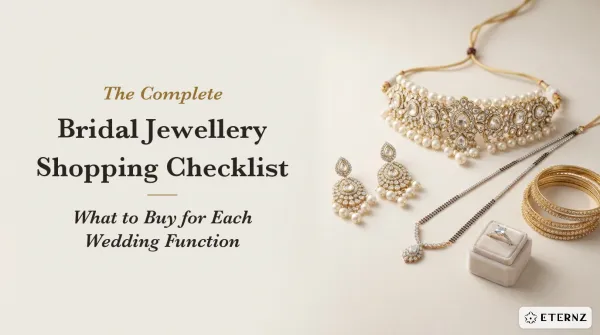
When you're ready to add your everyday pieces, browse mangalsutras, toe rings and daily wear earrings, or explore the full wedding jewellery edit on Eternz. For the pieces you need for the wedding itself, see the bridal jewellery checklist.
Frequently Asked Questions
1. What jewellery should a newly married woman wear daily?
Most newly married women wear a light mangalsutra, toe rings, a few bangles or a kada, small studs and their ring. Some also wear a nose pin and payals. The exact pieces depend on your region and your family.
2. Is it compulsory to wear a mangalsutra every day?
It depends on you and your family. In many families, it's worn daily, while many working women wear a lighter version or a bracelet mangalsutra on busy days. There's no single rule.
3. Why do married women wear toe rings?
In many Hindu families, toe rings are a sign of marriage, put on during the wedding rituals. They are usually silver and worn on the second toe of both feet. Some people also believe they have health benefits, though that is a traditional belief.
4. Can I wear my wedding bangles every day?
You can wear one or two, especially if they're sturdy gold or a kada. Heavy or glass bridal bangles can break or catch on things, so most brides keep them for festivals and wear slimmer bangles daily.
5. Can I remove my mangalsutra at the gym or while sleeping?
That's a personal and family choice. Some women never take it off, while others remove it for the gym, swimming or sleep to protect the chain. A bracelet mangalsutra is a popular option for workouts.
6. Which hand should the wedding ring be worn on in India?
Many couples in India wear it on the ring finger of the left hand. Some families prefer the right hand for traditional reasons. Both are fine, so follow what feels right to you and your family.
7. How do I wear my bridal choker again without it looking too much?
Wear it with a plain saree or a solid kurta, and keep everything else simple: small studs, no tikka and light makeup. The choker becomes a statement instead of a full bridal look.
8. Should I convert heavy bridal jewellery into lighter pieces?
If it's real gold and you're sure you won't wear it, a jeweller can remake it into lighter pieces, though you may lose some gold and pay making charges. Plated pieces can't be remade, but you can wear them separately. Talk to your family first if the pieces are heirlooms.