The Complete Bridal Jewellery Checklist from Head to Toe
The complete bridal jewellery checklist: every piece from head to toe, and exactly what to buy for roka, haldi, mehendi, sangeet, wedding and reception.
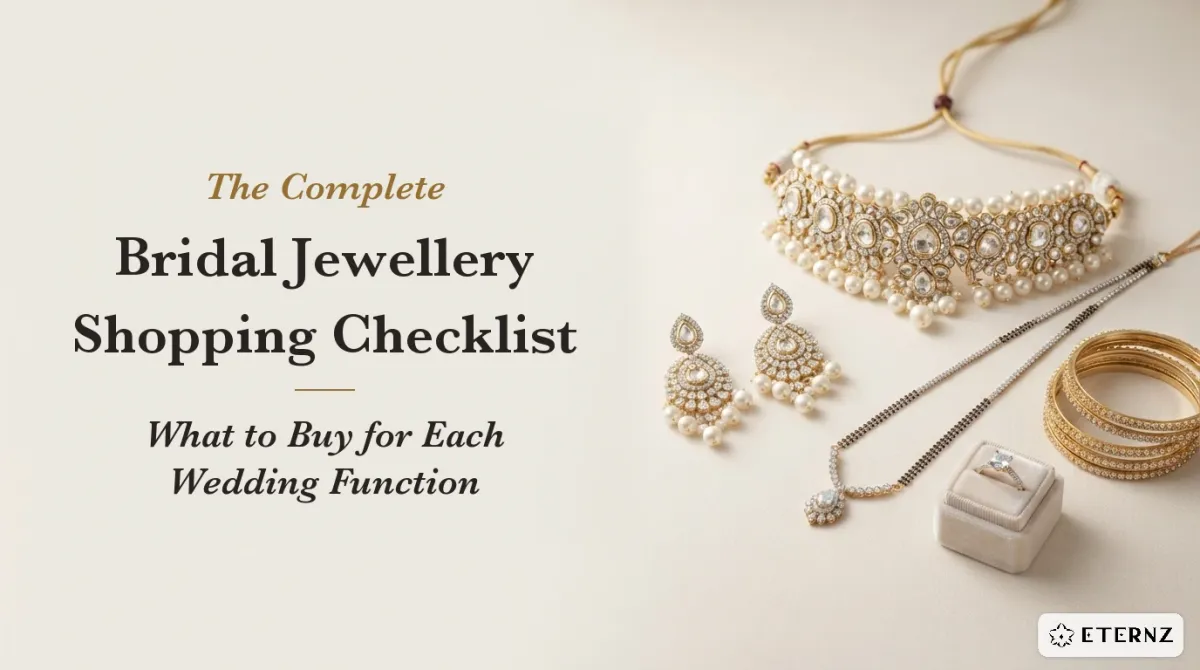
A complete bridal jewellery checklist comes down to three kinds of pieces: one heavy set for the wedding day, one statement set for the sangeet or reception, and light pieces for the haldi and mehendi. Add the pieces that stay with you after the wedding, like the mangalsutra, toe rings and bangles, and your list is done. Below is the full head-to-toe list first, then exactly what to buy for each function, in the order they happen. Keep it open while you shop, and tick off each function as you go.
Before we start, let me tell you about Eternz, a trusted jewellery marketplace featuring 400+ jewellery brands, with authenticity certification on every piece and fast, same-day delivery in major cities. First-time users can also save with ETERNZ5 for up to ₹50 off on ₹499+, ETERNZ10 for up to ₹100 off on ₹999+, or ETERNZ300 for up to ₹300 off on ₹2,500+, valid on both the app and website.
The Full Bridal Jewellery List, Head to Toe
Every bride's list is a little different, depending on her region, her family and her outfit. This table shows every piece you might be asked about, where it's worn, and how essential it really is:
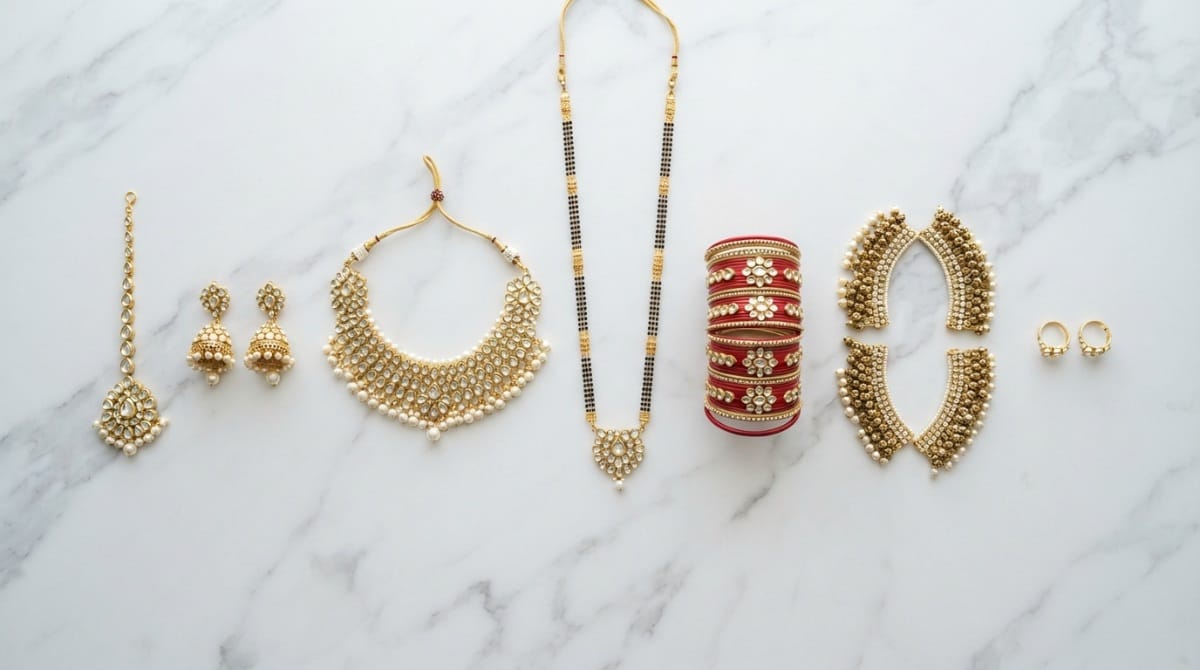
| Piece | Where it's worn | Must-have or optional | Functions you'll wear it at |
|---|---|---|---|
| Maang tikka | Head, centre parting | Must-have (or one other head piece) | Mehendi, sangeet, wedding |
| Matha patti | Across the forehead | Optional | Wedding |
| Passa (jhoomar) | Side of the head | Optional, unless it's your family tradition | Wedding, nikah |
| Hair accessories (hair chain, juda pin) | Bun or braid | Optional, but great for the back view | Mehendi, wedding |
| Nath | Nose | Depends on family custom | Wedding |
| Earrings (jhumkas, chandbalis) | Ears | Must-have | Every function |
| Ear chain (sahara) | Ear to hair | Optional, but it supports heavy earrings | Wedding |
| Choker | Close to the neck | Must-have (choker or long necklace) | Sangeet, wedding, reception |
| Rani haar or long haram | Neck to waist | Optional, often layered with a choker | Wedding |
| Mangalsutra | Neck | Must-have in many communities | Wedding and every day after |
| Bangles or chooda | Wrists | Must-have in many communities | Every function |
| Kaleera | Hanging from the chooda | Part of the ritual in Punjabi weddings | Wedding |
| Haathphool | Back of the hand | Optional, one is enough | Wedding |
| Bajuband | Upper arm | Optional | Wedding |
| Rings | Fingers | Engagement ring is a must, the rest optional | Engagement, reception |
| Kamarbandh or vaddanam | Waist | Must-have for many South Indian brides, optional with a lehenga | Wedding |
| Payal | Ankles | Common in many communities | Wedding and after |
| Bichiya (toe rings) | Second toe | Must-have in many Hindu families | Wedding and every day after |
In many communities, a few of these pieces are part of the marriage itself, not just the look: the mangalsutra, the bichiya, and the chooda or shakha-pola. Customs differ from family to family, so check with your elders which ones are part of your rituals.
Quick tip: Copy this list into your phone's notes and tick off each function as you buy for it. It's the easiest way to avoid buying the same pair of earrings twice.
Bridal Jewellery Checklist for Each Wedding Function
Here is the whole wedding at a glance, with the one piece that should be the hero at each function:
| Function | The hero piece | Keep it light on |
|---|---|---|
| Roka or engagement | The engagement ring | Necklaces |
| Haldi | Floral or light oxidised pieces | Real gold and pearls |
| Mehendi | Statement earrings or a hair chain | Rings and haathphools |
| Sangeet or cocktail | Big earrings or a layered necklace (not both) | Everything else |
| Wedding day | The heavy bridal set | Nothing, but test the weight first |
| Reception | A choker or a diamond-look set | Head jewellery |
Each function below follows the same shape: the mood, what to buy, what's nice to have, and which piece you can reuse later.
Roka or Engagement
- The mood: Elegant and personal, and all eyes on the ring.
- Must-buy:
- The engagement ring, or couple rings if you are exchanging a pair
- A light necklace or pendant set
- Statement studs or small drops
- Nice to have: A thin bracelet that won't compete with the ring in photos.
- Reuse trick: The pendant set comes back at your reception and becomes your first everyday set after the wedding.
Haldi
- The mood: Bright, messy and full of laughter. Your jewellery will get turmeric on it.
- Must-buy:
- Floral jewellery, or a light oxidised set
- Simple earrings that can be wiped clean
- A few inexpensive bangles you don't mind staining
- Nice to have: A floral tikka or hair pin to match your flowers.
- Reuse trick: Oxidised earrings come back for the mehendi and for casual family lunches later.
Good to know: Turmeric stains thread, fabric and floral jewellery, and it can dull silver and plated pieces. Keep real gold and pearls away from the haldi, and wipe everything with a dry cloth straight after.
Mehendi
- The mood: Colourful and relaxed, with hours of sitting still while your hands are done. Keep your hands free of rings and haathphools until the mehendi dries.
- Must-buy:
- A hair chain or a light maang tikka
- Statement earrings in a colour from your outfit
- A light choker
- Stack bangles to slip on once the mehendi dries
- Nice to have: A pair of bright payals for the dancing.
- Reuse trick: The same light choker can come back at the sangeet with bigger earrings, and the hair chain at any family wedding.
Sangeet or Cocktail
- The mood: Glamorous and dance-ready. Your jewellery has to survive two hours on the dance floor.
- Must-buy:
- One statement area: big statement earrings OR a layered necklace, never both
- A cocktail ring
- Bangles that won't fly off when you dance
- Nice to have: A slim waist chain if your outfit has a defined waist.
- Reuse trick: The statement earrings are one of the most re-wearable pieces you'll buy, perfect for every friend's wedding after yours.
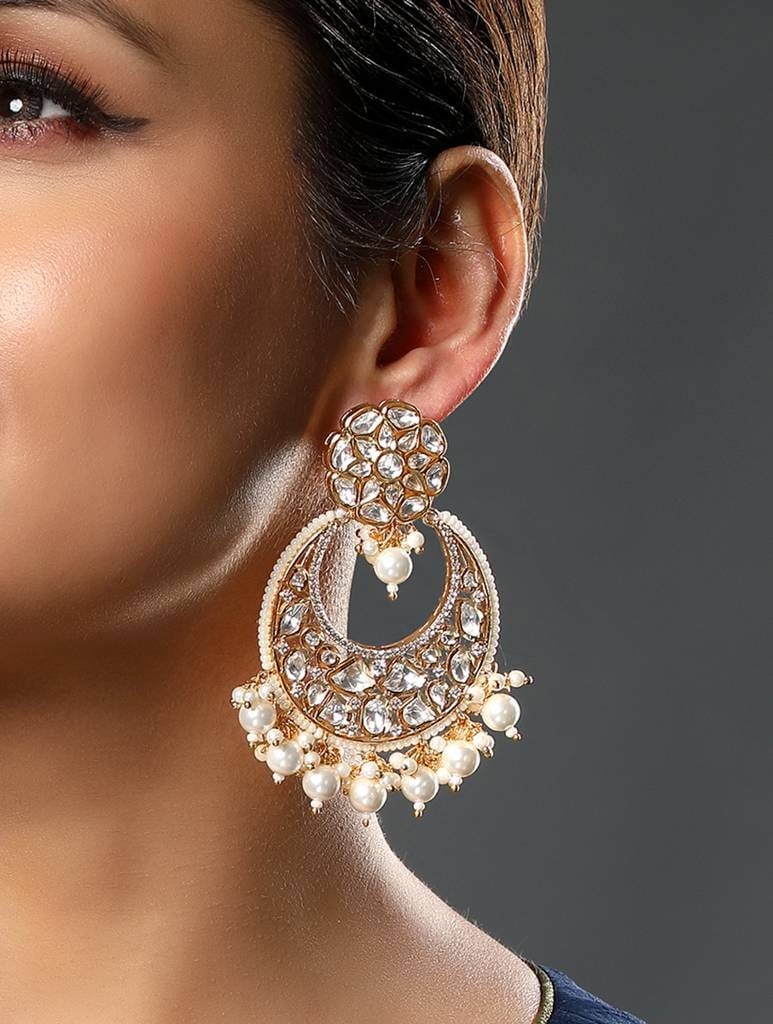
Here is a pair of statement chandbali earrings that can carry the whole sangeet look on their own. Check the length and weight in the product details before you order:
Wedding Day (Pheras, Muhurtham or Nikah)
- The mood: This is the day of the album. Go as grand as you like, but keep it comfortable for 8 hours or more.
- Must-buy:
- The heavy bridal set: a kundan, polki or temple necklace with matching earrings
- A maang tikka or matha patti, and a nath if it's your family custom
- Bangles or chooda, plus kaleera for Punjabi brides
- Payal and bichiya, often put on during the rituals
- Nice to have: A haathphool, an ear chain to support heavy earrings, and a kamarbandh if you are wearing a saree.
- Reuse trick: Buy a necklace and earrings that can be worn separately. Later, the choker goes with a plain saree at Diwali and the earrings with a kurta.
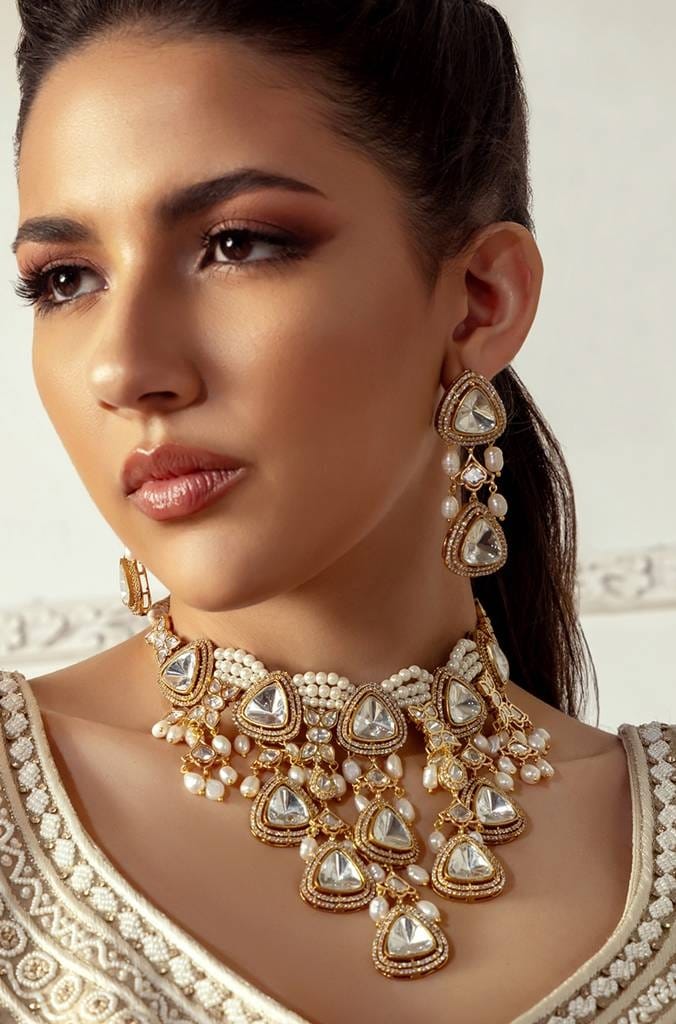
Here is a polki bridal necklace set with matching earrings for the wedding day. Check the metal, the finish and what comes in the set in the product details before you order:
What the wedding-day look includes changes a lot by region:
- North Indian bride: A heavy kundan or polki set, a maang tikka or matha patti, a nath, and a red and white chooda with kaleera in Punjabi families.
- South Indian bride: Temple jewellery with a choker, a long haram, jhumkas, a nethi chutti and a vaddanam at the waist. Rashmika's wedding jewellery is a good real-life example.
- Bengali bride: Layered gold-look necklaces, a tikli on the forehead, and shakha-pola with an iron loha on the wrists.
- Maharashtrian bride: A Maharashtrian nath, green glass bangles, and traditional necklaces like the thushi or kolhapuri saaj.
- Muslim bride: A passa (jhoomar) with a maang tikka, a nath, and a heavy necklace set for the nikah.
- Christian bride: Pearls, diamonds or lab-grown diamonds, and delicate pieces that suit a white gown or saree. See this edit for a Christian bridal look.
Not every bride wants the full traditional look. Kavya Maran wore just three polki pieces at her wedding, with no maang tikka and no nath, as this breakdown of Kavya Maran's wedding look shows.
Did you know? In many Punjabi weddings, kaleera are tied to the bride's chooda by her sisters and friends, not bought and worn by her alone. Before the vidaai, she shakes them over the heads of her unmarried friends, and the one a piece falls on is believed to marry next.
Reception
- The mood: Polished and modern. It's your first evening as a couple, and you'll be standing and greeting guests for hours.
- Must-buy:
- A choker set or a diamond-look set in polki or lab-grown diamonds
- Lighter earrings than the wedding day, since your earlobes need a rest
- A cocktail ring
- Nice to have: A bracelet in the same metal as the necklace.
- Reuse trick: The cocktail ring from the sangeet works here too, and lab-grown pieces become your go-to for every evening event after the wedding.
Here is a choker set that works for a reception, lighter than your wedding-day set but still a statement. Check the metal and finish in the product details before you order:
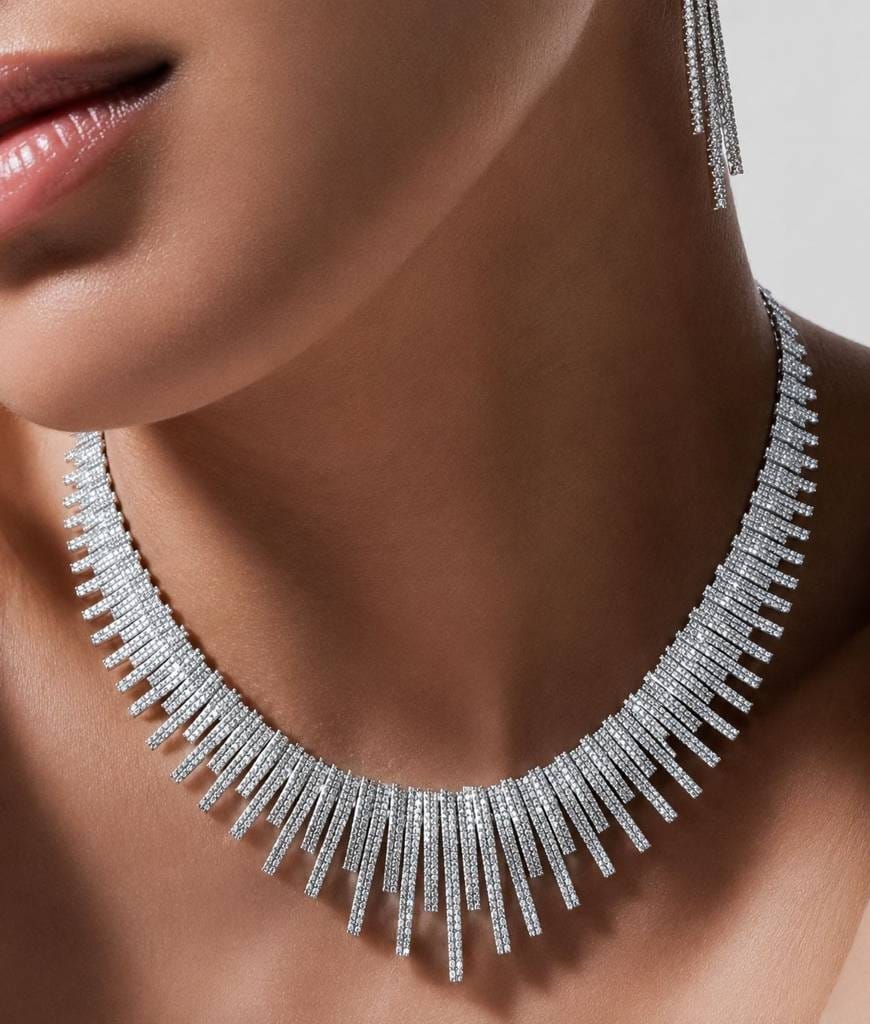
Quick tip: Wear your heaviest earrings at home for an hour or more before the wedding. If they start to hurt, add an ear chain now rather than on the day.
How Many Sets Does This Add Up To?
Once you reuse pieces across functions, most brides land on 3 to 5 sets in total, not one per function. The heavy set is for the wedding day, a statement set covers the sangeet or reception, and light sets cover the rest. To work out your exact number, see this guide on how many bridal jewellery sets you need, based on the size of your wedding.
When to Start Shopping and What to Buy First
Shopping in stages takes the pressure off. Here is a simple timeline that works for most brides:
| When | What to do |
|---|---|
| 3 to 4 months before | Finalise the outfits, then buy the heavy wedding-day set and anything real gold |
| 6 to 8 weeks before | Buy the statement set, function jewellery, bangles and the small pieces |
| The final 2 weeks | Do a full trial, check bangle sizes and test the weight of the earrings |
For most brides, the outfit comes first and the jewellery is chosen to match it. There are exceptions, like heirloom pieces or real gold bought on an auspicious day. This guide on whether to buy bridal jewellery or the lehenga first explains when each order works.
Where to Save and What to Skip
A long list doesn't have to mean a big bill. Three ideas keep the checklist under control:
- Buy smarter: Gold-plated kundan, polki-look sets, lab-grown stones and reused pieces give you the full look for less. Here are 10 budget bridal jewellery ideas.
- Buy less: A matha patti, passa, bajuband, heavy kamarbandh with a lehenga, and extra rings are often worn only once. See the bridal jewellery you can skip and what to wear instead.
- Avoid costly slip-ups: Earrings that hurt, bangles that don't fit and clashing metals are the most common problems. These 7 bridal jewellery mistakes are easy to catch in your trial.
What to Check Before You Buy Bridal Jewellery Online
You can buy almost your entire list from the wedding jewellery edit on Eternz or browse full bridal jewellery sets. Before you add anything to your cart, check these 7 things:
- Metal and finish: Read the product details to see whether it's gold-plated, silver or real 14K or 18K gold.
- Weight: Look for the weight of heavy earrings and necklaces, especially if you'll wear them all day.
- Size: Check the bangle size chart and whether rings and toe rings are adjustable.
- Photos and video: Look for clear photos from several angles and, if possible, a video, so you can see the real shine and size.
- Certification: For real gold, check for the BIS hallmark and HUID code. Here is a complete guide to gold hallmarking.
- Delivery date: Make sure the piece arrives well before your first function, not the day before.
- Return policy: Know how long you have to return or exchange it, in case it doesn't match your outfit.
If this is your first time buying jewellery online, read whether it's safe to buy jewellery online in India and what to look for.
The Pieces That Stay With You After the Wedding
Most of your checklist is worn for a few days, but a few pieces stay for years. The mangalsutra, the bichiya, a pair of light bangles or a kada, and small studs become your everyday jewellery as a married woman. Your bridal set doesn't have to retire either, because it can be split and re-worn at festivals. Here is a full guide to the jewellery to wear after marriage.
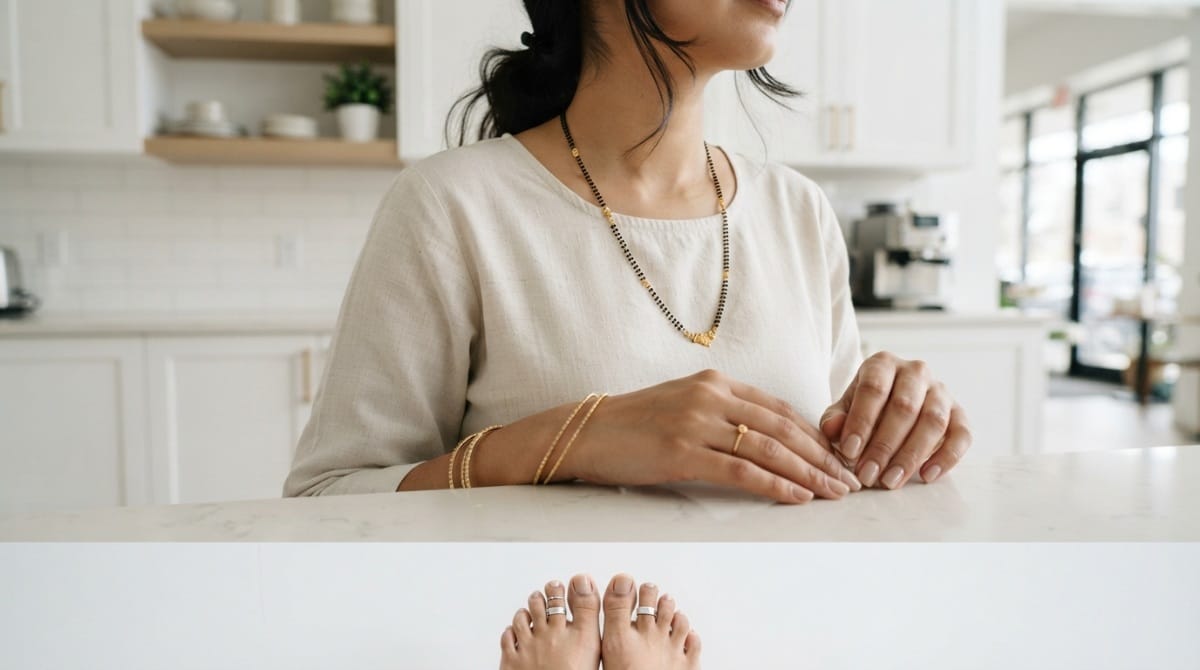
The one-liner to remember: List it by function, buy the heavy set once, and reuse everything else.
Conclusion
Bridal jewellery shopping feels overwhelming because it's usually done as one long, anxious list. Break it down by function, and it becomes six small, easy lists, each with one hero piece. Buy the heavy set once, reuse the light pieces, skip what you'll never wear again, and save room for the pieces that will stay with you long after the wedding.
When you're ready, start with the wedding jewellery edit on Eternz, or browse bridal jewellery sets by style. And for what's new this season, see the latest Indian bridal jewellery trends.
Frequently Asked Questions
1. What jewellery does an Indian bride wear on her wedding day?
Most Indian brides wear a heavy necklace set with matching earrings, a maang tikka or matha patti, bangles or chooda, payal and bichiya. Many also wear a nath, a haathphool and a kamarbandh. The exact pieces depend on your region and your family's customs.
2. What is the 16 shringar jewellery list for a bride?
Solah shringar lists vary by region, but the jewellery usually includes a maang tikka, nath, earrings, necklace or mangalsutra, bangles, armlets, rings, a kamarbandh, payal and bichiya. The rest are adornments like sindoor, bindi, kajal, mehendi and gajra. Here is the full solah shringar list and meaning.
3. What jewellery should I wear for haldi?
Floral jewellery or light oxidised pieces work best, because turmeric can stain them without ruining anything precious. Keep real gold and pearls away from the haldi, and wipe all your pieces clean right after.
4. What jewellery should I wear for mehendi?
Wear statement earrings, a hair chain or a light tikka, and a light choker. Keep your hands free of rings and haathphools until the mehendi dries, then add stack bangles.
5. Can I buy all my bridal jewellery online?
Yes. You can buy most bridal jewellery online, from heavy sets to toe rings. Check the metal, weight, size, photos and return policy, and order early so everything arrives well before your first function.
6. Do I need real gold jewellery for every function?
No. Many brides wear real gold only for the wedding day or the pieces they'll keep, like the mangalsutra. Gold-plated, oxidised, polki-look and lab-grown pieces look beautiful at the other functions.
7. Who traditionally gifts the bride's jewellery?
In many families, the bride's parents give most of her jewellery, and the groom's family gives pieces like the mangalsutra or a set at the wedding. In Punjabi weddings, the chooda traditionally comes from the bride's maternal uncle. For ideas, see these gifting ideas for the bride.
8. Should bridal jewellery be gold or kundan?
It doesn't have to be one or the other. Kundan is a way of setting stones, and most kundan bridal sets today are gold-plated, while real gold is often kept for pieces you'll wear daily. Choose kundan for the grand wedding-day look, and 14K or 18K gold for the pieces you'll keep.
9. Do I need a separate set for the engagement?
Not necessarily. A light pendant set or your reception choker with statement studs works well, since the ring is the real hero. If you have a big engagement party, a statement set from your sangeet can work too.
10. What jewellery does a bride need for a court or intimate wedding?
Keep it simple: one necklace set or statement earrings, your mangalsutra and toe rings if they're part of your customs, and a few bangles. Kavya Maran's three-piece polki look is a good example of how a small, well-chosen set can look completely bridal.