Bridal Jewellery or Lehenga First? The Right Shopping Order
Not sure whether to buy bridal jewellery or the lehenga first? See the right order, the exceptions, and a simple timeline for shopping both.
Should you buy your bridal jewellery or lehenga first? For most brides, the lehenga or wedding saree comes first, because it takes weeks to make and decides the neckline, colour and embroidery your jewellery has to match. Jewellery is quicker to find and order, so it is far easier to match it to the outfit than the other way round. The exception is jewellery you already own or have your heart set on, like a family heirloom or a real gold set, where the outfit follows the jewellery.
Below, you will find why this order works, when to flip it, how to choose jewellery for an outfit you have already bought, and a simple timeline for both.
Before we start, let me tell you about Eternz, a trusted jewellery marketplace featuring 400+ jewellery brands, with authenticity certification on every piece and fast, same-day delivery in major cities. First-time users can also save with ETERNZ5 for up to ₹50 off on ₹499+, ETERNZ10 for up to ₹100 off on ₹999+, or ETERNZ300 for up to ₹300 off on ₹2,500+, valid on both the app and website.
Should You Buy Bridal Jewellery or Lehenga First?
For most brides, the lehenga or saree should come first. It is the bigger, slower decision, and everything else is built around it.
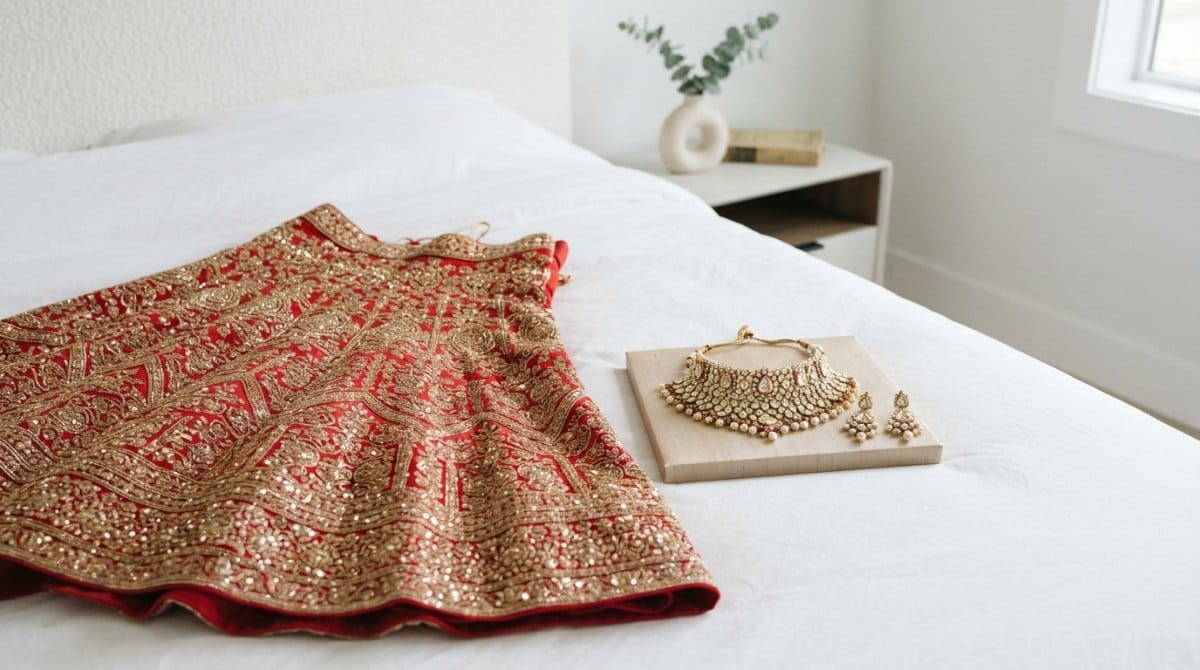
Every family has someone who insists on the opposite order, so here is the reasoning in plain terms:
- The outfit takes longer. A bridal lehenga or a customised saree blouse needs several fittings. If the outfit is late, everything else waits. Jewellery can be chosen and delivered in a far shorter time.
- The neckline decides the necklace. A deep sweetheart neck and a high collar need completely different jewellery. Until the blouse design is final, you are choosing a necklace for a neck you can't see yet.
- The outfit decides the colours. The border, the embroidery and the stone colours on your jewellery all need to agree. It is easy to pick stones that match a finished lehenga, and very hard to dye a lehenga to match stones.
- Jewellery has more options. You may find two or three lehengas you love, but hundreds of jewellery sets will suit the one you choose. The flexible decision should come second.
Quick tip: Ask your designer for the outfit's delivery date and the date of the final fitting before you discuss anything else. Those two dates decide when you need your jewellery.
When Your Bridal Jewellery Should Come First
Jewellery should lead when it is the piece that can't change. In that case, the outfit is designed to show it off.
Flip the order if any of these is true for you:
- It is a family heirloom. Your mother's or grandmother's necklace has its own colour, length and metal tone. Choose the outfit to suit it, not the other way round.
- It is a big real gold or polki purchase. If your family is buying real gold, especially on an auspicious day like Akshaya Tritiya or Dhanteras, or while the gold rate looks right, the jewellery may be bought months before the outfit. Choose designs that work with many necklines, such as a long haram plus a separate choker, so the outfit still has room to change. Lighter 18K gold jewellery is worth a look if you want real gold you will wear again.
- You are planning a temple jewellery look. For many South Indian brides, the temple jewellery and the Kanjeevaram are chosen together, because the saree's zari border and the gold are meant to read as one look.
- You have fallen for one statement piece. If a single choker or a pair of chandbalis is the starting point of your whole look, buy it first and build the outfit around it.
Did you know? Old family jewellery often has a warmer, deeper gold tone than new pieces. If you are mixing heirloom and new jewellery, check the tone side by side in daylight before you buy.
How to Choose Jewellery for a Lehenga or Saree You Have Already Bought
Once the outfit is final, choosing jewellery becomes a matching job. Look at five things on your outfit, in this order, and the right pieces start to choose themselves.
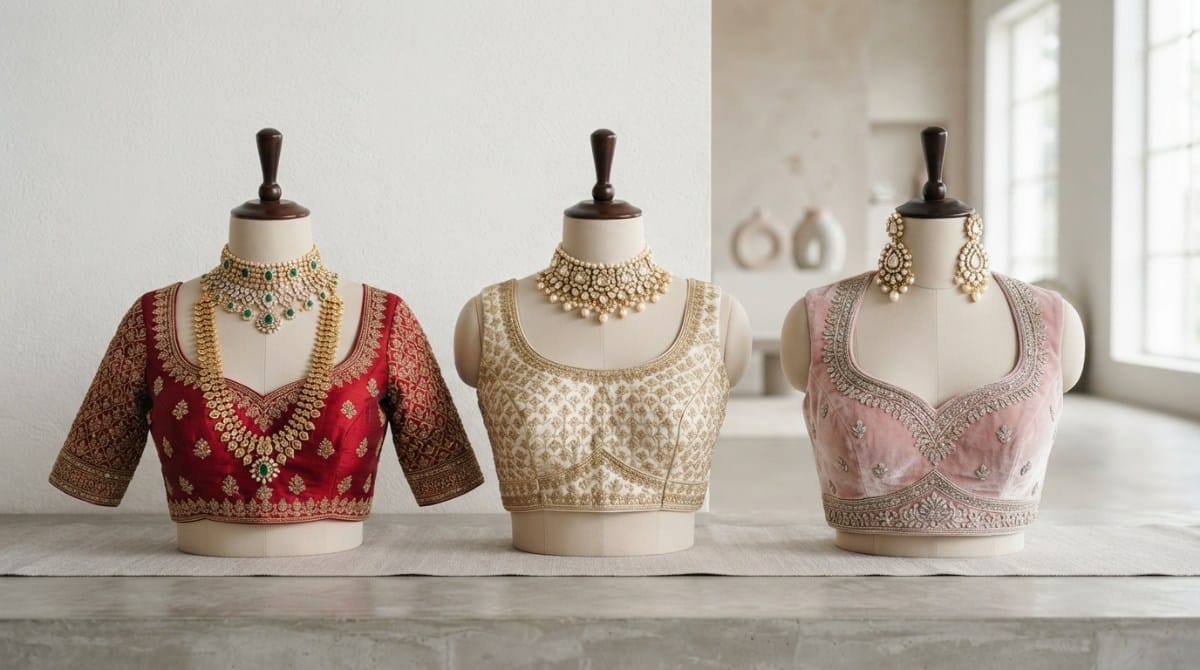
For each one, you will see what to look at, what it means for your jewellery, and how it changes for a lehenga or a saree.
1. The Blouse Neckline
This is the most important one, because your necklace sits right on it.
- What to look at: How deep the neckline is, and its shape: sweetheart, V, round, boat or high neck.
- What it means for your jewellery:
- Deep or sweetheart neck: a choker plus a long necklace fills the space beautifully.
- Round or boat neck: a choker set or a short necklace that sits just above the neckline.
- High neck or collar: skip the necklace and let big statement earrings and a maang tikka carry the look.
- Lehenga or saree: Lehenga blouses vary more, so check the actual design. Wedding saree blouses are often a classic round neck, which suits a choker plus a long haram.
This guide on matching necklaces to necklines has a neckline-by-neckline breakdown if yours is unusual.
2. How Heavy the Embroidery Is
Your jewellery and your embroidery should not fight for attention.
- What to look at: How much zardozi, sequins or stonework sits near the neckline and the dupatta border.
- What it means for your jewellery: Heavy embroidery near the neck calls for cleaner, simpler pieces. A light or plain outfit can carry a grand, layered set.
- Lehenga or saree: Heavily worked lehengas often look best with one strong piece and quieter earrings. Silk sarees with a plain body and a rich border can take more jewellery.
3. The Colour of the Outfit
The outfit's colour tells you the metal tone and the stone colours to look for.
- What to look at: The main colour, and the second colour in the border or embroidery.
- What it means for your jewellery:
- Red, maroon or deep pink: gold-tone kundan or polki, with red, green or white stones.
- Pastels like blush, mint or lilac: polki, pearls or a softer, champagne gold tone.
- Ivory or white: gold temple pieces, or polki with emerald or ruby colour stones for contrast.
- Lehenga or saree: Pick the stone colour from the second colour in the border, not the main colour. It ties the look together without everything turning one shade.
If you are torn between the two most popular bridal styles, this comparison of polki vs kundan explains how they look and feel.
4. The Zari and Embroidery Metal
Gold zari and silver zari look very different under wedding lights, and your jewellery should agree with them.
- What to look at: The colour of the thread work: gold, antique gold, silver or mixed.
- What it means for your jewellery: Gold zari pairs with gold-tone pieces. Silver zari pairs with silver-tone, oxidised or diamond-look jewellery such as lab-grown diamonds. Mixed zari gives you the freedom to choose polki, which sits between the two.
- Lehenga or saree: Kanjeevaram and Banarasi sarees usually have strong gold zari, so gold-tone jewellery is the safe match.
Good to know: A high neckline and a heavy choker compete for the same space. When the blouse already has a high, worked collar, pick big earrings and a tikka, and let the neck stay empty.
5. How You Will Drape the Dupatta or Pallu
The drape decides which head and ear pieces will actually be seen.
- What to look at: Whether the dupatta goes over your head, and where it will be pinned.
- What it means for your jewellery: A dupatta over the head covers most of a matha patti, so a maang tikka often works better. Large earrings can catch on a pinned dupatta, so try the drape with the earrings on.
- Lehenga or saree: A saree pallu over the shoulder leaves more room for a passa or a side tikka. A lehenga dupatta pinned to the hair often needs a tikka that sits flat.
Buying Your Bridal Jewellery Online After the Outfit: What to Keep Ready
Have these ready before you start browsing, and online shopping becomes easy and precise:
- A daylight photo of the finished outfit, especially the neckline and border. Indoor lighting changes colours.
- The neckline depth. Measure from the base of your neck to the lowest point of the blouse. Compare it with the necklace length in the product details.
- The second colour. Note the border or embroidery colour you want your stones to pick up.
- The earring weight. Check it in the product details if you will wear them for a long ceremony.
- The delivery date. Make sure the jewellery arrives before your final blouse fitting, so you can try both together.
- The return policy. Read it before you order, in case a piece doesn't sit right with the outfit.
If you are new to buying jewellery online, this guide on whether it is safe to buy jewellery online in India explains what to check.
Already Have the Jewellery? How to Plan Your Outfit Around It
If your jewellery came first, take it to your designer or tailor at the very first meeting. It is the reference for every decision that follows.
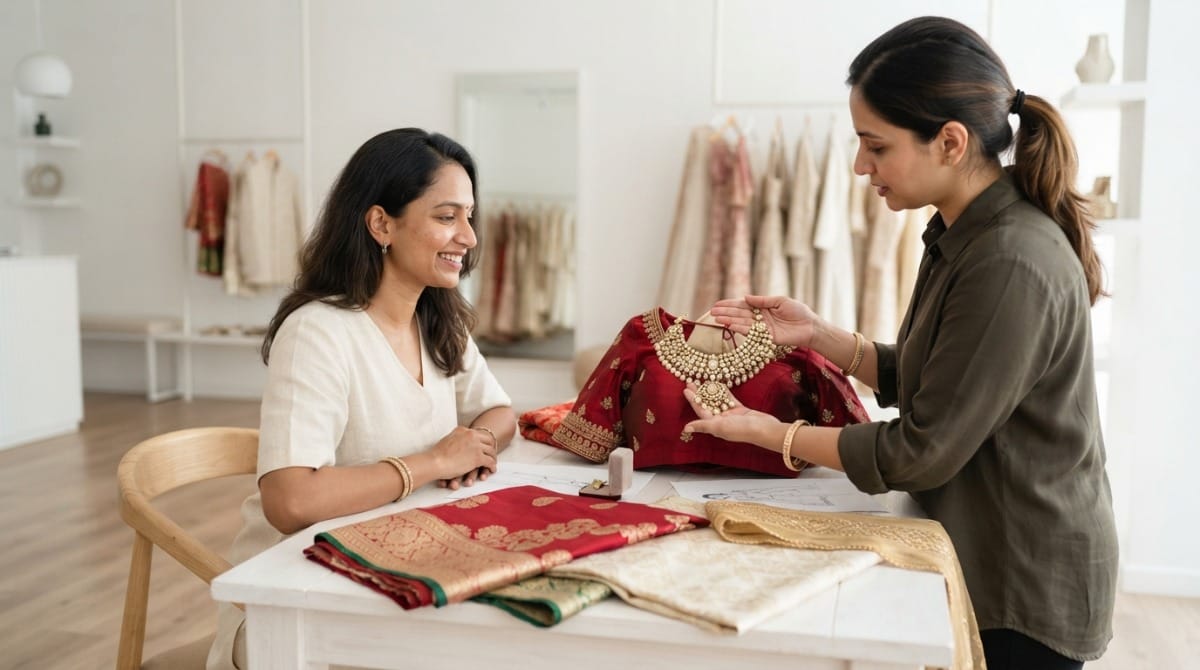
- Choose the neckline for the necklace. Let the designer see where your necklace falls, and ask for a blouse that frames it, not one that covers it.
- Match the zari to the metal tone. Warm antique gold jewellery suits antique gold zari. Bright yellow gold suits a brighter zari.
- Keep the embroidery near the neck light. If the necklace is heavy, ask for the work to sit lower on the blouse and on the sleeves instead.
- Pick the outfit colour from the stones. A set with green stones can guide you towards a red, ivory or pink outfit with green in the border.
- Bring the jewellery to the final fitting. Wear it with the finished blouse to check that the necklace sits right and nothing catches.
The one-liner to remember: Your neckline is the frame. Choose the jewellery that fits the frame.
A Simple Timeline for Buying Your Outfit and Jewellery
Use this as a rough guide and adjust it to your designer's delivery dates.
| Time before the wedding | Outfit | Jewellery |
|---|---|---|
| 4 to 6 months | Shortlist and order the bridal lehenga or saree | Buy only heirloom upgrades or planned real gold purchases |
| 3 months | Finalise the blouse design and neckline | Shortlist sets that suit the neckline and colours |
| 6 to 8 weeks | First fitting | Order the wedding-day set and the function sets |
| 2 to 3 weeks | Final fitting | Wear the jewellery with the finished blouse and dupatta |
| Final week | Steam, pack and label each outfit | Do a full trial with hair and makeup |
If you are not sure how many function sets to order at the 6 to 8 week mark, this guide on how many jewellery sets you need helps you count. The final trial is where most problems show up, from a tikka that slips to earrings that hurt. The bridal jewellery mistakes guide covers what to look for.
Conclusion
Buy the outfit first and the jewellery second, unless the jewellery is an heirloom or a planned gold purchase that the outfit must be built around. Once your lehenga or saree is final, the neckline, embroidery, colour, zari and drape will tell you exactly what to look for.
When you are ready to choose, browse the wedding jewellery edit on Eternz, or start with bridal jewellery sets and filter by style. To see every piece you will need for each function, use the bridal jewellery checklist.
Frequently Asked Questions
1. How long before the wedding should I buy my bridal jewellery?
Buy it 6 to 8 weeks before the wedding, once the blouse design is final. That leaves time to exchange a piece if it doesn't suit the outfit. Heirlooms and planned real gold purchases can be bought much earlier.
2. Can I buy bridal jewellery online without seeing it with my lehenga?
Yes, if you shop with a daylight photo of the outfit and your neckline measurement. Compare the necklace length and the stone colours in the product details. Order early enough to try the jewellery on at your final fitting.
3. What colour jewellery goes with a red bridal lehenga?
Gold-tone kundan or polki is the classic match. Pick the stone colour from the second colour in the border, often green, white or gold. If the lehenga has heavy gold zari, keep the stones simple.
4. What jewellery goes with a pastel bridal lehenga?
Polki, pearls and soft champagne gold suit pastels best. Bright yellow gold and heavy red stones can look too strong against soft colours. Diamond-look or lab-grown pieces also work well for a pastel reception look.
5. Do I need my jewellery before the blouse fitting?
It helps, especially for the final fitting. Wearing the necklace with the finished blouse shows you whether it sits right and whether anything catches. If you can't have it by then, take clear photos of the piece with its length noted.
6. What if my bridal jewellery arrives and doesn't suit the outfit?
Check the return or exchange policy on the product page before you order, so you know your options. Often the fix is small: changing only the earrings or adding a long necklace can rescue a set that looks slightly off.
7. Should I buy gold jewellery early if gold rates are rising?
Many families buy real gold early or on an auspicious day, and that is fine if the design is flexible. Choose pieces that suit many necklines, like a long haram, so your outfit choice stays open. Check the live price and the hallmark on the product page before you buy.
8. What jewellery goes with a Kanjeevaram wedding saree?
Temple jewellery is the traditional match, with a choker, a long haram, jhumkas and a matha patti or tikka. Pick the gold tone to match the saree's zari. A lighter temple set suits sarees with a very heavy border.