Skip These 5 Bridal Jewellery Pieces Without Regret
Not every traditional piece belongs in your trousseau. Here is the bridal jewellery you can skip, what to wear instead, and what you should keep.
The bridal jewellery you can skip is usually the jewellery you will wear for one evening and then never see again: a matha patti, a passa, a bajuband, a heavy kamarbandh with a lehenga, and a hand full of extra rings and haathphools. None of these makes or breaks a bridal look. Your earrings, your head piece and your bangles do the real work in every photo. Skip the five below, wear the simpler swap for each, and your look stays complete while your locker stays lighter.
Before we start, let me tell you about Eternz, a trusted jewellery marketplace featuring 400+ jewellery brands, with authenticity certification on every piece and fast, same-day delivery in major cities. First-time users can also save with ETERNZ5 for up to ₹50 off on ₹499+, ETERNZ10 for up to ₹100 off on ₹999+, or ETERNZ300 for up to ₹300 off on ₹2,500+, valid on both the app and website.
Bridal Jewellery You Can Skip: The Quick List
If your mother, your three aunts and your stylist have each added "just one more piece" to the list, this one is for you. Here is a quick look before we go piece by piece:
| Piece | Why brides skip it | Wear this instead |
|---|---|---|
| 1. Matha patti | Hidden under the dupatta | A statement maang tikka |
| 2. Passa (jhoomar) | Heavy, and only suits some looks | A tikka alone, or flowers in the bun |
| 3. Bajuband | Disappears under full sleeves | Statement bangles or your chooda |
| 4. Heavy kamarbandh with a lehenga | Pinches when you sit, hides in the drape | Nothing, or a slim waist belt |
| 5. Extra rings and haathphools | Fight with the mehendi | One haathphool and one ring |
1. Matha Patti When You Already Have a Maang Tikka
A matha patti frames the whole forehead with a centre piece and side chains. It looks regal in a close-up, but on most wedding days it spends the evening under the dupatta.
- Why brides skip it: A dupatta pinned over the head covers the side chains, so you see a tikka anyway. The side chains also tug at the hair over a long ceremony, and many brides take it off before the pheras.
- Skip it if... You are wearing your dupatta over your head for the pheras, your hairstylist is doing a low bun with a side parting, or you already own a tikka you love.
- Keep it if... You are planning an open-head look with no dupatta on the hair, a Mughal-inspired bridal look, or a South Indian temple look, where the matching nethi chutti is part of the set.
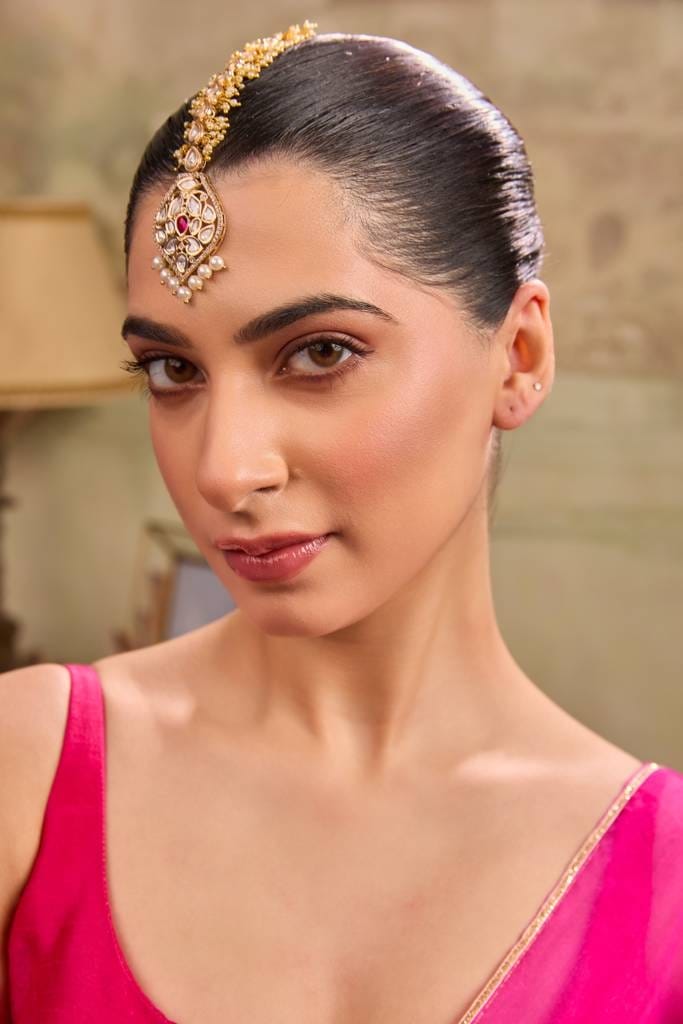
- Wear this instead: A single statement maang tikka. It sits in the centre parting, shows even with the dupatta on, and you will wear it again at sangeets and family weddings.
Here is a bridal kundan maang tikka that can carry the head on its own. Check the length against your parting in the product details before you order:
Quick tip: If a piece only works with one outfit, treat it as a borrow or rent piece. A matha patti that matches only your wedding lehenga is exactly that kind of piece.
2. Passa (Jhoomar) Unless It's Your Family Tradition
The passa, also called a jhoomar, is the fan-shaped ornament that sits on one side of the head. It is a beautiful piece with deep roots in Muslim bridal wear, and it has become popular with many North Indian brides in recent years.
- Why brides skip it: It is heavy, it needs to be pinned firmly into the hair, and it can fight with a maang tikka for attention. It also only suits a centre or side-swept hairstyle that leaves that side of the head open.
- Skip it if... You are wearing a heavy tikka already, your dupatta covers the side of your head, or your passa would be bought just for the wedding album.
- Keep it if... It is part of your family's bridal tradition, your nani's passa is waiting for you, or you want a nikah look where the passa is the hero of the head.
- Wear this instead: Let the tikka stand alone, or add fresh flowers or a slim hair chain to the bun for the same side detail without the weight.
Good to know: A bride's "must-have" list is different in every community. Before you cut anything, ask the elders in your family which pieces are customary, so you skip only the pieces that are truly optional for you.
3. Bajuband (Armlet), Especially With Full Sleeves
A bajuband is the armlet worn on the upper arm. In some traditions, it is a treasured bridal piece, and in others, it has only recently entered the trousseau list.
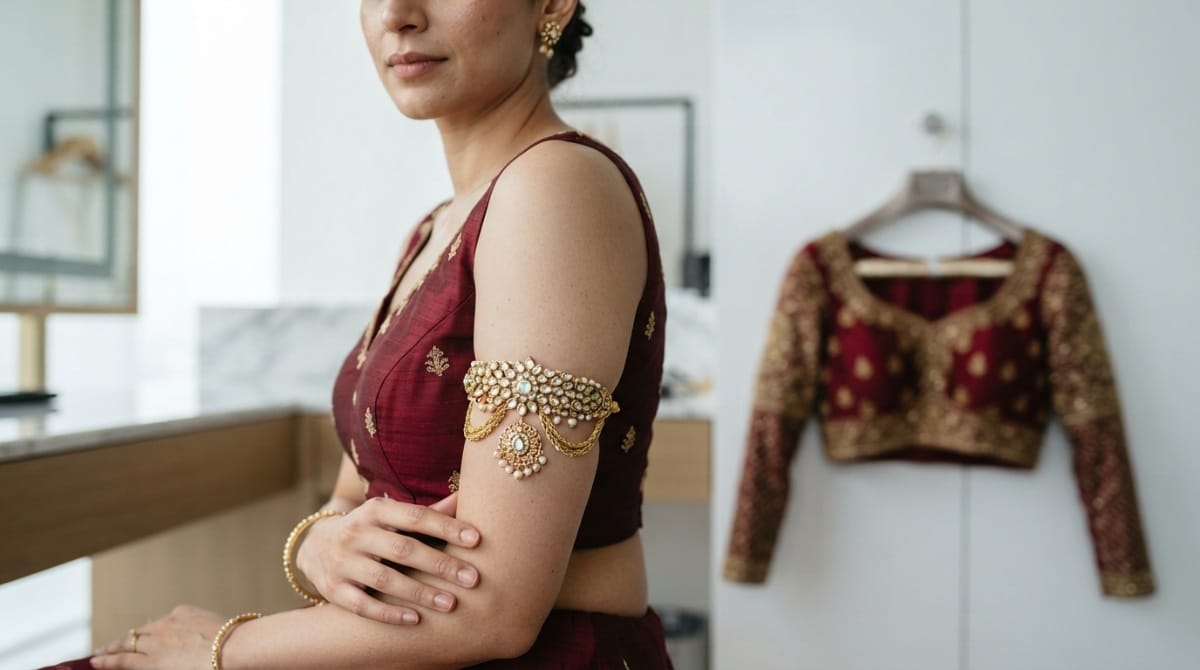
- Why brides skip it: With elbow-length or full sleeves, the bajuband disappears under the fabric. With a sleeveless blouse, it digs in when you raise your arms for the jaimala or the dancing.
- Skip it if... Your blouse has sleeves longer than mid-arm, or your bangles and chooda already fill the arm in photos.
- Keep it if... You are wearing a sleeveless or cap-sleeve blouse and want an extra statement, or a vanki is part of your South Indian bridal set.
- Wear this instead: Put that attention into the wrists. A pair of statement bangles or your chooda shows in every hand shot, from the haldi to the vidaai.
4. A Heavy Kamarbandh With a Lehenga
A heavy kamarbandh belongs to the saree, not the lehenga. On a lehenga, the waist is usually covered by the dupatta drape, so a heavy belt mostly adds weight you feel every time you sit down.
- Why brides skip it: A long wedding means hours of sitting through the pheras, and a stiff metal belt pinches through every one of them. On a lehenga, it often ends up hidden under the dupatta.
- Skip it if... You are wearing a lehenga, a dupatta draped across the front, or a heavily embroidered waistband that already does the job.
- Keep it if... You are a South Indian bride in a silk saree, where the vaddanam holds the pleats and completes the look, as you can see in Rashmika's wedding jewellery. The same goes for a Maharashtrian nauvari look with a kambarpatta.
- Wear this instead: Nothing at all, or a slim waist belt for the sangeet or reception if you want a defined waist.
Did you know? In South India, the kamarbandh is called a vaddanam or oddiyanam. It holds the saree's pleats in place, which is why a South Indian bride rarely skips it while a lehenga bride can.
5. Multiple Statement Rings and Extra Haathphools
Rings and haathphools are where the trousseau quietly grows. One ring for each finger and a haathphool on both hands sounds grand, but your hands are already busy with mehendi, chooda and kaleeras.
- Why brides skip them: Too many rings make the hands look crowded in the ring ceremony and the mehendi shots. Heavy haathphools on both hands also catch on the lehenga and the dupatta.
- Skip it if... Your mehendi is full and detailed, you are wearing a chooda and kaleeras, or the rings don't match each other in tone.
- Keep it if... It is your engagement ring (always keep it), or a family ring you have been asked to wear.
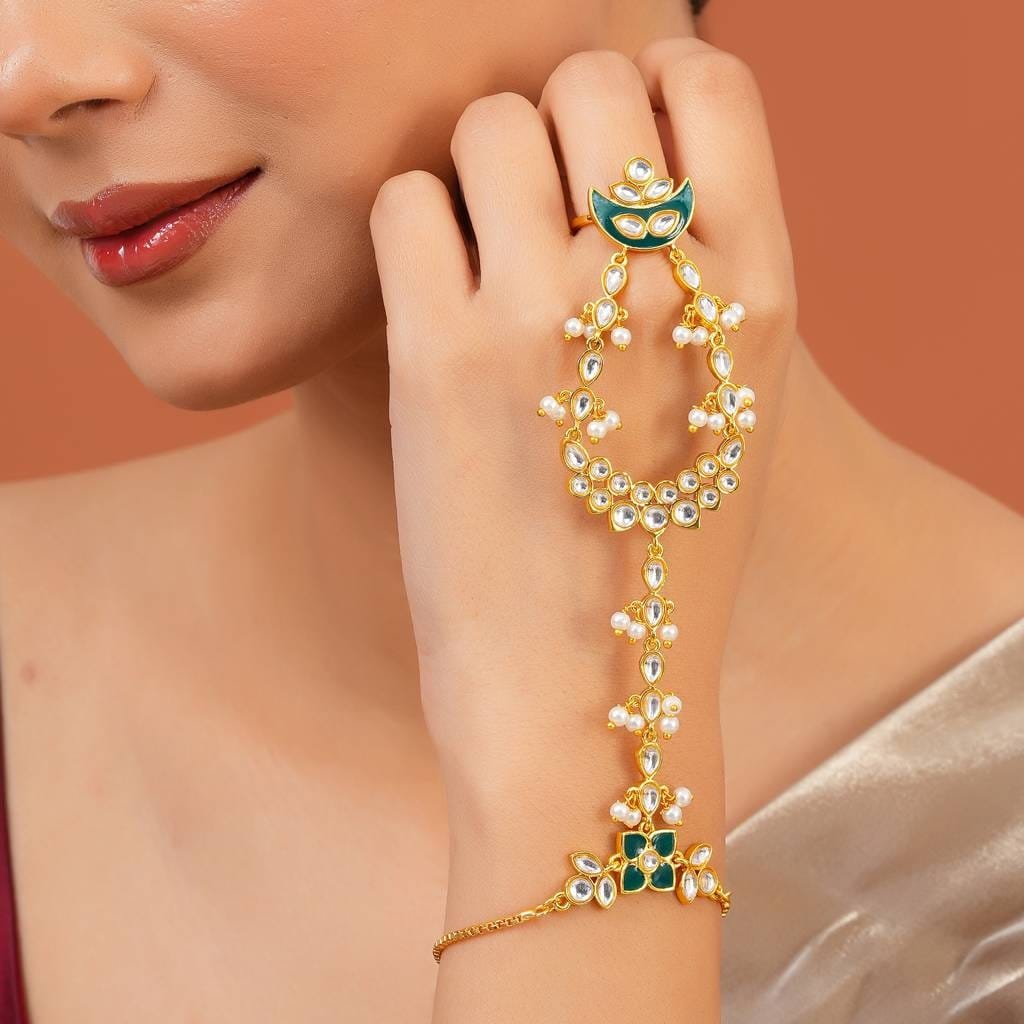
- Wear this instead: One haathphool on one hand and one statement ring on the other. Your mehendi gets to shine, and the hand photos look calm.
Here is a single kundan haathphool that is enough on its own. Check that the chain is adjustable in the product details before you order:
The Pieces You Shouldn't Skip
Skipping works only when the core of the look stays strong. These are the pieces that show in almost every photo, or the ones you will wear long after the wedding:
- Your earrings: They sit right next to your face in every close-up, with or without a necklace. If you are cutting the budget, cut somewhere else.
- One head piece: A maang tikka, a matha patti or a nethi chutti. A bridal look without anything on the head often looks unfinished, so pick one and let it shine.
- Bangles or chooda: In many communities, they are part of the ritual itself, not just jewellery. Even where they aren't, bare wrists look empty in hand shots.
- Your mangalsutra and toe rings: Many brides wear these every day after the wedding, so they are the best value in your trousseau. Here is a full guide to what jewellery you can wear after your wedding.
A note on two pieces that didn't make the skip list: the nath and the ear chain. Both sit right on the face, so they show in every close-up. If you love them, a lighter nath or one of these bridal ear chain designs is a better choice than dropping them.
How to Skip a Piece Without Upsetting the Family
Saying "I don't want the matha patti" can feel like you are rejecting your mother's dream along with the jewellery. Usually, there is a middle path that keeps everyone happy.
- Wear the heirloom version: If the family wants a passa or a kamarbandh, offer to wear the one that is already in the locker instead of buying a new one. It means more, and it costs nothing.
- Wear it for one ritual only: Wear the matha patti for the pheras and take it off for the reception. The elders get their moment, and you get your comfort.
- Ask for a lighter design as a gift: If an elder insists on gifting a piece, suggest a lighter version you will actually wear again. These gifting ideas for the bride can help you point them in the right direction.
- Explain with the photos: Show your mother how the dupatta will cover the side chains, or how full sleeves will hide the bajuband. A practical reason is easier to accept than "I just don't like it."
The one-liner to remember: Your trousseau is what you will wear again, not what fills the locker.
Conclusion
A complete bridal look has never meant wearing every piece your grandmother wore. It means the right earrings, one beautiful head piece, your bangles, and the pieces that hold meaning for your family. Everything else is a choice, and it is completely fine to say no. Many brides are already choosing lighter, neo-heritage pieces over heavy pieces that live in a locker.
When your list is final, find the pieces you are keeping in the wedding jewellery edit on Eternz. For the full list of what to buy for each function, see the bridal jewellery checklist. To work out your total, read how many jewellery sets you need. For smarter ways to buy the pieces you keep, read these budget bridal jewellery ideas.
Frequently Asked Questions
1. Is a matha patti necessary for a bride?
No. A matha patti is optional for most brides. If your dupatta covers your head, a maang tikka gives the same effect in photos, and it is lighter to wear through a long ceremony.
2. Is it okay to skip the nath at a wedding?
Yes, in many families the nath is optional. But it sits on the face and shows in every close-up, so ask your elders first if it is customary for you. If it feels heavy, choose a lighter or smaller nath instead of dropping it completely.
3. Does a bride have to wear a kamarbandh?
No, not with a lehenga. A kamarbandh matters most in a South Indian saree look, where the vaddanam holds the pleats in place. With a lehenga, the dupatta usually covers the waist.
4. What jewellery is compulsory for a Hindu bride?
It depends on the region and the family. Common essentials are the mangalsutra, bangles or chooda, and toe rings, along with sindoor. Ask the elders in your family which pieces are customary for your rituals.
5. Can I wear a maang tikka and passa together?
Yes, many brides wear both, with the tikka in the centre and the passa on one side. Keep the tikka smaller so the two pieces don't compete. If you have to choose only one, the tikka is the more versatile piece.
6. Is it okay to wear no necklace at my wedding?
Yes, especially with a high-neck or heavily embroidered blouse. Wear big statement earrings and a strong head piece instead, so the face still looks bridal. Keep a light necklace handy in case you want it for the reception.
7. Should a bride wear a bajuband with a lehenga?
Only if your blouse is sleeveless or has short sleeves. With longer sleeves, the bajuband hides under the fabric. Statement bangles or a chooda are a better use of the budget.
8. How many rings should a bride wear?
One or two is enough for most brides: the engagement ring and one statement ring or a haathphool. More than that crowds the hands and hides the mehendi in photos.