Rise of Lumba Jewelry: Celebrating the Special Bhabhi Bond
Discover the meaning of Lumba jewelry, its traditions, modern styles, and its role in celebrating the Nanad-Bhabhi bond.
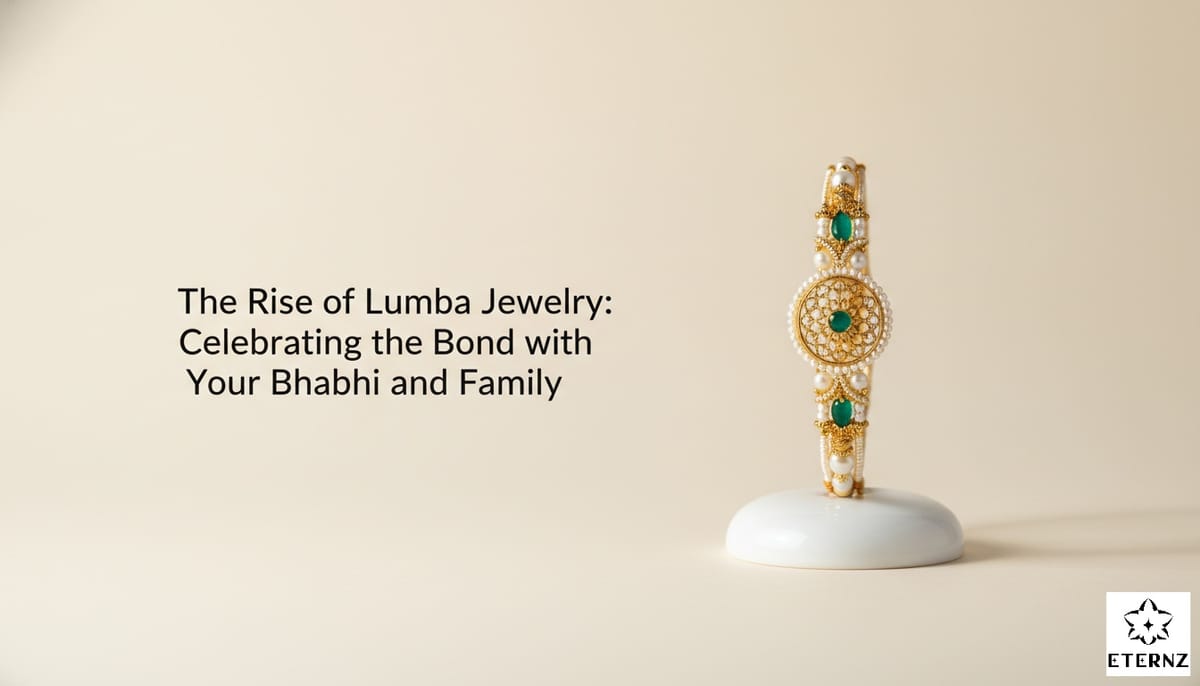
The Rise of Lumba Jewelry: Celebrating the Bond with Your Bhabhi is a growing trend that highlights the special relationship between a sister-in-law and her husband’s sister. This tradition involves tying a decorative hanging jewel or thread, known as a Lumba, to the bangle of the brother’s wife during the Raksha Bandhan festival. While it started as a regional custom in Rajasthan, it has now become a global symbol of female friendship and family unity.
The Meaning and Origin of Lumba Jewelry
Lumba jewelry is a traditional decorative piece tied to the bangle of a sister-in-law to welcome her into the family and pray for her well-being. This custom ensures that the wife is included in the sacred bond of protection that traditionally exists between brothers and sisters. It serves as a physical reminder that the Bhabhi is now a vital protector and friend within her new home.
The word Lumba literally means "pendant" or "tassel" in the Marwari language. Historically, the Marwari community in Rajasthan started this practice to make the sister-in-law feel loved and secure. They believed that when a brother gets married, his wife becomes his better half, so any prayer for his long life must include her too. Today, this tradition has spread far beyond Rajasthan. It is now common in many parts of India and among the global diaspora.
- Lumba jewelry is tied to the left bangle of the sister-in-law.
- It signifies the acceptance of the Bhabhi into her new family circle.
- The ritual strengthens the "Nanad-Bhabhi" (sister-in-law) relationship.
- It often features vibrant colors like red, yellow, and green, which are considered auspicious.
- Modern versions include semi-precious stones, pearls, and even personalized charms.
The significance of Lumba jewelry becomes clearer when seen within the context of the Raksha Bandhan 2026 guide, which explores the festival’s deeper cultural meaning.
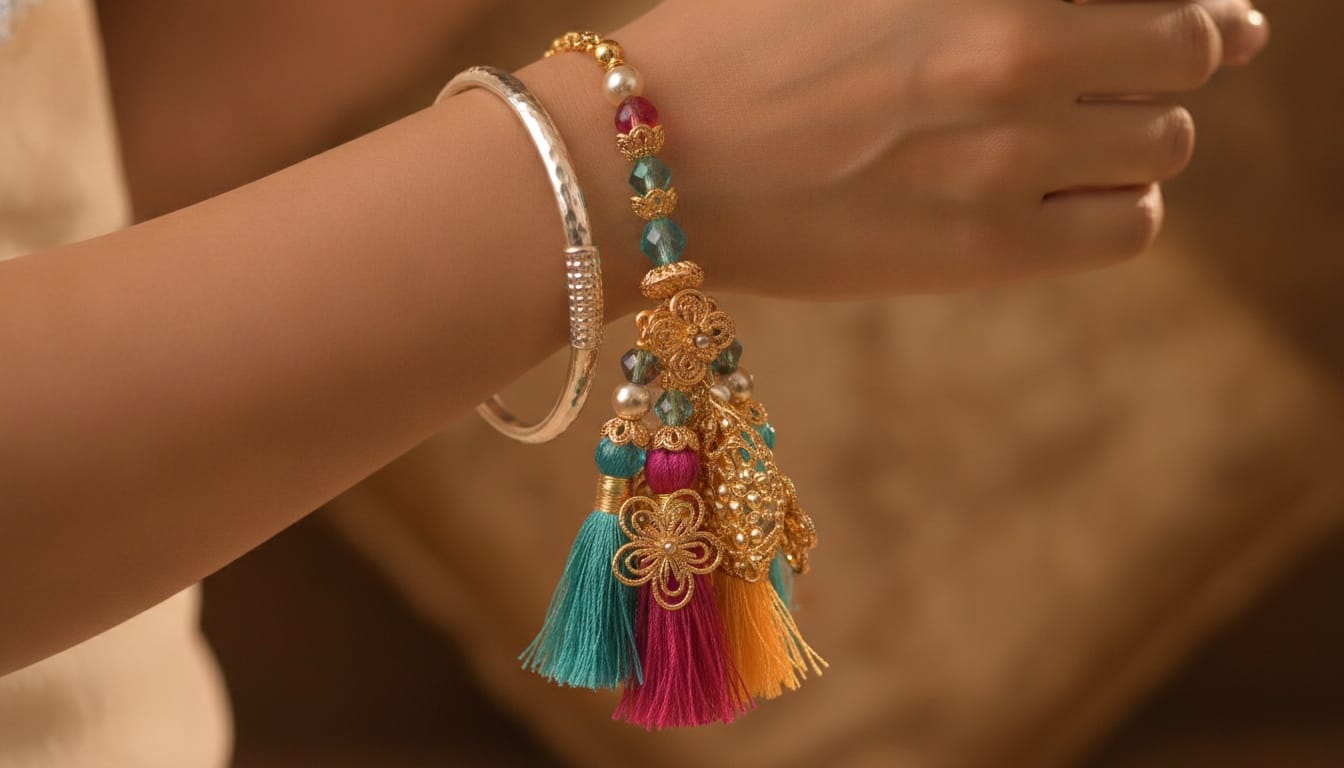
Actually, the Lumba was originally designed to be tied specifically to the "Chooda" (bridal bangles). In Marwari culture, the hanging tassels were thought to protect the couple’s household from negative energy and bring financial stability to the family.
The Rise of Lumba Jewelry: Celebrating the Bond with Your Bhabhi in Modern Times
The Rise of Lumba Jewelry: Celebrating the Bond with Your Bhabhi has gained momentum because it celebrates female solidarity in an era where family dynamics are shifting. Modern sisters see their Bhabhis as mentors, friends, and confidantes rather than just "the brother’s wife." This shift in perspective has turned a simple thread into a high-fashion accessory that women are proud to wear long after the festival ends.
Social media has played a massive role in this popularity. On platforms like Instagram and Pinterest, users share photos of matching jewelry sets for sisters and sisters-in-law. This has pushed jewelry designers to create more durable and stylish pieces. Instead of cheap threads that break easily, we now see Lumba pieces made of silver, gold plating, and fine Kundan work.
| Feature | Traditional Lumba | Modern Lumba Jewelry |
|---|---|---|
| Material | Silk thread and plastic beads | Silver, gold plating, semi-precious stones |
| Longevity | Worn for a few days | Designed to be a permanent accessory or keychain |
| Design | Basic tassels and mirrors | Minimalist, floral, or personalized themes |
| Purpose | Purely religious ritual | Fashion statement and friendship symbol |
Shop rakhis online at Eternz in 925 certified silver, BIS hallmarked gold, and designer styles from top brands, with fast delivery across India.
Not sure what to pick? Explore the complete Raksha Bandhan collection featuring Rakhis, gifts, hampers, jewellery, and more for brothers, sisters, bhabhi, and kids.
Why This Bond is Unique and Worth Celebrating
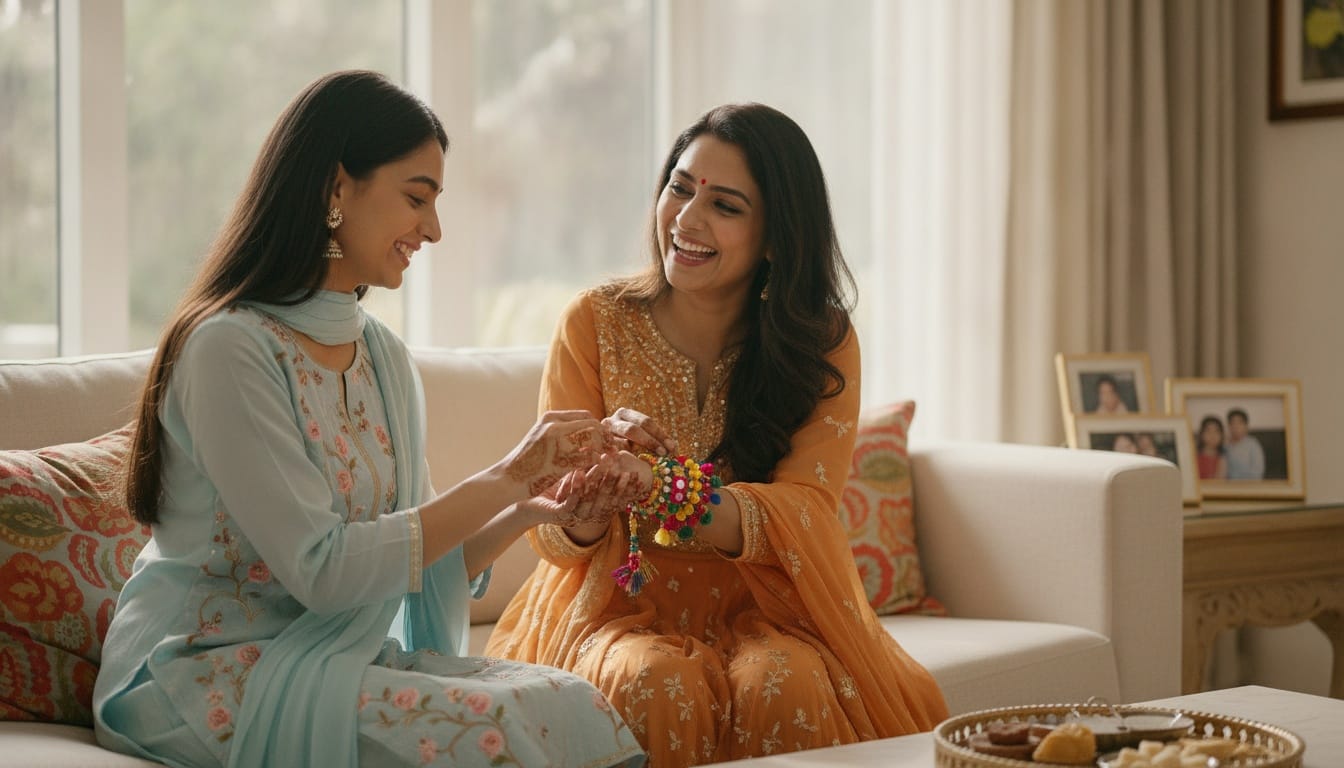
The bond between a sister and her Bhabhi is unique because it is a chosen friendship that bridges two different families. Unlike a biological sisterhood, this relationship starts with a legal union but grows through shared secrets, kitchen chats, and mutual support. Celebrating this with Lumba jewelry acknowledges that the Bhabhi is the glue holding the family together.
In many Indian households, the sister-in-law is the person who understands the family's internal world best. She often acts as a mediator between the siblings and the parents. By gifting a Lumba, the sister acknowledges this hard work. It is a way of saying, "I see you, I appreciate you, and you are one of us."
- It breaks the outdated "evil sister-in-law" trope seen in old movies.
- It encourages a culture of women supporting other women within the home.
- It creates a safe space for the newcomer to express herself.
- The Lumba acts as a "friendship bracelet" that carries deep cultural weight.
The Lumba isn't just for the Bhabhi; it's a gift for the whole family. When the women of the house are in harmony, the entire home feels more peaceful. A small piece of jewelry is often the first step in building that lifelong peace.
Popular Styles of Lumba Jewelry for Every Personality
Choosing the right Lumba jewelry involves matching the piece to the personality and lifestyle of your sister-in-law. Since this jewelry hangs from the wrist, it needs to be comfortable but eye-catching. From heavy traditional designs to sleek modern interpretations, the variety available today is nearly endless.
For a Bhabhi who loves traditional fashion, a Kundan or Meenakari Lumba is the best choice. These feature intricate enamel work and bright colors. For a Bhabhi who works in a corporate setting or prefers a minimalist look, a simple pearl drop or a silver-toned charm Lumba works perfectly.
- Kundan Tassels: These are heavy, royal-looking pieces that use glass stones set in gold foil.
- Gota Patti Designs: Lightweight and made of fabric, these are perfect for those who find metal jewelry heavy.
- Pom-Pom and Bead Styles: Fun, colorful, and casual, these are great for younger Bhabhis who like bohemian fashion.
- Silver Filigree: Fine wirework that looks like lace, offering a sophisticated and timeless appeal.
- Personalized Charms: Some modern Lumbas feature initials or small symbols like "Super Bhabhi" or "Best Friend."
How to Style Lumba Jewelry Beyond Raksha Bandhan
Lumba jewelry is no longer a one-day accessory because many modern designs allow the wearer to repurpose the piece. You can detach the decorative pendant and use it in several creative ways to keep the memory of the bond alive. This versatility is a major reason why high-quality Lumba jewelry is seeing such a rise in sales.
Many women now use their Lumba pendants as keychains for their house or car keys. Others attach them to the zippers of their favorite handbags as a "bag charm." Some even convert the jewelry into a necklace pendant or a brooch. This gives the gift a long life and makes the investment more meaningful.
| Repurposing Idea | How to Do It | Best Style for This |
|---|---|---|
| Bag Charm | Clip it onto the side handle of a leather tote | Large tassels or metal charms |
| Keychain | Add a sturdy metal ring to the top loop | Beaded or durable metal styles |
| Home Decor | Hang it from a curtain tie-back or a car mirror | Gota Patti or fabric-based designs |
| Ethnic Brooch | Pin it to the shoulder of a saree or dupatta | Kundan or heavy stone-set pieces |
If you want the Lumba to last for years, look for pieces labeled "oxidized silver" or "gold plated." Avoid pieces with glued-on plastic beads, as these tend to fall off. A high-quality hook at the top makes it much easier for your Bhabhi to turn it into a keychain later!
The Cultural Impact of the Rise of Lumba Jewelry
The Rise of Lumba Jewelry: Celebrating the Bond with Your Bhabhi reflects a broader change in how society views marriage and family integration. It moves the focus away from a male-centric ritual and puts the spotlight on the relationship between women. This change fosters a sense of belonging for the bride, who might feel like an outsider when she first enters a new home.
When a sister takes the time to select a beautiful Lumba, it shows she has thought about her Bhabhi’s tastes and preferences. This effort builds trust. In a world where families are often spread across different cities or countries, these small rituals act as anchors. They remind everyone involved of their roots and the people who matter most.
- It promotes inclusivity within festive celebrations.
- It honors the "Grihalakshmi" (the lady of the house) during a major festival.
- It provides an opportunity for gift-giving that is personal rather than generic.
- It serves as a bridge for the younger generation to learn about Marwari traditions.
How to Choose the Perfect Lumba for Your Bhabhi
Selecting the perfect piece of Lumba jewelry requires a mix of cultural understanding and personal observation. You should consider her wardrobe, her daily activities, and what kind of jewelry she usually wears. A well-chosen Lumba is a sign that you pay attention to the small details of her life.
If your Bhabhi wears a lot of Western clothes, a metallic, minimalist Lumba will be more useful to her than a bright pink fabric one. If she loves attending traditional events and wearing sarees, go for something grand with plenty of "latkans" (hanging elements). The goal is to give her something she will actually want to wear or display.
- Check the weight: Since it hangs from a bangle, it shouldn't be so heavy that it pulls her arm down.
- Look at the attachment: Some have a simple thread, while others have a metal clasp. Clasps are generally more secure.
- Color coordination: Try to pick a color that matches the outfit she plans to wear on Raksha Bandhan.
- Check for allergens: Ensure the metal parts are nickel-free if she has sensitive skin.
- Think about durability: If she has small children, avoid pieces with tiny, loose parts that could be easily pulled off.
Conclusion: A Small Thread with a Big Heart
The Rise of Lumba Jewelry: Celebrating the Bond with Your Bhabhi is more than just a trend in the fashion world. It is a beautiful evolution of an ancient custom that brings women closer together. By tying a Lumba, a sister welcomes her Bhabhi into her heart and her home, creating a cycle of love and protection that lasts a lifetime.
Whether it is a simple silk thread or a grand Kundan masterpiece, the Lumba represents a promise of friendship. As this tradition continues to grow and adapt to modern styles, it remains a powerful symbol of the "Nanad-Bhabhi" bond. Next time you celebrate Raksha Bandhan, remember that the Lumba is a small thread, but it carries a very big heart.
Frequently Asked Questions
1. What is the significance of Lumba jewelry for a Bhabhi?
Lumba jewelry is a decorative pendant tied to a sister-in-law's bangle to welcome her into the family. It signifies protection, acceptance, and the strengthening of the bond between a woman and her brother's wife during the Raksha Bandhan festival.
2. How can you repurpose Lumba jewelry after the festival?
Modern Lumba pieces are designed for versatility. You can repurpose them as stylish keychains, decorative bag charms, or even ethnic brooches for sarees and dupattas by using the attachment hooks provided on high-quality jewelry designs.
3. What are the most popular styles of modern Lumba jewelry?
Popular styles include royal Kundan tassels, lightweight Gota Patti designs, and elegant silver filigree. Many people also choose personalized charms featuring initials or titles like Best Bhabhi to add a unique and special touch to the gift.
4. Is the Lumba tradition limited to specific regions of India?
While the tradition originated within the Marwari community of Rajasthan, it has now become a global trend. People across India and the international diaspora celebrate this ritual to honor female friendship and unity within the household.
5. What is the difference between Rakhi and Lumba jewelry?
Rakhi is tied by a sister on her brother’s wrist, while Lumba is tied to the sister-in-law’s bangle. Together, they symbolize the bond between brother, sister, and Bhabhi during Raksha Bandhan.
6. What materials are used in Lumba jewelry?
Lumba jewelry is made using materials like silk thread, beads, kundan, pearls, oxidized silver, gold plating, and fabric-based designs depending on traditional or modern styles.
7. Can Lumba jewelry be worn beyond Raksha Bandhan?
Yes, modern Lumba designs are created to be reusable as fashion accessories such as bag charms, keychains, or decorative ethnic jewelry, making them suitable for long-term use.
8. How do I choose the right Lumba for my Bhabhi?
Choose based on her style, comfort, and lifestyle. Minimal designs suit working professionals, while heavier traditional designs are ideal for festive or ethnic wear preferences.