Nose Pin vs Nose Ring vs Nose Stud: What's the Difference?
Confused by nose jewellery names? Here's the simple difference between nose pins, studs and rings, plus tips to pick the right one for your piercing.
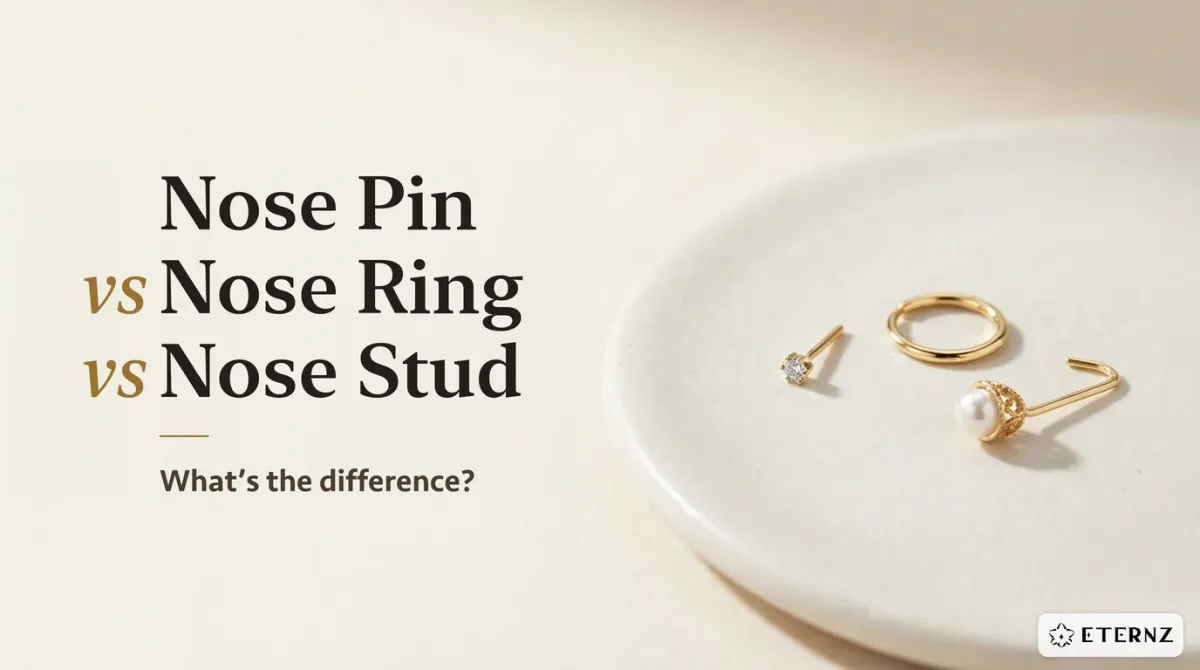
In India, a nose pin and a nose stud are the same thing: a small piece that sits flat on the side of your nostril, with a post that goes through the piercing. A nose ring is different. It is a circle that loops through the piercing and wraps around the edge of the nostril, from a thin everyday hoop to a big bridal nath.
So the nose pin vs nose ring vs nose stud question really comes down to two shapes, not three. Studs are the easier choice for a new piercing and for everyday wear, while rings make a bolder statement once your piercing has healed. Here is how to tell them apart, and how to pick the one that suits you.
Before we start, let me tell you about Eternz, a trusted jewellery marketplace featuring 400+ jewellery brands, with authenticity certification on every piece and fast, same-day delivery in major cities. First-time users can also save with ETERNZ5 for up to ₹50 off on ₹499+, ETERNZ10 for up to ₹100 off on ₹999+, or ETERNZ300 for up to ₹300 off on ₹2,500+, valid on both the app and website.
Nose Pin vs Nose Ring vs Nose Stud at a Glance
Before the details, here is the quick difference in one table:
| Nose pin | Nose stud | Nose ring | |
|---|---|---|---|
| What it looks like | A small stone, flower or dot on the nostril | Same as a nose pin | A circle or half circle around the nostril edge |
| How it stays in | A post with a screw, wire, L-bend or bone end inside | Same as a nose pin | The ring itself loops through, often with a clicker or a small gap |
| Good for a new piercing? | Yes, the usual first choice | Yes, the usual first choice | Usually only after healing |
| Best for | Daily wear, office, a subtle look | Daily wear, office, a subtle look | Festive looks, a bold everyday style, bridal naths |
| Other names | Nose stud, laung, phul | Nose pin | Hoop, nath, nathni, nathiya, bali |
Easy way to remember: If it sits on your nose, it's a pin or a stud. If it goes around your nose, it's a ring.
Is a Nose Pin the Same as a Nose Stud?
Yes, in India they are two names for the same piece. Your mother may call it a nose pin, a jeweller may call it a nose stud, and your nani may call it a laung (after the clove it looks like). All three mean a small piece that sits flat on the nostril.
The confusion comes from Western piercing shops, where "nose pin" often means a straight post with a tiny end, and "stud" is the general word for anything that sits flat. Online stores mix the two worlds, so you'll often see the same product called a nose pin, a nose stud and sometimes even a nose ring. When you shop, ignore the name and look at two things: the shape on the front, and the type of back.
Most everyday nose pins in India are small gold or silver flowers, single stones and tiny dots. A light gold pin with a screw back is the classic choice you can wear day and night.

You can browse the full range of stud nose pins, from plain gold dots to CZ flowers.
What Is a Nose Ring? Hoops, Naths and Septum Rings
A nose ring is any piece that forms a full or partial circle through your piercing. It shows more of itself than a stud, because part of the ring sits along the outer edge of the nostril. There are three main kinds you'll come across.
1. Hoop or Bali
A plain circle, usually thin and small, worn in a regular nostril piercing. A seamless hoop slides through and closes on itself, while a clicker has a small hinged section that snaps shut. Half hoops, which wrap only around the front edge, are a lighter take that many people wear daily.

2. Nath, Nathni or Nathiya
The nath is India's traditional nose ring: a larger ring, often with stones, pearls or a hanging motif. The bridal version can be big enough to need a thin chain that hooks into the hair to hold its weight. Every region has its own style, from the curved Maharashtrian nath with pearls to the round Rajasthani and Punjabi naths.
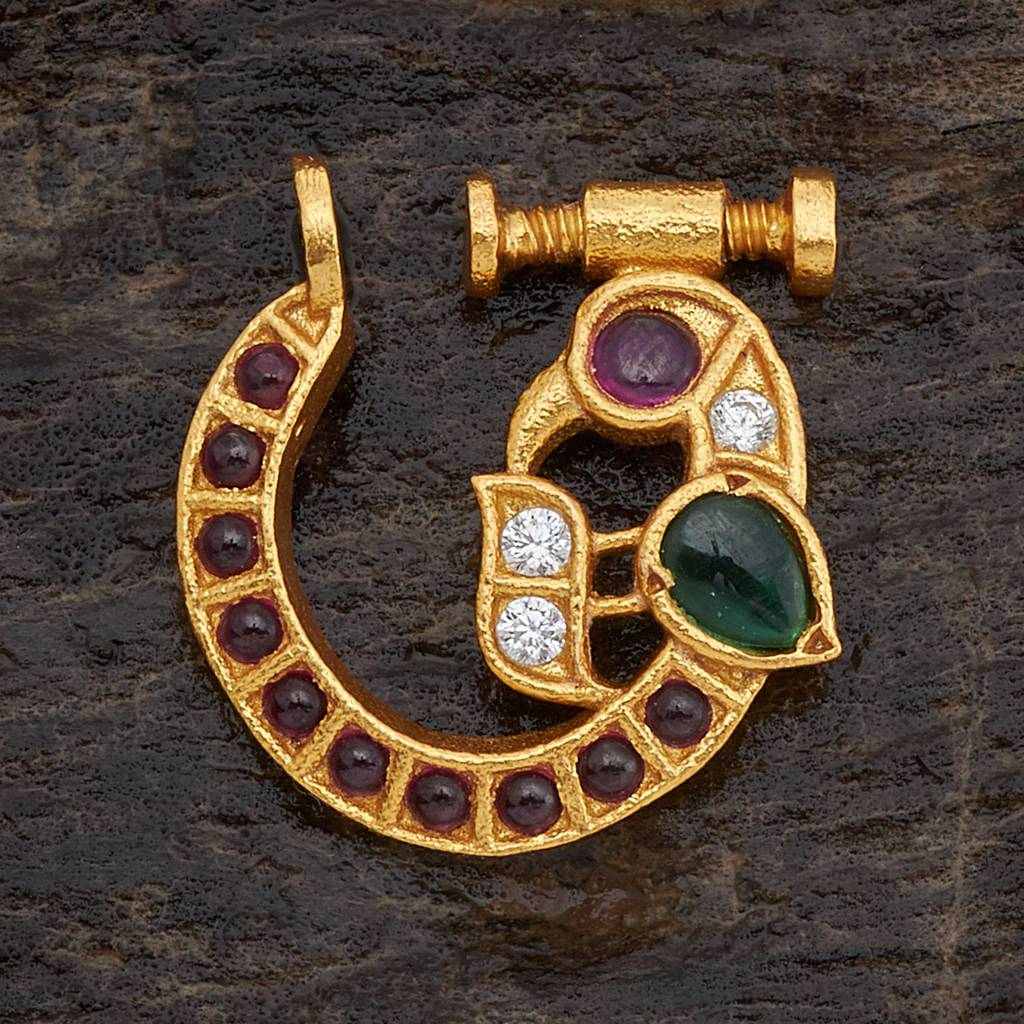
If you're putting together a full wedding look, the nath usually gets picked last, after the necklace and earrings. You'll find it alongside the rest of your wedding jewellery.
Did you know? The word "nath" is often linked to "naath", meaning husband or lord, which is why the big nath became such an important part of a bride's jewellery in many communities.
3. Septum Ring
A septum ring goes through the septum, the soft wall between your two nostrils, not through the side of the nose. It hangs in the centre, below the tip of your nose. Septum rings are a different piercing, so you can't wear one in a regular nostril piercing.
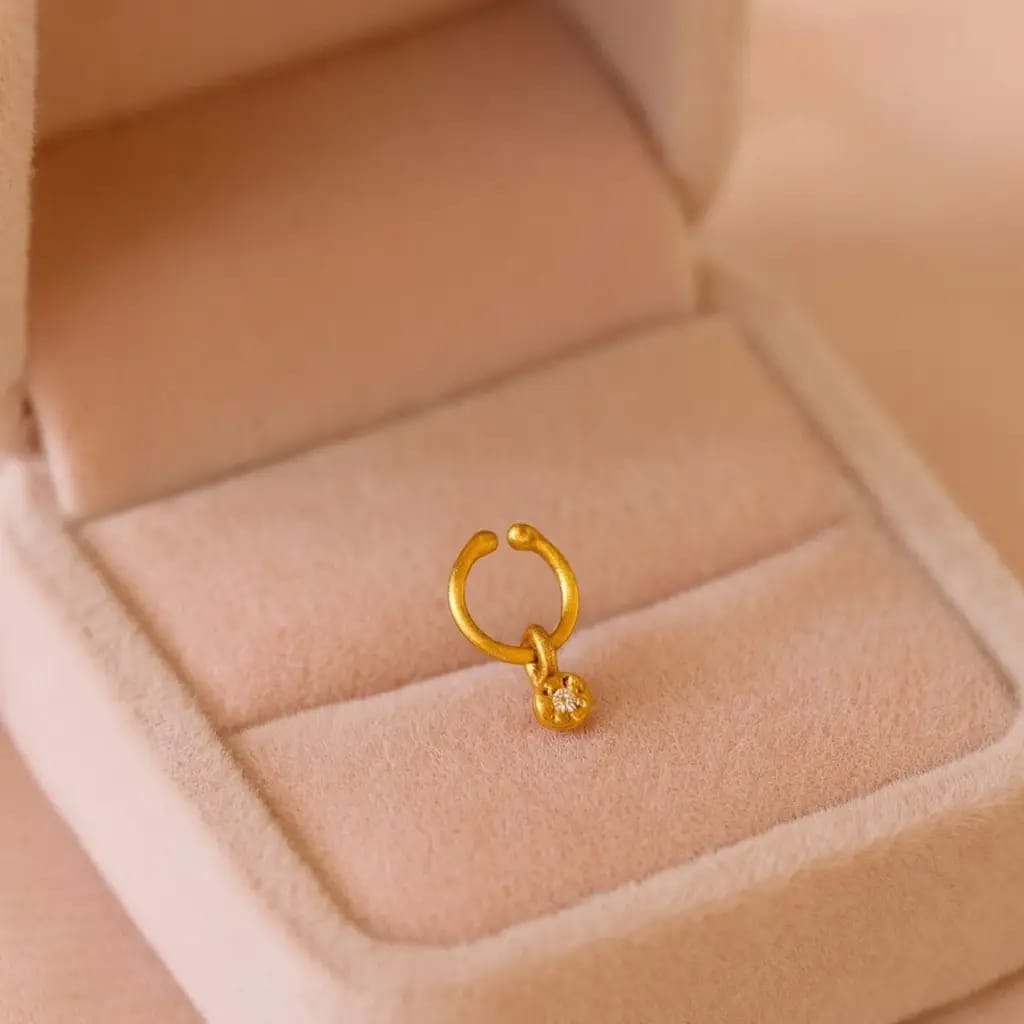
For everyday hoops and small rings, see the hoop nose pins range.
Types of Nose Pin Backs: Screw, L-Shape, Bone, Wire and Clip-On
The front of a nose pin decides how it looks. The back decides whether it stays in, how easy it is to put on, and how comfortable it feels. This is the part most people only learn about after losing their first nose pin.
- Screw back: A post with a tiny screw (a pech) that twists on from inside the nostril. It's the most popular daily-wear back in India, because it hardly ever falls out. The small catch is that it can be fiddly to put on until you get the knack.
- L-shape: The post bends at a right angle inside the nostril. It's easy to slip in and fairly secure, a good middle ground for most people.
- Bone or ball end: A straight post with a small ball at the end that you push through. It's quick to wear and sits close to the skin, but it can be a little tight to pass through and may slip out over time.
- Nose wire: A thin straight wire that you gently bend or curl inside the nostril after putting it in. Wires feel very light and suit people who change their nose pin often, though they are less locked in than a screw back.
- Clip-on (no piercing): A small open ring or clamp that grips the outside of the nostril. It's perfect if you aren't pierced or want to try a look for one evening.
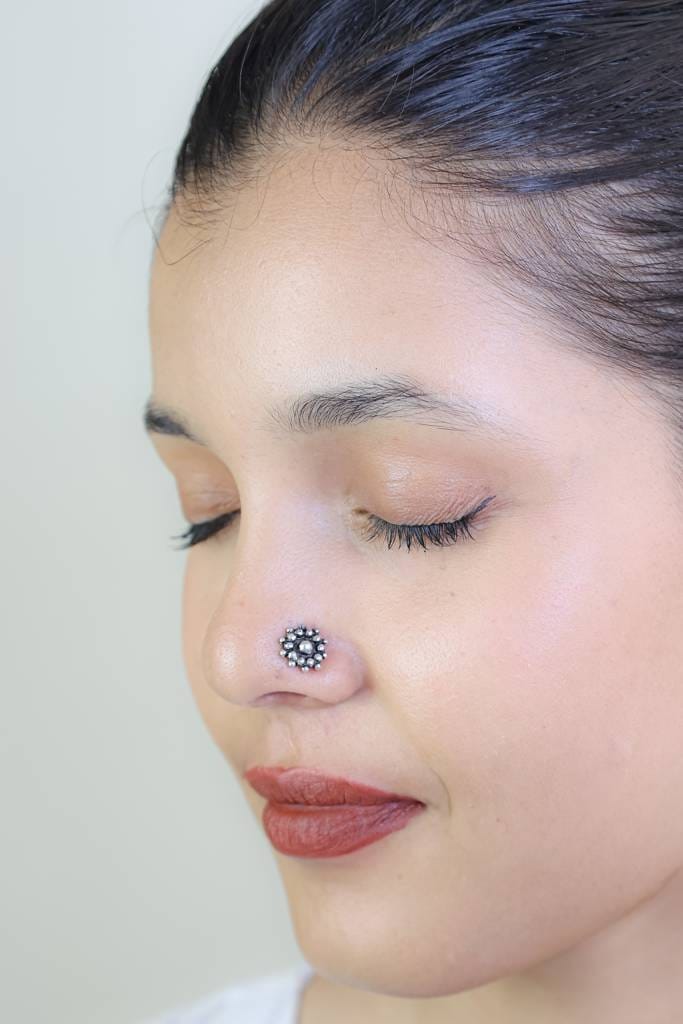
Quick tip: If you keep losing nose pins in your sleep or while changing clothes, switch to a screw back. It takes a few extra seconds to wear but almost never falls out on its own.
Not pierced yet, or not sure you want to be? A clip-on lets you try the look first.
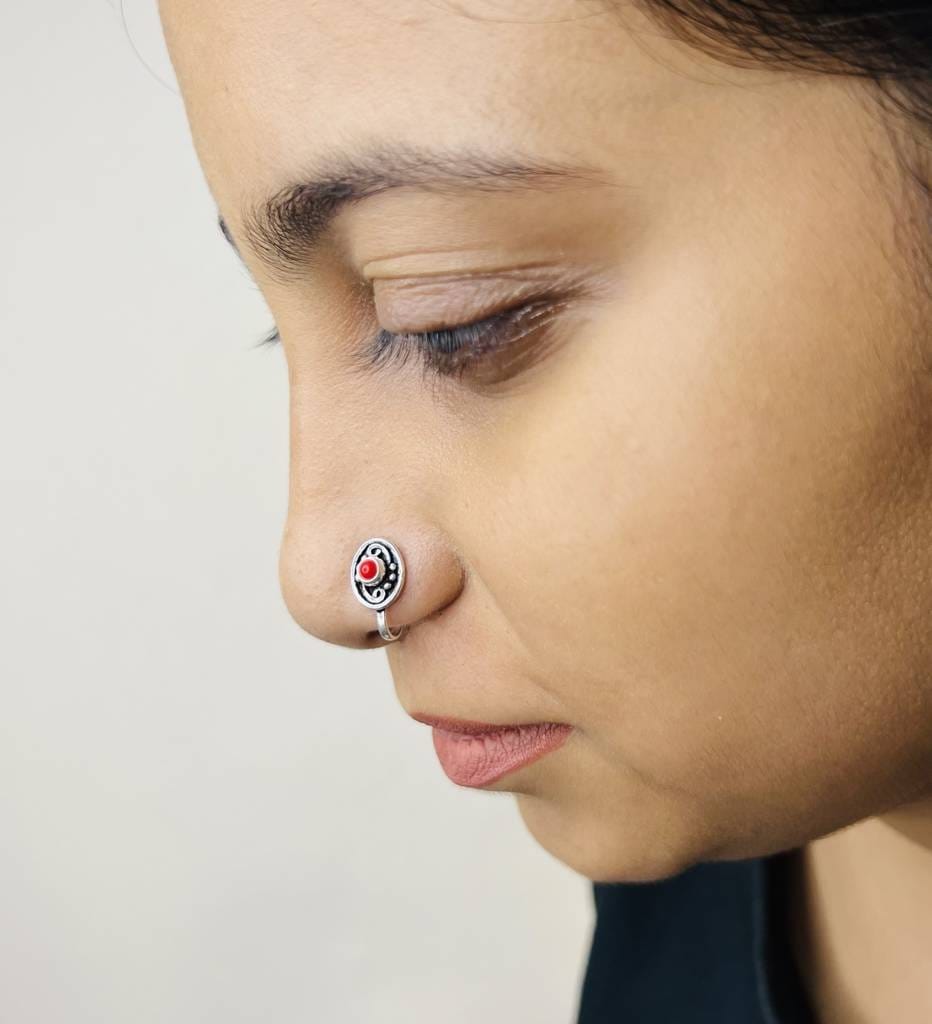
If you like light, easy-to-change pins, the nose wire range has plenty of small flowers and dots.
Nose Pin or Nose Ring: Which Is Better for a New Piercing?
For a fresh piercing, a stud or nose pin is almost always the better choice. A stud stays still, so the piercing is not rubbed and turned all day. A ring moves every time you touch it, sleep on it or pull a T-shirt over your head, and that movement can irritate a healing piercing and slow it down.
That's why most piercers start you with a stud, often in an L-shape or screw back, and suggest waiting until the piercing is fully healed before trying a ring. A nostril piercing usually takes several months to heal properly, and it can be longer for some people. Your piercer is the best person to tell you when it's ready.
When you do switch, a few things help:
- Change it clean: Wash your hands and clean the new piece before you put it in.
- Start small: A thin, small hoop or half hoop is gentler than a heavy nath.
- Don't force it: If the ring won't go in easily or the piercing feels sore after, go back to your stud for a few more weeks.
For pain, healing time and aftercare in detail, read our complete guide to nose piercing in India.
Good to know: For a new or sensitive piercing, pick 925 silver, solid gold or titanium. Cheap mixed metals can contain nickel, which often causes itching and redness.
Which One Should You Wear? Daily Wear, Office, Festive and Bridal
Once your piercing has healed, you can switch between pins and rings whenever you like. Many women keep a simple pin for every day and save the ring for special days. Here's how to choose for each part of your life:

| Occasion | Best pick | Why |
|---|---|---|
| Daily wear | Small gold or silver pin with a screw back | Light, secure, safe to sleep in |
| Office | Single stone, tiny flower or plain dot | Neat and quiet with formal clothes |
| College and casual | Thin hoop, half hoop or a quirky wire | A little edgy, fun to change often |
| Festivals and pujas | Stone-studded pin or a small nath | More sparkle without much weight |
| Wedding (bride) | Large nath with a hair chain | The traditional bridal statement |
| Wedding (guest) | Small nath or a bigger CZ pin | Festive but not stealing the bride's look |
A few more things to think about:
- Your routine: If you wear a helmet daily, play sports or have a baby who grabs at your face, a flat pin is safer than a ring.
- Your skin: If your skin reacts easily, stick to 925 silver or solid gold. Our guide to gold vs silver vs demi-fine jewellery explains how each metal holds up.
- Your face: Small pins suit almost every face. A slim hoop can soften a round or square face, while longer faces carry a slightly bigger stud or nath well.
- Your side: In many North Indian families the left nostril is traditional, while some South Indian communities prefer the right. Today it's mostly personal choice.
Conclusion
A nose pin and a nose stud are the same small piece that sits on your nostril, and a nose ring is the circle that wraps around it. Start with a stud while your piercing heals, choose a screw back if you want it to stay put, and bring out the hoops and naths once you're ready for more drama. The right one is simply the one that feels like you every time you catch your reflection. To find your first pin or your next one, browse all nose pins, or go straight to gold nose pins and silver nose pins.
Frequently Asked Questions
1. What is the difference between a nose pin and a nose ring?
A nose pin sits flat on the side of the nostril with a post through the piercing. A nose ring is a circle that loops through the piercing and wraps around the edge of the nostril.
2. Is a nose pin and a nose stud the same?
Yes. In India, nose pin and nose stud are two names for the same small piece. Some Western shops use "nose pin" for a specific straight post, which is why the names get mixed up online.
3. Can I wear a nose ring right after getting pierced?
It's usually better not to. Most piercers start you with a stud, because a ring moves more and can irritate a fresh piercing. Switch to a ring once your piercer says it has fully healed.
4. Which nose pin back is the most secure?
A screw back is the most secure for daily wear, because it twists into place and rarely falls out. L-shape backs are the next best, and wires and bone ends are easier to wear but can slip.
5. Which is better for daily wear, a nose pin or a nose ring?
A nose pin is better for most people's daily routine. It's flat, light and doesn't catch on clothes, helmets or pillows. A thin hoop works too if you're used to it.
6. What is the difference between a nath and a nose ring?
A nath is a type of nose ring. The word usually means the traditional Indian style, often bigger and decorated with stones or pearls, while "nose ring" covers any ring, including plain hoops.
7. Can I wear a nose pin without a piercing?
Yes, with a clip-on nose pin. It grips the outside of your nostril, so you can try the look for a day without getting pierced.
8. Can I wear a septum ring in my nostril piercing?
No. A septum ring is made for the septum, the wall between your nostrils, and it hangs in the centre. For a side piercing, choose a regular nose pin or a nostril hoop.
9. Which side should I wear my nose pin on?
Either side is fine. The left nostril is traditional in many North Indian families and the right in some South Indian communities, but today most people simply pick the side they like.
10. Which metal is best for a nose pin?
925 silver, solid gold and titanium are the safest choices, especially for sensitive skin or a new piercing. Avoid cheap mixed metals that may contain nickel.