Navratri 2026: Date, Colours, 9 Goddesses, Rituals & More
When is Navratri in 2026? Check Navratri 2026 dates, daily colours, 9 goddesses, significance, rituals, Garba, fasting and celebration ideas.
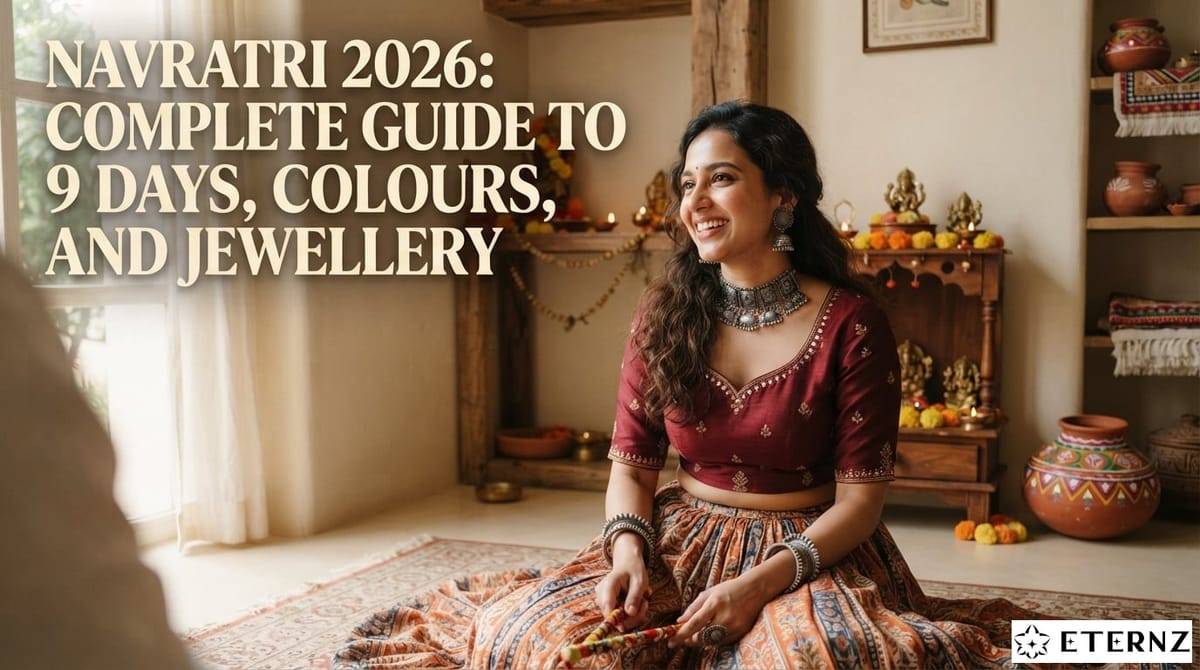
Navratri 2026 will be celebrated from Sunday, October 11, to Monday, October 19, marking nine sacred nights dedicated to Goddess Durga and her nine divine forms. This vibrant Hindu festival brings together prayers, fasting, Garba and Dandiya, colourful traditional outfits, and beautiful jewellery as families and communities come together to celebrate the victory of good over evil. Each day has its own goddess, significance, and traditional colour, making Navratri a time of devotion, celebration, and festive style.
This complete guide to Navratri 2026 covers the nine days and their goddesses, daily colours, Garba and Dandiya traditions, outfit ideas, jewellery styling, fasting, puja rituals, regional celebrations, and everything you need to plan your Navratri celebrations.
Before we start, let me tell you about Eternz, a trusted jewelry marketplace featuring 400+ jewelry brands, with authenticity certification on every piece and fast, same-day delivery in major cities. First-time users can also save with ETERNZ5 for up to ₹50 off on ₹499+, ETERNZ10 for up to ₹100 off on ₹999+, or ETERNZ300 for up to ₹300 off on ₹2,500+, valid on both the app and website.
What Is Navratri?
Navratri is a nine-night Hindu festival that honors the divine mother Goddess Durga and her nine forms. It celebrates the victory of good over evil with daily prayers, dance, bright clothes, and traditional jewellery.
The word Navratri comes from two Sanskrit words. "Nava" means nine, and "Ratri" means night. Across India and around the world, families gather during these nine nights to pray, fast, dance, and wear festive outfits.
During this time, people worship the divine feminine energy called Shakti. Every single day of the festival focuses on a different form of Goddess Durga. People wear a special colour each day to match the divine energy of that goddess.
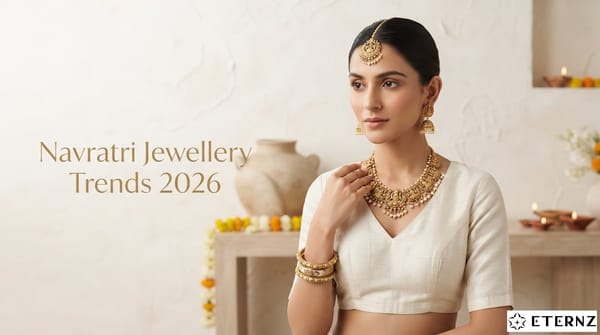
Jewellery plays a huge role in these celebrations. From heavy silver necklaces to shiny gold bangles, the right ornaments complete your look for both daytime prayers and late-night dances.
When is Navratri 2026?
Sharad Navratri 2026 starts on Sunday, October 11, 2026, and ends on Monday, October 19, 2026. The tenth day is Dussehra, also called Vijayadashami, which falls on Tuesday, October 20, 2026.
This festival happens during the Hindu lunar month of Ashwin. This month usually falls in September or October on the solar calendar. The dates shift slightly every year based on the moon phases.
Here is the exact day-by-day calendar schedule for Navratri 2026:
- Day 1 (October 11, 2026): Ghatasthapana and Goddess Shailaputri Puja
- Day 2 (October 12, 2026): Goddess Brahmacharini Puja
- Day 3 (October 13, 2026): Goddess Chandraghanta Puja
- Day 4 (October 14, 2026): Goddess Kushmanda Puja
- Day 5 (October 15, 2026): Goddess Skandamata Puja
- Day 6 (October 16, 2026): Goddess Katyayani Puja
- Day 7 (October 17, 2026): Goddess Kalaratri Puja
- Day 8 (October 18, 2026): Goddess Mahagauri Puja (Maha Ashtami)
- Day 9 (October 19, 2026): Goddess Siddhidatri Puja (Maha Navami)
- Dussehra (October 20, 2026): Vijayadashami Idol Immersion
Planning your clothes and jewellery early helps you avoid last-minute stress. Most women match their outfits and jewellery sets to the nine official colours weeks before the first night.
Why is Navratri Celebrated?
Navratri marks the ultimate victory of Goddess Durga over the buffalo demon Mahishasura after nine days of fierce battle. It celebrates the power of good defeating bad and light winning over dark.
Mahishasura had received a boon that no man or god could defeat him. He caused great trouble in heaven and earth. To defeat him, the gods combined their supreme powers to create Goddess Durga.
Goddess Durga fought the demon for nine full nights. On the tenth day, she defeated him. This tenth day is celebrated as Vijayadashami, which means the victory on the tenth day.
Here are the main spiritual reasons why people observe Navratri:
- Honoring Divine Energy: It celebrates Shakti, the feminine force that creates and protects the universe.
- Seasonal Change: It marks the start of autumn and prepares the mind and body for the winter season.
- Inner Purification: Fasting and prayer help clean your body and mind of negative thoughts.
- Community Bond: Dancing Garba and sharing food brings families and friends together in joy.
Wearing fine traditional outfits and bright jewellery during Navratri is a way to welcome the Goddess into your home. It shows devotion, joy, and festive cheer.
9 Days of Navratri 2026: Goddess Names, Colours, Meaning & Jewellery
Each night of Navratri honors one specific form of Goddess Durga, known together as the Navadurga. Each goddess brings unique blessings, strength, and grace to her devotees.
People match their daily clothes and jewellery to the special colour dedicated to each day. This tradition connects everyone in the community through a shared visual celebration.
Day 1 of Navratri 2026: Goddess Shailaputri
Goddess Shailaputri is the first form of Durga worshipped during Navratri. She is the daughter of the Himalaya mountains and stands for nature, stability, and absolute strength.
She holds a trident in her right hand and a lotus flower in her left hand. She rides a bull named Nandi. Worshipping her brings stability and grounding energy into your life.
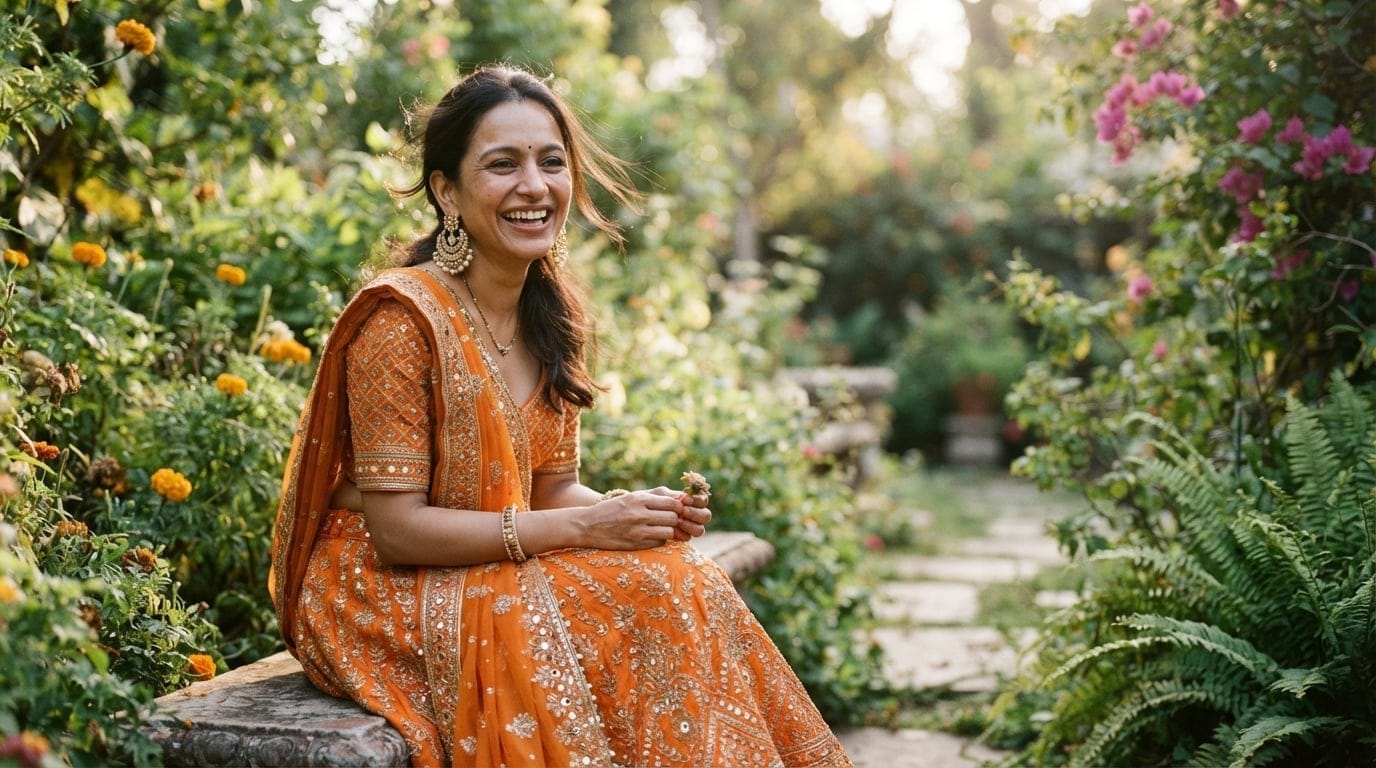
- Day 1 Goddess: Goddess Shailaputri
- Day 1 Colour: Orange
- What it Symbolizes: Heat, energy, and enthusiasm
- Outfit Suggestion: Bright orange silk saree or an orange lehenga with light gold borders
- Jewellery Match: Warm gold necklaces, small studs, and traditional gold bangles
Day 2 of Navratri 2026: Goddess Brahmacharini
Goddess Brahmacharini is worshipped on the second day of Navratri. She represents devotion, peace, hard work, and deep penance.
She walks on foot carrying a rosary in her right hand and a water pot in her left hand. Worshipping her grants patience, peace, and quiet resolve during difficult times.
- Day 2 Goddess: Goddess Brahmacharini
- Day 2 Colour: White
- What it Symbolizes: Purity, peace, and wisdom
- Outfit Suggestion: White cotton saree, ivory chaniya choli, or a white chanderi kurta set
- Jewellery Match: Silver choker, pearl earrings, and light silver bangles
Day 3 of Navratri 2026: Goddess Chandraghanta
Goddess Chandraghanta is the third form of Durga. She has a half-moon shaped like a bell on her forehead, which gives her this divine name.
She has ten arms and rides a tiger. She stands ready for battle to protect her devotees from all evil forces while keeping a calm and gentle smile.
- Day 3 Goddess: Goddess Chandraghanta
- Day 3 Colour: Red
- What it Symbolizes: Passion, strength, and love
- Outfit Suggestion: Deep red silk saree or a red flared chaniya choli with mirror work
- Jewellery Match: Classic temple gold necklace, red stone jhumkas, and thick gold bangles
Day 4 of Navratri 2026: Goddess Kushmanda
Goddess Kushmanda is worshipped on the fourth day. Her divine smile created the entire universe when there was only darkness everywhere.
She lives inside the center of the sun and has eight arms. Worshipping her brings good health, wealth, light, and happiness into your home.
- Day 4 Goddess: Goddess Kushmanda
- Day 4 Colour: Royal Blue
- What it Symbolizes: Richness, divine grace, and trust
- Outfit Suggestion: Royal blue georgette saree or a blue silk lehenga with silver thread work
- Jewellery Match: Oxidised silver layered necklace, big drop earrings, and silver armlets
Day 5 of Navratri 2026: Goddess Skandamata
Goddess Skandamata is the mother of Lord Skanda, who is also known as Lord Kartikeya. She represents motherly love, care, and protection.
She holds the infant Skanda on her lap and rides a ferocious lion. Praying to her brings pure joy, peace, and maternal blessings.
- Day 5 Goddess: Goddess Skandamata
- Day 5 Colour: Yellow
- What it Symbolizes: Happiness, brightness, and warmth
- Outfit Suggestion: Sunshine yellow bandhani saree or a yellow cotton silk kurta
- Jewellery Match: Floral style gold jewellery, yellow bead neck chains, and shiny gold bangles
Day 6 of Navratri 2026: Goddess Katyayani
Goddess Katyayani is the fierce warrior form of Durga born to destroy the bad forces. She is worshipped on the sixth day of Navratri.
She rides a lion and holds a shining sword in her hand. Worshipping her clears obstacles and gives courage to overcome every life struggle.
- Day 6 Goddess: Goddess Katyayani
- Day 6 Colour: Green
- What it Symbolizes: Growth, renewal, and nature
- Outfit Suggestion: Emerald green silk saree or a green printed chaniya choli
- Jewellery Match: Antique silver oxidised choker, green stone studs, and metal bangles
Day 7 of Navratri 2026: Goddess Kalaratri
Goddess Kalaratri is the most powerful and fierce form of Goddess Durga. She has dark skin, untamed hair, and four hands.
Though her look seems fierce, she always protects her followers from fear and harm. She is also called Shubhankari, which means the bringer of good luck.
- Day 7 Goddess: Goddess Kalaratri
- Day 7 Colour: Grey
- What it Symbolizes: Balance, strength, and protection from harm
- Outfit Suggestion: Grey tussar silk saree or a grey and silver embroidered lehenga
- Jewellery Match: Heavy oxidised silver neckpieces, black coin rings, and dark silver cuffs
Day 8 of Navratri 2026: Goddess Mahagauri
Goddess Mahagauri is worshipped on Maha Ashtami, the eighth day of Navratri. She represents absolute purity, peace, and clean thoughts.
She wears white clothes and rides a white bull. Devotees perform special prayers and Kanya Pujan on this day to seek her divine grace.
- Day 8 Goddess: Goddess Mahagauri
- Day 8 Colour: Purple
- What it Symbolizes: Luxury, nobility, and spiritual power
- Outfit Suggestion: Rich purple Kanjivaram saree or a purple brocade lehenga
- Jewellery Match: Kundan necklace set, pearl line drop earrings, and gold broad bangles
Day 9 of Navratri 2026: Goddess Siddhidatri
Goddess Siddhidatri is the ninth form of Durga. She sits on a lotus flower and holds a chakra, conch shell, mace, and lotus.
She bestows all types of supernatural skills, wisdom, and success upon her devotees. Worshipping her marks the grand finale of Navratri prayers.
- Day 9 Goddess: Goddess Siddhidatri
- Day 9 Colour: Peacock Green
- What it Symbolizes: Grace, beauty, and complete satisfaction
- Outfit Suggestion: Peacock green handloom saree or a dual-tone silk chaniya choli
- Jewellery Match: Meenakari enamel necklace, peacock motif jhumkas, and matching enamel rings
Navratri Colours 2026: Complete Day-Wise Colour List With Dates
Wearing specific colours on each day of Navratri is a popular ritual across India. It creates a feeling of unity when everyone wears the same shade on a given day.
The colour schedule changes every year based on the weekday when Navratri starts. Following the correct daily colour guide brings fresh excitement to your daily dressing routine.
Here is the quick look-up table for Navratri 2026 colours and daily jewellery pairings:
| Day & Date | Navratri Colour | Key Meaning | Recommended Jewellery |
|---|---|---|---|
| Day 1 (Oct 11) | Orange | Energy & Joy | Warm Gold Choker & Bangles |
| Day 2 (Oct 12) | White | Peace & Purity | Silver Pearl Drop Set |
| Day 3 (Oct 13) | Red | Passion & Power | Temple Gold Jhumkas & Chains |
| Day 4 (Oct 14) | Royal Blue | Trust & Elegance | Layered Silver Neck Chain |
| Day 5 (Oct 15) | Yellow | Brightness & Cheer | Light Gold Studs & Rings |
| Day 6 (Oct 16) | Green | Growth & Freshness | Green Stone Oxidised Choker |
| Day 7 (Oct 17) | Grey | Calm & Shielding | Heavy Dark Silver Cuffs |
| Day 8 (Oct 18) | Purple | Nobility & Grace | Uncut Kundan Necklace Set |
| Day 9 (Oct 19) | Peacock Green | Wealth & Beauty | Meenakari Enamel Jhumkas |
Tips to Style Daily Colours Easily
- Mix Neutrals: If you lack an exact garment colour, match your saree blouse or dupatta to the day's colour.
- Use Gemstones: Wear gemstone jewellery matching the day's colour, like ruby red, emerald green, or sapphire blue stones.
- Layer Accessories: Match your bindi, hair flowers, and bangles to the main colour theme of the day.
Garba & Dandiya for Navratri
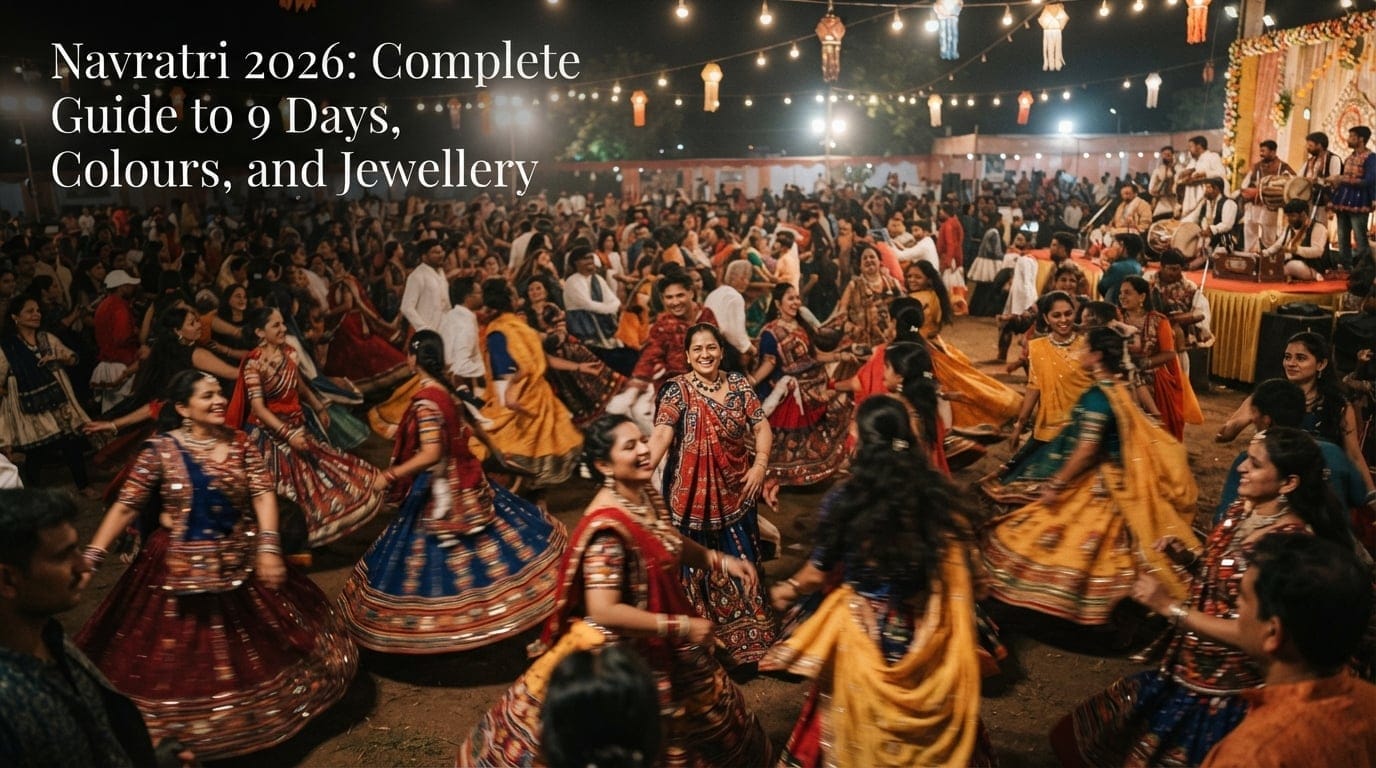
Garba and Dandiya are traditional folk dances from Gujarat performed with high energy every night during Navratri. People stand in big circles to dance, moving in rhythmic steps around a light or Goddess idol.
These dances are open to everyone, young and old. The rhythmic clapping and stick beating create an electric mood that lasts late into the night.
Garba vs Dandiya: What Is the Difference?
While both dances take place during Navratri, they have clear differences in style and props:
- Garba: Danced before the evening Aarti. Dancers use graceful hand claps, snaps, and body sways. It is done in circles around a clay lamp called a Garbo.
- Dandiya Raas: Danced after the main prayers. Dancers hold small decorated wooden sticks called Dandiyas. Partners strike sticks together in time with energetic drum beats.
What to Wear for Garba 2026
Your outfit needs to look traditional while letting you move freely for hours without feeling heavy.
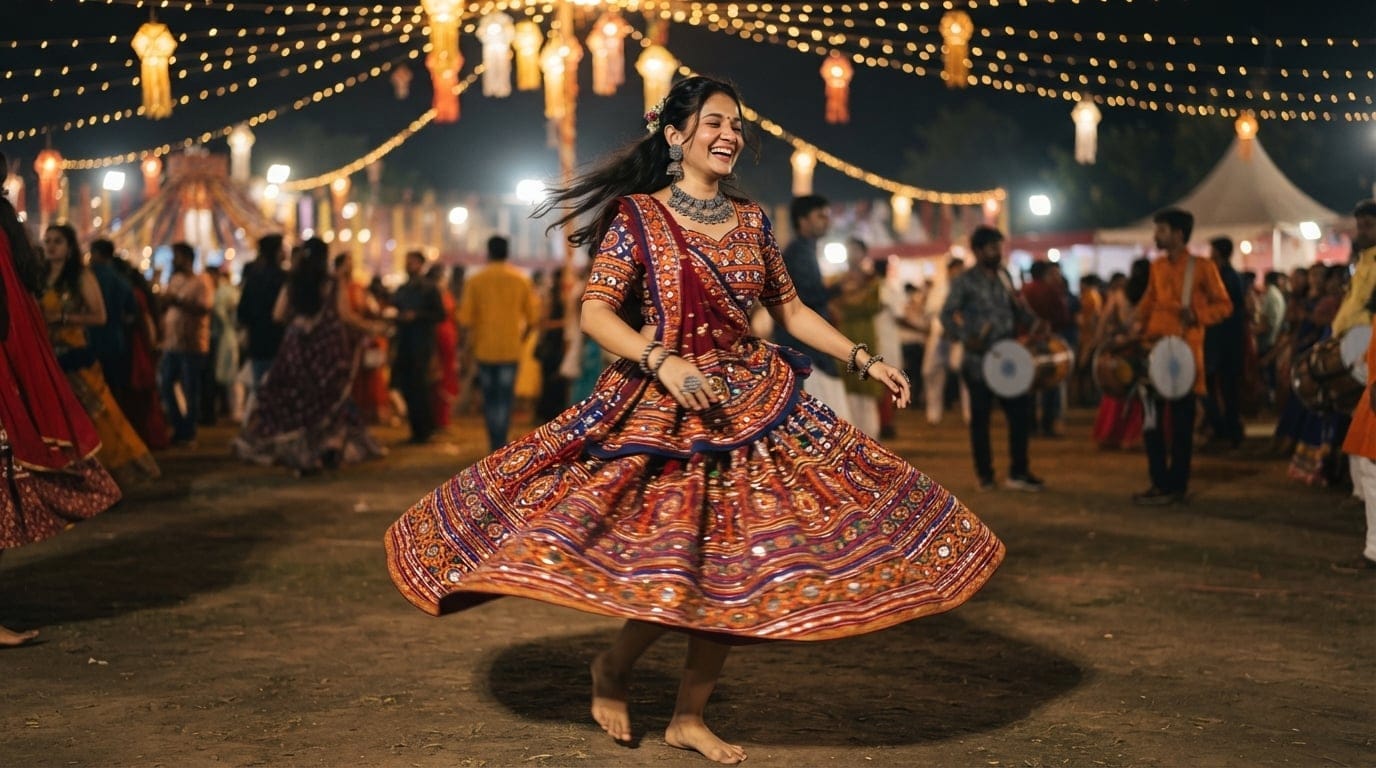
- For Women: A traditional flared chaniya choli with mirror work, thread embroidery, and bandhani prints.
- For Men: A traditional short kediyu top with multi-color tassels paired with dhoti pants or flared trousers.
- Fabric Choice: Pick breathable cotton fabrics so you stay cool while dancing in big crowds.
Best Jewellery for Garba & Dandiya Dance Nights
Garba jewellery should look grand but feel light enough so it does not hurt or slip while you move fast.
- Oxidised Silver Chokers: They look traditional, fit comfortably around the neck, and hide sweat stains easily.
- Light Jhumkas: Choose lightweight hollow silver jhumkas with smooth rubber backs so your ears do not feel sore.
- Bangle Sets: Combine noisy glass bangles with thick oxidised metal cuffs for great sound and style.
- Ear Chains (Kaan Chain): Use ear chains connected to your hair to support heavy earring weights during long dances.
Essential Garba Night Gear
Be sure to pack these practical items in your dance bag so you enjoy a hassle-free evening:
- Safety Pins: Keep plenty of sturdy pins to hold your dupatta in place while twirling.
- Comfortable Footwear: Wear flat juttis or dance barefoot on cushioned grass or wood floors.
- Hair Accessories: Use hair rings, clips, and bun covers to keep your hair neat while sweating.
- Small Pouch: Carry a small cloth bag for your phone, keys, lip balm, and extra earring backs.
Navratri Outfit Ideas 2026 for Women, Men & Kids
Choosing nine different outfits for nine nights can feel like a tough task. Mixing smart wardrobe items keeps your look fresh every single night without spending too much.
Outfit Ideas for Women
- The Classic Chaniya Choli: Choose heavy mirror work and flared cotton skirts for maximum twirls on dance nights.
- The Indo-Western Fusion Set: Pair a long embroidered ethnic jacket with wide-leg pants and a crop top.
- The Traditional Silk Saree: Wear rich Kanjivaram or Banarasi sarees for morning prayers and family lunches.
- Anarkali Suits: Flowing floor-length Anarkali suits offer great movement and look very graceful for evening events.
Outfit Ideas for Men
- Kediyu and Dhoti: The classic Gujarati outfit for men featuring short, gather-waisted tops and flexible dhoti pants.
- Kurta with Nehru Jacket: A crisp white or pastel silk kurta paired with a colorful printed vest jacket.
- Pathani Suit: Deep-toned cotton Pathani suits offer high comfort and a sharp look for casual festival nights.
Outfit Ideas for Kids
- Pre-stitched Lehengas: Easy clip-on lehengas with soft inner cotton linings prevent skin itching during long events.
- Soft Cotton Kurta Sets: Breathable kurta pyjama sets keep young boys comfortable during long rituals.
Navratri Jewellery 2026
Jewellery is the main star of Navratri style. The right neckpiece, earrings, and bangles can transform a basic outfit into a stunning festive look.
Understanding different jewellery types helps you make smart choices for every morning prayer and late-night dance.
Traditional Jewellery
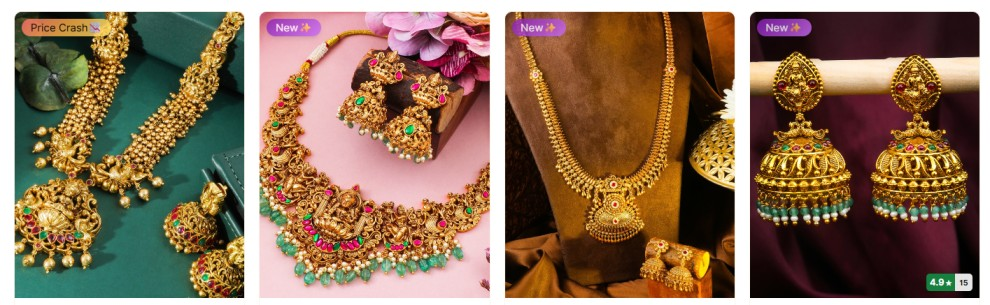
Traditional jewellery features deep-rooted Indian motifs like peacocks, lotus flowers, coins, and divine figures.
These sets are usually made from gold, brass, or copper alloys with antique finishes. They pair best with silk sarees, rich lehengas, and classic ethnic wear during daytime rituals.
Oxidised Silver Jewellery
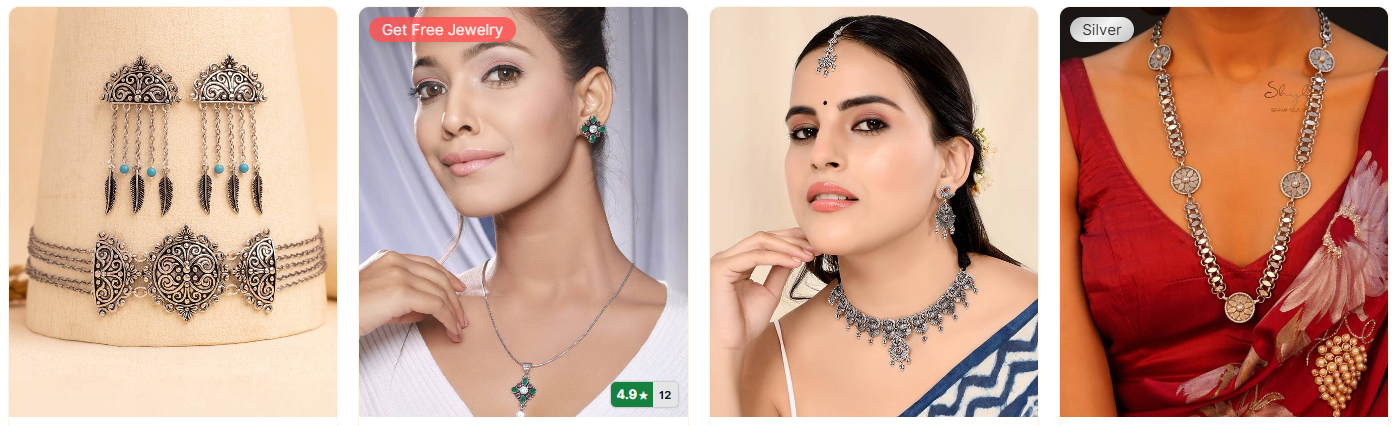
Oxidised jewellery is the ultimate favourite for Navratri Garba nights. It has a darkened, aged look created through special surface treatments.
- Why it is popular: It is lightweight, budget-friendly, and does not show sweat damage.
- Key Items: Chokers, long coin chains, big nose rings, armlets, and stacked bangles.
- Best Outfit Pairing: Mirror work chaniya cholis and printed cotton kurtas.
Silver Jewellery
Pure silver jewellery offers a bright, refined shine that sits right between dark oxidised metal and traditional gold.
Pure silver necklaces and coin bangles add a cool glow to pastel clothes, white sarees, and dark blue silk outfits. They are durable items that stay valuable for years.
Gold Jewellery
Gold jewellery adds timeless warmth and prestige to high sacred days like Maha Ashtami and Maha Navami.
Plain gold chains, bangles, and studs are great for daytime rituals when you want a clean look. Gold holds deep sacred value during festival prayers.
Temple Jewellery
Temple jewellery features direct carvings of gods, goddesses, temple towers, and divine elephants.
It originated in South India to deck temple idols. Today, these matte-gold carved pieces add regal beauty to rich silk sarees and heavy festive outfits.
How to Style Navratri Jewellery
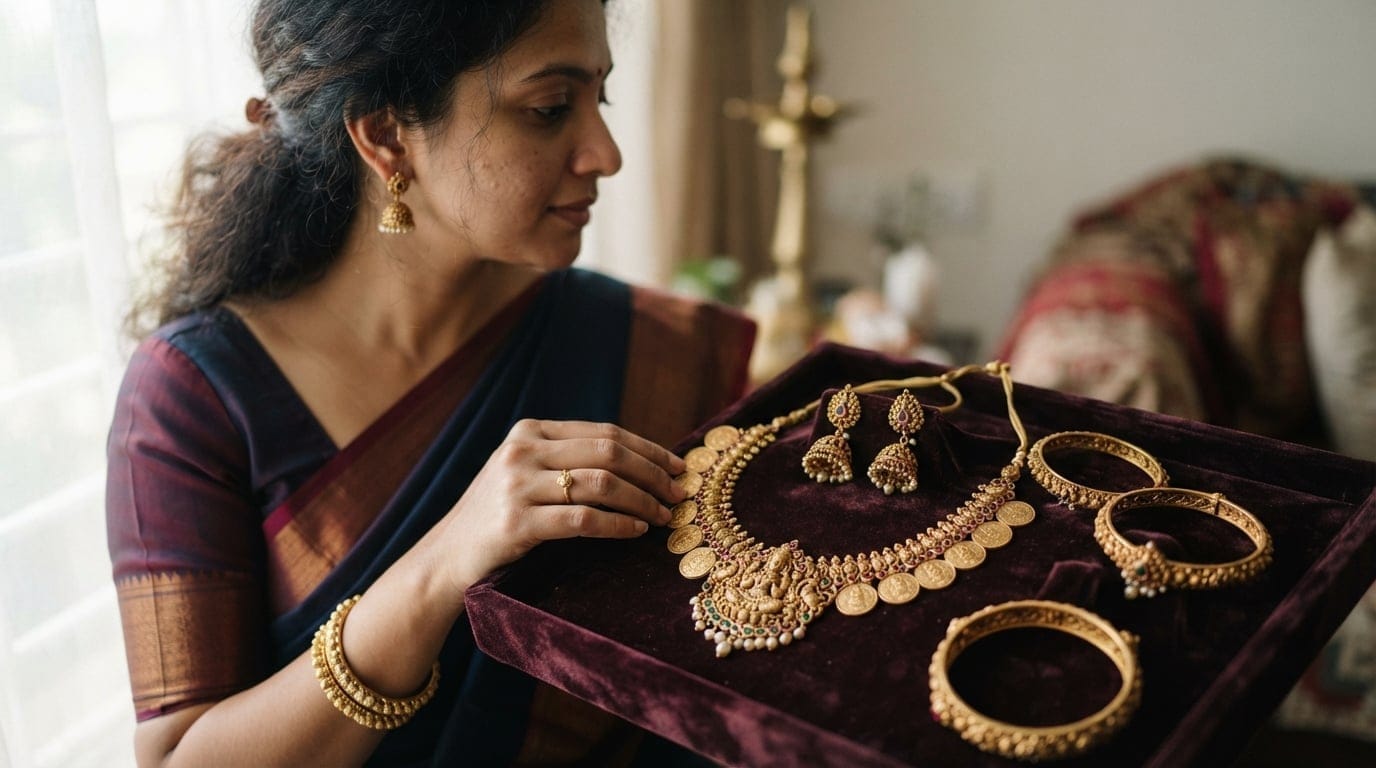
Styling your jewellery properly means striking a clear balance between your clothing details, necklines, and festival activities.
Styling Jewellery by Colour
- Bright Colours (Orange, Yellow, Red): Wear antique gold or temple jewellery to enhance the warm look.
- Cool Colours (Royal Blue, Green, Grey): Wear dark oxidised silver or bright silver sets for a clean contrast.
- Pastels and White: Wear pearl strands, clear stone chokers, or silver jewellery for a soft finish.
Styling Jewellery by Outfit
- Deep V-Necks: Wear a short choker paired with a long layered chain to fill the space nicely.
- High Neck / Closed Collar: Skip the necklace entirely. Wear big, eye-catching jhumkas and stacked bangles instead.
- Heavy Embroidered Tops: Pick simple studs or thin neck chains so your top does not look cluttered.
- Simple Plain Tops: Wear extra heavy, multi-layered oxidised silver neckpieces to make the plain fabric pop.
Navratri Gift Ideas 2026 for Family, Friends & Kanya Pujan
Gift-giving during Navratri spreads love, respect, and festive joy among family members, friends, and young girls.
Kanya Pujan Gift Ideas for Girls
On Ashtami or Navami, nine young girls are invited home as forms of Goddess Durga. After feeding them, families give them small thoughtful gifts.
- Silver Coin: A small silver coin with Goddess Lakshmi or Durga images.
- Jewellery Items: Small colorful bangles, hair clips, and cute bead necklaces.
- Utility Items: Pencil boxes, lunch bags, or small water bottles.
Navratri Gifts for Family
Gifting traditional items to family members builds strong bonds during the festival season.
- For Women: Silk sarees, silver coin sets, traditional jhumkas, or gold-plated bangles.
- For Men: Kurta sets, silver chains, cuff links, or traditional brooches.
- For Elders: Prayer beads, brass puja lamps, or soft cotton shawls.
Navratri Return Gift Ideas for Garba Parties
If you host a Garba evening or small family gathering, giving simple return gifts shows great hospitality.
- Oxidised Rings: Adjustable silver rings wrapped in small organza pouches.
- Traditional Pouches: Potli bags with detailed thread work for storing jewellery.
- Puja Items: Small brass oil lamps, incense stick holders, or sweet boxes.
Navratri Fasting 2026: Foods to Eat, Foods to Avoid
Fasting (Vrat) during Navratri is a popular practice to clean the body and calm the mind. Some people fast for all nine days, while others fast only on the first and last days.
Navratri fasting relies on light, wholesome ingredients known as Sattvic food. These foods give steady energy without causing stomach heaviness.
Foods Allowed During Navratri Fasting
- Grains & Flours: Buckwheat flour (Kuttu), Water Chestnut flour (Singhara), Amaranth (Rajgira), and Samak rice.
- Vegetables: Potatoes, sweet potatoes, pumpkin, raw banana, and bottle gourd.
- Dairy: Milk, fresh curd, paneer, butter, and homemade ghee.
- Nuts & Seeds: Almonds, walnuts, cashew nuts, raisins, and sesame seeds.
- Salt & Spices: Rock salt (Sendha Namak), cumin seeds, black pepper, and green chillies.
Foods to Avoid During Navratri Fasting
- Common Grains: Wheat, rice, semolina (sooji), and all-purpose flour (maida).
- Pungent Vegetables: Onions and garlic are strictly avoided in fast meals.
- Table Salt: Normal iodized salt is replaced with natural rock salt.
- Processed Foods: Packaged snacks containing chemical preservatives or artificial flavors.
Navratri Puja & Rituals
Daily home rituals keep the home atmosphere peaceful and holy throughout the nine days.
Ghatasthapana
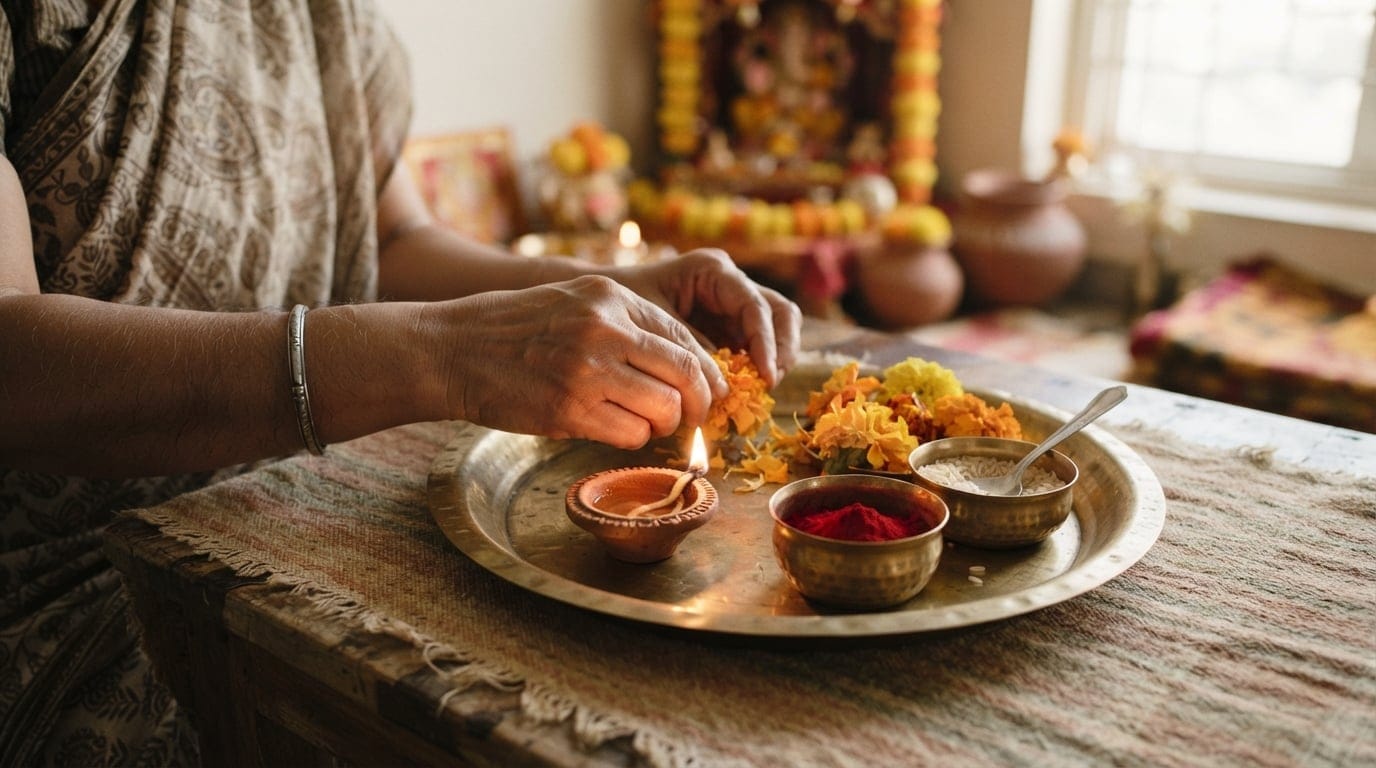
Ghatasthapana is one of the most vital rituals of Navratri. It marks the formal start of the nine-day festival on the first day.
A mud pot (Ghat) filled with holy water is set up on a wooden altar. Barley seeds are sown in a layer of moist soil placed right underneath the pot. By day nine, these seeds sprout into tall green barley shoots, signaling growth and good luck.
Akhand Jyot
Many families light a holy oil lamp called an Akhand Jyot on the first day. This brass lamp is kept burning continuously for all nine days and nights.
It represents continuous light, truth, and divine presence inside the home. Someone stays near the lamp to add oil or ghee regularly so it never goes out.
Daily Prayers and Aarti
- Morning Puja: Clean the altar, offer fresh flowers, light incense, and offer fresh fruits to the Goddess.
- Evening Aarti: Sing traditional songs like "Jai Ambe Gauri" while ringing small brass bells with family members.
- Chanting: Recite sacred texts like Durga Saptashati or simple daily mantras for peace.
Kanya Pujan
Kanya Pujan takes place on the eighth or ninth day. Nine young girls who have not reached puberty are welcomed into the house as divine forms of Goddess Durga.
- Washing Feet: The host washes the girls' feet with water and sits them on clean cloths.
- Applying Tilak: Red vermilion and rice grains are applied to their foreheads.
- Serving Prasad: Girls are served a feast of puri, sweet halwa, and black chickpeas (kale chana).
- Giving Gifts: The ritual ends by giving small gifts and touching their feet to seek blessings.
How Is Navratri Celebrated in Different Parts of India?
While the spirit of honoring Goddess Durga remains the same everywhere, different regions of India celebrate Navratri with unique cultural traditions.
Gujarat: Garba and Folk Dances
Gujarat is the global heart of Navratri dance celebrations. Whole cities stay awake all night as thousands of people dance in huge open grounds.
Women wear traditional chaniya cholis covered in heavy mirror work, while men wear colorful kediyus. The night is filled with live band music, drum beats, and endless energy.
West Bengal: Grand Durga Puja
In West Bengal, the festival is celebrated as Durga Puja during the final four days (Sasthi to Dashami).
Massive temporary temples called Pandals are built across streets. Sculptors create grand clay idols of Goddess Durga killing Mahishasura. Women wear traditional white sarees with red borders and perform the famous Dhunuchi dance.
Maharashtra: Ghatasthapana and Family Gatherings
In Maharashtra, Navratri starts with Ghatasthapana in home altars. Married women visit friends and family for a special ritual called Haldi-Kumkum.
They apply turmeric and vermilion powders to each other's foreheads and exchange small gifts, fruits, and bangles as tokens of good luck.
Karnataka: Mysore Dasara
In Karnataka, the festival is celebrated as Dasara. The city of Mysore hosts a world-famous 10-day festival.
The grand Mysore Palace is lit up with over 100,000 light bulbs every night. On the tenth day, a majestic elephant parade carries the idol of Goddess Chamundeshwari through city streets.
Tamil Nadu: Golu Toy Displays
In Tamil Nadu and parts of South India, families set up a wooden staircase display called Bommai Golu.
The steps are covered with cloth and arranged with various clay dolls representing gods, goddesses, animals, and daily village life. Friends visit each other's houses to sing devotional songs and receive sweet snacks.
Navratri 2026 Checklist: Outfits, Jewellery, Puja Items & Garba Essentials
Use this simple checklist to plan your clothes, jewellery, puja items, and fasting needs well before the festival starts.
1. Outfit Preparation
- Check all nine daily colours against your current wardrobe.
- Get saree blouses and lehenga tops altered to fit comfortably.
- Iron and hang all nine outfits in daily order.
- Safety pin dupattas and skirts ahead of time for Garba nights.
2. Jewellery Checklist
- Clean your oxidised silver jewellery sets with a soft cloth.
- Check all earring backs, clasps, and hooks to ensure they are secure.
- Keep extra rubber earring backs and safety pins in your purse.
- Match your bangles, rings, and neckpieces to each outfit.
3. Puja Shopping List
- Clay pot (Ghat) and clean soil for sowing barley seeds.
- Fresh barley seeds (Jowar/Kuttu).
- Brass lamps, pure ghee, and long cotton wicks.
- Incense sticks, camphor, coconut, and fresh flowers.
- Red chunri cloth for the Goddess idol.
4. Fasting Pantry Essentials
- Buckwheat flour (Kuttu), Singhara flour, and Rajgira flour.
- Samak rice and Sabudana (tapioca pearls).
- Rock salt (Sendha Namak) and whole black pepper.
- Dry fruits (almonds, cashews, raisins, walnuts).
- Fresh potatoes, sweet potatoes, and curd.
5. Garba Night Basics
- Pair of comfortable flat juttis or soft dance shoes.
- Decorated wooden Dandiya sticks.
- Hair pins, bands, and hair sprays to manage sweat.
- Small handbag or potli pouch for essentials.
Summary
Navratri 2026 is your time to connect with divine feminine energy, enjoy vibrant traditions, and wear your favorite festive clothes and jewellery.
By planning your nine daily outfits, pairing them with the right silver and gold jewellery, and keeping your dance essentials ready, you can enjoy nine stress-free nights of pure celebration.
May Goddess Durga bring peace, health, success, and shining happiness to your home this Navratri!
Frequently Asked Questions
1. When does Navratri 2026 begin and end?
Sharad Navratri 2026 begins on Sunday, October 11, 2026, and ends on Monday, October 19, 2026. Dussehra, also known as Vijayadashami, falls on Tuesday, October 20, 2026.
2. What are the 9 days of Navratri 2026?
The nine days of Navratri are dedicated to the nine forms of Goddess Durga, known as the Navadurga. They are Shailaputri, Brahmacharini, Chandraghanta, Kushmanda, Skandamata, Katyayani, Kalaratri, Mahagauri, and Siddhidatri.
3. What are the Navratri colours for 2026?
The Navratri colours for 2026 are Orange, White, Red, Royal Blue, Yellow, Green, Grey, Purple, and Peacock Green, followed from Day 1 through Day 9.
4. Which colour should I wear on the first day of Navratri 2026?
The colour for the first day of Navratri 2026, October 11, is Orange. You can wear an orange saree, lehenga, chaniya choli, kurta, or other traditional outfit.
5. Why are different colours worn during Navratri?
Wearing a specific colour each day is a popular Navratri tradition associated with the nine days of worship. The colours create a shared festive theme and are commonly incorporated into clothing, jewellery, accessories, and decorations.
6. Why is Navratri celebrated?
Navratri is celebrated to honor Goddess Durga and the divine feminine energy known as Shakti. In one of the major traditions associated with Sharad Navratri, Goddess Durga defeats the buffalo demon Mahishasura after a battle lasting nine nights and ten days.
7. What is the difference between Navratri and Dussehra?
Navratri is the nine-night festival dedicated to the worship of Goddess Durga and her various forms. Dussehra, or Vijayadashami, occurs on the tenth day and is associated with the victory of good over evil. Different regions connect Dussehra with different traditions, including Durga's victory over Mahishasura and Lord Rama's victory over Ravana.
8. What is the difference between Garba and Dandiya?
Garba is a traditional Gujarati dance performed in circular formations, often around a lamp or sacred center. Dandiya Raas involves dancers using decorated wooden sticks and moving in coordinated patterns with partners or groups. Both are strongly associated with Navratri celebrations.
9. What should I wear for Garba during Navratri?
Traditional options include a chaniya choli for women and a kediyu with dhoti pants for men. Comfortable fabrics, secure accessories, and footwear suitable for extended dancing can make the outfit more practical for Garba nights.
10. What jewellery is suitable for Navratri?
Popular Navratri jewellery includes oxidised silver, traditional silver, gold, temple jewellery, Kundan, Meenakari, jhumkas, chokers, bangles, and necklaces. The choice can depend on your outfit, the day's colour, and whether you are attending a puja or a Garba event.
11. What jewellery is best for Garba and Dandiya?
Lightweight jewellery that stays secure during movement is generally practical for Garba and Dandiya. Oxidised silver chokers, lightweight jhumkas, bangles, and ear chains are popular choices with traditional outfits.
12. What foods are allowed during Navratri fasting?
Common fasting foods include kuttu, singhara, rajgira, samak rice, potatoes, sweet potatoes, fruits, dairy products, nuts, and rock salt. Fasting practices vary between families and regions, so the foods followed can differ.
13. What are the main rituals performed during Navratri?
Common rituals include Ghatasthapana, daily puja, Aarti, lighting an Akhand Jyot in some households, chanting prayers, and Kanya Pujan on Ashtami or Navami. Specific practices vary according to regional and family traditions.
14. What is Kanya Pujan during Navratri?
Kanya Pujan is a ritual performed in many Hindu households, commonly on Ashtami or Navami. Young girls are honored as manifestations of the Goddess, offered food and gifts, and traditionally welcomed with prayers and blessings.
15. How is Navratri celebrated in different parts of India?
Navratri traditions vary widely across India. Gujarat is especially known for Garba and Dandiya, West Bengal for Durga Puja, Maharashtra for Ghatasthapana and Haldi-Kumkum gatherings, Karnataka for Mysore Dasara, and Tamil Nadu for Bommai Golu displays.