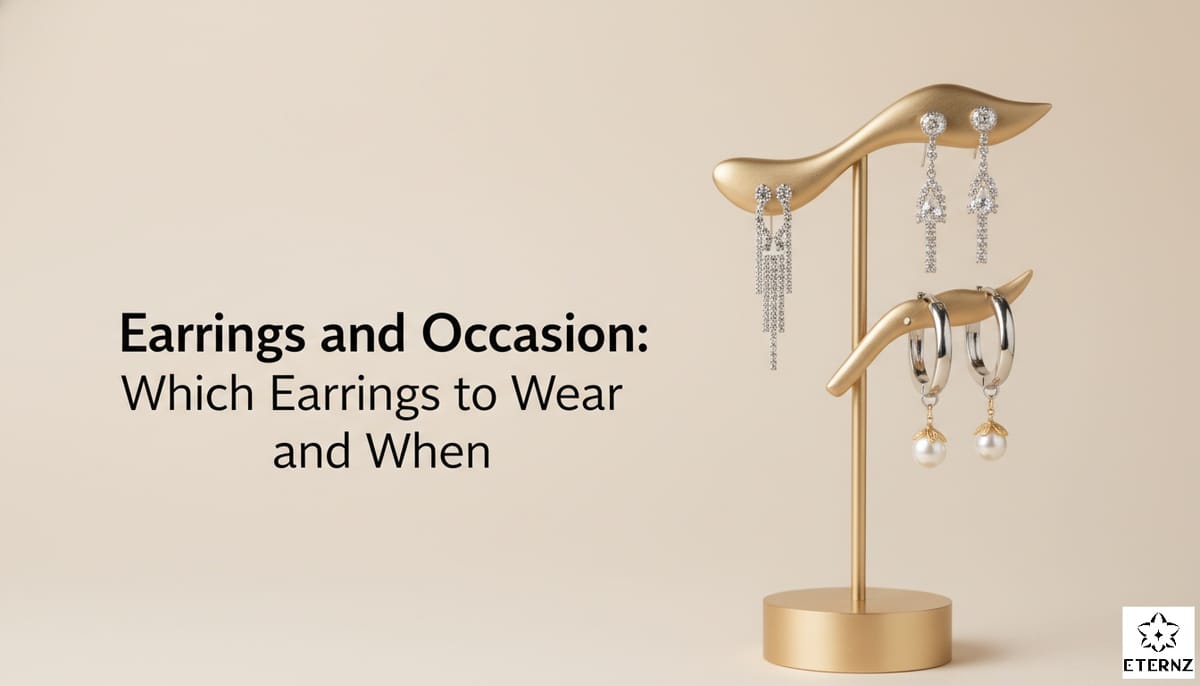
Earrings and Occasion: Which Earrings to Wear and When
Find out which earrings suit every occasion: office, casual, date night, Diwali, Navratri, weddings, Haldi, Sangeet and more. Includes a quick-reference table and decision framework.
TL;DR
- The occasion sets the tone. Your earrings should match that tone, not fight it.
- Office and daily wear: studs, huggies, small hoops. Lightweight, polished, non-distracting.
- Casual outings and brunches: medium hoops, drop earrings, fun geometric or colorful styles.
- Formal events and cocktail parties: statement drops, chandelier earrings, pavé styles.
- Indian festive occasions (Diwali, Navratri, Eid): jhumkas, chandbalis, meenakari drops.
- Weddings: the neckline of the outfit decides the earring, not the event alone.
- The one rule that covers every occasion: if the setting is loud, your earrings can match. If the setting is quiet, let your earrings lead but stay proportionate.
What We Cover
- Why occasion is the first filter before face shape or neckline
- Daily wear and office earrings: what works and what crosses the line
- Casual outings: where personality enters the picture
- Date night earrings: the balance between statement and effort
- Formal events and cocktail parties: when bold is the right answer
- Indian festive occasions: Diwali, Navratri, Eid, Karva Chauth, Puja
- Indian wedding functions: Haldi, Mehendi, Sangeet, Reception, and Bridal
- Outdoor events, travel, and sports: comfort first
- Quick-reference occasion table
- Decision framework: which earring for which event
Every occasion has an unspoken dress code, and your earrings are part of that code. Wearing dramatic chandeliers to a Monday morning meeting or tiny studs to a wedding reception sends the same signal: the earrings and the moment are out of sync. This guide maps every major occasion, western and Indian, to the exact earring style that fits, explains why it fits, and tells you what to avoid. Read it once and you will never second-guess an earring decision again.
Why Occasion Comes First?
Most people pick earrings in this order: they see something beautiful, they buy it, then they try to find an occasion for it. The result is a jewelry box full of earrings that do not quite fit the life they are actually living.
The correct order is the reverse. Start with the occasion. The occasion tells you how formal the setting is, how long you will be wearing the earrings, what kind of attention is appropriate, and what the people around you will be wearing. All of that information narrows your earring choice before you even open your jewelry box.
Think of it this way. A pair of gold studs is always appropriate. A pair of chandelier earrings is sometimes appropriate. The occasion tells you which moment belongs to which.
Once occasion is established, face shape and neckline do the fine-tuning. But occasion is always the starting point.
Before building an occasion-based collection, it helps to know the essential earring styles every jewelry wardrobe should include.
Earrings For Daily Wear and Office
Let us start with the occasion that takes up the most hours of most people's lives: the workday.
The office is a context where your earrings should add to your professional presence without creating a distraction. This is not about being boring. It is about reading the room. An earring that draws a compliment in a professional setting is doing its job. An earring that draws a stare is doing too much.
Best earrings for office and daily wear:
- Diamond or gold studs (the universal answer for professional settings)
- Pearl studs or small pearl drops
- Huggies in plain gold or silver
- Small hoops up to 20mm inner diameter
- Slim, short drop earrings ending above the jawline
What to avoid at the office:
Very long danglers, heavily embellished chandeliers, brightly colored fashion earrings, and anything that makes noise or creates movement that is visible across a meeting table. The test is simple: if the earring is the first thing someone notices when you walk into a room before your presence or your words, it is too much for a professional setting.
The comfort factor: Office earrings are worn for eight or more hours. Weight becomes a real issue past that point. Any earring above 7–8 grams per piece will start to feel noticeable by mid-afternoon. Studs, huggies, and small hoops stay under this threshold comfortably.
For home office and video calls: Here the rules loosen slightly. Your earrings are seen from the chest up only, which makes drops and medium hoops more visible and more effective. A 4cm drop earring that would look subtle in person reads well on screen. Medium gold hoops at 25–30mm create a polished, put-together appearance on video without requiring additional styling effort.
From the workday, the rules shift considerably the moment you step into weekend territory.

Earrings For Casual Outings and Weekend Wear
Weekend occasions, brunches, market visits, coffee with friends, museum trips, casual lunches: these are the settings where your earrings can carry more personality without any of the professional constraints.
This is where most people underuse their jewelry box. The fear of overdressing keeps them reaching for the same small studs they wore to work. But casual wear is the easiest context in which to experiment with style, and the lowest-stakes moment to do it.
Best earrings for casual outings:
- Medium hoops (25–35mm): the most versatile casual earring in existence
- Geometric drops in gold or silver: adds visual interest without formality
- Colorful gemstone studs: a quick way to make a simple outfit feel intentional
- Tassel earrings: fun, lightweight, expressive
- Mismatched pairs: a stud in one ear and a small drop in the other reads contemporary and considered
- Ear cuffs combined with a lobe stud: instantly editorial without effort
What to avoid for casual wear:
Heavy bridal-level chandeliers or elaborate kundan sets. These belong to specific occasions and look visually jarring against jeans and a linen shirt. Equally, avoid going so minimal that the earring has no presence. Casual dressing is often relaxed in silhouette and easy in color, and your earrings are where the outfit gets its personality.
The print and color rule for casual wear: If your outfit has a bold print or bright color, stay neutral with your earrings. Gold or silver hoops, clear stone studs, and plain metal drops all step back and let the outfit lead. If your outfit is a plain neutral: white, cream, beige, grey, black, your earrings can carry as much color and personality as you want.
Casual wear is the easiest context. Date night is where it gets more interesting.
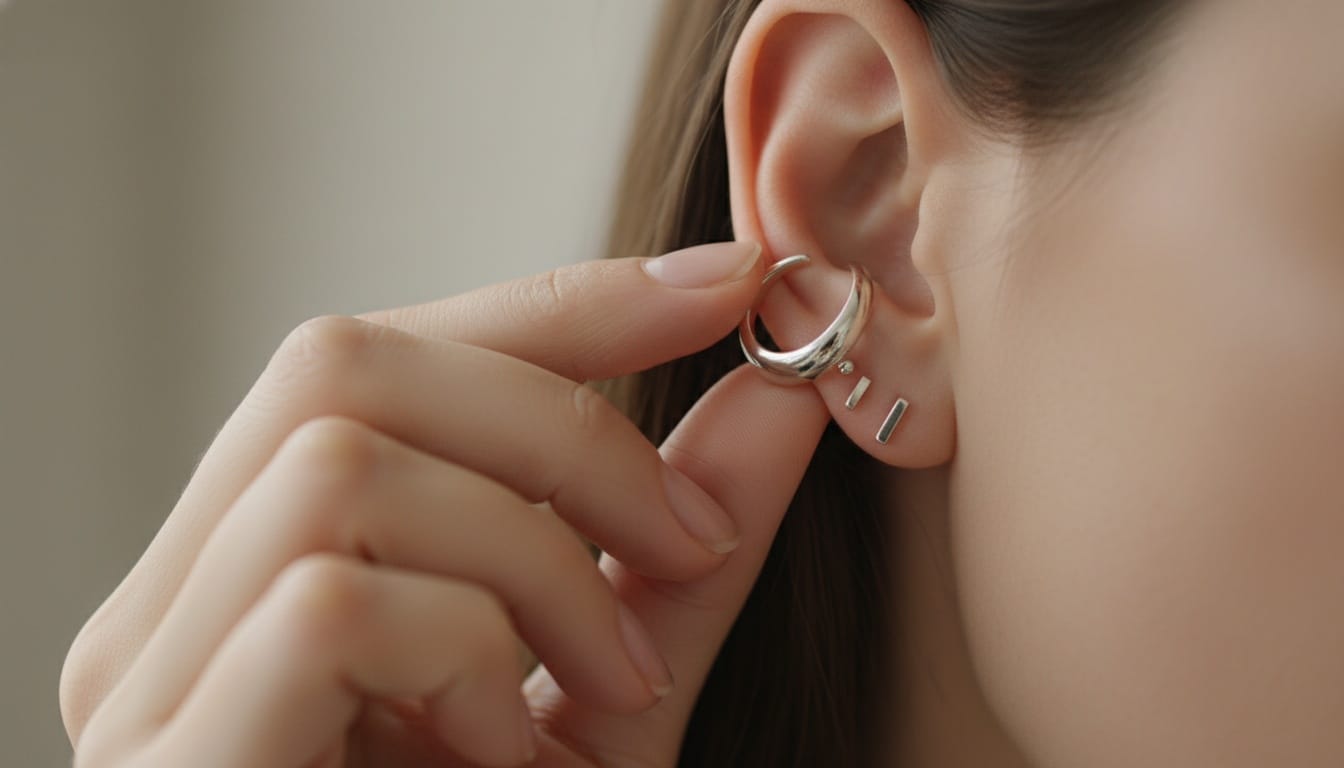
Earrings For Date Night Earrings
Date nights sit in the sweet spot between casual and formal. The occasion calls for more effort than a Saturday brunch but less formality than a gala. The earring should signal that you have thought about your look without looking like you tried too hard.
This is a more nuanced call than most earring decisions, and the answer depends entirely on the setting of the date itself.
Casual date (coffee, walk, lunch): Medium drops, slim hoops with a delicate pendant drop, or an elevated version of your casual go-to. The earring should upgrade the look by one level without pushing it into evening territory.
Dinner date: This is where statement earrings earn their place. A 4–6cm drop earring with stone detailing, a bold chandelier in gold or crystal, or a pair of pavé-set huggies combined with a longer chain drop all work here. The earring should draw the eye and contribute to the overall impact of the look.
The effort signal: A date night earring should look like a deliberate choice, not an afterthought. The difference between a dinner date where you wear your office studs versus a pair of elegant pearl drops is the difference between looking like you came from work and looking like you dressed for the occasion. One pair says the moment matters. The other does not.
What to avoid for date night: Very bulky or costume-level earrings that look better on a runway than in a restaurant. Anything that makes noise when you move (some bead or chain earrings fall into this category). And the opposite extreme: such minimal earrings that your look feels unfinished for an occasion that called for more.
With date nights covered, the formality scale moves up to cocktail parties and formal events.
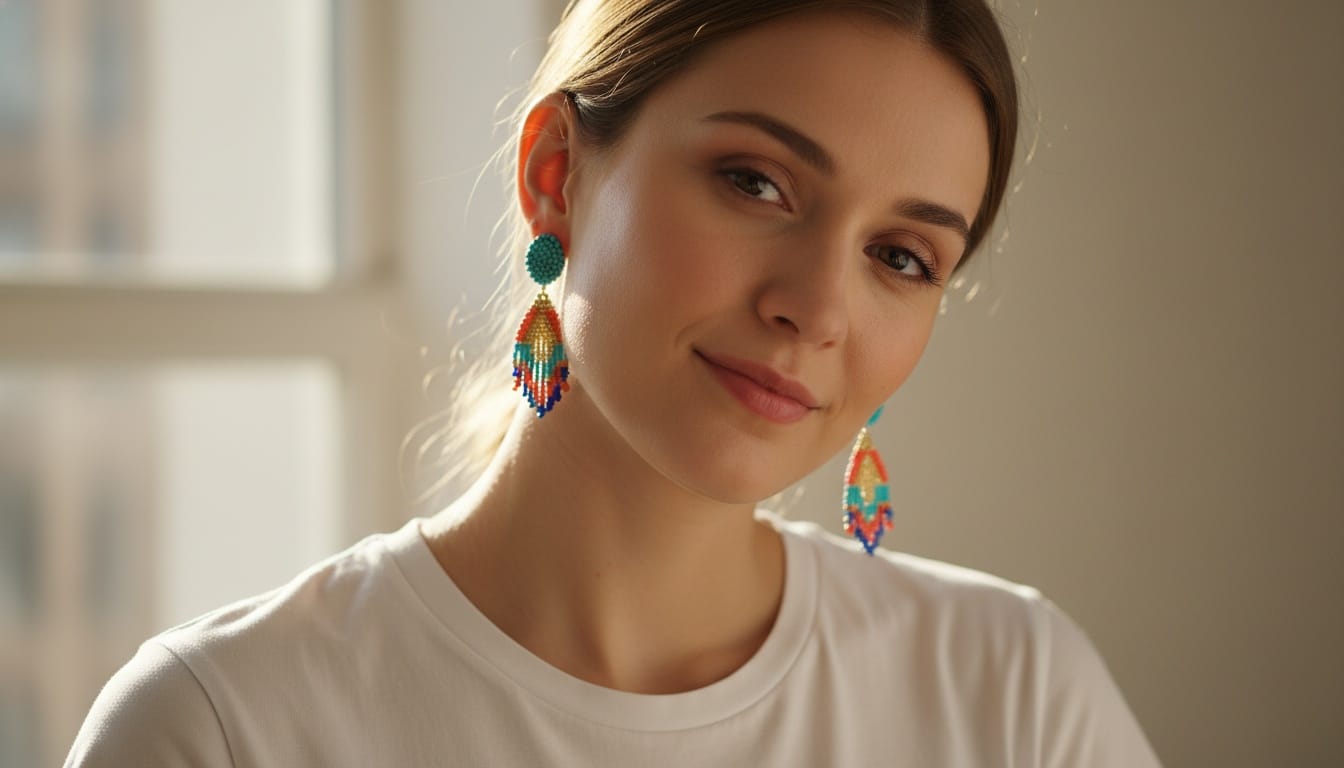
Earrings For Cocktail Parties and Formal Events
Cocktail parties, award dinners, corporate galas, engagement parties, and formal evening events are the occasions where bold earrings are not just acceptable but expected. These settings are built for visual impact, and your earrings should contribute to it.
Best earrings for cocktail parties and formal events:
- Chandelier earrings: the definitive choice for high-formal occasions
- Long pavé drop earrings with diamond or crystal detailing
- Statement gemstone drops in emerald, ruby, sapphire, or tourmaline
- Bold geometric gold earrings with architectural scale
- Long jhumkas or chandbalis for Indian fusion formal looks
What to avoid for formal events:
Plain studs unless they are significantly sized diamond or gemstone studs with visual presence. Very small hoops that read as everyday rather than evening. Anything that looks like daily wear in a formal context signals under-dressing, even if the individual earring is beautiful on its own.
The one-element rule for formal occasions: When wearing a statement earring to a formal event, let it be the only statement. Bold earrings plus a bold necklace plus an embellished clutch creates visual competition across three focal points. Pick one. A chandelier earring is at its most powerful when the neck is bare and the neckline is open.
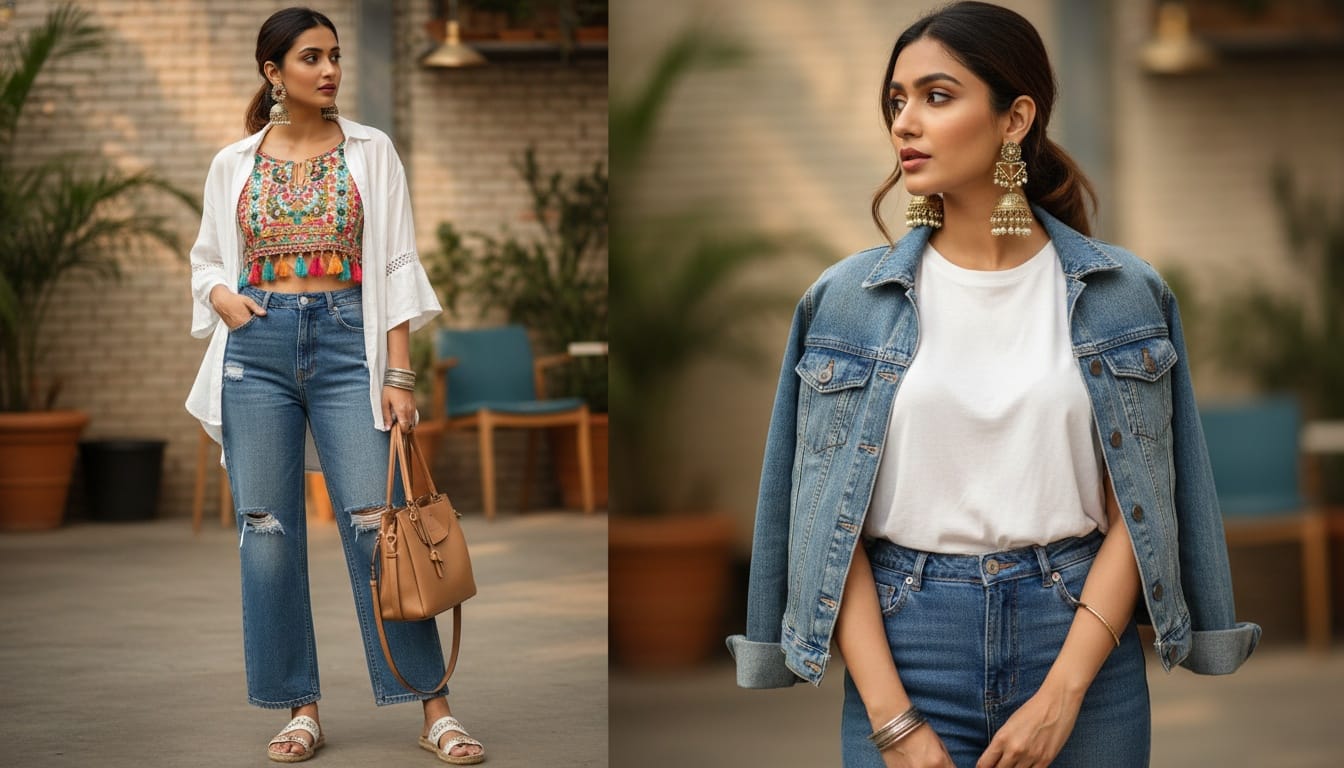
Your neckline changes how earrings visually frame the face, which is why learning how to match earrings to different necklines makes such a difference.
Earrings For Indian Festive Occasions
This is where this guide separates itself from every other earring-occasion resource online. Indian festive occasions are not a single category. Diwali, Navratri, Eid, Karva Chauth, Raksha Bandhan, and Puja each have their own mood, outfit palette, and expected level of dressing. The earring should match all three.
Diwali Earrings
Diwali is the festival of light, and the jewelry that performs best here reflects light richly. This is a full festive dressing occasion where the outfit, the earring, and the occasion are expected to align at a high level of richness.
Best earrings for Diwali: Stone-set jhumkas, chandbalis with kundan or polki detailing, meenakari drops in gold with red and green enamel (the traditional Diwali palette), and long chandelier drops in gold with crystal or stone setting.
What to avoid: Very understated studs or plain metal drops. Diwali is not the occasion for minimal jewelry. The occasion calls for richness, and your earrings are a significant part of delivering it.
Navratri Earrings
Navratri has its own unique styling logic. Each of the nine nights traditionally corresponds to a specific color, and coordinating your earring to your outfit color is both a style choice and a cultural one.
Best earrings for Navratri: Meenakari jhumkas and drops that can be chosen to coordinate with the night's color. Colorful gemstone drops in the relevant hue. Lightweight chandbalis in gold with colored stone accents. Tassel earrings in coordinated colors work particularly well for the dance-heavy evenings of Navratri because they are lightweight and add movement without snagging during garba.
Comfort note: Navratri involves hours of dancing. Weight and security matter as much as aesthetics here. Lightweight jhumkas with secure hooks and rubber stoppers are the most practical choice for a long evening of garba.
Eid Earrings
Eid styling tends toward elegant and rich rather than dramatic. The occasion calls for earrings that feel special and celebratory without necessarily being as heavily embellished as bridal-level pieces.
Best earrings for Eid: Pearl drops and pearl jhumkas sit particularly well with the white, pastel, and muted jewel-tone palettes common to Eid dressing. Gold chandbalis with stone work suit richer outfits in deeper colors. Polki or kundan drops for the most formal Eid events.
Karva Chauth and Puja Earrings
These are more intimate, typically family occasions rather than large social events. The expectation is traditional and put-together rather than maximally embellished.
Best earrings: Gold jhumkas at a medium size are the most appropriate choice. They read as traditional, polished, and occasion-appropriate without being overdressed for a family context. Plain gold drops or small chandbalis in gold also work well.
Earrings For Indian Wedding Functions
Indian weddings are not a single event. They are a multi-day series of functions, each with its own mood, formality level, and dress code. The earring for a Haldi is not the earring for a Reception. Understanding the distinction is what separates a considered look from a generic one.
Haldi Earrings
Haldi is the most relaxed of all wedding functions. The turmeric involved means that no high-value jewelry should be worn. The setting is joyful, informal, and typically daytime.
Best earrings for Haldi: Lightweight jhumkas in gold-toned fashion jewelry. Tassel earrings in yellow, green, or orange that coordinate with the typically bright Haldi outfit palette. Floral earrings in dried flowers or fabric. This is the one wedding function where fashion jewelry is not just acceptable but genuinely the right choice.
What to avoid: Fine jewelry, heavily embellished chandbalis, or anything with stones that could be damaged or discolored by turmeric.
Mehendi Earrings
Mehendi is festive and colorful, slightly more dressed than Haldi but still on the informal end of the wedding function spectrum. Outfits tend toward greens, yellows, and oranges.
Best earrings for Mehendi: Meenakari jhumkas in colors that coordinate with the outfit. Colorful gemstone drops. Long chandbalis in gold with colored stone work. Lightweight options are preferred because Mehendi functions are typically long and involve sitting for extended periods for the application itself.
Sangeet Earrings
Sangeet is the most fashion-forward of all wedding functions. It is celebratory, music-heavy, and gives guests the most creative license of any wedding event. Outfits range from lehengas to draped sarees to contemporary fusion, and the earring range is equally wide.
Best earrings for Sangeet: Bold jhumkas at a rich embellishment level. Chandbalis for a more traditional look. Long chandelier drops for a contemporary fusion outfit. Statement hoops in gold for a modern lehenga look. Tassel earrings work for the more fashion-forward looks.
The Sangeet rule: Match the richness of the earring to the richness of the outfit. A heavily embellished lehenga needs a bold earring. A simple draped georgette saree can carry a subtler drop or hoop without looking underdressed.
Reception Earrings
The Reception is typically the most formal function of an Indian wedding. As a guest, this is the occasion to dress at your highest level. As the bride, this is where the most elaborate jewelry is worn.
Best earrings for Reception (as a guest): Chandbalis for a full traditional look. Long chandelier drops for a contemporary formal look. Statement jhumkas with heavy stone work. Polki or kundan drops for those who want the highest-richness traditional option.
What to avoid as a guest: Wearing white or the colors the bride is wearing, and avoiding earrings more elaborate than the bride's. Read the room. A Reception is not the occasion for understated jewelry, but it is also not the occasion to outshine the person being celebrated.
Bridal Earrings
Bridal earring selection deserves its own logic because it is the most considered jewelry decision most people ever make.
The single most important rule: the neckline of the bridal outfit determines the earring, not the occasion alone.
- Deep V blouse: Long jhumkas or chandbalis that follow the downward visual line of the V.
- Round neck blouse: Chandbalis or medium drops that add the vertical length the neckline lacks.
- Boat neck blouse: Elegant chandelier drops that counteract the wide horizontal neckline.
- High-neck blouse: Bold statement studs or structured pieces that stay above the collar.
- Sweetheart neckline: Chandbalis or long polki drops that fill the wide open frame.
Beyond the neckline, the second consideration for bridal earrings is weight. Bridal events are long. An earring above 20 grams per piece becomes a real physical consideration after several hours. If the design you love is heavy, look for a version built on a lightweight resin or copper base that replicates the visual quality without the physical strain.
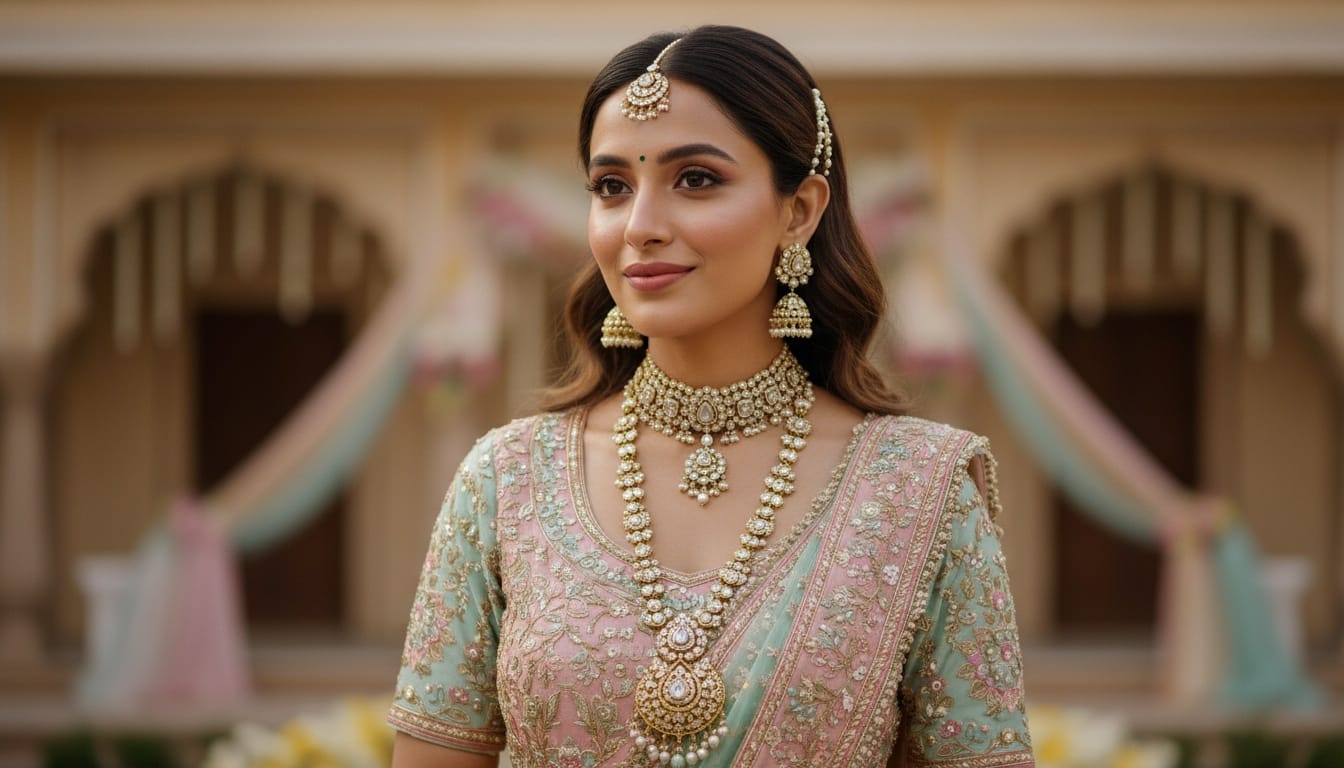
If you are unsure how large or dramatic a style will look in real life, this complete earrings size guide breaks down every common earring length and scale.
Earrings For Outdoor Events, Travel, and Sports
These occasions share one priority above everything else: practicality.
Outdoor events like picnics, garden parties, beach days, and travel situations all involve movement, wind, sun exposure, and the real possibility of losing an earring without noticing. Sports and active occasions add sweat, physical contact, and the risk of snagging.
Best earrings for outdoor events: Stud earrings with screw backs or butterfly backs (secure closure prevents loss). Small hoops with clicker closures. Huggies that sit flush against the lobe and do not catch on anything.
Best earrings for travel: Flat-back studs are the most practical for long journeys where you might sleep or lean your head. Huggies are the second best choice. Avoid long danglers that catch on scarves, headphone cords, or seat headrests.
Best earrings for sports and physical activity: The honest answer is no earrings at all for contact sports and high-movement activities. For lighter activities like yoga or walking, small flat-back studs are the safest option. Nothing with a hook or a long drop.
What to avoid for outdoor and active occasions: Long dangle earrings near water or wind. Heavily embellished earrings with exposed stone settings that can crack or chip on impact. Hook-back earrings during any activity where the hook might catch on hair or clothing.
Quick Reference: Earrings for Every Occasion
| Occasion | Best Earrings | Avoid |
|---|---|---|
| Office / Daily wear | Studs, huggies, small hoops, short drops | Long danglers, statement chandeliers |
| Video calls / WFH | Medium drops, medium hoops (25–30mm) | Very small studs that disappear on screen |
| Casual outings | Medium hoops, geometric drops, colorful studs | Heavy bridal-level pieces |
| Date night (casual) | Elevated drops, slim hoops with pendant | Office studs, costume earrings |
| Date night (dinner) | Statement drops, chandeliers, pavé styles | Noisy or costume-level earrings |
| Cocktail / Formal event | Chandelier earrings, long pavé drops, bold gems | Everyday studs, small hoops |
| Diwali | Stone-set jhumkas, chandbalis, meenakari drops | Understated studs or plain metal |
| Navratri | Color-coordinated meenakari jhumkas, lightweight chandbalis | Heavy earrings for dancing nights |
| Eid | Pearl jhumkas, gold chandbalis, polki drops | Very casual or western-only styles |
| Karva Chauth / Puja | Gold jhumkas, small chandbalis | Overly dramatic bridal-level pieces |
| Haldi | Fashion jhumkas, tassel, floral earrings | Fine jewelry or stone-set pieces |
| Mehendi | Meenakari jhumkas, colorful drops, light chandbalis | Heavy or high-value pieces |
| Sangeet | Bold jhumkas, chandbalis, chandelier drops, statement hoops | Understated studs |
| Reception (guest) | Chandbalis, polki drops, statement jhumkas | White or bridal colors, overly dramatic |
| Bridal | Based on neckline: chandbalis, jhumkas, polki drops | Heavy earrings above 20g per piece |
| Outdoor / Travel | Flat-back studs, huggies, small hoops | Long danglers, hook backs |
| Sports / Active wear | Small flat-back studs only | Any earring with a hook or long drop |
Decision Framework: Which Earring for Which Occasion
Use this before choosing any pair for any event.
Step 1: How formal is this occasion?
- Everyday or professional: foundation earrings only (studs, huggies, small hoops)
- Social or semi-formal: statement layer (drops, medium hoops, pearl earrings)
- Formal or festive: occasion pieces (chandeliers, chandbalis, bold drops)
Step 2: How long will you be wearing them?
- Under 4 hours: any style within the formality level
- 4–8 hours: stay under 8 grams per earring, check for hook security
- 8+ hours: studs, huggies, or lightweight jhumkas only. Screw backs or clicker closures recommended.
Step 3: What is the outfit doing?
- Heavy embellishment, rich fabric, strong print: keep earrings cleaner and more restrained
- Plain, minimal, or neutral outfit: earrings can and should carry more visual weight
- Ethnic wear at a festive occasion: match the richness level of the fabric with the richness level of the earring
Step 4: What is the neckline?
- Open and low: longer, bolder earrings
- Covered or high: bold studs or drops that stay near the face
- Wide and horizontal: vertical earrings to counteract the horizontal pull
Run through all four steps and your earring choice will be proportionate, appropriate, and intentional for any occasion you face.
If you want to explore earrings across all occasion categories in one place, Eternz brings together 300+ jewelry brands including Giva, Palmonas, and Kushal's, covering everything from everyday office studs to bridal chandbalis and polki sets.
If you want to understand the difference between studs, hoops, jhumkas, chandbalis, and drops, this guide explains every major earring type in detail.
Conclusion
The occasion is always the first question. Everything else, face shape, neckline, hair, outfit, is fine-tuning that happens after.
Once you know the formality level, the expected dress code, and how long you will be wearing the earrings, the field narrows dramatically. A festive Indian occasion calls for jhumkas or chandbalis at a richness level matched to the event. A formal western event calls for chandeliers or bold drops. An office setting calls for restraint. A casual brunch gives you creative freedom. A Haldi calls for fashion jewelry regardless of how much fine jewelry you own.
The earring that is right for the moment is not always the most beautiful pair in your box. It is the one that fits the occasion so naturally that no one notices the earring in isolation. They just notice that the whole look works.
That is exactly what good earring selection feels like.
For a deeper understanding of earring styles, materials, sizing, and styling principles, explore the ultimate guide to earrings.
FAQs
1. Which earrings are best for office wear?
Studs, huggies, small hoops (under 20mm), and slim short drop earrings that end above the jawline. These styles are polished and professional without being distracting. Keep weight under 7–8 grams per earring for all-day comfort. Avoid long danglers, heavily embellished pieces, and anything with significant movement.
2. What earrings should I wear to a wedding?
As a guest, chandbalis, bold jhumkas, polki or kundan drops, and statement chandeliers are all appropriate depending on the function. As a bride, the earring choice is determined first by the neckline of your blouse: deep V necklines take long jhumkas or chandbalis, round necks take chandbalis or drops, and covered necklines take bold statement studs or structured pieces.
3. What earrings are best for Indian festive occasions like Diwali and Navratri?
For Diwali: stone-set jhumkas, chandbalis, meenakari drops, or kundan chandelier styles. For Navratri: lightweight color-coordinated meenakari jhumkas or tassel earrings (prioritize comfort for long dancing evenings). The general principle: match the richness of the earring to the richness of the outfit and the formality of the occasion.
4. What earrings should I wear on a date?
For a casual date: an elevated drop or slim hoop with a pendant detail. For a dinner date: a statement drop, chandelier, or pavé-set earring in the 4–6cm range. The earring should signal intentional dressing without looking overdressed for the setting. Avoid office studs (too minimal) and very heavy costume earrings (too much).
5. Can I wear jhumkas to a formal event?
Yes, absolutely. Long jhumkas with heavy stone work, kundan detailing, or polki setting are fully appropriate for formal Indian occasions including receptions, formal dinners, and wedding events. Match the embellishment level of the jhumka to the formality of the event. A simple gold jhumka for a casual occasion, a heavily stone-set jhumka for a formal one.
6. What earrings are safe to wear to outdoor events or during travel?
Flat-back studs with screw backs are the safest for travel and outdoor events. Huggies with clicker closures are the second best option. Avoid long danglers that catch on hair, clothing, or accessories. For active outdoor events, small flat-back studs are the most practical and lowest-risk choice.
7. What earrings are appropriate for Haldi and Mehendi functions?
For Haldi: lightweight fashion jhumkas, tassel earrings, or floral earrings. Avoid fine jewelry as turmeric can damage stone settings and discolor metal. For Mehendi: meenakari jhumkas, colorful gemstone drops, or light chandbalis that coordinate with the outfit palette. Both functions are on the informal end of the wedding spectrum, which makes fashion jewelry the right call.