How Many Bridal Jewellery Sets You Need, by Wedding Size
Most brides need 3 to 5 jewellery sets for their wedding. See how many you need for your number of functions, and which sets can be reused.
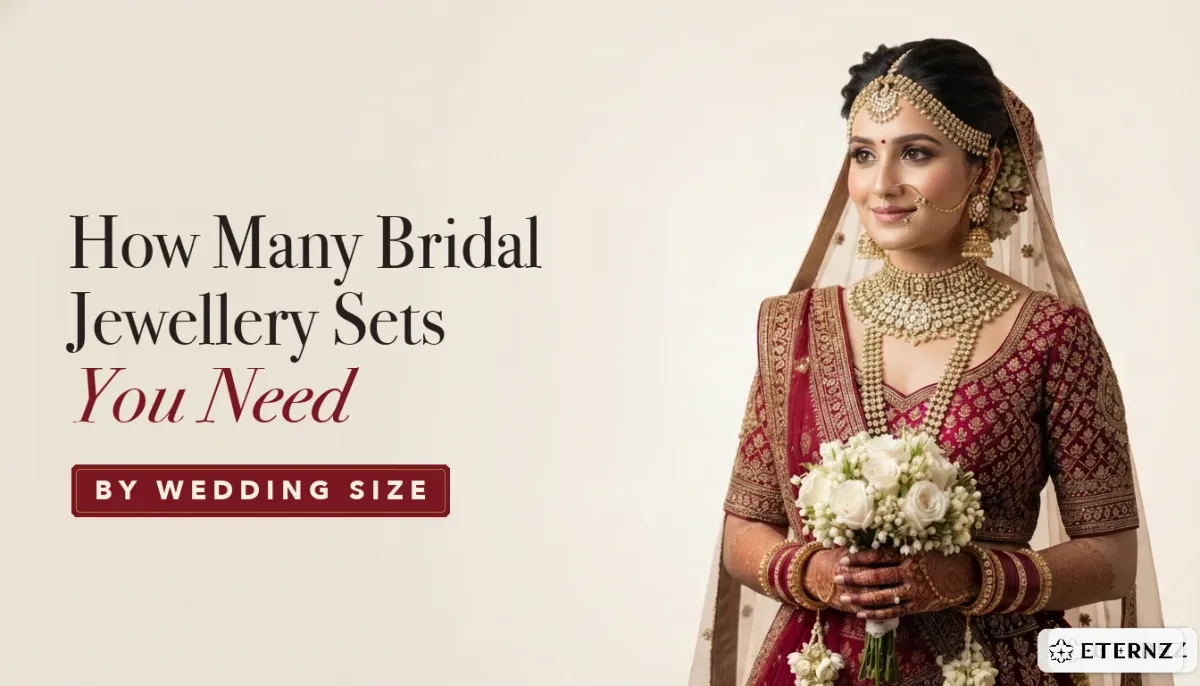
Most brides need 3 to 5 jewellery sets for their wedding: one heavy set for the wedding day, one statement set for the sangeet or reception, and one or two light sets for haldi and mehendi. The exact number depends on how many functions you have and how many pieces you are happy to mix. A set does not have to stay a set. Swap the earrings, add a tikka or layer a long necklace, and three sets can easily cover five functions without looking repeated.
Below, you will find the number for your size of wedding, which sets must be new, and how to reuse the rest.
Before we start, let me tell you about Eternz, a trusted jewellery marketplace featuring 400+ jewellery brands, with authenticity certification on every piece and fast, same-day delivery in major cities. First-time users can also save with ETERNZ5 for up to ₹50 off on ₹499+, ETERNZ10 for up to ₹100 off on ₹999+, or ETERNZ300 for up to ₹300 off on ₹2,500+, valid on both the app and website.
The Short Answer: 3 to 5 Jewellery Sets for Most Brides
For most Indian weddings, 3 sets is the floor and 5 is plenty. Anything more is usually a choice, not a need.
When people say "set", they usually mean a necklace with matching earrings, sometimes with a maang tikka. Every bride's sets fall into three jobs, and once you see the jobs, the counting gets easy.
| Set | Where you wear it | What it needs to do |
|---|---|---|
| The heavy bridal set | Wedding day (pheras, muhurtham or nikah) | Look grand in photos and match the bridal outfit |
| The statement set | Sangeet, cocktail or reception | Stand out under stage lights while letting you dance and move |
| The light set | Haldi, mehendi, small pujas | Stay comfortable for hours and survive turmeric, mehendi and water |
Here is what each of the three jobs can look like:
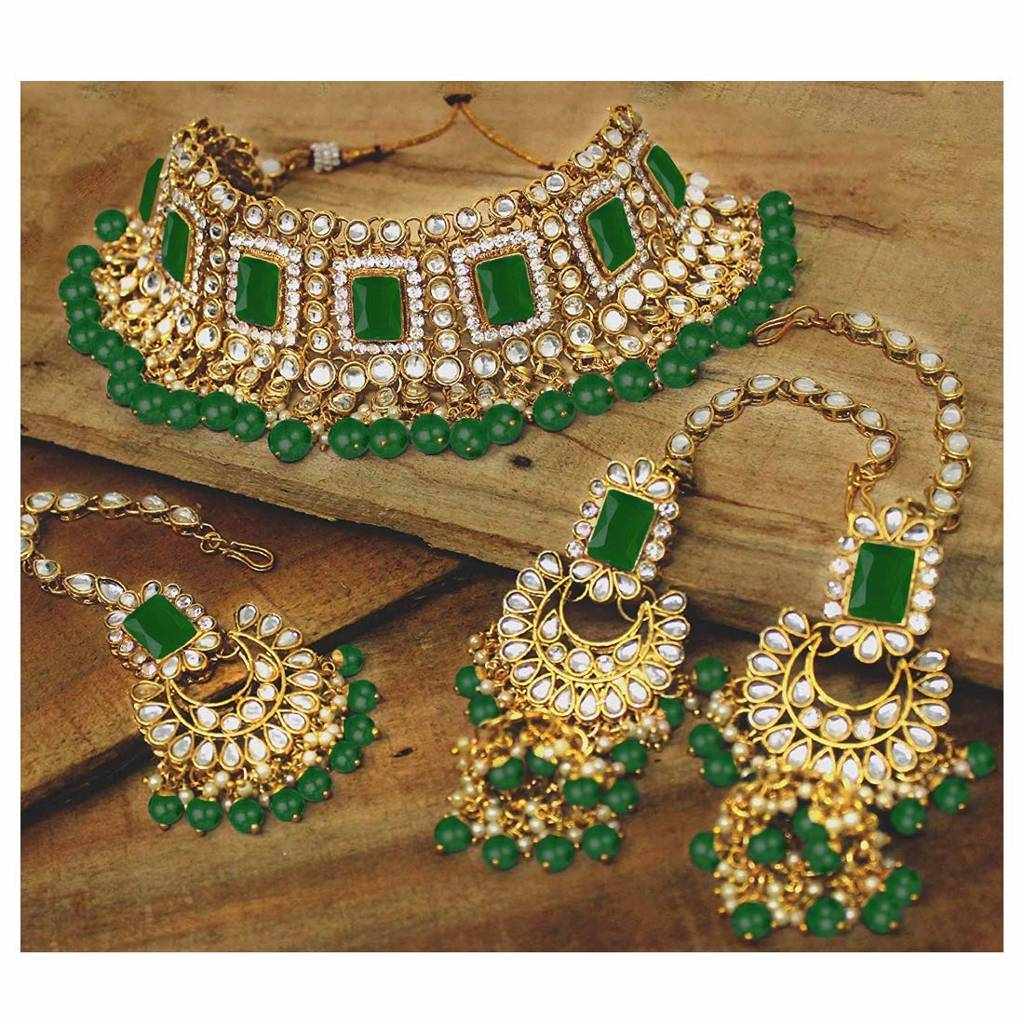
The heavy bridal set: a gold-plated kundan choker with chandbali earrings and a matching maang tikka, built for the pheras and the wedding album.
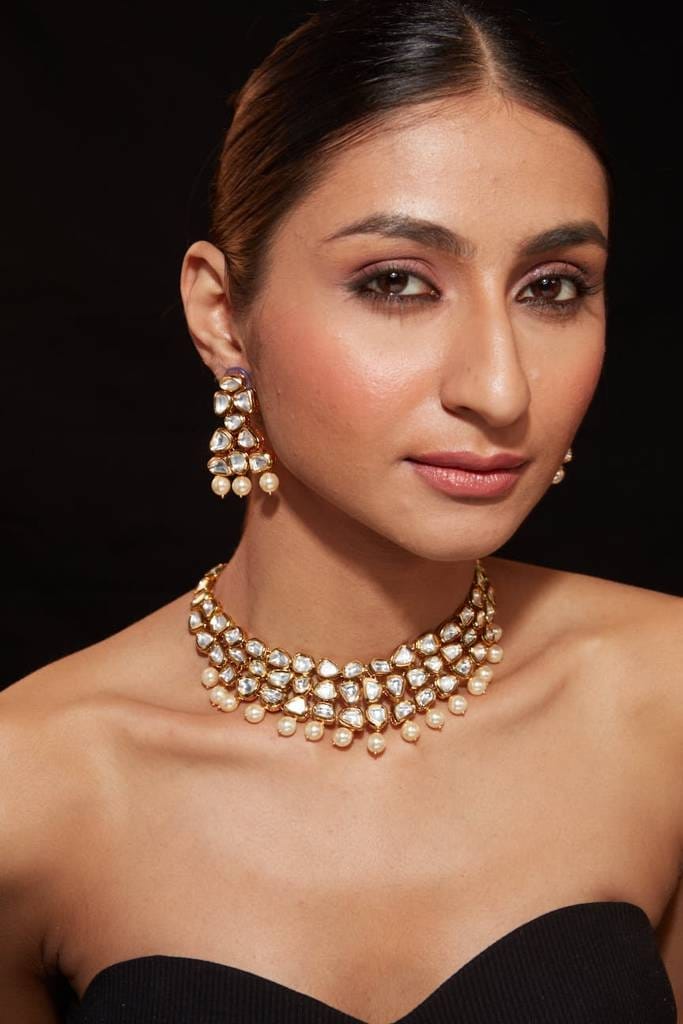
The statement set: a gold-plated kundan polki choker with bead drops. It catches stage light at the sangeet and looks just as right at the reception.
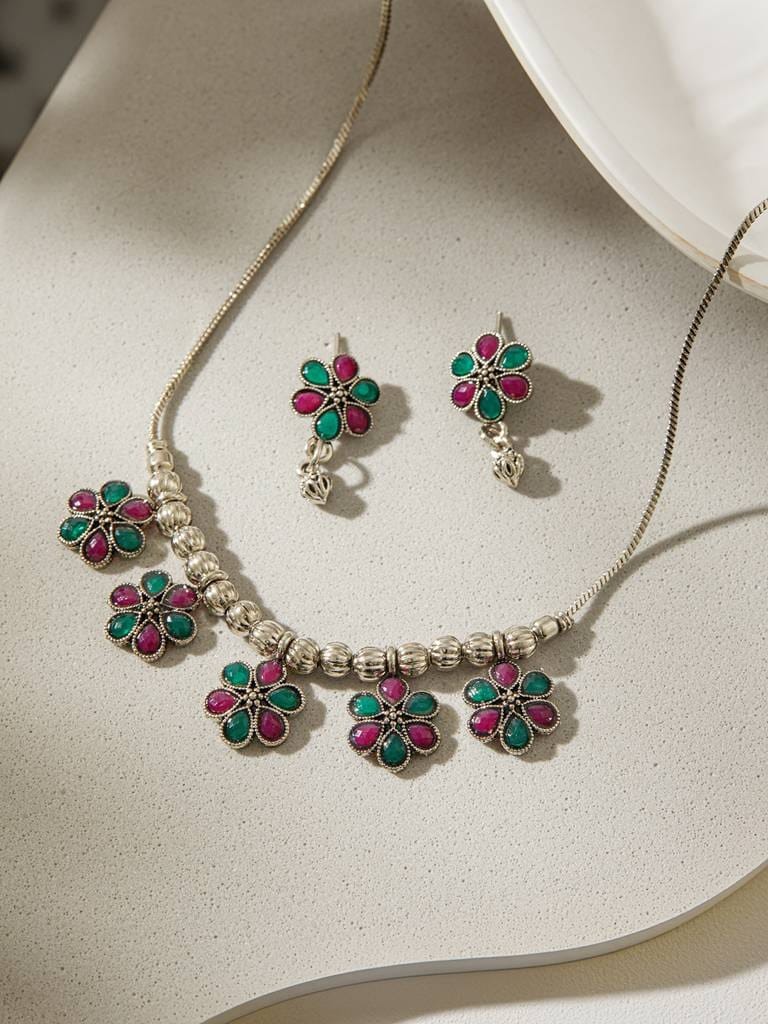
The light set: a silver-plated oxidised floral necklace and earrings. It is easy to wear for hours and doesn't need babying around turmeric or mehendi.
That is why 3 is the starting number: one set for each job. You add a fourth or fifth set only when you have more functions than these three jobs can stretch across, or when two functions need very different looks.
If you want to see which pieces go into each of these sets, from tikka to payal, the bridal jewellery checklist walks through it function by function.
How Many Jewellery Sets You Need, by Wedding Size
The real answer depends on how many functions you have. A court wedding and a six-day destination wedding are two very different shopping lists.
For each size of wedding below, you will see the usual functions, the number of sets, and how to split them.
Intimate or Court Wedding (1 to 2 Functions)
A registered wedding with a lunch, or a small temple wedding with close family, needs far less than people expect.
- Functions: The ceremony, and perhaps a small dinner or puja.
- Sets you need: 1 to 2.
- How to split them: Choose one medium-weight set that looks bridal but not stiff, such as a choker set or a light polki or kundan set. If there is a dinner later, change only the earrings and the hairstyle instead of buying a second full set.
A Three-Function Wedding
This is the most common shape for many families: mehendi, the wedding, and a reception.
- Functions: Mehendi, wedding day, reception.
- Sets you need: 3.
- How to split them: A light set for mehendi, the heavy bridal set for the wedding, and a statement set for the reception. Each function gets its own look, and nothing needs to be reused.
The Full Five or Six Function Wedding
Roka or engagement, haldi, mehendi, sangeet, wedding, reception. This is where brides start to panic and overbuy.
- Functions: 5 to 6.
- Sets you need: 4 to 5.
- How to split them:
- Haldi and mehendi: one light set, worn in two ways (more on that below)
- Engagement or roka: a medium set that can come back later
- Sangeet: a statement set
- Wedding day: the heavy bridal set
- Reception: a second statement set, or the engagement set dressed up with new earrings and a tikka
Two Ceremonies, Two Cultures
When a Punjabi bride marries into a Tamil family, or a church wedding sits next to a Hindu ceremony, you often have two wedding-day looks.
- Functions: Usually two main ceremonies plus the shared functions.
- Sets you need: Your usual number plus 1.
- How to split them: Give each main ceremony its own set in its own tradition, such as temple jewellery for a South Indian muhurtham or a Christian bridal look for the church. Then share the light and statement sets across everything else.
Quick tip: Write your functions down on one page before you open a single shopping app. Next to each one, write "heavy", "statement" or "light". The number of sets you need is staring back at you.
Here is the whole picture in one table:
| Wedding type | Functions | Sets you need | Must be new |
|---|---|---|---|
| Intimate or court wedding | 1 to 2 | 1 to 2 | 1 |
| Three-function wedding | 3 | 3 | 1 to 2 |
| Five to six function wedding | 5 to 6 | 4 to 5 | 2 |
| Two ceremonies, two cultures | 6 or more | 5 to 6 | 2 to 3 |
Which Jewellery Sets Must Be New and Which You Can Reuse
Only one set truly has to be new: the wedding-day set. Everything else can do double duty if you plan it.
The heavy bridal set is the one in your wedding album, the one your family will pass around, and the one that has to match a very specific outfit. This is the set worth choosing slowly, whether it is a bridal jewellery set in kundan, polki or temple style.
The other sets are more flexible:
- The statement set: It can move from the sangeet to the reception. The two crowds overlap less than you think, and a change of earrings makes it read as a new look.
- The light set: It can cover both haldi and mehendi. These functions are messy, so this is the set you least want to spend on twice.
- The engagement set: Often the most reused of all. It is lighter than the bridal set, so it can return at the reception or at the first family wedding you attend as a newlywed.
Here is a simple reuse map:
| Piece | First worn at | Worn again at | How to change the look |
|---|---|---|---|
| Statement earrings | Sangeet | Reception | Pair with a different necklace or none at all |
| Light choker | Mehendi | Haldi | Swap the earrings and add a hair chain |
| Engagement necklace set | Engagement | Reception | Add a maang tikka and a long necklace below it |
| Long haram or rani haar | Wedding day | Reception | Wear it alone over a plain blouse |
Did you know? A choker from one set and a long necklace from another, worn together, often looks like a brand new set. Most people read the outline of the layers, not the individual pieces.
How to Re-Wear a Jewellery Set Without Looking Repeated in Photos
Most guests see you for a few minutes at each function. Your photos are where a repeat really shows, so plan your reuse around the album, not around the guest list.
Here are the changes that make the same set look new on camera:
- Change the earrings first. Earrings sit right next to your face in every close-up. Swap jhumkas for statement earrings or chandbalis, and the whole set reads differently.
- Add or remove the head piece. A maang tikka at the sangeet and none at the reception changes how the set frames your face.
- Layer instead of repeating. Put a long necklace under the choker you wore earlier. If you have never tried it, this guide to necklace layering shows how to space the lengths so they don't tangle.
- Switch the metal mood. The same outfit colour with an oxidised set at mehendi and a gold-tone set later looks like two different brides.
- Change the neckline story. A choker sits high and a long necklace falls low. If you are unsure which suits which function, this breakdown of choker vs layered necklaces helps.
- Change the hair. Open waves hide the back of a necklace, while a bun shows it off. It is a free way to change the whole look.
Quick tip: A week before the functions, wear each set with its outfit and take one photo in good light. Put the photos side by side on your phone. Repeats you didn't notice in the mirror jump out in a photo, and you still have time to fix them.
Count the Jewellery You Already Have Before You Buy
Gifted and family pieces count as sets too. List them first, then buy only what is missing.
In many families, the bride receives jewellery from her parents, her in-laws and close relatives, sometimes long before the wedding. Before you shop, put everything on one table: your mother's old set, the necklace your nani kept for you, the earrings from the roka. Then match each piece to one of the three jobs: heavy, statement or light.
You may find you already have your statement set and only need the bridal set and something light. Old pieces may need a gentle clean before they come out again. This guide on cleaning heirloom jewellery explains how to do it without damaging old stones or polish.
The one-liner to remember: Buy the heavy set once. Let everything else work twice.
Conclusion
You do not need a new jewellery set for every function. Count your functions, give each one a job (heavy, statement or light), and you will usually land on 3 to 5 sets. Spend your time and care on the wedding-day set, and let the rest move between functions with new earrings, a tikka or a long necklace.
When you are ready to fill the gaps, start with the wedding jewellery edit on Eternz, or browse necklace sets and jewellery sets by style. If your list is running long, the budget bridal jewellery ideas and the jewellery pieces you can skip will help you trim it without losing the bridal feel.
Frequently Asked Questions
1. Do I need a different jewellery set for every wedding function?
No. Most brides wear 3 to 5 sets across all their functions. Only the wedding-day set needs to be new. Light and statement sets can be reused with new earrings, a different head piece or a layered necklace.
2. Can I wear the same necklace at the sangeet and the reception?
Yes. The guest lists often differ, and a change of earrings and hairstyle makes the necklace look new. If the outfits are similar colours, add a long necklace below it at the reception so the photos look different.
3. How many jewellery sets does a South Indian bride need?
Usually 3 to 4. Many South Indian brides wear a temple set for the muhurtham, a lighter set for the reception, and one or two sets for the pre-wedding functions. Customs vary by community, so ask your family which pieces are expected on the main day.
4. Is one heavy set enough for a small wedding?
Yes, for a court or intimate wedding with one or two functions. Choose a medium-weight set that feels bridal but comfortable. For a dinner after the ceremony, change only the earrings instead of buying a second set.
5. Should my engagement set match my wedding set?
It doesn't have to. Many brides choose a lighter engagement set in a different style so it can be reused later, at the reception or at family weddings. Matching the metal tone is enough to make the two look connected in photos.
6. How many pairs of earrings should a bride buy?
Plan one pair per function, but they don't all have to be new. Earrings are the cheapest way to make a reused necklace look different, so it is worth having more earrings than necklace sets.
7. Can I mix kundan and gold sets across different functions?
Yes. Kundan for the wedding day and a gold-tone or polki set for the reception is a common mix. Keep one function to one style, so the look in each photo feels finished.
8. What jewellery set should I wear for the post-wedding puja or first family visit?
Use your lightest set or your engagement set. After the wedding, most new brides switch to comfortable pieces such as a mangalsutra, slim bangles and small earrings. This guide to the jewellery to wear after marriage covers those everyday pieces. Save the heavy set for festivals and family weddings.