Choker vs Layered Necklaces: Which One Should You Actually Wear?
Choker vs layered necklaces: learn which suits your neckline, neck length, face shape, and Indian outfits. Includes a full decision framework and styling tips.
TL;DR
A choker works best when your neckline is open or low, when the look needs one strong focal point, and when you want the necklace to frame your face and neck directly. Layered necklaces work best when your neckline is simple or modest, when you want depth and dimension across the chest, and when you are building a look rather than completing one. If you are in doubt, a thin choker paired with a longer layered chain is one of the most versatile necklace combinations you can own.
What We Cover
- What actually defines a choker and a layered necklace
- The real differences between the two styles and where each one wins
- When to wear a choker versus when to go layered, by occasion and outfit
- How each style works across different necklines
- How body type and neck length affect the choice
- Whether you can wear both at the same time and how to do it right
- A clear decision framework so you never second-guess this again
You are standing in front of your mirror. The outfit is sorted, the makeup is done, and then you open your jewelry box and pause. Should it be the choker or the layered set?
This is one of the most common jewelry dilemmas, and it is common because both styles genuinely work well. Neither is a wrong choice in isolation. The question is which one is the right choice for your specific outfit, occasion, and neckline at that moment. And that is a question most styling guides do not fully answer.
This article gives you that full answer. It covers both styles clearly, puts them side by side across every relevant dimension, and ends with a decision framework you can actually use the next time you are standing in front of that mirror.
What Is a Choker Necklace?
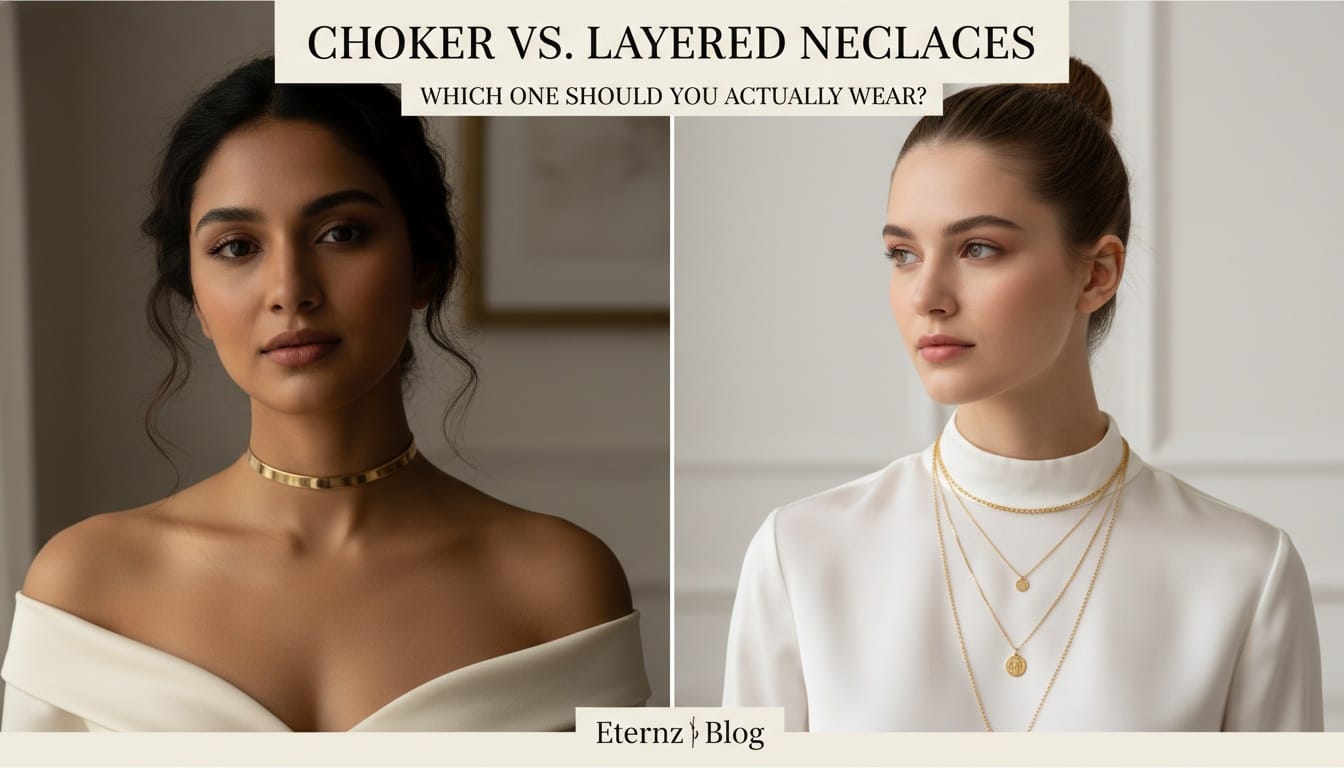
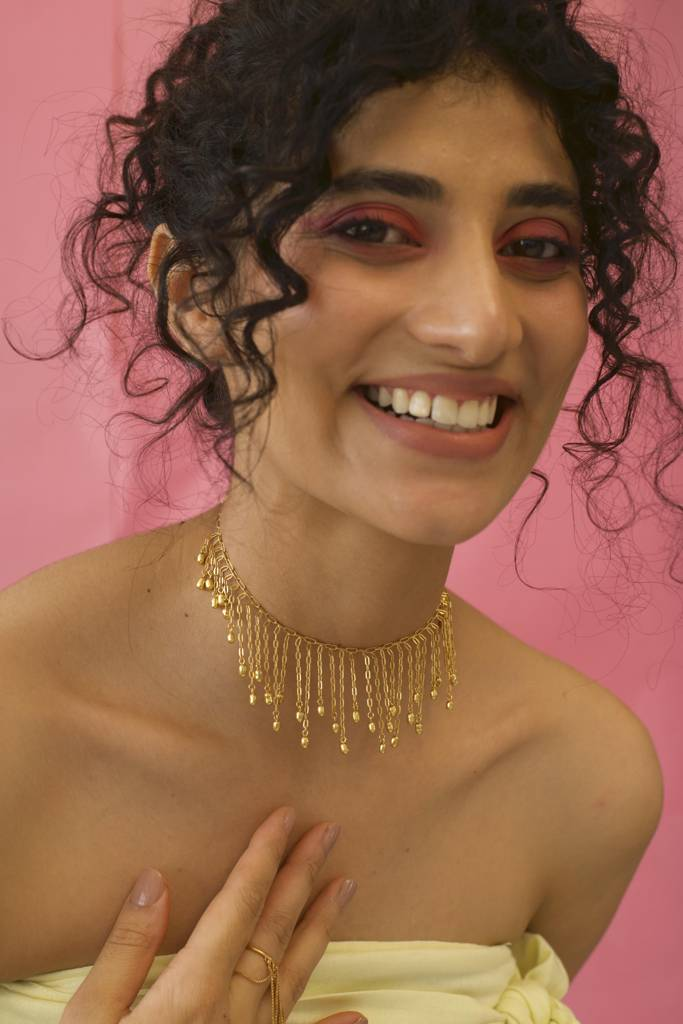
A choker is a close-fitting necklace that sits snugly at the base of the neck. It typically measures between 14 and 16 inches in length and leaves little to no gap between the chain and the skin. The defining quality of a choker is its position. It sits high, hugs the neck, and immediately draws attention to the collarbone and the area just below the jaw.
Chokers come in a wide range of styles and materials. The most common types you will find across brands on Eternz include:
- Delicate chain chokers: Thin gold or silver chains that sit quietly against the neck. The go-to for minimal or everyday styling.
- Pendant chokers: A close-fitting chain with a single charm, stone, or motif at the center. These add just enough visual interest without becoming dramatic.
- Pearl chokers: Strands of pearls or pearl-set chains that sit at the neck. One of the most versatile choker styles across both ethnic and western outfits.
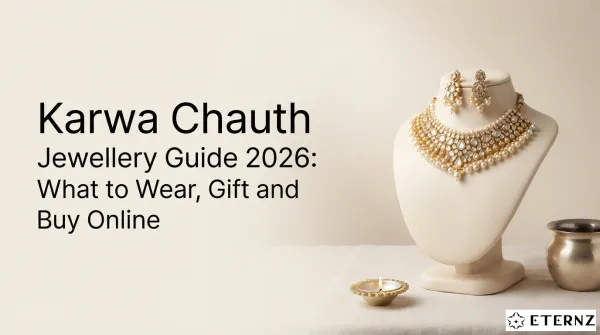
- Kundan and temple chokers: Wider, heavily set chokers common in Indian traditional jewelry. These are statement pieces designed for ethnic wear.
- Velvet and fabric chokers: A nostalgic style from the 90s that has returned. Generally casual, not suited for formal occasions.
What all of these have in common is the positioning. The choker is always close to the neck, always high, and always a single-piece focal point.
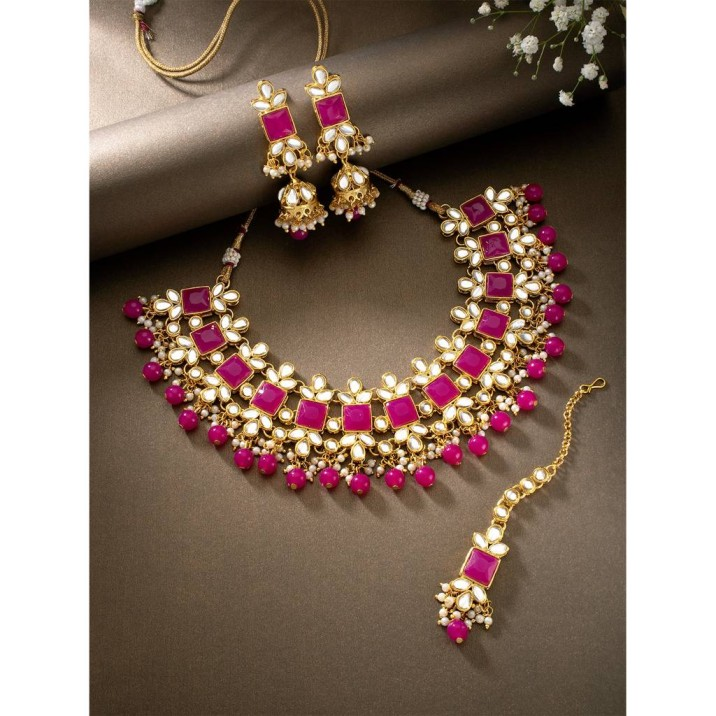
Explore choker necklaces and matching choker sets for every occasion.
What Are Layered Necklaces?
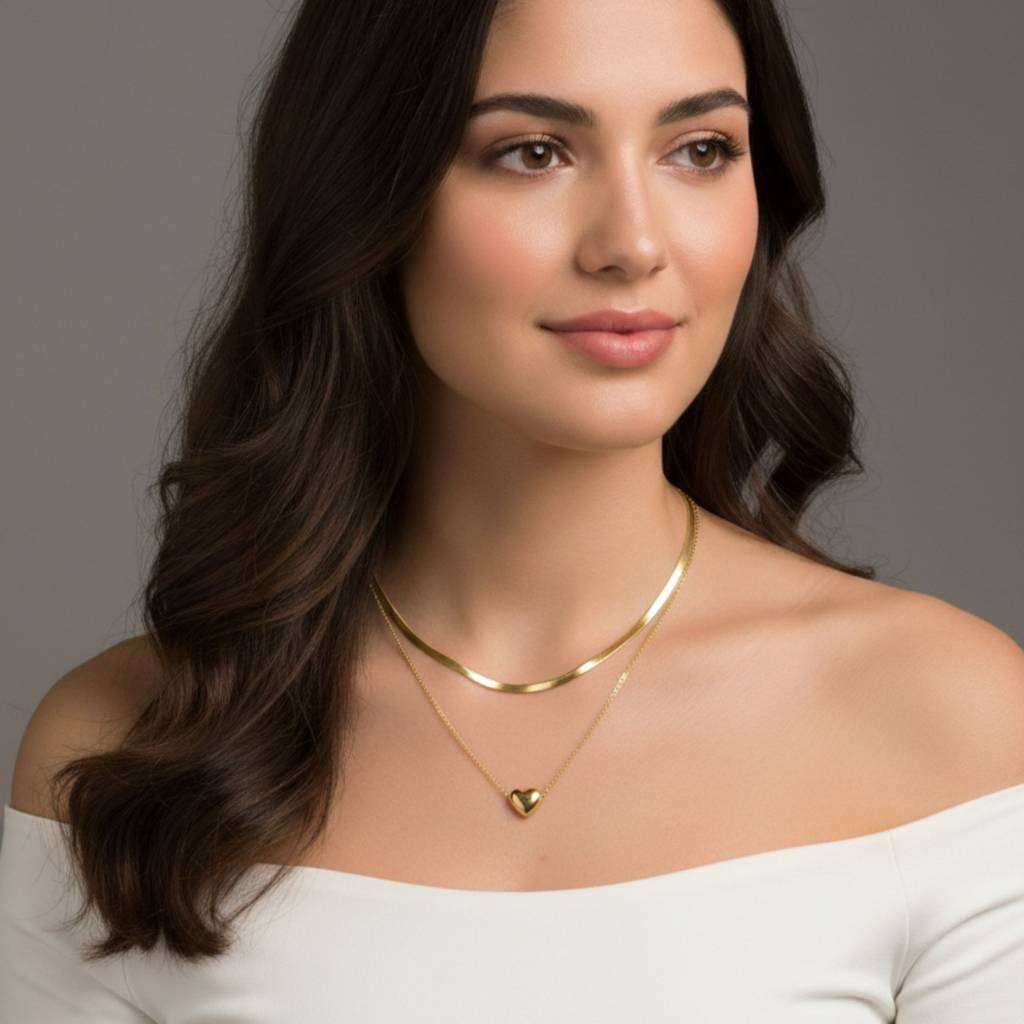
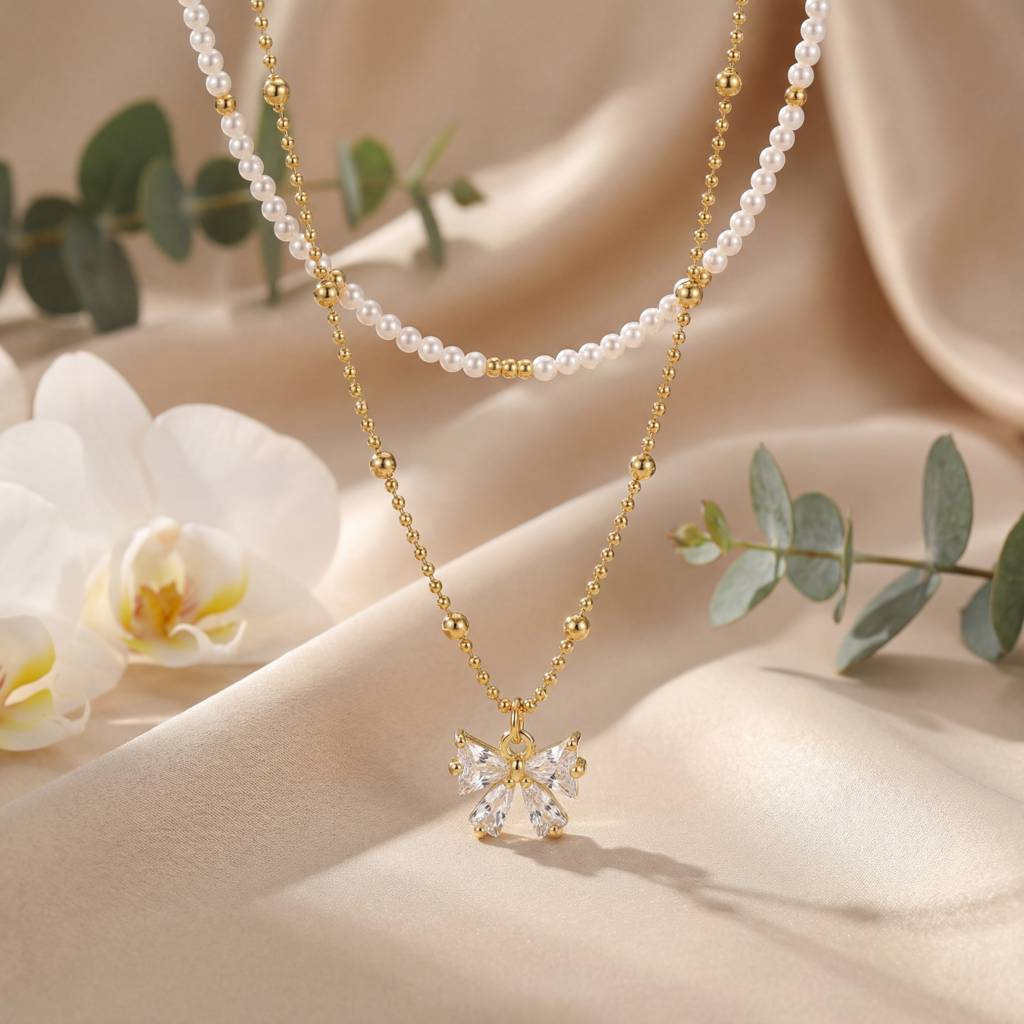
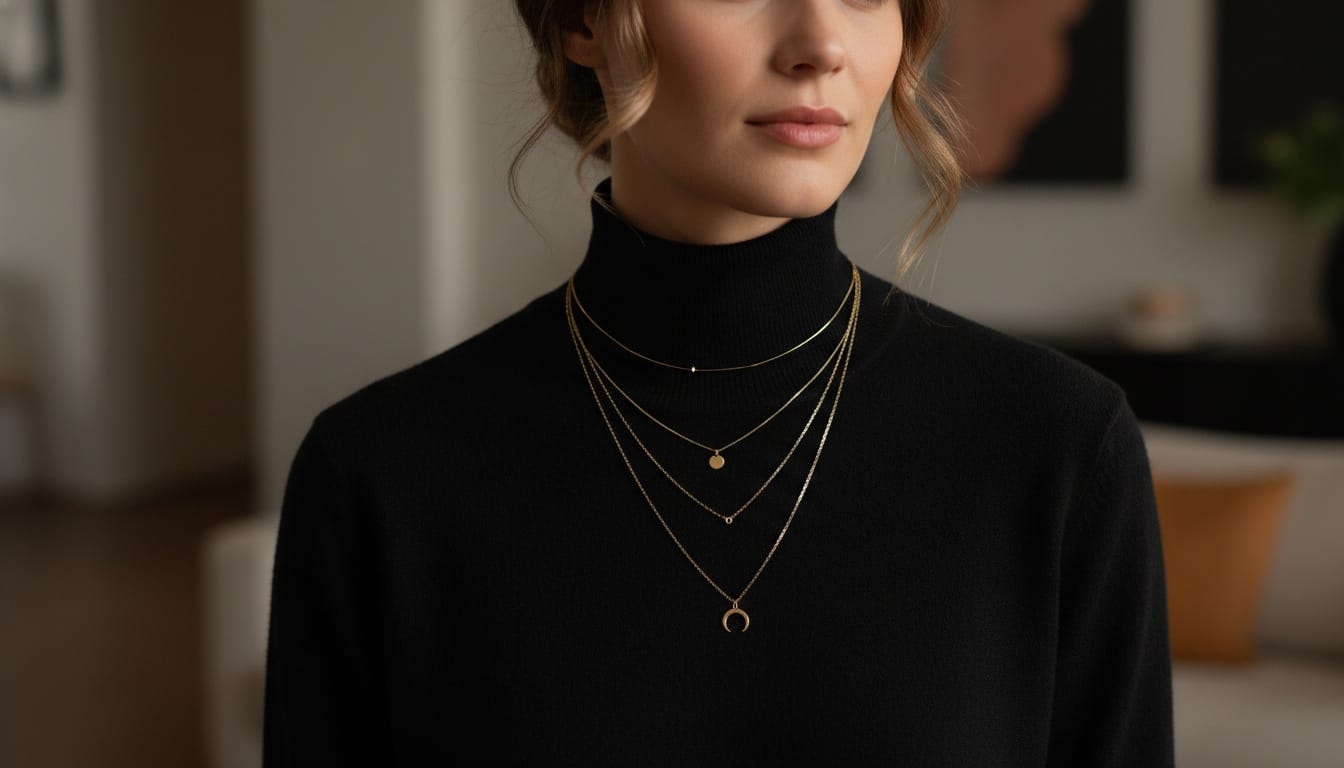
A layered necklace set is exactly what it sounds like: two or more necklaces of different lengths worn together to create a cascading, dimensional effect across the neckline and chest. The visual result is one of depth and intentional layering, where each chain or pendant is visible and contributes to the overall look without overlapping.
Layered necklaces typically involve two to four pieces. The most common structure is:
- A shortest layer: Often a choker or a 16-inch chain sitting just below the base of the neck
- A middle layer: A 18 to 20-inch pendant chain or simple strand sitting at the collarbone
- A longer layer: A 22 to 24-inch chain that falls onto the chest, adding depth and elongation
You can buy layered necklaces as pre-set combinations (where all three chains come together on a single clasp) or build your own stack by combining individual pieces. Both approaches work, but building your own gives you more flexibility to mix styles, lengths, and metal tones.
Layered necklace styles on Eternz span minimal gold stacks, mixed metal combinations, pearl-chain hybrids, and gemstone-accented multi-chain sets. Brands like Palmonas, GIVA, and Salty all carry layered necklace options built for different aesthetics, from clean minimalist to boho-luxe.
Choker vs Layered Necklaces: Where Each One Actually Differs
Before getting into specific use cases, here is a direct side-by-side view of how the two styles differ across the dimensions that matter most for everyday wearing decisions.
| Dimension | Choker | Layered Necklaces |
|---|---|---|
| Length | 14 to 16 inches | 16 to 28 inches (multiple pieces) |
| Visual effect | Single focal point, frames neck and face | Multi-dimensional, adds depth across chest |
| Best neckline | Low, open, V-neck, off-shoulder, sweetheart | High neck, round neck, boat neck, scoop neck |
| Best outfit | Outfits with exposed neckline or collarbone | Outfits with simple or modest necklines |
| Look it creates | Bold, defined, minimalist or traditional | Layered, intentional, editorial or bohemian |
| Occasion fit | Casual, party, bridal, cocktail | Everyday, office, ethnic, semi-formal |
| Body type note | Works better on long or thin necks | Works across most neck lengths and types |
| Ethnic wear | Kundan, temple, pearl choker for sarees | Gold stacks for kurtas, lehengas, indo-western |
| Styling effort | Minimal: one piece does everything | Moderate: requires proportional thinking |
This table captures the structure of the decision. The sections below go into each dimension in detail.
For a deeper dive into how layered necklaces work in real styling, explore our guide on mastering necklace layering for a balanced look.
When to Wear a Choker
The choker's core strength is precision. It is one piece doing one clear job: framing the neck and upper chest when that area is already exposed and deserving of attention.
The choker earns its place in the following situations:
Open and low necklines. A V-neck, sweetheart neckline, off-shoulder top, or scoop neck creates open space around the collarbone. A choker fills that space cleanly and intentionally. It sits in the exposed zone without competing with the neckline itself.
When you want the jewelry to be the clear focal point. A bold kundan choker on a simple blouse, or a diamond-set choker on a strapless gown, works because the neckline is not doing much, so the choker can own the space entirely.
Formal and bridal occasions with ethnic wear. Wide kundan, polki, or temple chokers are designed for bridal and festive contexts. Paired with a deep-neck blouse and a lehenga, they sit at exactly the right height to frame the face without hiding behind the neckline.
Casual everyday styling. A thin gold chain choker from GIVA or a delicate pearl choker from Palmonas is one of the easiest ways to add quiet polish to a plain T-shirt or casual shirt without overthinking it.
When your neck is long or on the thinner side. A choker shortens the visual length of the neck slightly, creating a more balanced proportion. For those with longer necks, this is a flattering effect.
When to Wear Layered Necklaces
Layered necklaces solve a different problem. Where the choker fills one specific zone, a layered set fills an entire visual range. This makes it the better choice when the neckline does not expose much, or when the outfit needs dimension added across the chest rather than just at the base of the neck.
Layered necklaces work best in the following situations:
Round necks and crew necks. These necklines cover the neck entirely and leave the chest as a plain canvas. A layered set fills that canvas with intentional depth and becomes the visual centerpiece of the outfit.
Boat necks and high necks. Both of these necklines sit high and wide, leaving no exposed zone for a choker to sit in. A layered necklace that falls below the neckline adds interest where the neckline cannot.
Turtlenecks. Longer layered chains worn over a turtleneck is one of the most effective winter styling moves. The fabric acts as a clean backdrop, and the chains create visual interest against the solid surface.
Everyday and office wear. A two-chain gold layered set over a kurta or a formal blouse adds styling without being dramatic. It reads as put-together rather than dressed-up, which is exactly the right balance for daily wear.
Indo-western outfits and kurtas. A delicate pearl and gold chain combination, or a simple multi-chain layered set, works exceptionally well with structured kurtas, co-ord sets, and indo-western dresses. Brands like Palmonas and Salty offer layered sets that are built for exactly this aesthetic.
When you want depth without committing to a statement piece. Layered necklaces create visual interest through the combination of pieces rather than through one bold element. This makes them easier to wear with more outfits and more occasions.
Choker vs Layered Necklaces by Neckline
This is where the decision becomes most concrete. The neckline of your outfit is the single strongest signal for which style to choose.
| Neckline | Better Choice | Why |
|---|---|---|
| V-neck | Choker or long pendant layer | V-neck creates a downward line; a choker sits above it cleanly |
| Round neck | Layered necklaces | No exposed zone for choker; layered set fills the chest area |
| Boat neck | Minimal drops or layered | Wide horizontal neckline; longer layers add vertical interest |
| Off-shoulder | Bold choker | Maximum neck exposure, choker fills the zone perfectly |
| Sweetheart | Choker | Open chest and collarbone framed cleanly by a choker |
| Turtleneck | Layered necklaces | No space at neck for choker; layers fall over the fabric |
| Scoop neck | Either works | Wide enough for both; occasion determines the choice |
| High neck kurta | Layered necklace | The neck is covered; layers frame the chest instead |
| Halter neck | Simple choker or studs | Halter straps already add neck detail; minimal works best |
How Body Type and Neck Length Affect the Choice
This is a dimension most comparison guides skip, but it matters in practice.
For long or tall necks: Chokers are naturally flattering because they sit high and visually balance the length of the neck. A thin choker on a long neck looks elegant. A wide choker on a long neck creates a bold, intentional look. Both work.
For short necks: This is where chokers require thought. A wide, thick choker on a short neck can make the neck appear even shorter. If you have a short neck and love chokers, a thin delicate chain choker is the safer choice. It adds the look without compressing the proportion. Layered necklaces that sit lower on the chest are actually more flattering for shorter necks because they elongate the overall upper body visually.
For petite frames: Delicate layered sets with thin chains in two layers are ideal. Heavy, wide three-chain sets can overwhelm a petite frame. Similarly, oversized chokers can look disproportionate. The key for petite frames is scale: smaller pieces in either style always work better.
For taller or fuller frames: Both styles have room to go bolder. A wider choker, a three-piece layered set with some texture, or a combination of both are all proportionally appropriate.
Can You Wear a Choker and Layered Necklaces Together?
Yes, and this is one of the most underused styling moves in everyday jewelry.
A thin choker worn as the shortest piece in a layered stack is how most professional necklace layering actually begins. The choker becomes the anchor layer, sitting at the base of the neck, while the remaining chains fall progressively lower at 18 inches, 22 inches, and beyond. The result is a fully layered look with the clean definition that a choker brings at the top.
How to do this well:
The choker in a combined look should be thinner and more delicate than the layers below it. A thin gold choker from GIVA paired with a 20-inch pendant chain from Palmonas and a longer 24-inch chain from Salty creates a three-tier stack that is intentional and balanced.
What to avoid in a combined look:
Do not pair a wide, heavy choker with multiple thick chains below it. The result is a crowded neckline where nothing has room to breathe. When the choker is bold, the layers below should be thin. When the layers below are textured or embellished, the choker should be delicate.
The combined look works best on open necklines (V-neck, scoop neck, off-shoulder) where all three layers are visible. On higher necklines, only the longer layers will show, which defeats the purpose of including the choker in the stack at all.
Choker vs Layered Necklaces for Ethnic Wear
Both styles have strong roots in Indian jewelry traditions. Understanding where each belongs in an ethnic context makes the choice significantly easier.
Chokers in ethnic wear are traditional. The kundan choker, temple choker, polki choker, and pearl choker have all been part of Indian bridal and festive jewelry for generations. A kundan choker with a lehenga and a deep neck or sweetheart blouse is one of the most time-tested ethnic styling combinations. The choker here occupies the entire neck zone and is the statement piece.
Layered necklaces in ethnic wear work across a broader range of ethnic outfits. A multi-layered gold chain set with a kurta is office-appropriate. A pearl and gold layered set with a silk saree is festive-appropriate. A longer rani haar or multi-strand set layered over an ethnic co-ord is wedding-guest appropriate. Layered sets give you flexibility across the formality spectrum in a way that a single choker cannot always do.
The bridal combination: Many brides now wear a traditional choker as the first layer and a rani haar or longer set as the second layer. This combination covers the full neck-to-chest zone and creates a complete bridal jewelry look without requiring additional pieces. Kushal's carries traditional layered bridal sets specifically designed for this combination approach.
A Clear Decision Framework: Choker or Layered?
Before reaching into your jewelry box, run through this sequence:
Step 1: Check your neckline. If it is open, low, or V-shaped, the choker wins. If it is round, high, or modest, layered necklaces win.
Step 2: Check your occasion. Party, bridal, or cocktail? Choker. Office, casual, or everyday ethnic? Layered. No clear occasion? Layered is always safer.
Step 3: Check your outfit's visual weight. Is the outfit already detailed, embroidered, or textured? If yes, go minimal: a thin choker or a simple two-chain layered set. Is the outfit plain and simple? Go bigger in either direction.
Step 4: Check your neck length. Long neck? Either style flatters you. Short neck? Lean toward layered or use only a thin delicate choker.
Step 5: Check your other jewelry. Wearing heavy earrings? A thin choker or no necklace is the cleaner choice. Wearing studs or small hoops? A layered necklace set or a statement choker both have room to work.
If after all five steps you are still undecided, wear both. A thin choker as the anchor and one longer layer below it is the safest, most stylish default when you cannot pick one.
Conclusion
Chokers and layered necklaces are not competing styles. They solve different problems and thrive in different contexts. The choker brings precision and definition to open necklines. The layered necklace brings depth and dimension to simpler ones. Understanding that distinction is what makes every jewelry decision faster and more confident.
Both styles are available across a wide range of materials, aesthetics, and price points on Eternz, across brands like GIVA, Palmonas, Kushal's, and Salty. Whether you are building an everyday jewelry rotation or putting together a look for a specific occasion, the decision framework above gives you a clear starting point every time.
The next time you open your jewelry box and pause, you will know exactly what to pick and exactly why.
Explore chokers and layered necklaces across 300+ brands on Eternz.
FAQs
1. Which is better: a choker or a layered necklace?
Neither is universally better. A choker works best with open, low necklines like V-necks and off-shoulder styles. Layered necklaces work better with wide, covered, or boat neck styles where there is more space to fill. The right choice depends on your neckline, neck length, and how much visual weight you want the jewelry to carry.
2. Does a choker suit a short neck?
Yes, but with one important condition. Choose a slim, delicate choker rather than a wide or heavily embellished one. A slim choker adds definition to a short neck. A wide choker adds visual bulk and makes the neck appear shorter. Avoid stacked or heavy choker styles if your neck is shorter.
3. What necklines should you avoid chokers with?
Avoid chokers with high necklines, turtlenecks, and covered or boat neck blouses. Chokers worn against fabric look unintentional and visually compress the neck. For these necklines, layered necklaces or longer chains work significantly better.
4. Can you wear a choker and a layered necklace together?
Yes. A slim choker as a base layer with one or two longer chains is one of the strongest necklace looks in current styling. The key is to use a simple, non-bulky choker as the anchor and keep the metal tones consistent. Avoid combining a heavy embellished choker with a heavy layered set, as the look becomes too dense.
5. Which is better for Indian ethnic wear: choker or layered necklace?
Both have their place. Chokers suit open and deep necklines like V-necks and sweetheart blouses, particularly for festive and bridal wear. Layered necklaces and rani haars suit boat neck, wide, and covered blouses. For short necks in Indian wear, slim chokers or slim layered sets work better than wide, heavy chokers.
6. What is the difference between a choker and a layered necklace?
A choker is a single close-fitting necklace that sits at the base of the throat, typically 14–16 inches long. A layered necklace is a combination of two or more necklaces of different lengths worn together, creating a cascading effect from the collarbone downward. Chokers create a single defined line. Layered necklaces build visual depth and movement across the chest.
7. Which necklace style suits a round face better?
Layered necklaces that fall below the collarbone generally suit a round face better. They add vertical length to the look, which balances the face's rounded proportions. If you want to wear a choker with a round face, choose a pendant-style or V-shaped choker rather than a flat band, as it introduces downward visual movement.