Things to Keep in Mind Before Buying Any Silver Jewellery
Learn the key things to keep in mind before buying any silver jewellery. Check purity, hallmarks, and avoid scams. Read our simple shopping guide now!
Silver jewellery is beautiful, versatile, and affordable, but buying the wrong piece can lead to wasted money, damaged skin, and quick tarnishing. Knowing the essential things to keep in mind before buying any silver jewellery ensures that you get genuine metal, fair pricing, and pieces that last for generations. Whether you are shopping for daily wear earrings, a festive necklace, or an heirloom gift, learning how silver works helps you shop like a master jeweller.
Before we start, let me tell you about Eternz, a trusted jewellery marketplace featuring 400+ jewellery brands, with authenticity certification on every piece and fast, same-day delivery in major cities. First-time users can also save with ETERNZ5 for up to ₹50 off on ₹499+, ETERNZ10 for up to ₹100 off on ₹999+, or ETERNZ300 for up to ₹300 off on ₹2,500+, valid on both the app and website.
What Are the Key Things to Keep in Mind Before Buying Any Silver Jewellery?
The most important things to check before buying silver jewellery are the purity stamp, official hallmarking, total metal weight, making charges, and skin safety. Checking these factors protects you from fake alloys, excessive markups, and allergic skin reactions. A smart buyer always inspects the piece under good lighting and demands a transparent breakdown invoice.
When shopping for silver items, keep these core rules in mind:
- Check the purity stamp stamped directly on the metal, such as 925 or 999.
- Verify government certification or trusted hallmark symbols.
- Separate the metal weight from the weight of stones and beads.
- Inspect clasps, joints, and solder marks for sturdy construction.
- Ask about the return, exchange, and buyback policies before paying.
Why Does Silver Purity Matter and How Do You Read the Numbers?
Silver purity tells you the exact amount of real, pure silver present in an item compared to other strengthening metals. Pure silver is naturally very soft, like warm wax, so silversmiths mix it with stronger metals like copper to make durable everyday jewellery. Understanding purity numbers prevents you from paying solid silver prices for base metal imitations.
How to Differentiate Between Fine Silver and Sterling Silver
Fine silver contains 99.9 percent pure silver, while sterling silver contains 92.5 percent pure silver combined with 7.5 percent alloy metal for strength. Fine silver is too soft for rings or bracelets because it bends and scratches easily. Sterling silver is the global gold standard for jewellery because it balances high purity with everyday toughness.
Here is how different types of silver compare across everyday uses:
| Silver Type | Silver Purity | Common Markings | Best Use Cases | Durability Level |
|---|---|---|---|---|
| Fine Silver | 99.9% Pure | 999, .999, FS | Coins, bullion bars, religious idols | Very soft; bends easily |
| Britannia Silver | 95.8% Pure | 958, .958 | High-end designer tableware, specialty jewellery | Moderately soft |
| Sterling Silver | 92.5% Pure | 925, .925, Ster, SS | Daily rings, chains, earrings, bracelets | High; ideal for daily wear |
| Coin Silver | 90.0% Pure | 900, .900, Coin | Vintage jewellery, collectible cutlery | Very durable |
| German / Nickel Silver | 0% Real Silver | EPNS, German Silver | Costume jewellery, decorative showpieces | Hard, but contains no real silver |
When shopping, look for these common purity stamps on the back or inner curve of the jewellery:
- 999: Represents pure fine silver, mostly used for coins and pooja items.
- 925: Represents sterling silver, the most reliable mark for everyday jewellery.
- 800 or 835: Represents lower purity silver, often used for heavy traditional utensils and vintage artefacts.
Do you know? The term "Sterling" comes from eastern European merchants called Easterlings who traded with King Henry II in the 12th century, using pure silver coins that established the worldwide standard for metal quality.
Read More: Sterling Silver vs 925 Silver: Are They the Same Thing?
What Is Hallmarking and Why Is It Your Safety Shield?
Hallmarking is an official, third-party laboratory verification stamp that guarantees the metal purity stated by the seller is real. Without a hallmark, a piece stamped with 925 could actually contain cheap brass, zinc, or unsafe lead. A genuine hallmark turns seller trust into verified scientific proof.
How to Verify Hallmark Stamps and Identification Codes
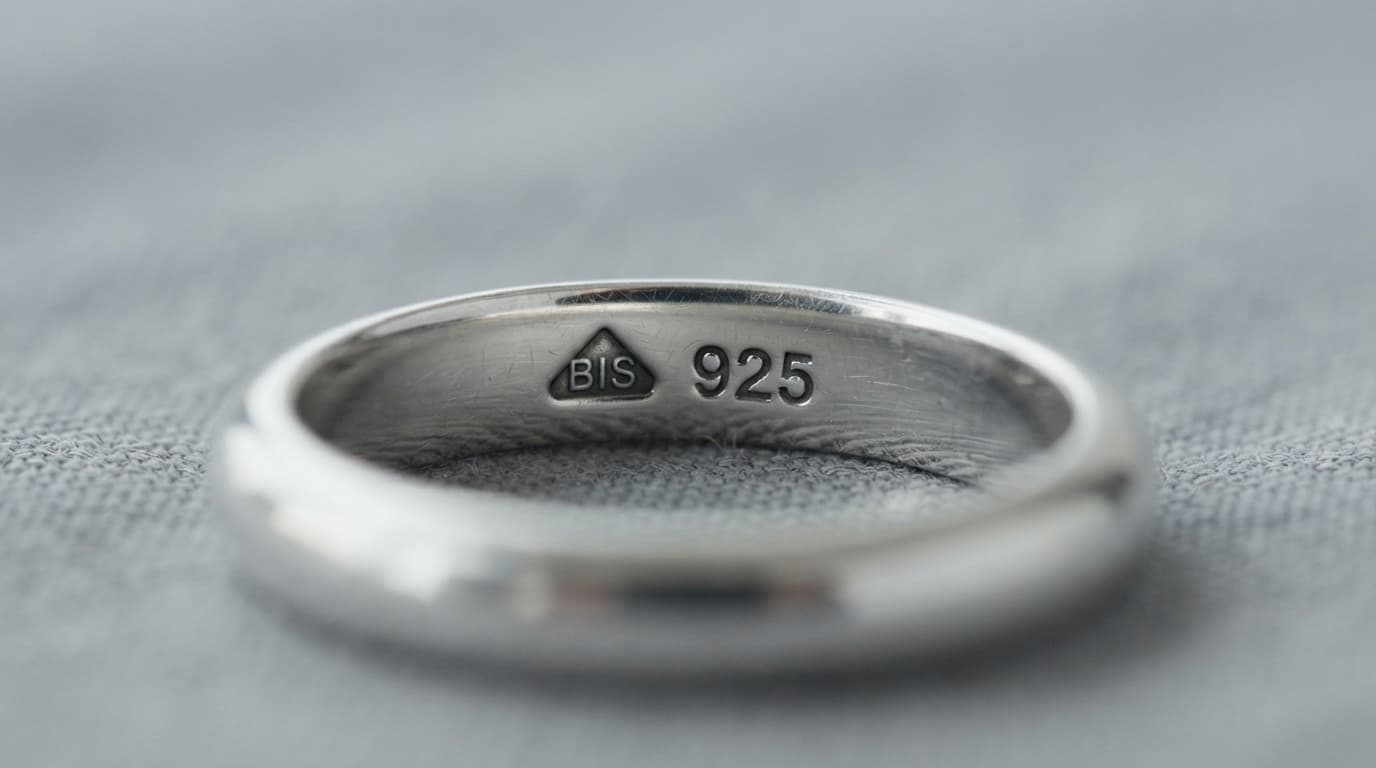
To verify a hallmark, inspect the inside curve of your item using a jeweller magnifying loupe to spot the official certification symbol, the purity grade, and the unique tracking code. In regions like India, the Bureau of Indian Standards (BIS) uses a Hallmark Unique Identification (HUID) code that can be verified through official mobile apps. In other countries, look for recognized assay office marks or standard international fineness symbols.
Follow these steps to check any hallmark properly:
- Ask the jeweller for a magnifying glass to read tiny stamps on the back of pendants or inside rings.
- Look for the official standard logo (such as the BIS triangular logo on Indian silver).
- Find the purity number (such as 925 for sterling silver) right beside the official symbol.
- Note the unique alphanumeric tracking code (HUID) when available.
- Ensure the exact hallmark details and net silver weight are printed clearly on your final retail bill.
How Are Silver Jewellery Prices Calculated in the Market?
Silver jewellery pricing is calculated by adding the raw silver metal cost, making charges for craftsmanship, stone weights, and applicable retail taxes. Understanding this formula prevents sellers from overcharging on labour or charging precious metal rates for non-silver weight. Always request a broken-down price quote before agreeing to purchase.
The complete price formula looks like this:
Price = (Net\ Silver\ Weight \times Current\ Silver\ Rate \times Purity\ %) + Making\ Charges + Stone\ Cost + Taxes
| Price Component | What It Covers | How It Should Be Billed | Watch Out For |
|---|---|---|---|
| Silver Metal Cost | The actual weight of genuine silver | Charged strictly per gram based on spot price | Charging metal price for embedded glass or stones |
| Making Charges | Silversmith labour, casting, and polishing | Per gram or flat design fee | Inflated percentages exceeding 30% on basic items |
| Gemstone Value | Cost of semi-precious stones, cubic zirconia, or pearls | Billed separately by carat or piece count | Gemstone weight added to silver weight |
| GST / Sales Tax | Government retail sales tax | Standard percentage on total invoice value | Estimates without an official tax invoice |
How to Avoid Overpaying on Making Charges and Hidden Costs
To avoid overpaying, compare making charges across multiple sellers and negotiate designs that use machine casting instead of hand carving. Intricate temple designs and filigree handwork carry higher artistic fees, but basic chains and plain bands should have modest labour fees.
Keep these cost tips in mind when you buy:
- Ask for the exact gross weight and net metal weight separately.
- Check that stones, beads, and enamels are deducted before calculating silver metal cost.
- Compare the store gram rate against the current national silver commodity spot rate.
- Avoid paying heavy retail premiums for machine-made chains that require little handcrafting.
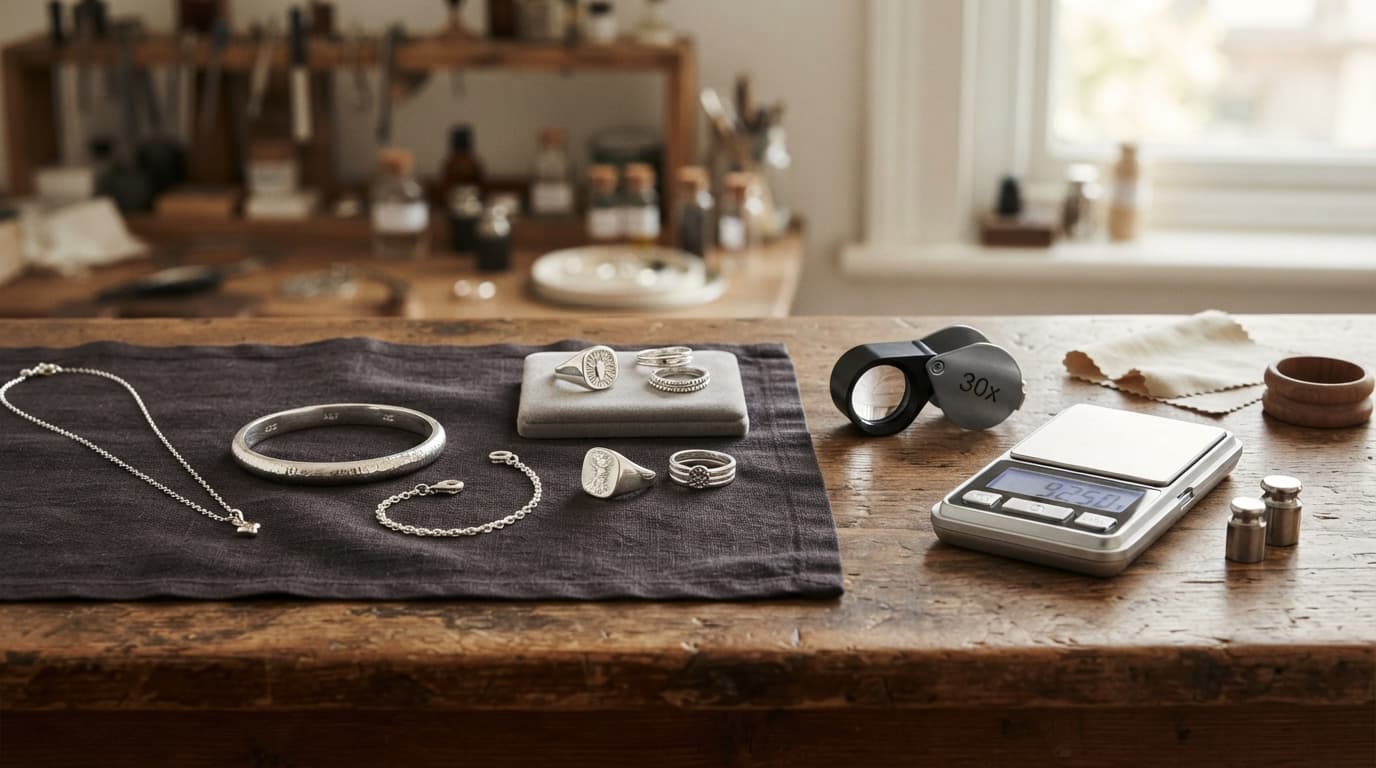
Pro Tip: Actually, you should always ask the seller to weigh the jewellery on a zeroed digital scale in front of you. If the piece has heavy stones, make sure they subtract the stone weight so you never pay silver prices for glue and glass!
Why Does Silver Tarnish and How Can You Protect Your Pieces?
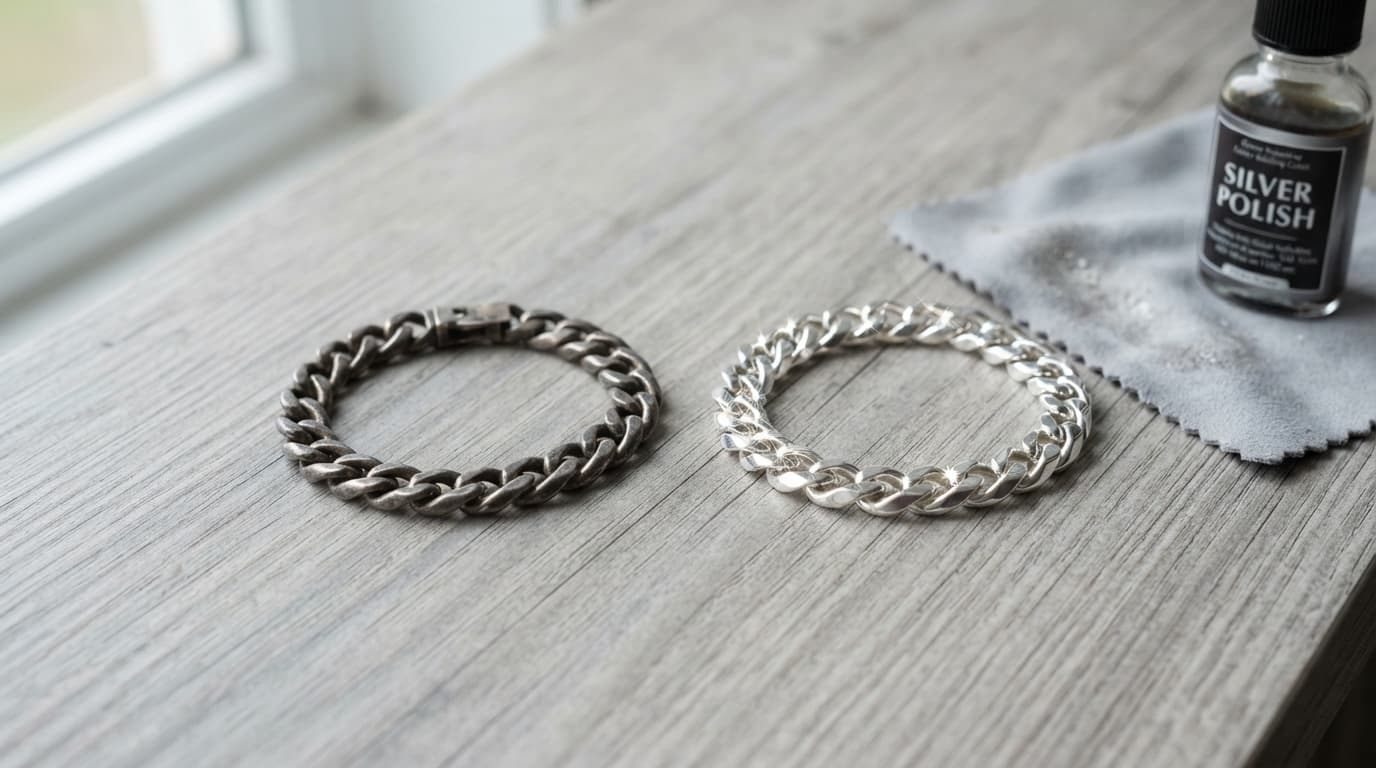
Silver tarnishes because it naturally reacts with microscopic sulfur compounds present in air, sweat, and cosmetics, forming a harmless dark layer called silver sulfide. Tarnishing is not a sign of fake silver; in fact, pure silver oxidizes naturally while cheap plastic imitations do not. Choosing protective coatings and proper storage keeps your silver bright for years.
Read More: Does Sterling Silver Tarnish? The Ultimate Prevention & Care Guide
How to Identify Skin-Safe Silver from Toxic Nickel Alloys
To ensure your silver is skin-safe, check that the item is explicitly labelled nickel-free, lead-free, and hypoallergenic. Many cheap white metals use nickel as a hardener, which causes itchy red rashes, green skin stains, and swelling for people with metal allergies. High quality 925 sterling silver alloyed only with copper is safe for sensitive skin.
Use this comparison table to choose the best surface finish for your lifestyle:
| Protective Finish | How It Works | Tarnish Resistance | Maintenance Needed |
|---|---|---|---|
| Rhodium Plating | Coated with rare rhodium metal for high shine | Exceptional; will not tarnish easily | Needs re-plating every 1 to 2 years |
| E-Coating (Electrophoretic) | Clear organic protective seal applied with electric current | High protection against sweat and moisture | Avoid harsh soaps and alcohol wipes |
| Oxidized / Antique Finish | Darkened intentionally in recesses to highlight patterns | Permanent vintage style | Wipe only raised surfaces with dry cloth |
| Raw Unplated Silver | Natural polished 925 sterling silver | Natural patina forms over time | Regular cleaning with silver cloth |
To keep your silver clean and safe:
- Put your jewellery on after applying perfumes, lotions, and hairsprays.
- Store each silver item in an airtight zip-lock bag with an anti-tarnish strip.
- Never wear silver jewellery while swimming in chlorinated pools or natural hot springs.
- Clean light tarnish with a soft microfibre cloth and warm, mild soapy water.
What Simple Tests Can You Do at Home to Check Silver Authenticity?
You can test silver authenticity at home using physical tests like the magnet check, thermal ice cube test, ping sound test, and scent check. These simple scientific tests help you screen pieces quickly, though certified lab hallmarking remains the ultimate authority. Real silver displays distinct physical properties that cheap base metals cannot copy.
1. How to Perform the Magnet Test
The magnet test relies on the fact that genuine silver is non-magnetic. Place a strong neodymium magnet close to your silver jewellery; if the piece jumps or sticks firmly to the magnet, it contains heavy amounts of iron, nickel, or cobalt and is not genuine silver. Keep in mind that tiny steel springs inside clasps may show slight attraction, but the main body should never stick.
Follow these steps for the magnet test:
- Use a strong rare-earth magnet rather than a weak refrigerator magnet.
- Lay the silver piece on a flat wooden or plastic table.
- Slowly bring the magnet near the surface of the item.
- Observe if the metal moves, slides, or snaps onto the magnet face.
2. How to Perform the Ice Cube Test
The ice cube test works because silver has the highest thermal conductivity of any common metal, meaning it transfers heat and cold faster than copper or gold. Place an ice cube directly on top of a flat silver coin or piece of jewellery at room temperature. On real silver, the ice will begin melting immediately as if placed on a warm frying pan, while on fake metal, the ice melts at a slow, normal rate.
To run the ice test properly:
- Place the silver item flat on a dry towel.
- Place one ice cube on the silver and a second ice cube on a regular metal pan nearby.
- Watch how fast the ice cube melts on the silver piece.
- Feel the underside of the silver piece; it should turn ice-cold within two seconds.
3. How to Check the Sound and Scent of Real Silver
The sound and scent checks detect metal density and chemical impurities through your senses. Pure and sterling silver produce a clear, high-pitched ringing sound like a tiny bell when lightly tapped with another coin. Real silver is also completely odourless; if an item smells like brass, copper pennies, or sulfur, it contains high amounts of cheap base alloys.
- Tap the silver gently with a small coin and listen for a sweet, resonant ring that lasts one to two seconds.
- Avoid items that produce a dull, hollow thud when tapped.
- Rub the metal briskly between your fingers and sniff the item.
- Reject items that leave a strong metallic or coin smell on your fingertips.
So, Real silver actually feels warm to your fingertips when you pick it up because it absorbs and conducts your body heat almost instantly. If a heavy metal piece stays cold in your hand for a long time, it is likely steel, pewter, or zinc!
What Should You Check in the Store Policy Before Handing Over Your Money?
Before finalizing your purchase, you must check the return window, exchange rules, buyback terms, and warranty coverage for lost stones or broken links. A reliable jeweller provides transparent documentation and stands behind the authenticity of their metal. Without clear paperwork, returning a damaged or counterfeit piece becomes very difficult.
Ask the seller these critical questions before paying:
- What is the official return or exchange window if the size does not fit?
- Does the invoice clearly mention the silver purity, net metal weight, and HUID or serial number?
- What percentage of the metal value is credited if you return the item for melt value in the future?
- Is free re-polishing or stone resetting included under warranty?
- Will you provide an official tax invoice that matches the hallmarked grade?
Smart Shopper Checklist for Buying Silver Jewellery
A smart silver purchase requires combining purity checks, hallmarking verification, honest weight measurement, and proper care planning. Reviewing this final checklist protects your hard-earned money and guarantees you bring home real, lasting craftsmanship.
- Purity Verified: Look for the 925 stamp or relevant purity number on every piece.
- Hallmarking Checked: Verify official assay marks or HUID numbers using your phone or a loupe.
- Weight Confirmed: Ensure stone weight is subtracted so you only pay for net silver weight.
- Skin Safe: Confirm that the alloy is nickel-free and lead-free for sensitive skin.
- Fair Making Charges: Check labour charges and negotiate on heavy or machine-made designs.
- Paperwork in Order: Keep the itemized invoice with metal purity and weights clearly recorded.
- Care Plan Ready: Store your new silver in airtight bags away from moisture to prevent tarnish.
By following these fundamental guidelines, you can build a stunning collection of genuine silver jewellery with complete confidence, knowing every piece is pure, fairly priced, and crafted to last a lifetime.
Sources & Citations
- Bureau of Indian Standards (BIS) Hallmarking Guidelines: https://www.bis.gov.in/
- Aditya Birla Capital Silver Hallmarking Guide: https://www.adityabirlacapital.com/abc-of-money/bis-hallmark-on-silver
Frequently Asked Questions
1. How can I tell if my silver jewellery is real?
You can look for a tiny stamp that says 925 on the metal. This stamp means it is real sterling silver. You can also test it with a magnet. Real silver will not stick to a magnet.
2. Why does silver jewellery turn dark after some time?
Silver turns dark because it touches air, sweat, and lotions. This change is called tarnishing. It is totally natural and shows your silver is real. You can clean it easily with a soft cloth and soapy water.
3. What does the 925 stamp mean on silver?
The 925 stamp means the piece is sterling silver. It has 92.5 percent pure silver and 7.5 percent other metals like copper to make it strong enough for daily wear.
4. Will silver jewellery give me itchy skin rashes?
Real sterling silver is very safe for your skin. Rashes usually happen if the jewellery has cheap metals like nickel mixed in. Always ask for nickel-free silver to keep your skin happy.