7 Hacks to Wear Heavy Jhumkas & Bridal Jewellery Pain-Free All Night
Love heavy jhumkas but hate the ache? These 7 easy hacks, from lobe patches to a sahara, help you wear bridal jewellery comfortably from baraat to vidaai.
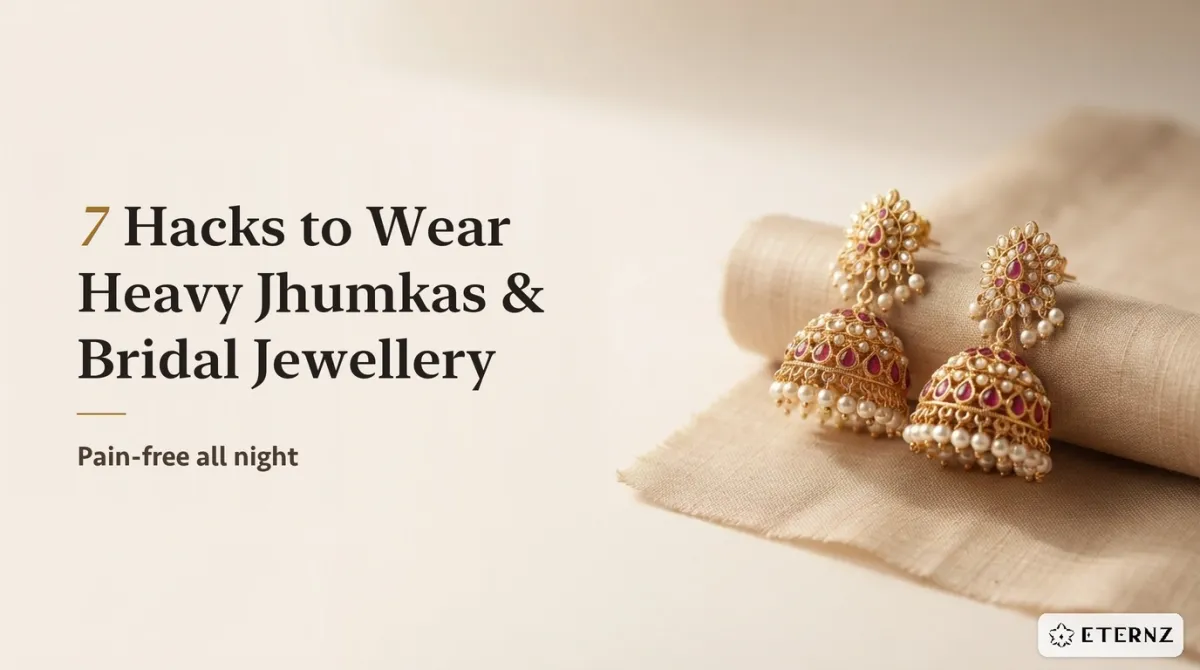
Heavy jhumkas hurt because all their weight hangs from one tiny point: the hole in your earlobe. So the secret to wearing them without pain is simple. Spread the weight with lobe patches, a sahara and wider backs, choose pieces that look grand but weigh less, and give your ears small breaks between ceremonies.
Every bride knows the moment. The pheras are still an hour away, the photographer wants "just a few more", and your ears are throbbing under those beautiful temple jhumkas your mother chose. It doesn't have to be that way. These seven hacks follow your wedding from the weeks before to the morning after, so you can stay comfortable from the baraat to the vidaai.
Easy way to remember: Spread it, support it, and give it a break.
Before we start, let me tell you about Eternz, a trusted jewellery marketplace featuring 400+ jewellery brands, with authenticity certification on every piece and fast, same-day delivery in major cities. First-time users can also save with ETERNZ5 for up to ₹50 off on ₹499+, ETERNZ10 for up to ₹100 off on ₹999+, or ETERNZ300 for up to ₹300 off on ₹2,500+, valid on both the app and website.
1. Choose Bridal Jewellery That Looks Heavy but Isn't
The easiest pain you'll ever avoid is the weight you never put on. Many bridal pieces today are made to look rich and full while staying surprisingly light.
When you shop, look for these signs:
- Hollow or domed jhumkas: A dome that is hollow inside gives the same full bell shape with much less metal.
- Plated silver or brass: Gold-plated pieces are usually far lighter than solid gold of the same size, which matters on a 10-hour wedding day.
- Smaller dome, longer drop: A slim jhumka with pearl drops looks festive and moves beautifully, without a big heavy bell pulling down.
- Check the weight on the listing: If two pairs look similar, pick the lighter one. Your lobes will notice the difference by midnight.
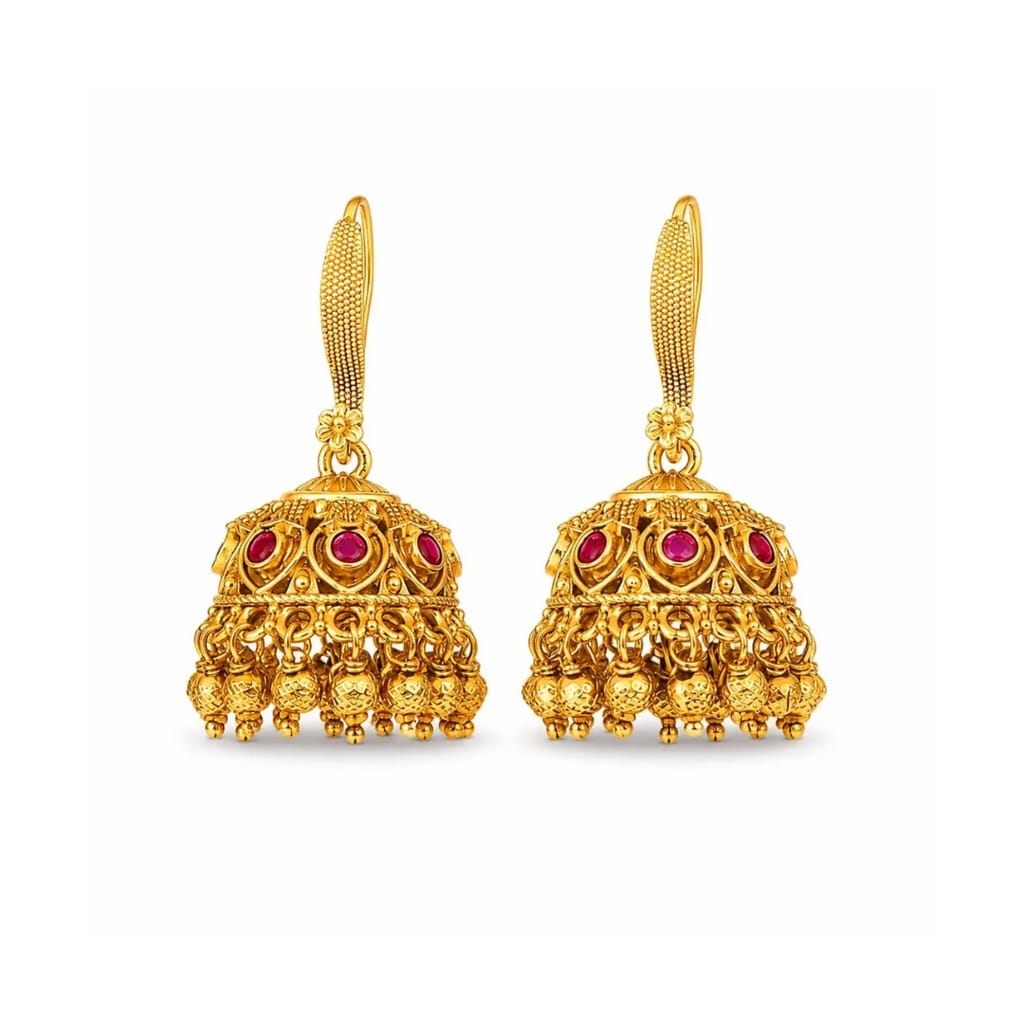
You can browse lighter styles among all jhumkas, or see the full range of wedding jewellery to plan your look piece by piece. Many brides are also choosing lighter neo-heritage pieces over heavy gold for exactly this reason.
2. Do a Trial Wear at Home Before the Wedding
You'd never wear new heels on your wedding day without walking in them first. Your jewellery deserves the same test.
About a week or two before the wedding, put on the full set at home for three to four hours:
- Wear everything together: Jhumkas, maang tikka, nath, necklace and bangles. A piece that feels fine alone can pinch when the necklace sits on top of the earring chain.
- Live in it: Sit cross-legged like you will at the mandap, eat a meal, hug someone and dance a little to your sangeet song.
- Notice what hurts first: Is it the lobes, the nose, the back of the neck or the forehead? That tells you exactly which hacks below you need.
- Fix it now: Loose screws, sharp edges or hooks that are too thick are easy for a jeweller to fix a week early, and impossible to fix at 11 pm on the day.
3. Stick Earlobe Support Patches Behind Your Ears
Earlobe support patches are small, clear stickers that go on the back of your lobe. You push the earring post through the patch, and it spreads the weight across a wider patch of skin instead of the tiny piercing hole. Dermatologists often recommend them for heavy earrings.
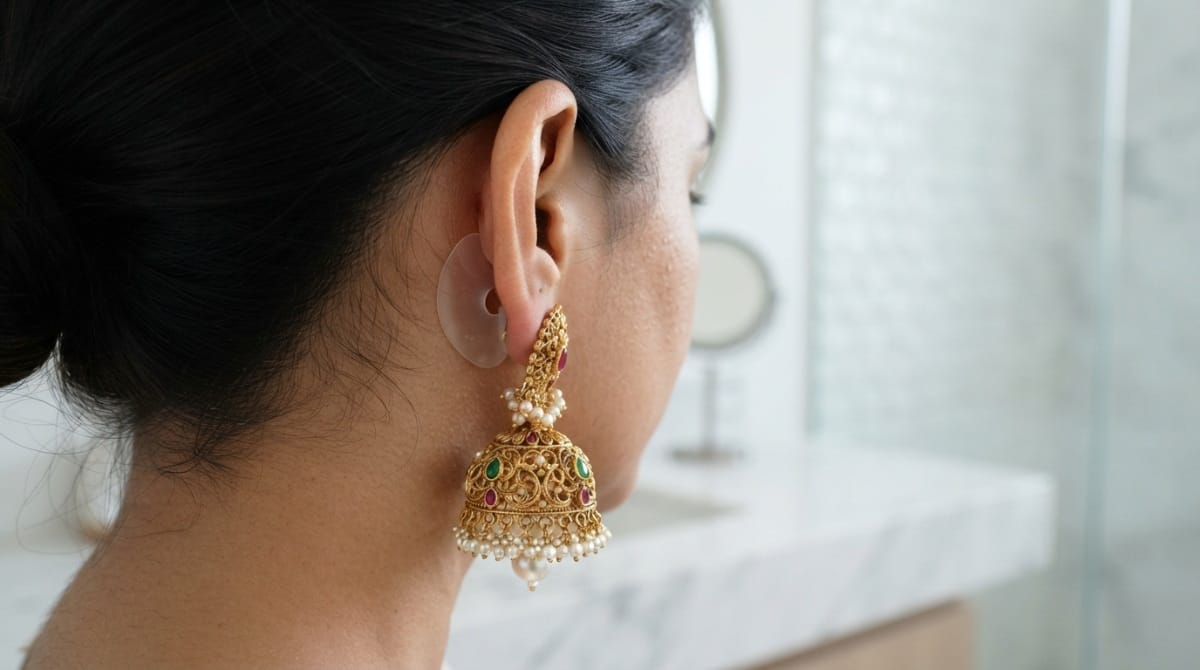
Here's how to use them well:
- Start with clean, dry skin. Wipe your lobes so no moisturiser or oil stops the patch from sticking.
- Place it before your makeup. Your makeup artist can then blend around it without lifting the edges.
- Centre it on the hole. Push the post straight through the middle so the patch takes the load evenly.
No patches at hand? A small square of skin-coloured medical tape on the back of the lobe works as a quick backup.
Quick tip: Keep a few spare patches or a strip of medical tape in your potli. Sweat and long hours can loosen them, and a fresh one halfway through the night makes a big difference.
4. Add a Sahara (Ear Chain) to Carry the Weight
A sahara, also called a kaan chain or ear chain, is a chain that runs from your earring up into your hair. Once it's pinned into your hairstyle, your hair takes a large share of the jhumka's weight, so your lobe doesn't carry it alone. This is one of the oldest comfort tricks in Indian jewellery, and it also looks stunning in photos.
- Pin it firmly: Ask your hairstylist to fix the top hook into a bun or braid with a bobby pin, not just tuck it loosely.
- Get the length right: The chain should be gently taut. If it sags, it adds weight instead of lifting it.
- Match the style: Pearl strings suit kundan and polki, while gold temple chains go with South Indian temple jhumkas.

Did you know? The same trick works for a heavy bridal nath. Most big naths come with a thin chain that hooks into the hair above the ear, so the nose piercing doesn't hold the full weight.
Find a style for your look among ear chains, or get ideas from these bridal ear chain designs.
5. Switch to Bigger Backs or Earring Lifters
The small back that comes with most jhumkas is often a thin metal butterfly. It holds the earring in, but it doesn't support it, so the earring tips forward and drags the hole down.
Two small swaps fix this:
- Disc or silicone-pad backs: A wide, flat back sits flat against your lobe and holds the jhumka upright. Silicone-padded versions are softer on sensitive skin.
- Earring lifters: These are backs with a small upward loop or extra support that pushes the post higher on the lobe. They keep the earring from flopping forward and take pressure off the bottom of the hole.
Do check that the new back fits the thickness of your earring post. A loose back can let a precious jhumka slip off mid-dance.
6. Pin Your Maang Tikka, Passa, Nath and Necklace in Place
Earrings get all the attention, but by midnight it's often the tikka sliding down your forehead or the necklace digging into your neck that bothers you most. Each piece needs its own small fix.
Maang Tikka
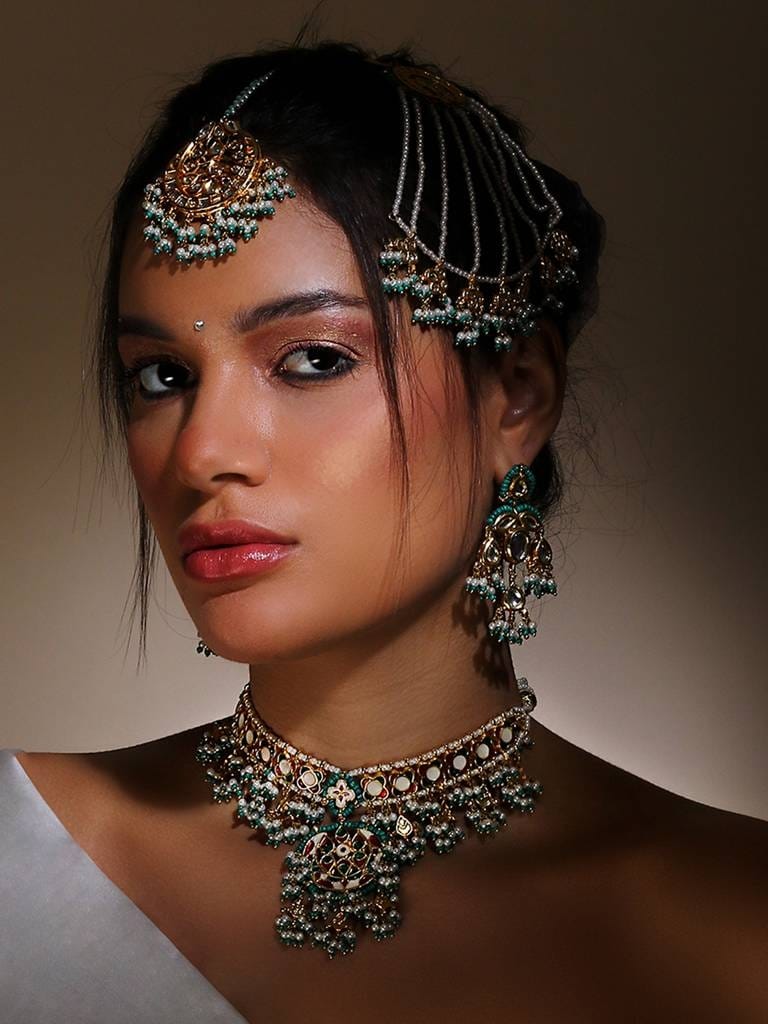
Ask your hairstylist to anchor the tikka chain with two crossed bobby pins under your hair, then cover them with the parting. If it still slides, a tiny dab of eyelash glue or skin-safe adhesive at the forehead keeps the pendant centred.
Passa (Jhoomar)
A passa is heavy on one side, so it needs more than one pin. Pin it at two or three points along its top edge into a firm section of hair, ideally where the hair has been backcombed a little for grip.
Nath
Hook the nath chain into the hair above your ear and keep it gently taut, just like a sahara. If your nose isn't pierced, or the piercing is new, a clip-on or press-on nath avoids the pain completely.
Heavy Necklace
A choker or rani haar sits on your collarbones and the back of your neck for hours. Use the dori (adjustable thread) to set the length so the weight rests on your collarbone, not on the soft back of the neck. Layered sets feel lighter when the heaviest layer sits highest.
Browse more hair chains or complete bridal jewellery sets that come with matching tikka and earrings.
7. Plan Jewellery Breaks Between Ceremonies
An Indian wedding is not one event, it's a marathon. Wearing your heaviest pieces for 12 hours straight is what really hurts, so plan when each piece goes on and comes off.
| Moment | What to wear | Why |
|---|---|---|
| Getting ready | Put heavy jhumkas on last | Saves 1 to 2 hours of extra weight |
| Baraat and jaimala | Full bridal set | The big photo moments |
| Dinner or a long wait | Take earrings off for 15 to 20 minutes | Lets your lobes recover |
| Pheras | Full set back on | The moment you'll see in every album |
| Reception or after-party | Switch to a lighter pair | Comfort for dancing and greeting guests |
The smartest trick of all is a 2-in-1 earring with a detachable jhumki. Wear the full drop for the ceremony, then unhook the jhumki and keep the simple hoop or stud for the rest of the night.
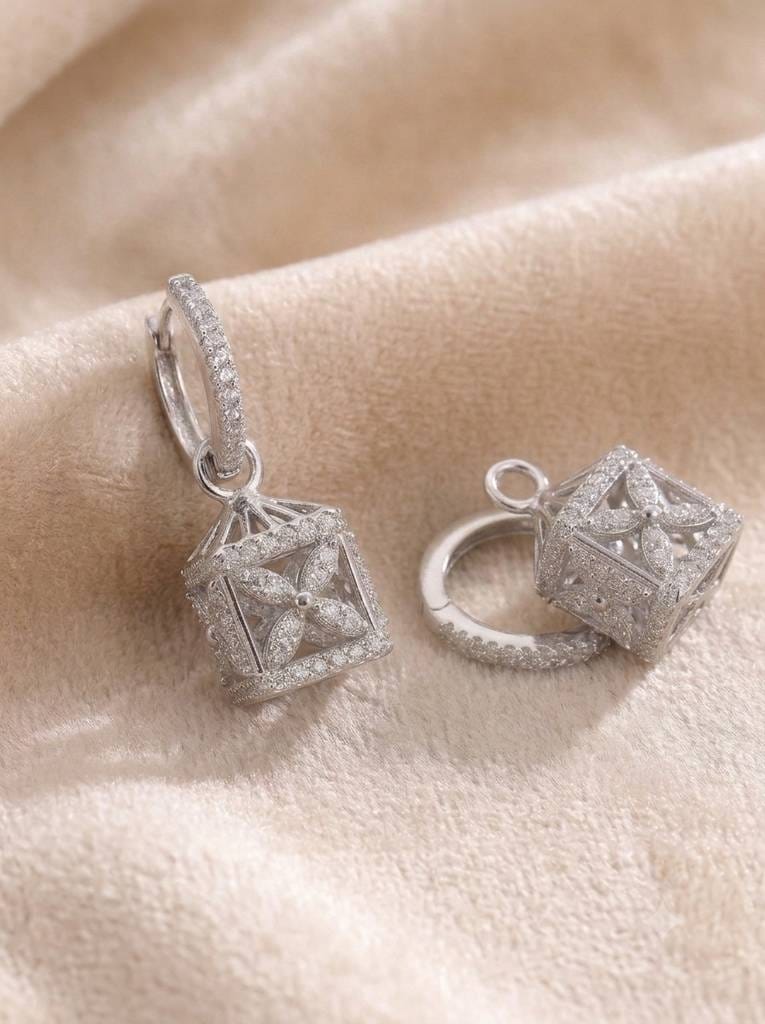
Hand a small pouch with your lighter pair, spare backs and patches to a cousin or bridesmaid. That way, a quick swap never means hunting through bags in the middle of the celebrations.
What to Do If Your Ears Still Hurt
Even with every hack, a long wedding can leave your lobes tender. A little care the next morning helps them settle quickly.
- Clean gently: Wipe the lobes and the earring posts with a clean cotton pad and mild saline or an antiseptic your doctor suggests.
- Cool it down: A cold compress wrapped in a soft cloth for a few minutes eases swelling.
- Give them rest days: Skip heavy earrings for a few days and wear light studs, especially before the next function.
- See a doctor if needed: If the hole looks stretched or torn, or there's pus, heat or swelling that keeps getting worse, see a dermatologist. A split earlobe is usually easy to repair with a minor procedure.
Good to know: Pain is your body's warning sign. If an earring hurts within the first hour, don't push through the whole night. Fix the back, add support or swap it, because a torn lobe takes much longer to heal than a sore one.
Conclusion
Your wedding jewellery is meant to be remembered for how beautiful you looked, not for how badly your ears ached by the end of the night. With a little planning, the right supports and a few well-timed breaks, you can wear those heirloom jhumkas through every ritual and still smile freely in the last photo. So choose pieces that feel as good as they look, pin them with care, and enjoy every moment of the day you've waited for. To find lighter jhumkas, saharas and matching sets, explore our full range of wedding jewellery.
Frequently Asked Questions
1. How do I wear heavy jhumkas without pain?
Spread the weight with an earlobe support patch and a sahara pinned into your hair, swap thin backs for wide disc backs, and take short breaks. Choosing lighter, hollow designs also helps a lot.
2. How long can I wear heavy earrings safely?
There's no fixed limit, but a few hours at a stretch is kinder to your lobes. Take them off for a short break during long gaps, and avoid wearing heavy earrings for many days in a row.
3. Do earlobe support patches really work?
Yes, for most people. They spread the weight over a wider area of skin, so the earring sits straighter and the hole is not pulled down as much.
4. What is a sahara in jewellery?
A sahara is a chain attached to the earring that goes up into the hair. Once pinned, it lets your hair carry part of the earring's weight, which takes pressure off the earlobe.
5. Can I wear heavy jhumkas with a stretched or torn earlobe?
It's best not to. Heavy earrings can make a stretched hole worse or tear it fully. Wear clip-ons or light studs and see a dermatologist about repairing the lobe first.
6. Does numbing cream help with heavy earrings?
Some brides use it, but it only hides the pain, it doesn't stop the strain on your lobe. It's better to support the weight properly, and to check with a doctor before using any numbing cream.
7. How do I stop my maang tikka from slipping?
Anchor the chain with crossed bobby pins under your parting, and add a tiny dab of eyelash glue at the forehead if it still moves.
8. How do I wear a heavy nath comfortably?
Hook the nath's chain into your hair above the ear so it carries most of the weight. If your nose isn't pierced or the piercing is new, choose a clip-on nath.
9. Is gold-plated bridal jewellery lighter than gold?
Usually, yes. Gold-plated silver or brass pieces are generally much lighter than solid gold pieces of the same size, which makes them easier to wear for long hours.
10. How do I care for sore earlobes after the wedding?
Clean them gently, use a cold compress to ease swelling, and wear only light studs for a few days. See a doctor if there's pus, increasing swelling or a visible tear.