
How to Style the Perfect Anklet Stack
Learn how to style the perfect anklet stack with our pro guide. Master the anchor rule, metal mixing, and footwear pairings. Elevate your jewelry game today!
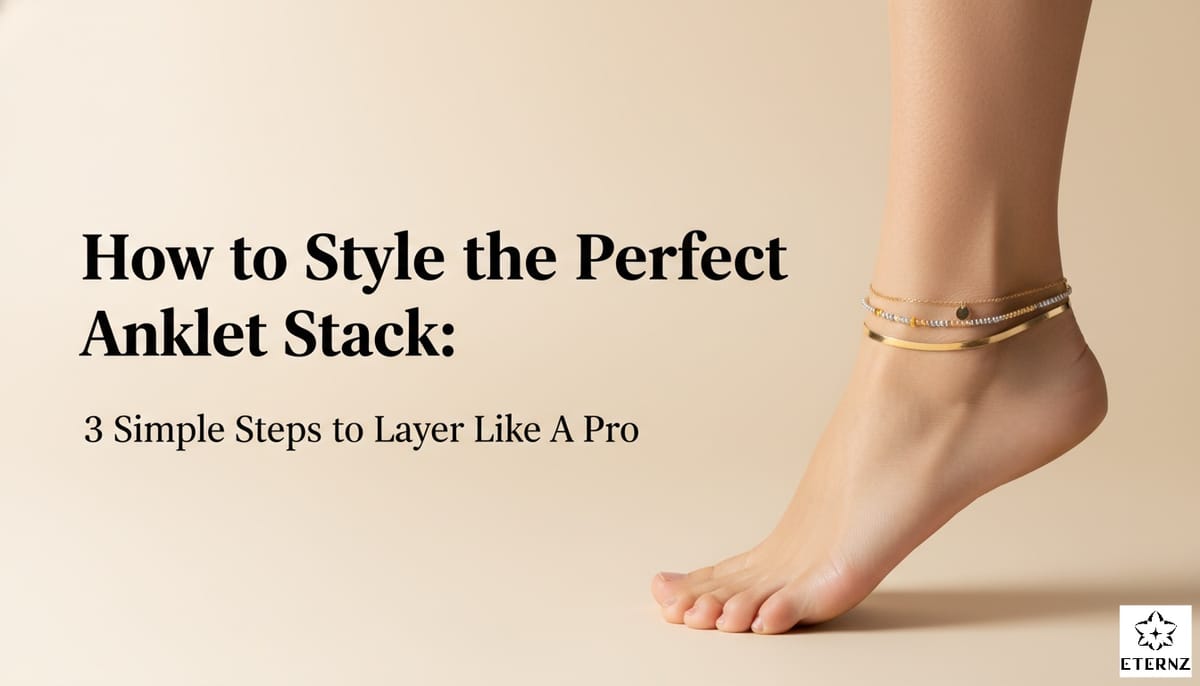
TL;DR
- An anklet stack works on one rule: one anchor piece leads, and everything else supports it. The moment two pieces compete equally, the stack looks cluttered.
- Two to three anklets is the sweet spot. Below that, it reads as a single piece. Above three, it risks looking tangled and unintentional.
- Start with your thickest or most detailed piece as the anchor. Layer thinner, simpler pieces alongside it.
- Metal mixing works, but within a limit: two metals maximum. Three different metal tones in the same stack looks accidental.
- Footwear changes everything. Sandals show every detail. Boots need bolder pieces that peek above the shaft. Sneakers suit minimal, slim chains.
- Indian payal stacking follows its own rules: two payals of the same metal but different design weights, worn together, is the most traditional and visually coherent approach.
- Searches for "anklet layering" grew over 60 percent year over year in 2024, making this one of the fastest-growing jewelry styling trends right now.
What We Cover
- Why anklet stacking is different from wrist or neck stacking
- The anchor piece: where every stack starts
- The three-step stacking formula
- The three stack styles: minimal, balanced, and statement
- Metal mixing: what works and what does not
- Footwear pairings that complete the stack
- Indian payal stacking: traditional and contemporary approaches
- Outfit styling for stacked anklets
- Common stacking mistakes
- Quick reference guide
- FAQs
Why Anklet Stacking Needs Its Own Rules
Stacking jewelry at the ankle is fundamentally different from stacking at the wrist or neck. The ankle is a narrower, more defined surface. It moves constantly, which means tangling is a real concern. And unlike your wrist or neckline, the ankle is often partially hidden by clothing, footwear, or viewing angle, so the stack needs to be readable even when partially visible.
These differences mean that bracelet stacking rules do not translate directly to anklets. The principles are the same (anchor piece, supporting layers, metal cohesion) but the execution needs to account for movement, visibility, and the specific proportions of the ankle.
The good news is that once you understand the formula, building a great anklet stack takes about five minutes and the results are immediately visible and wearable.
Start Here: Choose Your Anchor Piece First
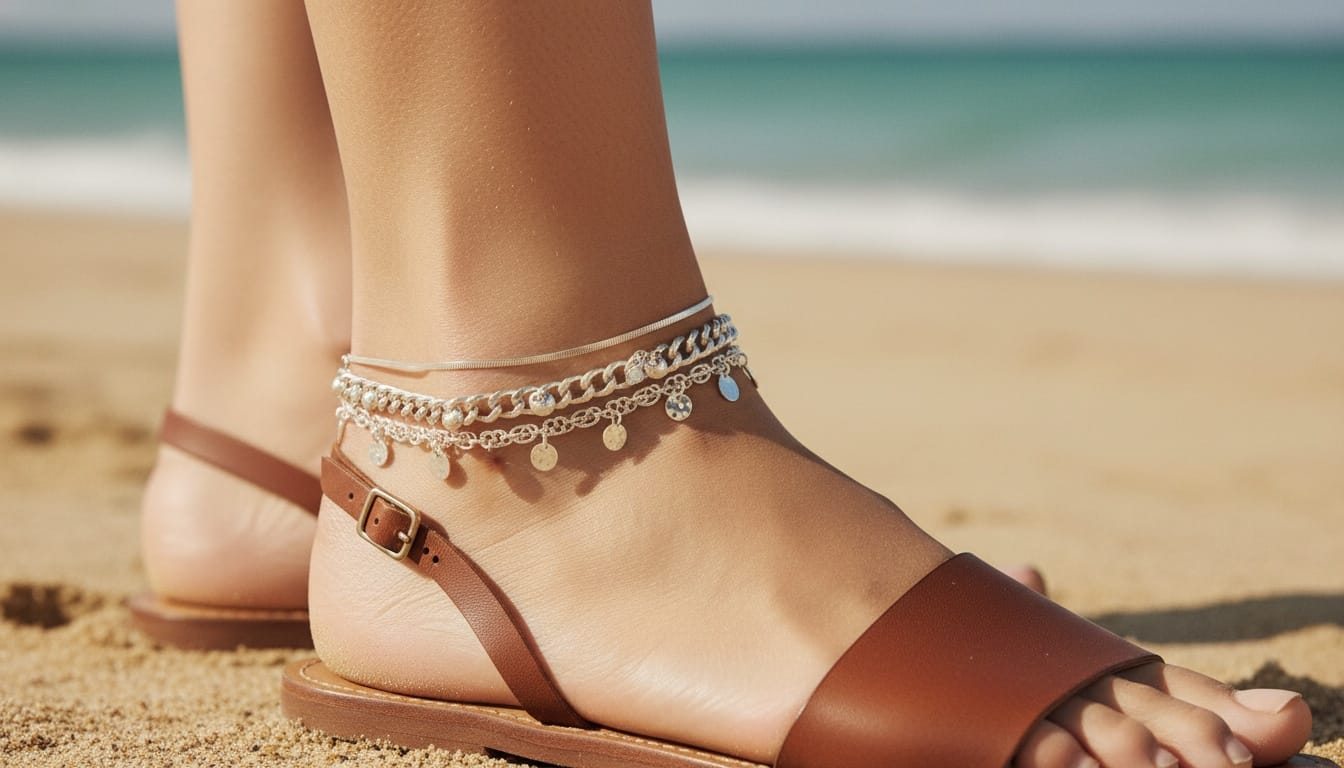
Every successful anklet stack starts with one anchor piece. This is the piece that carries the most visual weight in the stack. Everything else is chosen to support it, not to compete with it.
Your anchor piece is typically:
- The thickest chain in your stack
- The piece with the most detail (charms, beads, stone accents)
- The boldest design in terms of width or texture
The anchor does not have to be the longest or most expensive piece. It just needs to be clearly the lead. When you look at the finished stack, your eye should land on the anchor naturally before noticing the other pieces.
Without a clear anchor, the stack reads as a collection of random pieces rather than a curated look. This is the most common reason an anklet stack feels off: every piece was chosen at equal visual weight and none of them leads.
The Three-Step Stacking Formula
Once your anchor is chosen, the rest of the stack builds in three steps.
Step 1: Choose your anchor piece. Pick the most detailed or thickest anklet you want to feature. This goes on first and sits closest to the ankle bone.
Step 2: Add one thin supporting chain. A simple chain anklet in the same or complementary metal. It sits alongside or just above the anchor and adds the layered effect without competing for attention. Keep it plain or minimally detailed.
Step 3: Add a second supporting piece (optional, for a three-piece stack). This can be a slightly thicker chain than Step 2 but still thinner than the anchor, a delicate beaded strand, or a fine chain with a single small charm. This piece adds depth without adding noise.
That is the complete formula. Anchor plus one or two supporting pieces. The stack looks intentional because the hierarchy is clear.
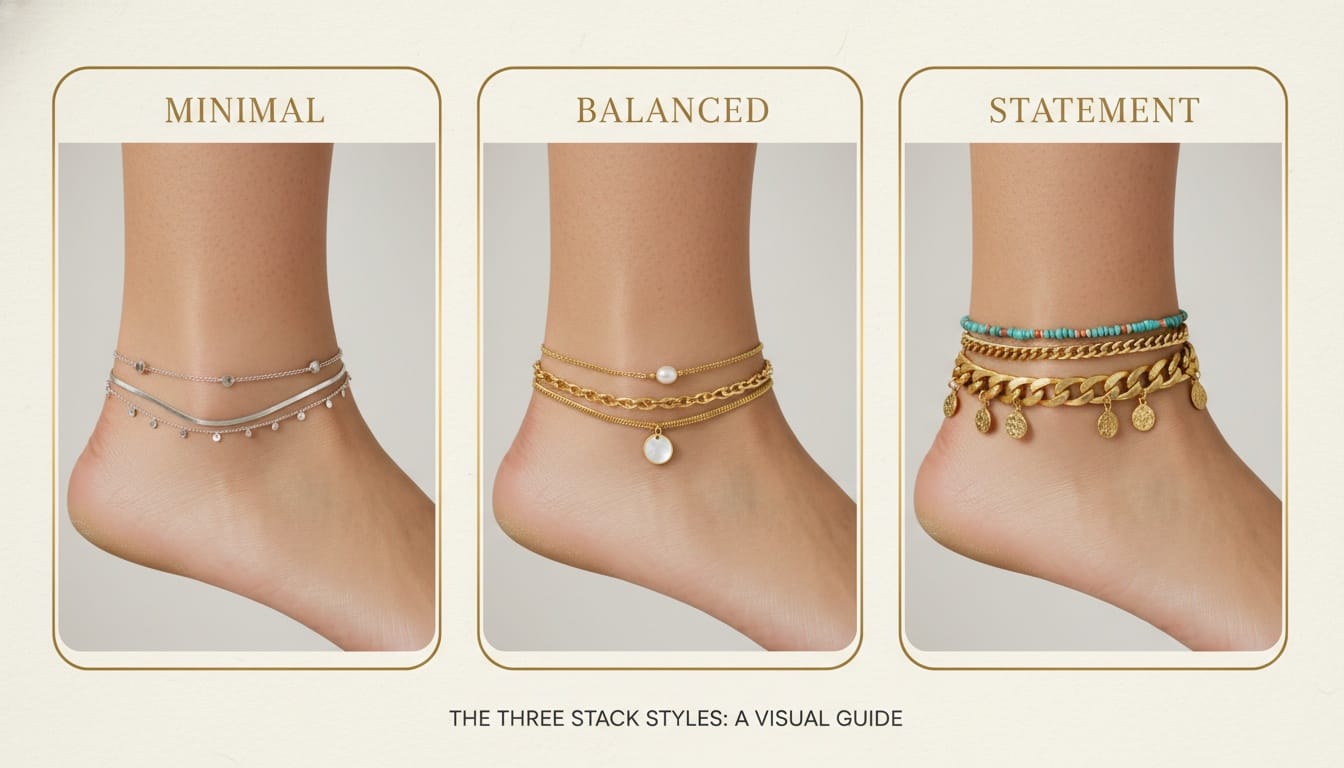
The Three Stack Styles
Not every anklet stack needs to look the same. The formula stays consistent, but the style direction changes based on personal aesthetic and occasion.
1. The Minimal Stack (2 Pieces)
Two anklets: one anchor, one supporting chain. Clean, refined, and understated. This stack works for daily wear, professional environments, and any outfit where you want the anklet to feel like a quiet finishing detail rather than a focal point.
How to build it:
- Anchor: a slim gold or silver chain with a small charm or simple texture
- Support: a plain, slightly finer chain in the same metal
Best with: Slim trousers, midi skirts, tailored outfits, office wear
2. The Balanced Stack (3 Pieces)
Three anklets at different widths and detail levels. The anchor is clearly the lead, two supporting pieces fill the layers, and the overall result reads as curated and intentional without being maximalist.
This is the most versatile stack and the most photographable. It suits casual, social, festive, and beach occasions equally well.
How to build it:
- Anchor: a medium-weight chain, charm anklet, or beaded strand
- Support 1: a slim plain chain in the same metal as the anchor
- Support 2: a very fine chain, a single small delicate piece, or a delicate beaded anklet that adds texture without overwhelming the stack.
Best with: Jeans, summer dresses, casual kurtis, festive ethnic wear at a casual level
3. The Statement Stack (3 Pieces, Bolder Choices)
This stack uses the same three-piece structure but with bolder individual pieces. The anchor is significantly thicker or more embellished. The supporting pieces have more texture or detail than in a balanced stack. The result is a high-impact look designed to be noticed.
How to build it:
- Anchor: a bold chain (Cuban link style, statement anklet, coin anklet, or a payal with prominent ghungroo bells)
- Support 1: a medium-width chain or a beaded anklet with color
- Support 2: a slim chain or a small charm anklet
Best with: Beachwear, festive Indian outfits, fashion-forward casual looks, event styling with heels
Metal Mixing: The Rules That Actually Work
Mixing metals in an anklet stack works, but it has a ceiling. The ceiling is two metal tones. Once a third distinct metal enters the stack, the look shifts from intentionally mixed to visually confused.
Here is how to mix metals well:
Gold and silver: The most classic combination. Works when one metal clearly dominates and the other accents. A gold anchor with a silver supporting chain reads as intentional mixed-metal styling. Two gold and one silver, or two silver and one gold, keeps the balance clear.
Gold and rose gold: The warmest and most cohesive combination. Because both metals are gold-based, the variation in tone is subtle enough to read as a unified stack with visible variation. This combination is particularly popular in Indian stacking because it bridges traditional yellow gold with contemporary rose gold aesthetics.
Silver and rose gold: A cooler combination that works well for contemporary and western-leaning stacks. The pink warmth of rose gold contrasts cleanly against silver's cool tone.
What to avoid:
- Three distinct metals (gold, silver, rose gold all at once): the stack looks like a collection of mismatched pieces rather than a styled combination
- Mixing fine gold jewelry with cheap plated metals in the same stack: the quality difference becomes visible, especially at close range
- Matching your anklet stack to your footwear hardware exactly: this level of matching reads as over-coordinated rather than styled
Footwear Changes Everything
The footwear you pair with your anklet stack determines how much of the stack is visible and how the overall look reads. This is a detail most styling guides skip entirely, and it makes a significant difference.
Sandals and Slides
The maximum visibility situation. Every detail of your stack is fully exposed from multiple angles. This is where all three stack styles work: minimal for a refined look, balanced for everyday style, statement for beach or festive occasions.
The one additional consideration with sandals: toe rings. A toe ring in the same metal family as your anklet stack creates a cohesive foot-to-ankle styling that looks deliberate. A toe ring in a completely different metal than the stack creates visual disconnection.
If you're styling both accessories, our guide on how to wear anklets and toe rings together covers the best metal combinations, placement rules, and styling approaches for a cohesive look.
Heels and Strappy Footwear
Heels raise the ankle and change the proportion of the leg. A dainty anklet on a bare ankle with heels creates one of the most consistently elegant looks in contemporary jewelry styling. For heels, keep the stack to two pieces maximum: the elevated ankle does not need the additional visual weight of a full three-piece stack.
Best stack for heels: Anchor plus one fine supporting chain, both in gold or diamond-set styles.
Sneakers and Casual Footwear
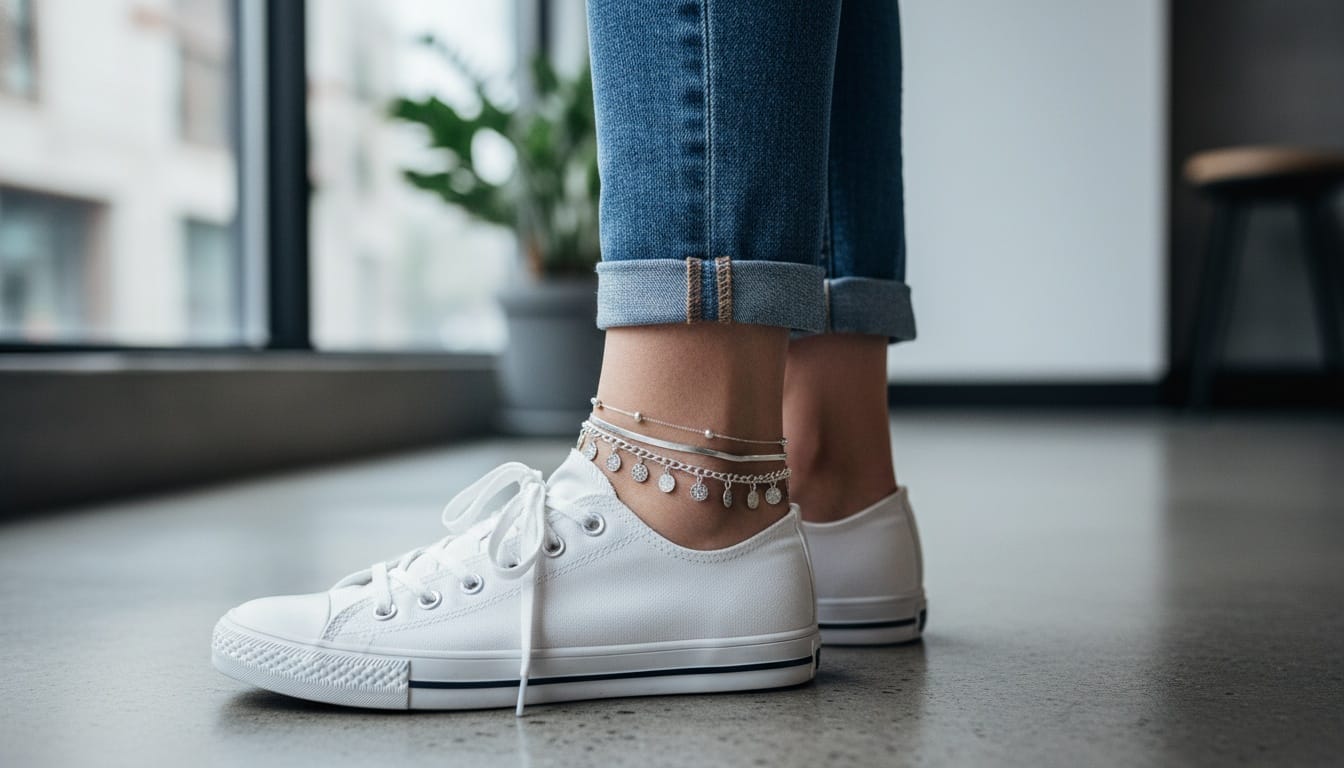
The anklet peeks above the shoe opening with sneakers. This means only the portion above the ankle is visible, which makes very fine or very small pieces invisible. Go slightly bolder than you would with sandals: a medium-weight anchor chain that reads clearly above a white sneaker creates the strongest look.
Best stack for sneakers: A minimal two-piece or balanced three-piece stack with at least one piece that has visible detail (a charm, a texture, a slightly heavier chain weight).
Boots
Ankle boots with a gap at the top, or heeled boots with a cropped hem, create the most dramatic backdrop for an anklet stack because the dark boot leather or fabric makes even minimal jewelry pop. The key is choosing pieces bold enough to be seen in that context.
Best stack for boots: One bold anchor with a single supporting chain. More than two pieces can look tangled inside or around the boot shaft.
Indian Payal Stacking
Indian payal (traditional ankle bracelets) have been layered for centuries, but the stacking approach differs from western anklet layering. Understanding the distinction helps you stack payals in a way that looks culturally coherent rather than arbitrarily layered.
Traditional Payal Stacking
The traditional approach uses two payals of the same metal on the same ankle. The designs are typically complementary rather than identical: one heavier payal with ghungroo (small bells) and one lighter, flatter payal without bells. The heavier piece sits at the base and the lighter piece sits above it.
This combination creates both visual and auditory appeal. The ghungroo produce the soft, rhythmic sound associated with traditional anklet wear in Indian culture, while the flat payal adds visual layering without adding noise.
Contemporary Payal Stacking
Contemporary Indian anklet stacking borrows from both traditional payal aesthetics and western layering principles. Some popular combinations:
- A traditional gold payal with ghungroo as anchor, paired with a slim plain gold chain as the supporting piece
- An oxidised silver payal with tribal detailing as anchor, paired with a thin plain silver chain
- A pearl and gold payal as anchor, paired with a slim diamond-cut gold chain for a more refined, contemporary look
For ethnic outfits: Match the payal metal to the jewelry worn higher on the body. If wearing gold jhumkas and bangles, gold payals create a cohesive full-look jewelry story.
For casual and fusion outfits: Mixing a traditional payal with a contemporary western-style chain anklet in the same metal creates a fusion stack that bridges both aesthetic worlds without looking confused.
Outfit Pairings for Your Anklet Stack
The outfit determines whether the anklet stack is a subtle detail or the focal point of the look.
- Cropped trousers or wide-leg pants with a visible hem gap: The stack is partially framed by the fabric. A balanced three-piece stack reads most clearly in this setting.
- Midi skirts and dresses with movement: The stack appears and disappears as the fabric moves. This creates a playful, dynamic quality. All stack styles work here.
- Jeans with a rolled cuff: The anklet sits between the rolled denim and the shoe, which creates a defined frame. A minimal or balanced stack is the strongest choice.
- Sarees and lehengas: The payal or anklet sits below the hem and adds the final finishing detail to the ethnic look. Match the richness level of the anklet to the richness level of the full jewelry look. A bridal lehenga with kundan necklace and chandbalis needs a traditional gold payal, not a fashion beaded anklet.
5 Anklet Stacking Mistakes to Avoid
- No clear anchor piece. Every piece at equal visual weight means nothing leads. Choose your heaviest or most detailed piece and let it lead before adding anything else.
- Three or more metal tones in the same stack. Two metals is the limit. Above that, the stack reads as accidental rather than curated.
- Choosing pieces that are all the same thickness. A stack of three equally thin chains looks like one thick chain from a distance. Vary the widths so each layer is individually readable.
- Ignoring the footwear context. A delicate three-piece stack that looks beautiful with sandals can disappear completely inside a boot. Choose your footwear first, then build the stack to suit its visibility context.
- Stacking too many pieces for daily wear. A five-piece anklet stack gets tangled in socks, caught on shoes, and becomes an annoyance within a day. For daily wear, two to three pieces is both the aesthetic and practical maximum.
Quick Reference: Build Your Stack
| Stack Style | Pieces | Anchor Type | Best Footwear | Best Occasion |
|---|---|---|---|---|
| Minimal | 2 | Slim chain with small detail | Heels, sandals | Office, daily wear |
| Balanced | 3 | Medium chain or charm anklet | Sandals, sneakers | Casual, social |
| Statement | 3 (bolder) | Bold chain or coin anklet | Sandals, heels | Beach, festive, events |
| Traditional payal | 2 | Payal with ghungroo | Barefoot, sandals | Ethnic occasions |
| Contemporary fusion | 2 to 3 | Traditional payal plus slim chain | Sandals | Fusion, casual ethnic |
Conclusion
The perfect anklet stack is not the one with the most pieces. It is the one with a clear anchor, a logical hierarchy of supporting layers, and a metal tone story that holds together.
Start with the anchor. Add one or two supporting pieces that step back from it rather than compete with it. Keep the metals to two tones maximum. Match the stack to the footwear and the outfit context. And for Indian ethnic wear, let the payal and the rest of your jewelry tell the same metal story from head to ankle.
Two to three well-chosen pieces, layered with intention, always outperforms five randomly stacked anklets. The clarity is visible. And that clarity is what makes a stack look styled rather than simply accessorised.
If you want to explore anklets and payals across all of these style categories, Eternz brings together 350+ jewelry brands including Giva, Palmonas, and Kushal's, covering everything from slim gold chains and diamond anklets to traditional payals and contemporary fusion stacks.
FAQs
1. How many anklets should I stack?
Two to three is the sweet spot. Two creates a clean minimal stack. Three creates a balanced layered look. Above three, pieces start to tangle and the stack looks unintentional rather than curated.
2. How do you layer anklets without them tangling?
Choose pieces with slightly different lengths so they naturally sit at different heights around the ankle. Avoid mixing hook closures with loose chain styles. Secure all clasps before putting them on together.
3. Can you mix gold and silver anklets?
Yes, and it works well when one metal clearly dominates. A gold anchor chain with a silver supporting piece, or vice versa, reads as intentional mixed-metal styling. Avoid three different metal tones in the same stack.
4. Which ankle should you wear an anklet stack on?
Either ankle works. In Indian tradition, payals are traditionally worn on both ankles. In contemporary western styling, the right ankle is slightly more common but there are no fixed rules. Wear the stack on whichever ankle is more visible given your outfit and footwear.
5. What is the difference between a payal and an anklet?
A payal is the traditional Indian ankle bracelet, typically made from silver or gold, often featuring ghungroo (small bells) and crafted in heavier, more ornamental designs. An anklet is the broader western term for any ankle bracelet, including slim chains, beaded strands, and charm styles. Both serve the same purpose but carry different cultural contexts.
6. Can you wear anklets with boots?
Yes. The most effective approach is a bold anchor chain that peeks visibly above the boot opening, paired with one supporting piece. Very fine or minimal anklets disappear inside or against boots and lose their visual impact.
7. How do you style a payal stack for Indian ethnic wear?
Match the payal metal to the rest of your jewelry. If wearing gold bangles, jhumkas, and a necklace, choose gold payals. Layer one heavier payal with ghungroo as the anchor and one slimmer flat payal as the supporting piece. For fusion looks, a traditional payal paired with a slim contemporary chain in the same metal bridges both aesthetics cleanly.
8. Can anklet stacking work for children?
Yes, but comfort and simplicity should come first. Lightweight pieces designed specifically as kids' anklets are usually the safest and most practical option for everyday wear.