How to Pair Jewelry with a Lehenga for a Flawless Look
Discover how to style jewelry with a lehenga like a pro. Master neckline matching, metal coordination, and color contrasts for a flawless look.
TL;DR
- One principle governs every lehenga jewelry decision: match the visual weight of your jewelry to the embroidery weight of your lehenga. Heavy work needs restrained jewelry. Plain fabric needs bold jewelry.
- Your blouse neckline decides your earring and necklace choice, not the lehenga color or design. Always start here.
- Lehenga color tells you your metal tone: red and warm colors suit gold, pastels suit rose gold and diamonds, cool tones suit silver and white metals.
- The full lehenga jewelry picture includes six elements: necklace, earrings, maang tikka, bangles, haath phool, and kamarbandh. You do not need all six. You need the right two or three.
- Bridal, festive, and casual lehengas each have a different jewelry register. Applying bridal jewelry logic to a festive lehenga is the most common styling mistake.
- Weight matters as much as aesthetics. A lehenga worn for eight or more hours needs jewelry that stays comfortable, not just jewelry that looks beautiful in a mirror.
What We Cover
- The one rule that makes every lehenga jewelry decision easier
- Start with embroidery weight, not color
- How your blouse neckline decides the earring and necklace
- Jewelry by lehenga color: a practical pairing guide
- The six lehenga jewelry elements explained
- Bridal lehenga jewelry: what works and what to avoid
- Festive lehenga jewelry: Navratri, Diwali, Sangeet, Mehendi
- Casual and party lehenga jewelry
- Common lehenga jewelry mistakes
- Quick reference table
- FAQs
The One Rule Before Anything Else
The visual weight of your jewelry must match the embroidery weight of your lehenga. This is the same principle that governs saree jewelry, and it applies with equal force to lehengas.
A heavily embroidered lehenga, one with dense zari, mirror work, or stone embellishment across the skirt and blouse, already carries enormous visual richness. Adding equally heavy jewelry on top of that creates a look that is overloaded rather than adorned. The eye has nowhere to rest.
A plain or lightly worked lehenga is the opposite situation. It needs jewelry to carry the visual weight the fabric does not. A minimal pendant and small studs on a completely plain lehenga leave the look feeling unfinished.
This is the first decision. Not color. Not metal. Not trend. Embroidery weight first. Everything else follows from there.
Step 1: Read Your Lehenga's Embroidery Weight
Before opening your jewelry box, look at your lehenga in natural light and ask one question: how much work is already on this fabric?
Heavy work lehenga (dense zari, heavy stonework, fully embroidered blouse and skirt): The fabric is doing the maximum. Your jewelry's job is to complete, not compete. One statement piece is enough. A choker with small matching earrings. Or bold chandbalis with no necklace. Never both at full statement scale.
Medium work lehenga (embroidered border, partially worked blouse, moderate stone detail): This is the most flexible category. You have room for both a necklace and earrings at a moderate richness level. A kundan pendant with matching jhumkas, or a layered necklace with chandbalis, both work here without fighting the fabric.
Light or plain lehenga (minimal embroidery, solid color, simple border only): This is your blank canvas. Go as bold as the occasion allows. Layered necklaces, heavy chandbalis, full kundan or polki sets, a statement maang tikka. The jewelry is doing the decorative work the fabric is not.
With embroidery weight established, the next decision is about your blouse neckline, because that is what determines which jewelry physically fits your look.
Step 2: Your Blouse Neckline Decides the Jewelry
The blouse neckline is the frame your earrings and necklace sit in. Getting this right is more important than any color or style preference, because a necklace that fights the neckline will look wrong regardless of how beautiful the piece is. For a deeper breakdown of this decision, read our guide on how to choose earrings based on neckline.
Here is how each blouse neckline changes the jewelry:
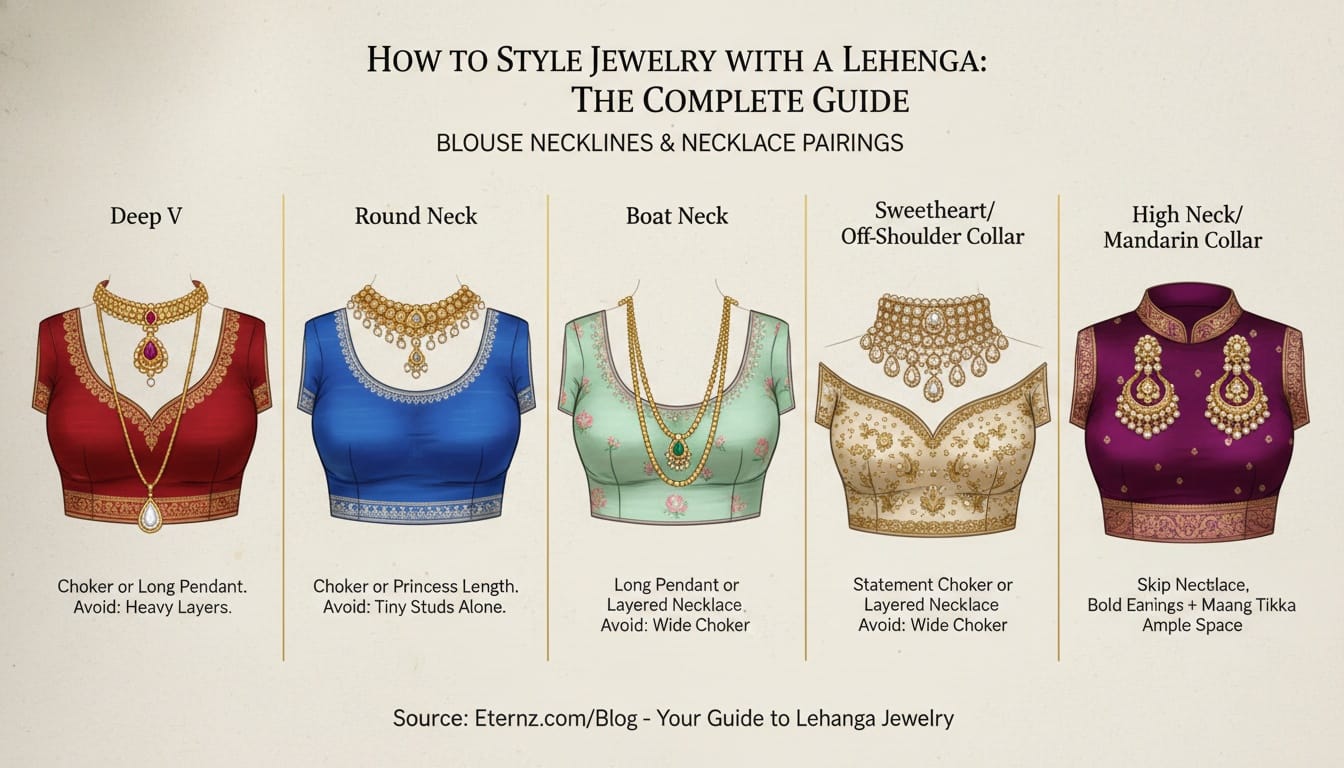
1. Deep V or Plunging Neckline
The V pulls the eye downward toward the chest. Work with that direction, not against it.
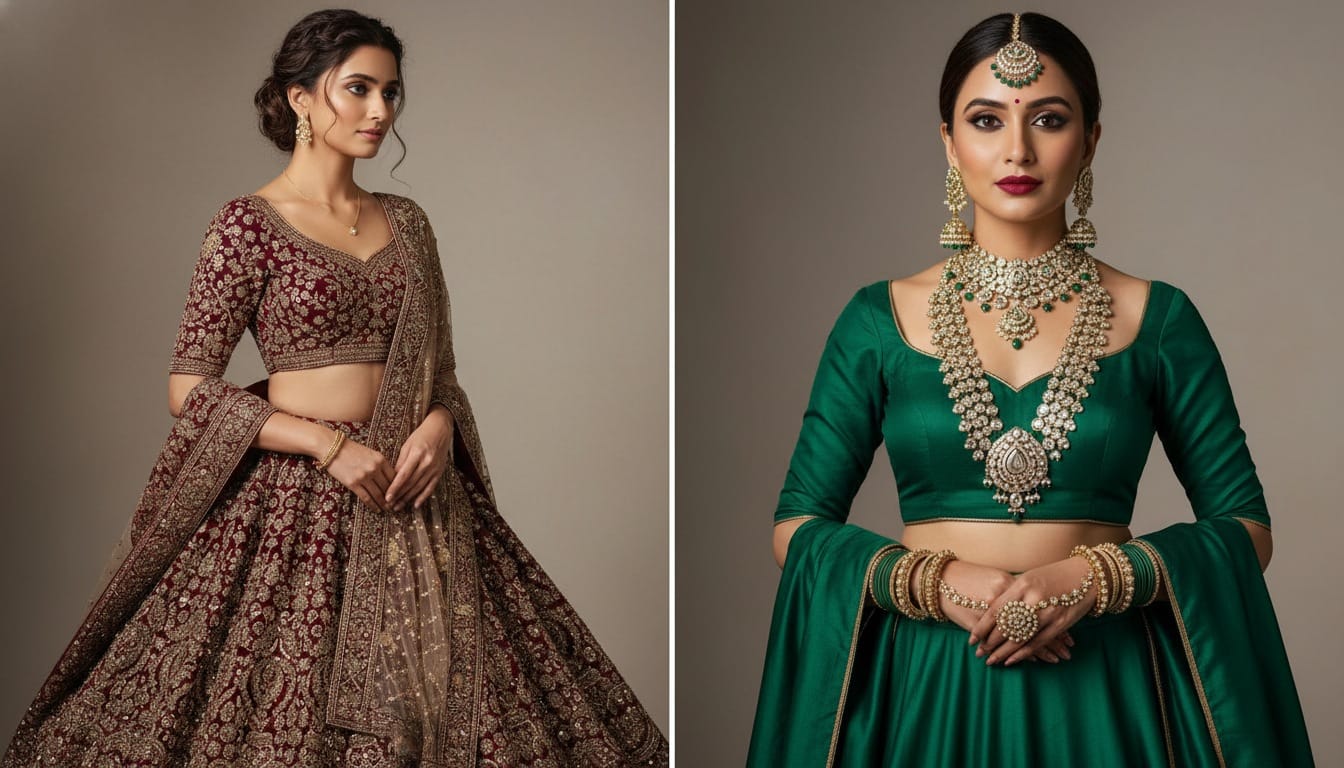
- Necklace: A choker or close-fitting necklace that intercepts the V and anchors attention at the neck. A long pendant that follows the V's line also works.
- Earrings: Long chandbalis or jhumkas that extend the vertical movement.
- Avoid: A heavy layered necklace that fills the V entirely. It competes with the neckline's design intent.
2. Round Neck Blouse
The round neckline sits close to the throat and offers a clean, neutral frame. It needs the jewelry to add the visual interest the neckline does not provide.
- Necklace: A choker or princess-length pendant to fill the space between neckline and collarbone.
- Earrings: Chandbalis or medium drops that add vertical length.
- Avoid: Tiny studs alone. They have no visual presence against a round neckline.
3. Boat Neck Blouse
The boat neck is wide and horizontal. The jewelry must counteract that sideways pull.
- Necklace: A long pendant or layered necklace that adds vertical movement.
- Earrings: Long, slim drops or chandeliers that pull the eye upward.
- Avoid: A wide choker that mirrors the horizontal neckline and amplifies its width.
4. Sweetheart or Off-Shoulder Blouse
Wide, open, and expressive. This neckline creates the most visual space for jewelry.
- Necklace: A statement choker or layered necklace that fills the open frame beautifully.
- Earrings: Bold chandbalis or large jhumkas.
- Note: This neckline can carry more jewelry than most. The wide open space needs the visual weight to feel complete.
5. High Neck or Mandarin Collar Blouse
The covered neckline eliminates the necklace as a practical option. The jewelry moves entirely to the ears and accessories.
- Earrings: Bold jhumkas or structured chandeliers that sit above the collar and draw the eye upward.
- Necklace: Skip it, or wear a very long opera-length chain that falls over the blouse.
- Maang tikka: This becomes a more prominent element here since the necklace zone is covered.
Step 3: Match Your Metal Tone to Your Lehenga Color
Lehenga color tells you which metal creates harmony and which creates visual conflict. This is not about matching exactly. It is about creating a coherent color temperature between fabric and metal.
Red and Maroon Lehengas
Gold is the natural partner for red. The warmth of yellow gold deepens and complements the richness of red without competing with it. Kundan with red ruby accents, polki in gold settings, and temple jewelry all work beautifully here. Rose gold is an equally strong choice for a contemporary red lehenga. Avoid silver, which can look cold and disconnected against red's warmth.
Pastel Lehengas (Peach, Blush, Mint, Powder Blue, Lavender)
Pastel lehengas are the most common source of metal tone mistakes. Heavy yellow gold overwhelms a soft pastel instantly. The right approach:
- Rose gold: The most universally flattering metal for pastels. Warm enough to add richness, soft enough not to overpower.
- Diamond and white gold: Clean, contemporary, and harmonious with cool pastels like mint and powder blue.
- Matte gold over high-polish gold: If wearing yellow gold with pastels, choose matte-finish pieces over shiny ones. The reduction in reflectivity prevents the gold from dominating a soft palette. Read more about the difference in our matte finish vs high polish jewelry guide.
- Delicate over heavy: Scale down the size of each piece, not just the design. A small kundan pendant sits on a pastel lehenga better than a full kundan set.
Royal and Dark Tones (Navy, Emerald Green, Bottle Green, Royal Blue, Plum)
These rich, deep colors carry the same jewelry logic as red: gold performs best. Kundan sets with emerald or sapphire accent stones create a deeply coordinated look by pulling one color from the fabric into the jewelry. Polki in gold settings also looks exceptional against dark jewel tones. Pearl necklaces are a classic pairing with navy and royal blue for a softer, more refined look.
Yellow and Mustard Lehengas
Gold in any finish works well. Avoid silver, which looks washed out against warm yellow. Meenakari earrings with green or red enamel create the kind of color pop that elevates a mustard lehenga without overwhelming it.
White, Off-White, and Ivory Lehengas
The most versatile base for jewelry. Gold, silver, diamonds, and colored stones all work. A single bold colored stone necklace against white creates one of the cleanest and most striking looks in Indian bridal styling. Polki on an ivory lehenga is particularly striking because of the contrast between the soft fabric and the raw diamond glow.
Pink and Fuchsia Lehengas
Rose gold is the strongest choice. Pearl jewelry creates a classic, soft complement. Kundan with pink or white stones keeps the palette harmonious. For hot pink or fuchsia, gold is bolder and works well. Avoid silver, which creates a color temperature clash with the pink's warmth.
The Six Lehenga Jewelry Elements
A complete lehenga look can involve up to six jewelry elements. You do not need all six. Understanding each one helps you choose which two or three serve your specific look best.
1. Necklace
The most visible jewelry element on a lehenga. Its length and style are determined by the blouse neckline, as covered in Step 2. The necklace sets the visual anchor point for the entire jewelry look.
2. Earrings
Always chosen after the necklace, not before. If the necklace is the statement, keep earrings smaller. If earrings are the statement (particularly with high-neck blouses), skip the necklace or wear something minimal.
3. Maang Tikka
The forehead ornament that adds the most traditional element to a lehenga look. It suits round, heart-shaped, and oval face shapes particularly well. The maang tikka should be sized proportionately to the face: a very large tikka on a small face looks disproportionate. Kundan, polki, and diamond maang tikkas are all appropriate for bridal and festive occasions. For a contemporary look, a small diamond or pearl maang tikka adds tradition without heaviness.
4. Bangles and Chuda
Bangles complete the lehenga look at the wrist. For weddings, the red and gold chuda (a set of red and white bangles worn by Punjabi brides) is traditional and culturally significant. For festive occasions, gold bangles, glass bangles in coordinated colors, or a single statement kada all work depending on the lehenga's richness level. The rule: if the necklace and earrings are very heavy, keep bangles simple. If the upper body jewelry is minimal, the wrist can carry more.
5. Haath Phool (Hand Harness)
A decorative accessory that connects a ring to a bracelet via chains across the back of the hand. The haath phool is worn for bridal occasions and high-level festive events. It is a statement element in itself and should be worn in place of, not alongside, a full bangle stack. Choosing a haath phool means simplifying the bangle situation significantly.
6. Kamarbandh (Waist Belt)
A decorative belt worn at the waist over the lehenga skirt. The kamarbandh defines the waistline and adds a regal, royal quality to the look. Kamarbandhs are most effective on lehengas with a plain or simply worked waist section that gives the belt visibility. A heavily embroidered waist section hides a kamarbandh entirely.
Bridal Lehenga Jewelry: What Works and What to Avoid
The bridal lehenga look is the highest-stakes jewelry decision most people ever make. The occasion demands maximum richness, but the event lasts all day and the jewelry must be as comfortable as it is beautiful. For inspiration on current styles, our guide to Indian bridal jewelry trends covers what brides are choosing right now.
Build the bridal look in this order:
- Identify the blouse neckline. This determines the necklace length and earring length.
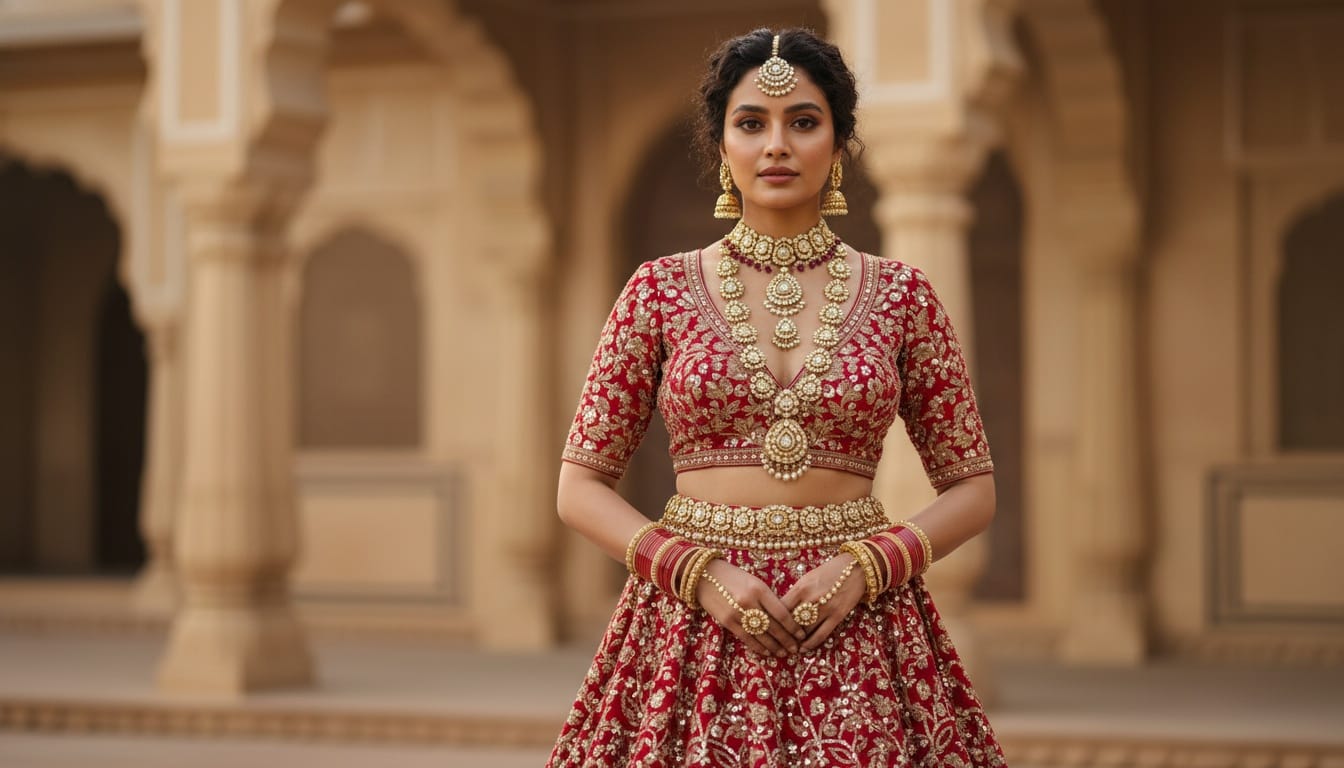
- Choose the necklace: a choker plus a rani haar layered below it is the most classic bridal combination. The choker fills the upper neck zone and the rani haar creates drama across the chest.
- Choose earrings that complement the necklace, not compete with it. If the necklace is very heavy, choose chandbalis or jhumkas that are rich but not oversized.
- Add the maang tikka in the same jewellery set as the necklace and earrings for visual cohesion.
- Choose bangles or chuda based on tradition and comfort level.
- Decide whether haath phool and kamarbandh add to the look or crowd it.
The weight consideration for bridal wear:
Any earring above 20 grams per piece will be felt after four to five hours. Any necklace above 150 grams becomes uncomfortable to wear all day. For the main wedding ceremony where the events are longest, prioritize lightweight construction in materials like resin-backed kundan or hollow gold settings. Reserve the heaviest pieces for the shortest events, like the pheras themselves, where the visual impact matters most and the duration is limited.
What to avoid for bridal lehenga jewelry:
- Matching every element to the same kundan set without variation in scale. Full sets look beautiful on display but can make the face disappear into identical patterns.
- Combining haath phool plus full bangle stack plus kamarbandh plus heavy necklace plus maang tikka all at once. Choose three strong elements and let those lead.
- Ignoring earring weight entirely. A 30-gram jhumka worn for 10 hours is a painful decision.
Festive Lehenga Jewelry: Navratri, Diwali, Sangeet, Mehendi
Festive occasion jewelry follows a different logic from bridal wear. The goal is rich and celebratory, not maximum bridal grandeur.
Navratri lehenga jewelry:
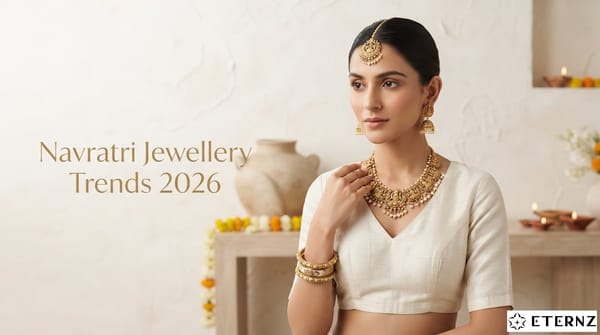
Navratri outfits are often bright, colorful, and coordinated to the night's traditional color. Jewelry should be lightweight (Navratri involves hours of garba dancing) and coordinated to the outfit's color. Meenakari jhumkas in the night's color, lightweight kundan earrings, and simple gold bangles are the strongest choices. Heavy chandelier earrings and elaborate necklaces are impractical for active dancing.
Diwali lehenga jewelry:
Diwali calls for festive richness without the full bridal commitment. A stone-set jhumka or chandbali with a kundan choker is the ideal level. Gold bangles in a stack of four to six. Maang tikka optional but adds to the festive completeness of the look.
Sangeet lehenga jewelry:
The Sangeet is the most fashion-forward function of a wedding. It allows for more contemporary jewelry choices alongside traditional ones. Statement hoops with a contemporary lehenga, a bold colored stone choker with a plain lehenga, or a full traditional set with a heavily embroidered lehenga, all work depending on the specific look. The Sangeet also allows mismatched or eclectic styling more than any other function.
Mehendi lehenga jewelry:
Mehendi functions are casual and colorful. Lightweight meenakari jewelry, colorful bangles, and simple gold or fashion jhumkas work best. Avoid fine jewelry and kundan sets because Mehendi application and festive activity create a high risk of damage to high-value pieces.
Casual and Party Lehenga Jewelry
Not every lehenga is worn for a wedding or a major festival. Contemporary lehengas are increasingly worn for birthday parties, family events, receptions as a guest, and even festive-casual occasions.
For these contexts, the jewelry register is significantly lighter than bridal or formal festive wear.
Best jewelry for casual and party lehengas:
- Diamond or CZ stud earrings or small drops
- A slim gold pendant chain or a single pearl necklace
- One or two thin gold bangles
- Skip the maang tikka unless the occasion specifically calls for traditional dressing
What to avoid for casual lehenga wear:
Full bridal sets, heavy kundan necklaces, and the full six-element jewelry look. These belong to the occasion level they were designed for. A party lehenga in a casual family context with full bridal jewelry looks over-dressed in a way that draws attention for the wrong reasons.
If you want to explore jewelry across all lehenga occasion levels in one place, Eternz brings together 300+ jewelry brands including Giva, Palmonas, and Kushal's, covering everything from lightweight festival jhumkas to full bridal kundan and polki sets.
5 Common Lehenga Jewelry Mistakes
Even well-chosen individual pieces fail when these five errors are present.
- Choosing jewelry before checking the blouse neckline. The neckline is the frame. Everything else follows from it.
- Wearing heavy jewelry on a heavily embroidered lehenga. The fabric is already at maximum visual richness. Adding equally heavy jewelry does not elevate the look. It crowds it.
- Ignoring weight for long-duration events. Beauty in a mirror and comfort across ten hours are two different things. Check the weight of every piece before committing to it for a full-day event.
- Using the same jewelry set for every lehenga. One set cannot suit every fabric weight, color, and occasion. A bridal kundan set belongs at a wedding. It looks mismatched at a Navratri or a family gathering.
- Piling up all six jewelry elements without hierarchy. Necklace, earrings, maang tikka, bangles, haath phool, and kamarbandh together need a clear focal point. When everything is equally bold, nothing leads and the look loses coherence.
Quick Reference: Lehenga Jewelry at a Glance
| Lehenga Type | Necklace | Earrings | Metal | Avoid |
|---|---|---|---|---|
| Heavy embroidery | Choker only | Medium chandbalis | Gold | Full layered set plus heavy earrings |
| Medium embroidery | Choker plus pendant | Jhumkas or chandbalis | Gold | Tiny studs alone |
| Plain / minimal | Statement layered set | Bold chandeliers or chandbalis | Any | Playing too minimal |
| Red / maroon | Kundan or polki choker | Long jhumkas | Gold | Silver |
| Pastel | Delicate diamond or pearl | Small drops or slim chandbalis | Rose gold or white gold | Heavy yellow gold |
| Royal / dark tones | Kundan or polki set | Chandbalis | Gold | Delicate minimal pieces |
| Bridal | Choker plus rani haar | Chandbalis at matching richness | Gold | Every element at maximum weight |
| Navratri / festive | Kundan choker or jhumkas | Lightweight meenakari | Gold | Heavy chandelier earrings for dancing |
| Party / casual | Slim pendant or studs | Small drops or jhumkas | Any | Full bridal set |
Conclusion
Styling jewelry with a lehenga follows a clear sequence. Embroidery weight tells you how much jewelry to wear. The blouse neckline tells you which jewelry fits physically. The lehenga color tells you which metal creates harmony. The occasion tells you how rich to go.
Work through those four filters in that order and the right jewelry becomes obvious before you open a single box or browse a single page.
The one principle that ties all four together: balance. The lehenga and the jewelry should feel like they belong to the same world, the same richness level, the same occasion. When that balance is right, the look does not need to be explained. It is simply complete.
Frequently Asked Questions (FAQs)
1. What jewelry should I wear with a lehenga?
Start with your blouse neckline to determine earring and necklace type. Then match jewelry richness to the embroidery weight of the fabric. Heavy embroidery needs restrained jewelry. Plain fabric needs bold jewelry. Match the metal tone to the lehenga color.
2. Which jewelry looks best with a red bridal lehenga?
Gold jewelry in kundan, polki, or temple style works best with red. The warmth of yellow gold complements red naturally. A choker layered with a rani haar, matching chandbali earrings, and a maang tikka in the same set is the classic bridal red lehenga combination.
3. What jewelry should I wear with a pastel lehenga?
Rose gold, diamond, and white gold jewelry suit pastels best. Avoid heavy yellow gold, which overpowers soft pastel colors. Choose delicate pieces over heavy sets, and matte gold finishes over high-polish if wearing yellow gold.
4. Can I wear silver jewelry with a lehenga?
Silver works with cool-toned lehengas like powder blue, mint, and grey. It looks cold and disconnected against warm colors like red, yellow, and orange. Oxidised silver suits casual cotton or light lehengas for festive occasions. Avoid silver with bridal and heavily embroidered lehengas where gold is the expected metal.
5. What earrings should I wear with a lehenga?
The blouse neckline decides the earring. Deep V blouse: long jhumkas or chandbalis. Round neck: chandbalis or medium drops. Boat neck: long slim drops. High neck: bold jhumkas above the collar. Sweetheart: chandbalis or bold chandeliers. Match earring richness to the embroidery level of the lehenga.
6. Do I need a maang tikka with a lehenga?
A maang tikka adds a traditional element and suits most face shapes, particularly round, heart, and oval faces. It is not mandatory. For contemporary or Indo-western lehenga looks, skipping the maang tikka is completely appropriate. For bridal and high-formal festive occasions, it completes the traditional look.
7. How do I choose jewelry for a heavy embroidered lehenga?
Apply the one hero piece rule. Choose either a statement necklace or bold earrings, not both at full statement scale. A choker with small matching earrings works well. Or bold chandbalis with no necklace. The heavily embroidered fabric is already making the visual statement. Your jewelry supports it rather than competing with it.