
How to Untangle a Necklace: 5 Easy Tricks for Knot Free Jewelry
Struggling with a knotted chain? Learn how to untangle a necklace using simple household items like baby powder and oil. Follow our pro guide to fix it today!
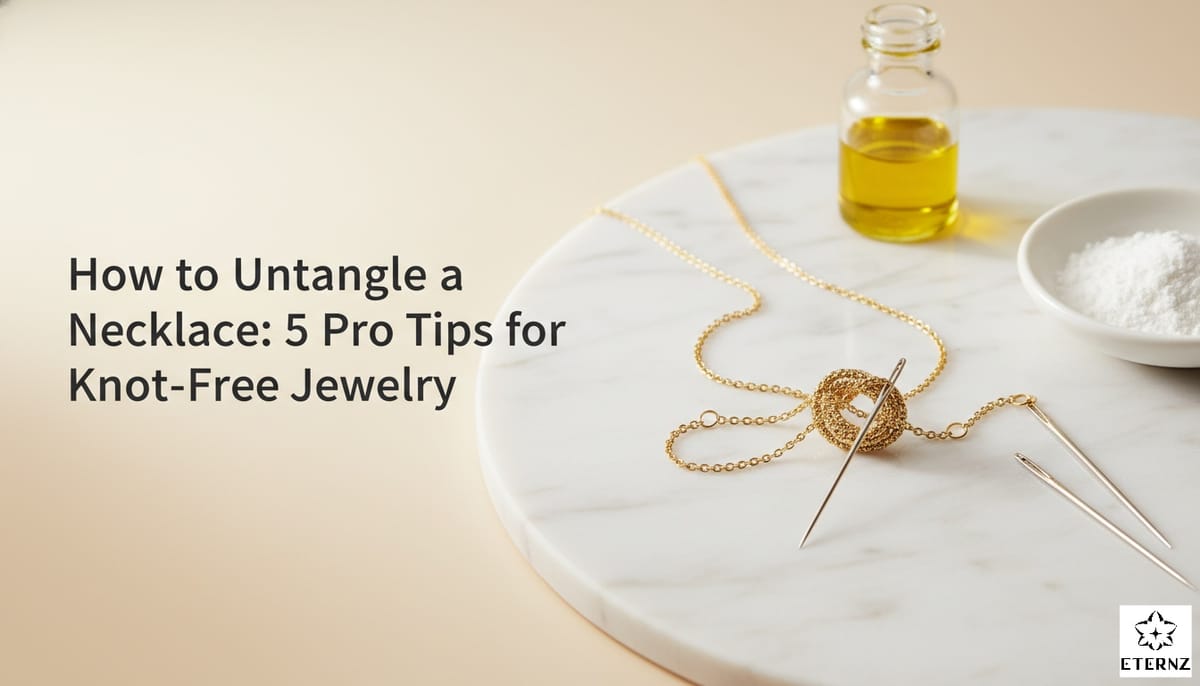
TL;DR: The most effective way to untangle a necklace is to lubricate the knot with baby powder or olive oil and use two thin needles to gently pull the links apart on a flat surface. Avoid pulling the chain with your fingers. That often makes the knot tighter and harder to remove.
Finding a favorite piece of jewelry turned into a tiny, frustrated ball of metal is a common headache. It usually happens right when you are getting ready to go out. You reach for that thin gold chain, only to find it has tied itself into a knot that looks impossible to fix.
Many people try to pick at it with their fingernails. That often leads to a broken clasp or a permanent kink in the metal. The good news is that almost any knot can be undone. You just need the right tools and a little bit of patience.
In this guide, you’ll learn:
- How to prepare your workspace for the best results
- The secret of using baby powder to loosen metal friction
- Why oils and lubricants are your best friend for tight knots
- The proper way to use needles and pins without scratching your jewelry
- Professional tricks to prevent your necklaces from tangling ever again
Let us start with why this happens in the first place.
Why Necklaces Get Tangled So Easily
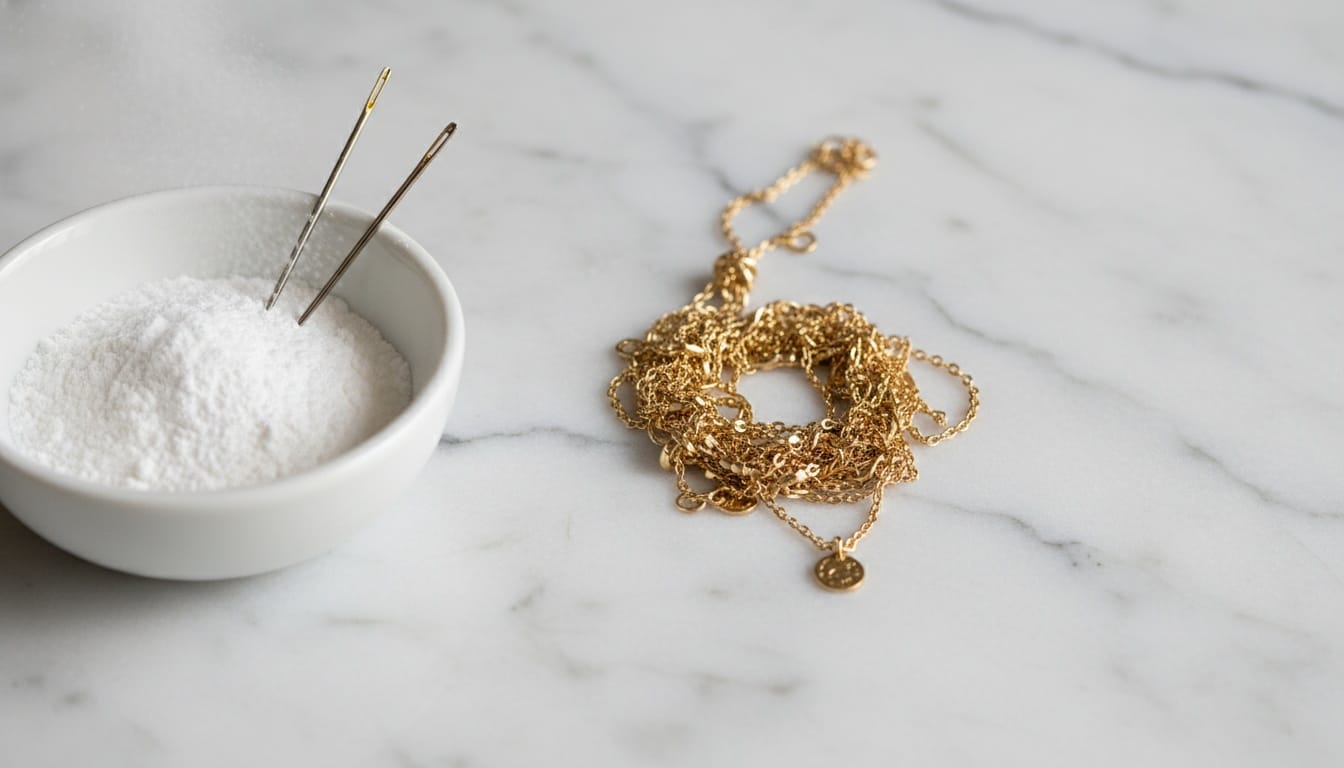
Necklaces tangle because their thin links have a lot of surface area that can catch on each other. This happens especially when you store them loosely in a box. When the chain moves, the loops slide through one another and create a knot. That knot tightens whenever you pull on the ends.
Understanding that friction is the enemy is the first step toward fixing the problem.
Think of a necklace like a long piece of wet spaghetti. If you put it in a bowl and shake it, the strands wrap around each other. Because jewelry is made of metal, these wraps create friction. The tiny gaps in the links act like teeth that grab onto the neighboring part of the chain.
This is why you should never simply pull on a tangled necklace. Pulling adds tension, which locks those metal teeth together even tighter. Instead, the goal of every method below is to reduce that friction. You want the links to slide past each other freely.
Most people think they need stronger fingers to fix a knot. But you actually need slippery surfaces. The harder you pull, the more the metal links bite into each other. That can lead to permanent damage or snapping.
Now that you understand the problem, let us gather the right tools.
What Tools You Need to Untangle a Necklace
The best tools for untangling jewelry are items that provide precision and lubrication. You need sewing needles, baby powder, and olive oil. More importantly, you need tools that are smaller than your fingers. They must reach into the center of the knot without putting pressure on the rest of the chain.
Before you start, gather these items from around your house.
| Tool | Purpose | Why It Works |
|---|---|---|
| Sewing needles or pins | Precision | They fit into the smallest gaps in the chain links |
| Baby powder or cornstarch | Dry lubricant | It fills the gaps between links to stop them from catching |
| Olive oil or baby oil | Wet lubricant | It allows the metal to slide with almost zero friction |
| Small screwdriver | Heavy duty | Useful for very thick chains with large, stubborn knots |
| Window cleaner | Surface tension | Helps break the stickiness that some metals develop |
Using the right tools is half the battle. If you try to use your bare hands, your fingers will likely block your view of the tiny loops. Small tools allow you to see exactly which way the wire is turning. That way, you can un turn it.
Before you touch the necklace, you need to set up your workspace properly.
How to Prepare Your Perfect Workspace
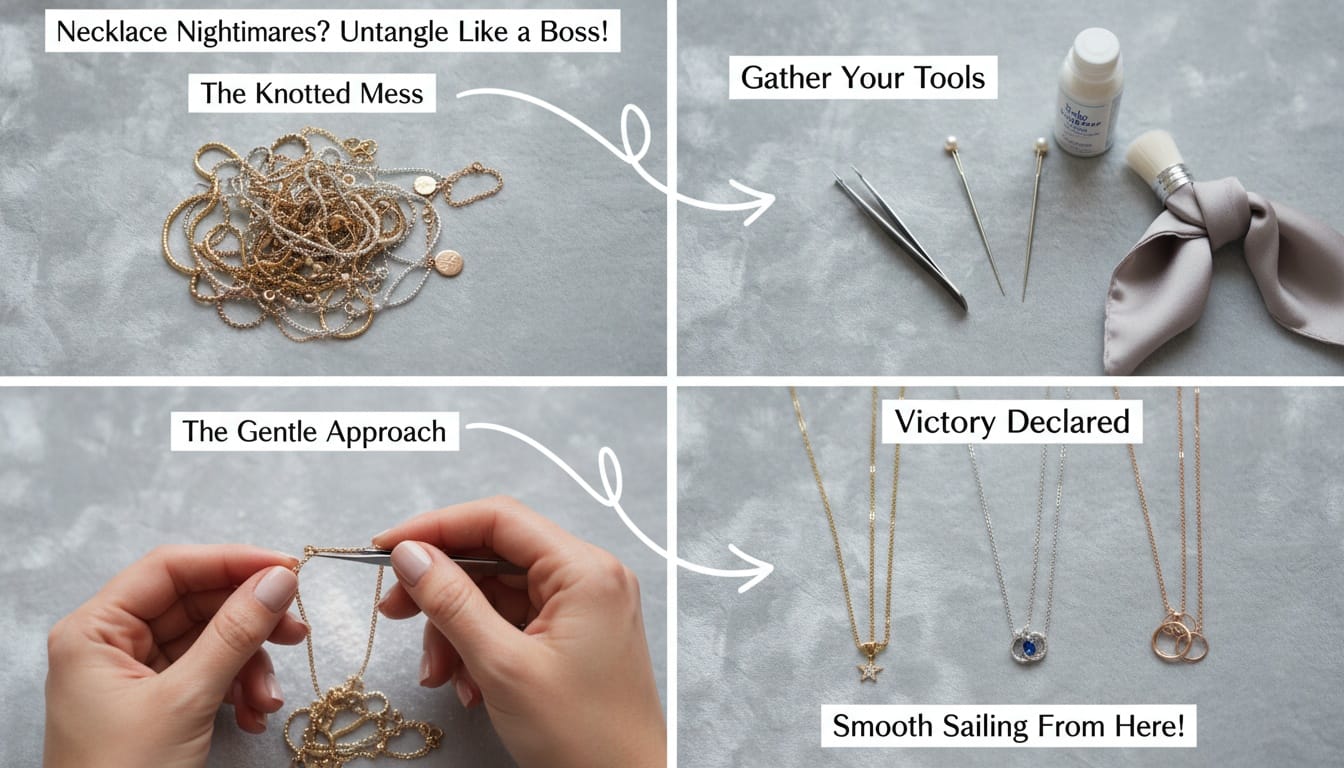
To untangle a necklace successfully, you must work on a flat, hard surface with excellent lighting. You need to see every individual link. Working in your lap or on a bed is a mistake. A soft surface allows the necklace to move too much. That can accidentally tighten the knot as you work.
Start by clearing off a kitchen table or a desk. A white or light colored background is best. It makes the dark or gold metal of the necklace stand out. If you have a magnifying glass, bring it over. Even if you have great eyesight, seeing the knot at three times its normal size makes the job much faster.
Follow these four steps to set up correctly.
- Lay the necklace flat. Do not let the ends hang off the table.
- Unclasp the necklace. If the ends are joined, you are working with a loop. That is twice as hard to untangle.
- Steady your hands. Rest your wrists on the table so you do not shake while using the needles.
- If you are working on a very expensive piece, lay down a piece of black velvet or a dark microfiber cloth. This prevents the jewelry from sliding around too much while still providing high contrast so you can see the links.
Now you are ready to try your first method.
Can Baby Powder Really Help Untangle Jewelry?
Baby powder is one of the most effective ways to untangle a necklace. It acts as a dry lubricant that coats the metal and allows links to slide past one another. The powder particles are so small that they get inside the knot. They reduce the grip that the metal links have on each other.
Here is how to use this method.
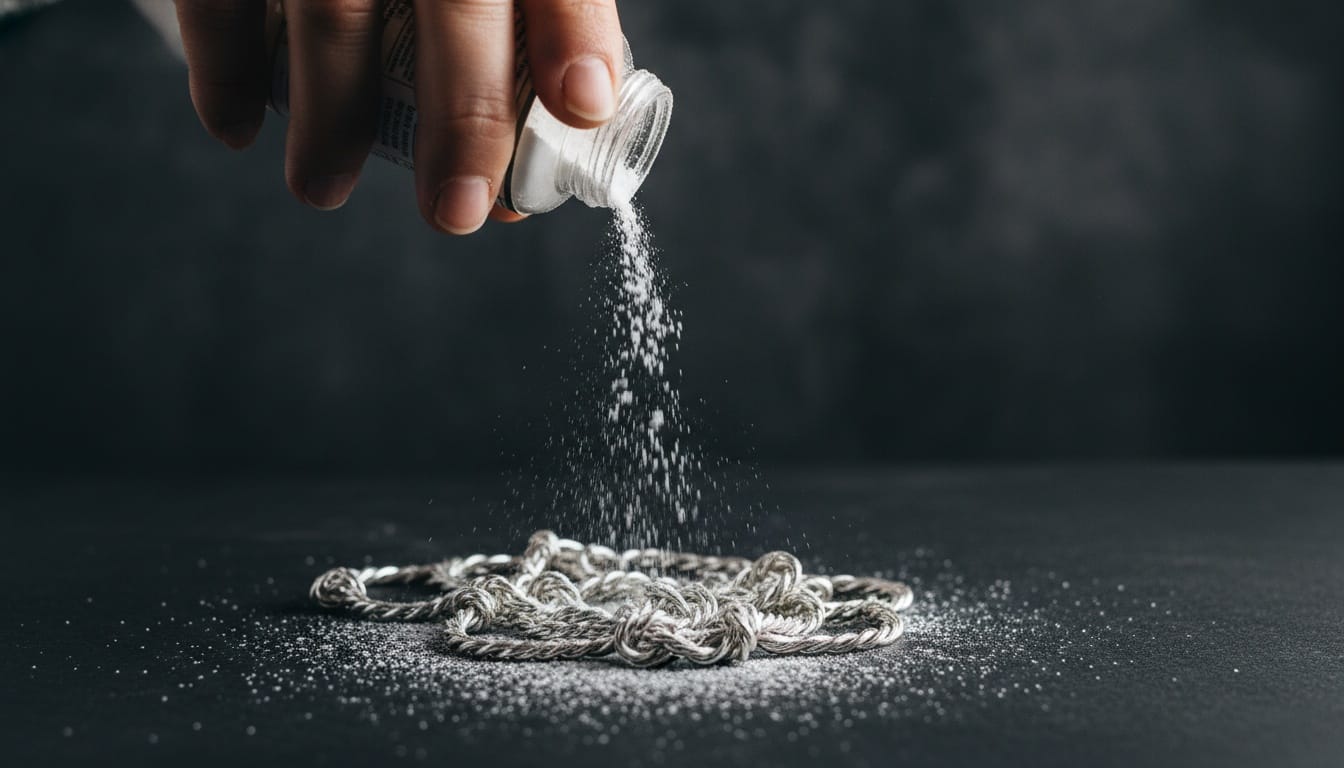
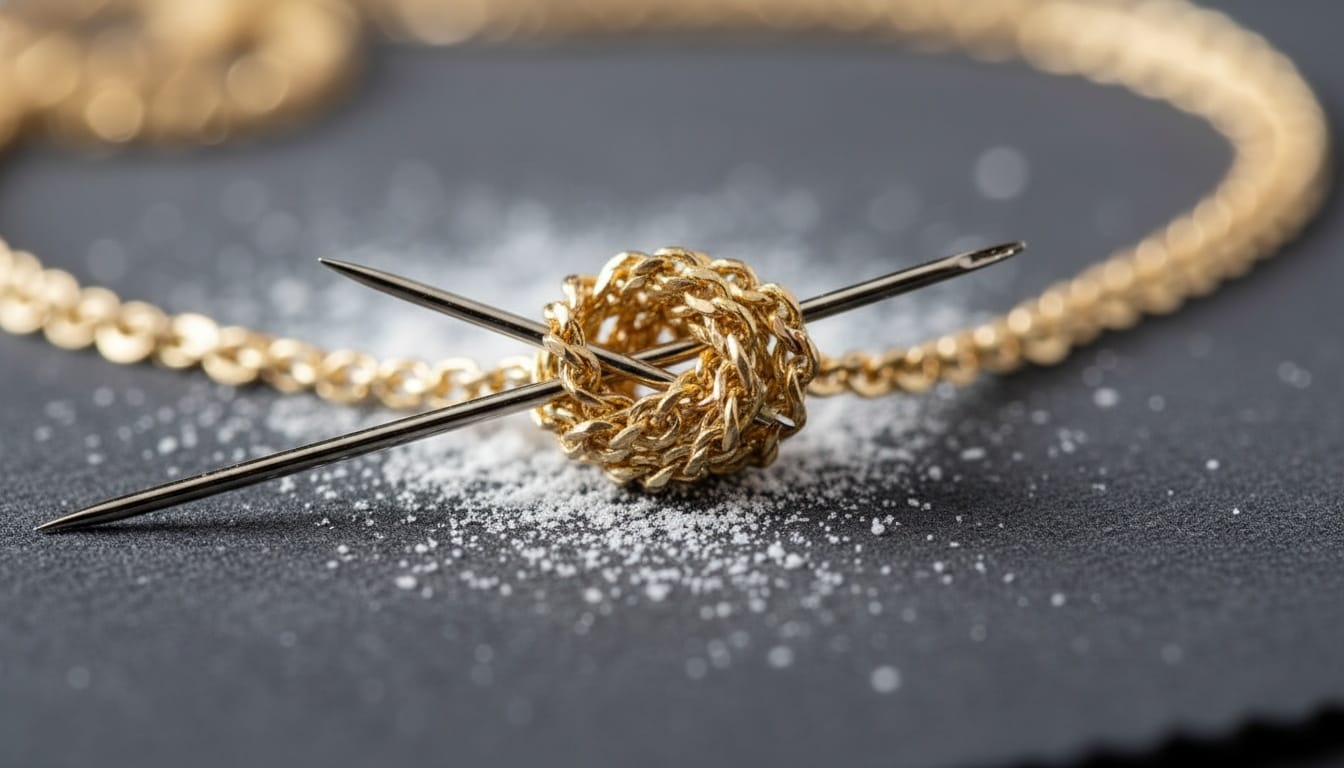
Sprinkle a generous amount of baby powder or cornstarch over the knot. Do not worry about the mess. You can wash it off later. Use your finger to gently dab the powder into the center of the tangle. Once the knot is coated, use two needles to poke at the center. You will notice that the links move much more easily. Instead of grinding against each other, they will glide.
Follow these five steps closely.
- Lay the knot on a flat surface.
- Dust it with powder.
- Use a needle to wiggle the center of the knot.
- Pull the loops outward slowly as they loosen.
- Rinse the necklace in warm water and mild soap once finished.
But what if the knot is too tight for baby powder? The oil method is your next option.
Is the Oil Method Better for Stubborn Knots?
The oil method is the best choice for extremely tight or dead knots. It provides the maximum amount of lubrication possible. Baby powder works great for loose tangles. But oil creates a slippery film that can help even the most stubborn links slide apart with almost no effort.
You can use baby oil, olive oil, or even vegetable oil from the kitchen. Use a cotton swab to dab a small drop of oil directly onto the knot. You do not need to soak the whole necklace, just the part that is stuck. Once the oil has soaked into the center, use your needles to gently pull the links. The oil works by removing almost all the friction between the metal surfaces.
Here is a quick comparison to help you choose between the two methods.
| Factor | Baby Powder Method | Oil Method |
|---|---|---|
| Mess level | Moderate (dusty) | High (greasy) |
| Effectiveness | Great for light tangles | Best for tight, old knots |
| Clean up | Easy rinse | Requires soap and warm water |
| Safety | Safe for all metals | Safe for most, but avoid on porous stones like turquoise |
Once you have applied your lubricant, you need to know exactly how to move the needles.
How to Use Needles to Tease a Knot Apart
Using two needles is the surgeon's approach to untangling a necklace. It allows you to manipulate individual links without putting stress on the rest of the chain. By placing the points of two needles into the center of the knot and moving them away from each other, you create space for the tangle to unravel.
Think of it like untying a shoelace that has been pulled tight. You would not pull the ends. You would stick your fingernail into the middle to create a gap. Since necklace links are too small for fingernails, the needles do that work for you.
Insert both needles into the heart of the ball. Gently wiggle them. Your goal is to expand the knot from the inside out. As a loop opens up, use one needle to hold the knot in place. Use the other needle to pull that loop through the mess.
Always work from the center of the knot outward. If you try to work from the outside edges, you might accidentally pull a loop that makes the center even tighter.
But what if you do not have oil or powder on hand? There is another household item that works surprisingly well.
Does Window Cleaner Actually Work on Necklace Knots?
Window cleaner works as both a lubricant and a surfactant. That means it helps break down the oils and dirt that might be making the necklace sticky. Many professional jewelers use a touch of window cleaner in an ultrasonic cleaner to help loosen debris that holds knots together.
The blue liquid most people have under their sink is surprisingly effective. It reduces the surface tension of the liquid, allowing it to penetrate deep into the knot. Some people even place the tangled necklace on top of a vibrating surface like a washing machine or a back massager while it is wet with window cleaner. The tiny vibrations help the links walk away from each other.
Follow these four steps.
- Spray a small amount of window cleaner into a shallow bowl.
- Place the tangled section in the liquid.
- Let it sit for two minutes.
- Use your needles to gently pull the links apart while they are submerged.
Different types of chains require different approaches. Let us talk about that next.
How to Handle Delicate Gold Versus Chunky Silver
Different types of chains require different levels of force and different techniques. Some metals are softer and more prone to scratching than others. For example, a high karat gold chain is very soft and can be easily scratched by steel needles. A stainless steel or heavy silver chain, however, can handle more pressure.
If you are working with a very delicate, thin gold chain, you must be incredibly gentle. Use wooden toothpicks instead of metal needles if you are worried about scratches. For snake chains or omega chains, be careful not to bend them too sharply. These types of jewelry can kink or snap if they are folded. Once a snake chain is kinked, it usually cannot be repaired to look like new.
Here is a quick guide based on the type of jewelry you have.
- Thin gold or platinum: Use toothpicks or very fine sewing pins. Use lots of oil.
- Sterling silver: Can handle metal needles. Silver often tarnishes, which makes it sticky. Use window cleaner to break the oxidation.
- Beaded necklaces: Never use oil on pearls or porous stones like turquoise. Stick to the needle method or a tiny bit of water.
Even with the right technique, people often make mistakes that ruin their necklaces. Let us make sure you avoid them.
The Most Common Mistakes People Make (And How to Avoid Them)
The most common mistake people make is losing their patience and pulling on the ends of the chain. This almost always results in a hard knot. That hard knot may require a professional jeweler to cut and resolder the chain.
Another big mistake is working with dirty hands. The oils from your skin, mixed with any dust on the necklace, can act like glue. This makes the links stick together. Always wash your hands and clean your workspace before starting.
Finally, do not use pliers. Pliers are meant for gripping and crushing. They have teeth that will mar the surface of your gold or silver. That leaves ugly marks that are expensive to polish out.
If you feel yourself getting frustrated, walk away for ten minutes. Most necklaces are broken because the owner got mad at the knot and pulled too hard. The metal does not have feelings, but it will snap if you lose your cool.
Once you have successfully untangled your necklace, you want to make sure it never happens again.
How to Prevent Necklaces From Tangling in the Future
The best way to manage tangled necklaces is to prevent them from happening in the first place. You need to ensure that chains are kept separate and under slight tension. Most tangles happen when necklaces are tossed into a pile. That allows the chains to wrap around each other like vines.
There are several clever household hacks to keep your jewelry safe. One of the most famous is the straw trick. Thread one end of your necklace through a plastic or paper drinking straw and then clasp it. The straw keeps the chain straight and prevents it from looping back on itself. For thicker chains, you can use a toilet paper roll the same way.
Here is a comparison of the best prevention methods.
| Prevention Method | How It Works | Best For |
|---|---|---|
| The straw trick | Holds the chain in a straight line | Thin, delicate chains |
| Hanging organizers | Uses gravity to keep chains straight | Daily wear jewelry |
| Individual zip lock bags | Keeps chains separate from each other | Travel and long term storage |
| Jewelry rolls | Wraps chains in soft fabric with spacers | High end or fragile pieces |
When you travel, do not put all your jewelry in one pouch. Even if they start out neat, the movement of your luggage will turn them into a giant knot. Use small, individual snack bags for each piece. If you want to be extra safe, leave the clasp hanging outside the bag and zip it shut. This ensures the chain cannot even move enough to form a loop. For even better protection and organization, consider using dedicated jewelry boxes and organizers designed to keep each piece separated and secure.
But sometimes, despite your best efforts, a knot is simply too difficult. That is when you need a professional.
When to Take Your Necklace to a Professional Jeweler
You should take your necklace to a professional jeweler if the knot is so tight that the metal links have begun to deform. You should also seek help if the chain is made of a very expensive material with complex links that you cannot see clearly.
If you have tried the oil and needle method for more than 30 minutes without making any progress, the knot might be locked. This happens when one link is forced through another link in a way it was not designed to go. A jeweler has specialized magnifying loops and ultra fine tools. They can move links with surgical precision. They can also anneal the metal, which means heating it up to make it more pliable. This is rare for a simple tangle, but it is an option.
Usually, a jeweler will charge a very small fee to untangle a necklace. Some might even do it for free if you are a regular customer. It is much cheaper to pay a small fee for detangling than to pay for a full chain repair because you snapped it in half.
A Step by Step Summary for Success
Untangling a necklace does not have to be a nightmare. If you follow the right steps, you can turn a stressful situation into a calm, rewarding task. Here is everything you need to remember.
Step 1: The setup. Find a flat, bright spot and unclasp the chain.
Step 2: Lubricate. Choose your weapon. Use baby powder for light tangles and oil for the tough ones.
Step 3: The wiggle. Use two needles to gently open the center of the knot.
Step 4: Expand. Pull the loops outward. Never pull the ends of the necklace.
Step 5: Clean. Use warm, soapy water to remove the lubricant.
Step 6: Store. Use a straw or a hanging rack so you never have to do this again.
By treating the necklace like a puzzle rather than a problem, you can save your jewelry and your sanity. Remember that the metal is stronger than you think. But it needs a slippery path to find its way back to being a straight, beautiful chain.
Frequently Asked Questions
1. Can baby powder really help with jewelry knots?
Yes, baby powder works as a dry lubricant. It coats the metal links to reduce friction. This makes it much easier to pull the knot apart with a needle.
2. What is the fastest way to untangle a thin gold chain?
The fastest way is to lay the chain on a flat surface, apply a drop of baby oil, and use two sewing needles to gently tease the knot apart from the center.
3. Should I keep the necklace clasped while untangling it?
No, you should always unclasp the necklace first. Working with a closed loop makes the process twice as difficult and increases the risk of tightening the knot.
4. Can window cleaner help loosen stuck necklace links?
Yes, window cleaner acts as a surfactant that breaks down dirt and surface tension. It is a professional secret for loosening sticky knots in metal chains.