How to Choose the Perfect Engagement Ring in 2026
Find the perfect engagement ring without overspending. Compare diamonds, gold types, and settings—plus expert tips to get the best ring for your budget in India.
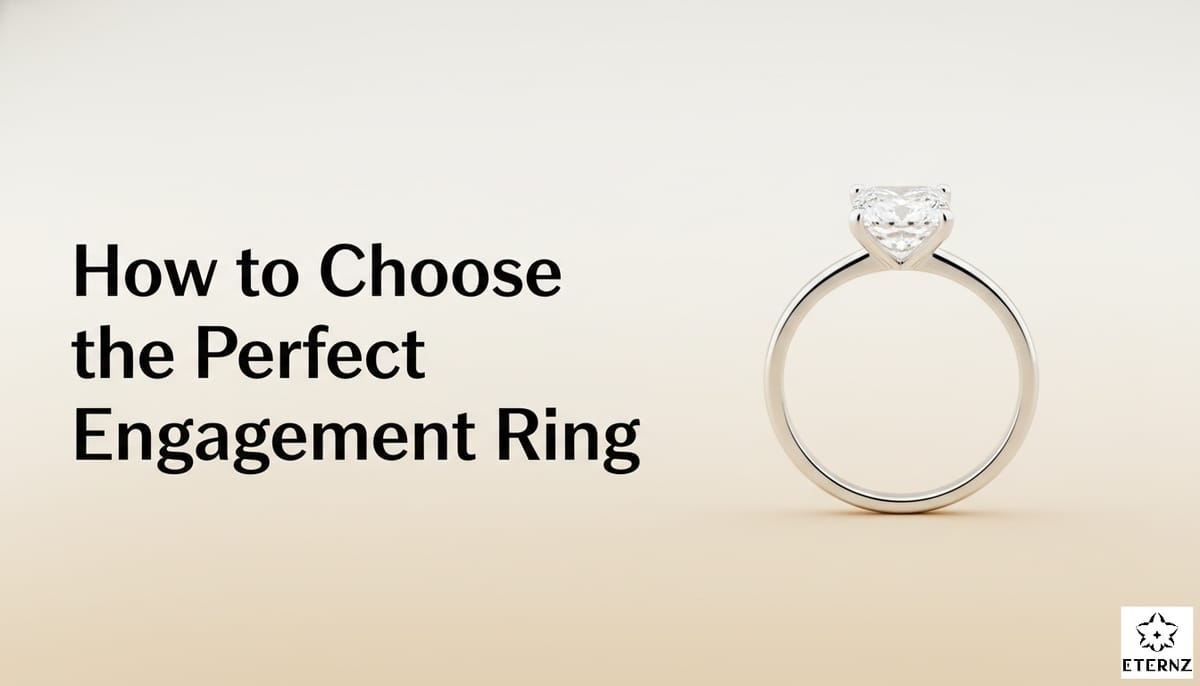
Choosing the perfect engagement ring is a journey that combines your deepest feelings with a smart financial decision. If you are looking for an engagement ring buying guide in India, the process involves understanding the quality of the stone, the strength of the metal, and the personal style of your partner. By following a clear plan, you can find a ring that looks beautiful today and stays strong for a lifetime.
Actually, the tradition of giving a diamond engagement ring became popular mainly because of a very clever marketing campaign in the 1940s. Before that, people used many different types of colorful gemstones to say "I love you."
Key Takeaways: Quick Summary
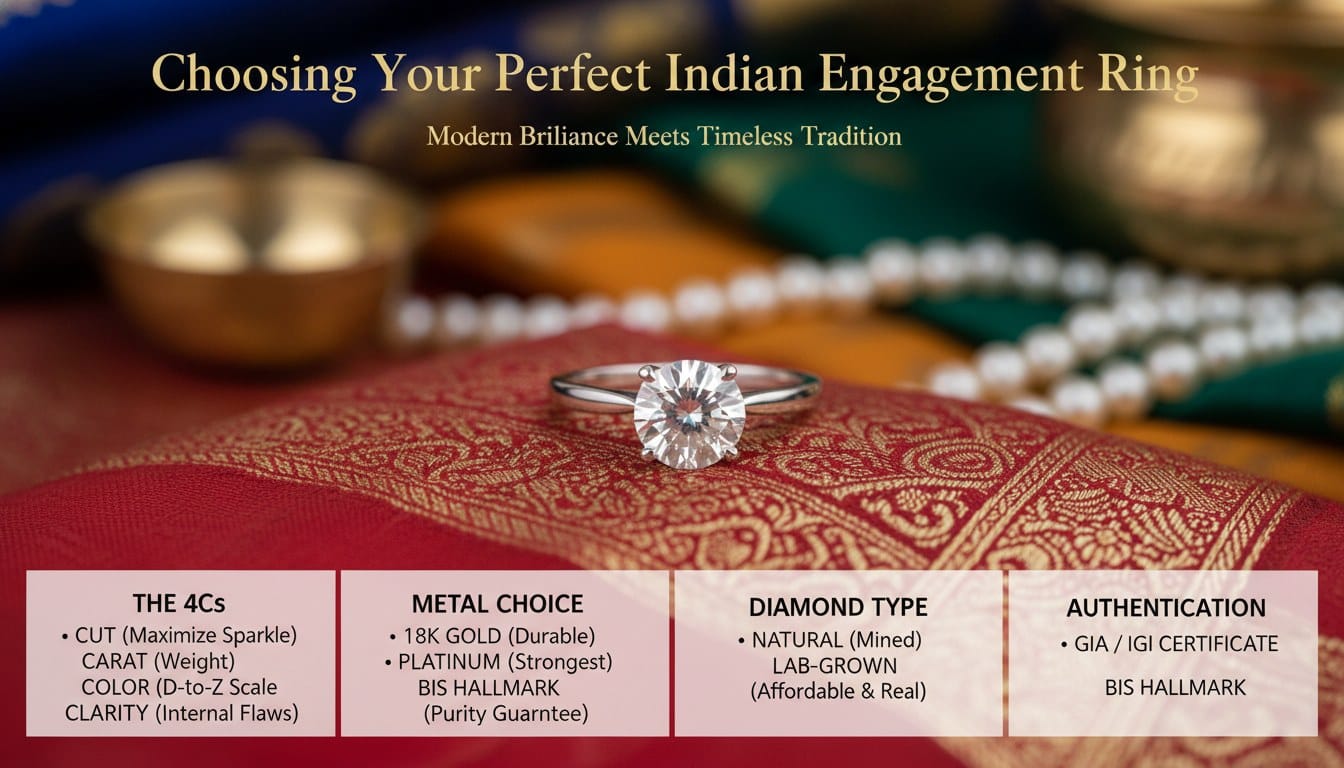
- The 4Cs Matter: Prioritize a diamond's Cut over its Carat size to maximize sparkle and brilliance.
- Metal Choice: For diamond rings, an 18k vs 22k gold ring comparison always favors 18k gold (or Platinum) for superior durability.
- Lab vs. Natural: Lab-grown diamonds are 100% real diamonds and offer a larger stone for the same budget.
- Authentication: Always insist on a BIS hallmark engagement ring and an independent diamond certificate (GIA, IGI).
- Try Before You Buy: Use online tools like Eternz's Virtual Try-On to see how rings look on your hand before purchasing.
What Makes an Engagement Ring Special in India?
An engagement ring in India is more than just jewelry; it represents a sacred promise between two families and two people. It serves as a wearable memory that often stays on the finger every single day for decades. Because our weather is warm and our lifestyle is active, the perfect ring must be both stunning to look at and highly durable to wear.
When you start looking, you might feel overwhelmed by the vast mix of traditional gold jewelry and modern diamond styles. You must consider how the ring will look with Western clothes as well as traditional outfits like sarees or lehengas.
Choosing well means looking at four main pillars:
- The quality of the diamond or gemstone (The 4Cs).
- The type of metal used for the band.
- The way the stone is held in place (The Setting).
- The official certificates that prove the ring is real.
Diamond 4Cs Explained Simply
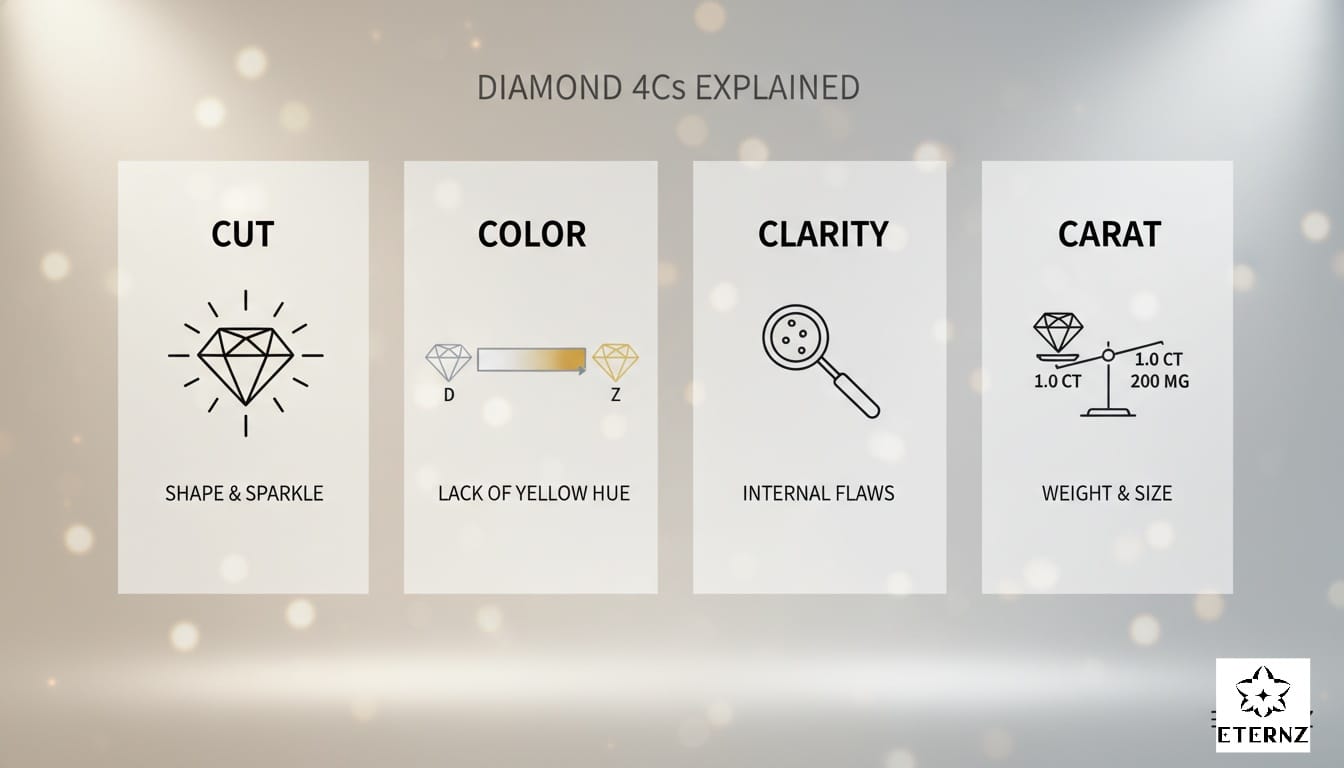
The 4Cs are a global grading system that tells you exactly how high the quality of a diamond is. These four factors are Cut, Color, Clarity, and Carat. Understanding these helps you see why one diamond costs much more than another, even if they look similar at first glance.
How Does the Cut Affect Diamond Sparkle?
The cut of a diamond is the most important factor because it determines how much the stone sparkles when light hits it. A well-cut diamond reflects light from one mirror-like facet to another and bounces it back out through the top. If a diamond is cut too deep or too shallow, light leaks out of the bottom, making the stone look dull or dark.
Think of the cut like the craftsmanship of a professional chef. Even if you have the best ingredients, the meal is only great if the chef knows how to prepare it. In the same way, a diamond can be very pure, but if the cut is poor, it will not shine. Most experts suggest spending the largest part of your budget on a "Very Good" or "Excellent" cut.
A smaller diamond with a perfect cut will often look much bigger and brighter than a huge diamond with a bad cut. Always prioritize the sparkle over the size!
Why Does Diamond Color Matter for the Ring?
Diamond color refers to how clear or white the stone appears to your eye. The grading scale starts at D (completely colorless like a drop of pure water) and goes down to Z (noticeable yellow or brown tint). In India, many prefer diamonds in the D to F range because they look icy white against gold or platinum.
| Color Grade | Appearance | Value |
|---|---|---|
| D, E, F | Completely Colorless | Highest Value |
| G, H, I, J | Nearly Colorless | Great Value |
| K, L, M | Faint Yellow Tint | Budget Friendly |
| N to Z | Noticeable Color | Lowest Price |
If you are setting your diamond in yellow gold, you can actually save money by choosing a slightly lower color grade like G or H. The yellow metal will naturally make the diamond look whiter. However, if you choose a white metal like Platinum, stay with higher color grades so the diamond does not look yellow by comparison.
What is Diamond Clarity and Why is it Important?
Clarity measures how many tiny "birthmarks" or flaws are inside the diamond, known as inclusions. Because diamonds are forged deep in the earth under immense heat and pressure, almost every diamond has some marks.
To understand this simply, think of a diamond like a window. If the window has tiny cracks or dust on it, it is less clear. Most of these marks are so small that you cannot see them without a powerful jeweler's loupe. Look for an "eye-clean" diamond meaning it looks perfect to the naked eye, even if it has small microscopic flaws.
How Does Carat Weight Influence the Price?
Carat is the measurement of how much a diamond weighs, not necessarily how big it looks from the top. One carat is roughly the weight of a paperclip. As the carat weight goes up, the price of the diamond jumps exponentially because large diamonds are much rarer in nature.
Pro Tip: Buying a 0.90-carat diamond can save you up to 20% compared to a 1.00-carat diamond. They look almost identical in size to the human eye, but the price difference is huge because everyone wants the prestige of a full 1.00-carat stone.
Lab-Grown vs Natural Diamonds in India
When researching how to choose an engagement ring in India, you will inevitably encounter lab-grown diamonds. In India, this involves choosing between natural diamonds or lab-grown diamonds. Lab-grown diamonds are real diamonds created by scientists in a laboratory instead of being mined from the earth. They possess the exact same chemical, physical, and optical properties as natural diamonds.
Are they "real"? Yes, they are 100% real. They are not like "American Diamonds" (Cubic Zirconia), which are just cheap simulants. If you use a diamond tester on a lab-grown stone, it registers as a diamond.
In India, lab-grown vs natural diamonds is a hot debate, but lab-grown stones are becoming a favorite for modern couples due to their affordability. You can often get a diamond that is twice as large for the same price as a smaller natural diamond, allowing for a much more impressive ring within your budget. For a deeper dive, read our article on whether lab-grown diamonds are a good investment in 2026.
How to Choose the Right Metal for an Indian Lifestyle
The metal you choose provides the foundation for the entire design. In India, we traditionally love 22-karat gold, but for engagement rings with diamonds, 18-karat gold or Platinum are far superior choices.
18k vs 22k Gold Ring: Which is Better?
18K gold is the perfect balance of purity and strength for a ring holding a diamond. 22K gold is simply too soft, meaning the tiny metal claws holding your diamond could bend or break during daily wear. By mixing 75% gold with 25% strong alloy metals, 18K gold becomes tough enough to protect your stone during chores or exercise.
| Metal Type | Purity Level | Best For | Durability |
|---|---|---|---|
| 18K Yellow Gold | 75% Gold | Traditional Indian Look | Medium-High |
| 18K Rose Gold | 75% Gold | Modern Romantic | High |
| 18K White Gold | 75% Gold | Modern Silvery Shine | Medium |
| Platinum | 95% Pure | Maximum Security | Very High |
Note: 18K White gold requires a new coating of a metal called Rhodium every few years to maintain its bright white color.
When Should You Choose Platinum?
Platinum is a rare, dense metal that is naturally white and will never fade or change color. It is much stronger than gold, making it the safest choice for securing a large diamond. It is also hypoallergenic, preventing itchy skin or rashes. Unlike gold, which loses microscopic bits of metal when scratched, Platinum simply displaces the metal. Over time, this creates a frosted finish called a "patina," which many feel gives the ring a beautiful antique character.
Popular Ring Settings That Last
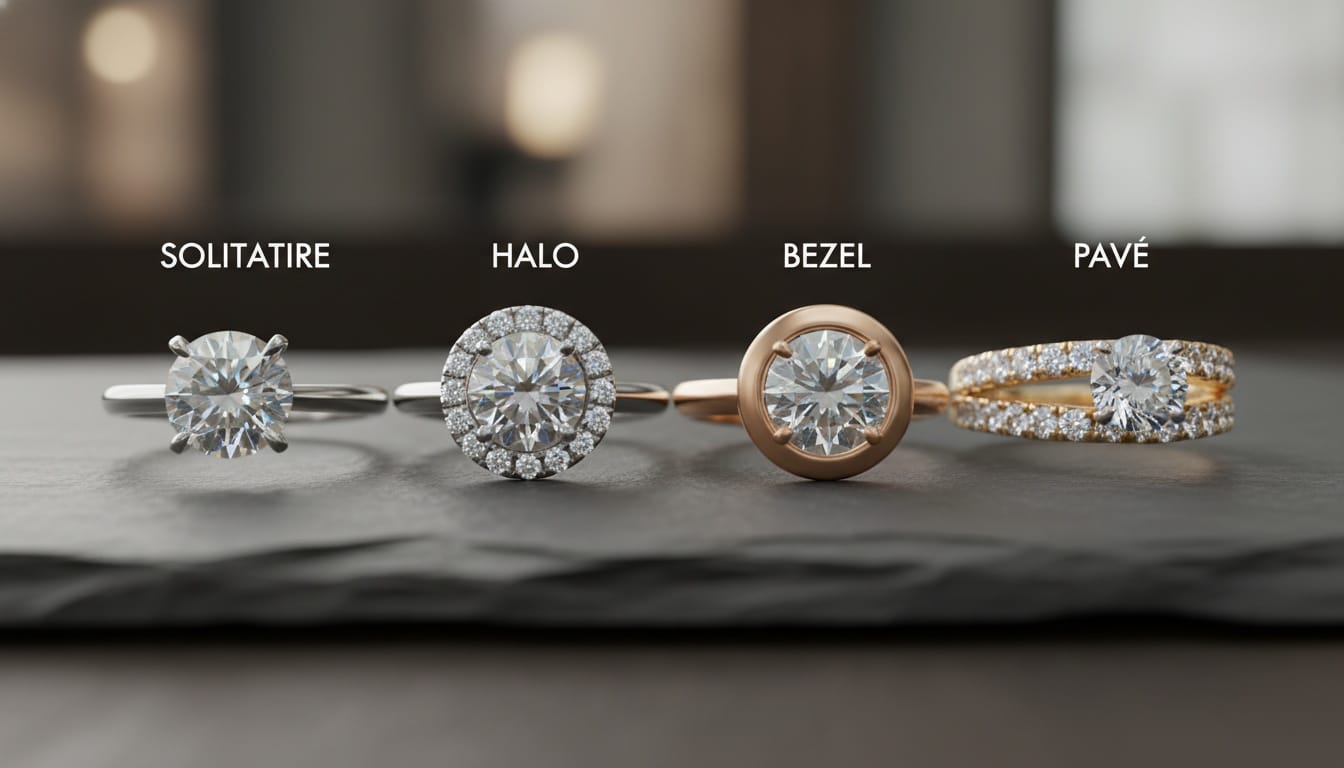
The "setting" defines the ring's style and determines how safe the diamond is. Choose a setting that matches your partner's daily activity level:
- Prong (Solitaire) Setting: The most famous choice, where a single diamond is held by metal claws. It maximizes light and sparkle but sits higher on the finger.
- Halo Setting: A circle of small diamonds around the center stone, making the main diamond look significantly larger. Browse our collection of halo rings for elegant options.
- Bezel Setting: A thin metal frame surrounds the entire edge of the diamond. Highly secure, modern, and won't snag on clothes.
- Tension Setting: The stone appears to float magically between two pieces of pressure-mounted metal.
Why Profile Height Matters: High settings look dramatic but can catch on pockets or hair. For a busy Indian lifestyle, a medium or low-profile setting is often more practical for all-day wear.
Custom-Designed vs. Ready-Made Rings
Should you buy off the shelf or design from scratch?
- Ready-Made: Ideal if you are proposing soon. Platforms offer thousands of ready-to-ship designs that can be delivered within days.
- Custom-Designed: If your partner has a specific vision, custom designing allows you to pick the exact loose diamond and setting. Keep in mind that custom rings in India typically take 3 to 5 weeks to manufacture.
How to Ensure You Are Buying a Real Diamond in India
Buying an engagement ring is a major financial milestone. You must verify that the diamond and the gold are exactly what the seller claims. Never buy an engagement ring without seeing official paperwork.
What is a BIS Hallmark Engagement Ring?
BIS Hallmarking is a government-backed system in India that guarantees gold purity. Every piece of gold jewelry must have a tiny stamp from the Bureau of Indian Standards. This stamp verifies the karat of the gold, ensuring you aren't paying 18K prices for a lower-quality alloy.
Why Do You Need a Diamond Certificate?
A diamond certificate is a report card for your stone, issued by independent gemological laboratories. Experts examine the diamond under a microscope and map its exact 4Cs.
| Certification Body | Reputation | Common in India? |
|---|---|---|
| GIA (Gemological Institute of America) | Global Gold Standard | Yes, for high-end diamonds |
| IGI (International Gemological Institute) | Highly Detailed | Very Common |
| SGL (Solitaire Gemmological Labs) | Fast and Reliable | Popular locally |
Having a certificate proves your diamond is authentic, which is crucial for insurance, future upgrades, or resale.
Insurance, Resale Value, and Maintenance
Indian buyers are highly investment-conscious, so considering the long-term lifecycle of your ring is essential.
- Ring Care & Maintenance: Keep your diamond sparkling by cleaning it at home once a month. Simply soak the ring in warm water with a few drops of mild dish soap for 15 minutes, gently scrub with a soft-bristle toothbrush, and dry with a lint-free cloth.
- Diamond Buyback and Insurance: Always ask your jeweler about their buyback or upgrade policy. Reputable jewelers in India typically offer a 75% to 90% exchange value on natural diamonds. Additionally, add the ring to your home insurance policy immediately after purchase to protect against theft or loss.
How to Find the Perfect Ring Size in Secret
If the ring is too big, it might get lost; too small, and it won't fit over the knuckle. The best way to find the size in secret is to borrow a ring your partner already wears on their ring finger. Place it on paper and trace the inside circle, or press it into a bar of soap to leave a mold.
If you're unsure, it is always better to buy a slightly larger size. Jewelers can easily size a ring down, but making a ring bigger is more complex and expensive. For more on ring sizing and styling, check out our Ring Stacking 101 guide.
How to Set a Smart Budget for the Ring
The old "three months' salary" rule is a marketing myth. Set a budget that you feel comfortable with and that does not force you into heavy debt.
- Look at your total savings.
- Factor in upcoming expensive Indian wedding traditions.
- Set a maximum limit for the ring and stick to it.
Your partner will likely prefer a ring that allows you both to start your life together debt-free. Focus on the thought and the quality rather than just the price tag.
Why Buy Your Engagement Ring Online in India with Eternz?
Finding the perfect ring is easier with a trusted partner. Eternz is India's leading jewelry marketplace, bringing together over 300 trusted brands. From classic solitaires to modern lab-grown engagement rings, you get unmatched variety in one place.
Worried about buying online? Eternz features an advanced Virtual Try-On tool. Use your phone camera to see exactly how a ring looks on your finger before spending a single rupee.
Every piece comes with strict authenticity certifications (BIS & IGI/GIA). For last-minute planners, Eternz even offers same-day delivery in major cities like Bengaluru, Delhi, Noida, and Mumbai.
Use the code WELCOME20 to get a discount on your first order, and enjoy a stress-free journey to finding the ring of your dreams!
Frequently Asked Questions (FAQ)
1. What is the most common engagement ring diamond size in India?
In India, the most popular diamond size for engagement rings ranges between 0.50 carat and 1.00 carat. This size offers a perfect balance of visible brilliance and everyday wearability without being overwhelmingly expensive.
2. Why is 18K gold preferred over 22K gold for diamond engagement rings?
18K gold consists of 75% pure gold mixed with 25% alloy metals, providing the necessary strength to hold diamonds securely. 22K gold is too soft for intricate diamond prongs and can bend during daily wear.
3. Which of the 4Cs is most important for diamond sparkle?
The Cut is the most critical factor. An "Excellent" cut determines how light reflects within the stone, making the diamond appear brighter, larger, and more brilliant than a stone with a higher carat weight but a poor cut.
4. How can I save money without sacrificing the size of the diamond?
Consider two strategies: First, buy "shy" of whole numbers (for example, a 0.90-carat instead of a 1.00-carat), which looks identical but costs significantly less. Second, consider a lab-grown diamond, which is optically and chemically identical to a mined diamond but much more affordable.
5. What paperwork should I ask for to ensure my ring is authentic in India?
You should request two things: A BIS Hallmark stamp on the gold band to verify the metal's purity, and an independent grading certificate (from GIA, IGI, or SGL) to verify the diamond's 4Cs and origin.