Gold vs Silver vs Stainless Steel Chains: Which Lasts Longer?
Comparing gold, silver, and stainless steel chains? Discover which material offers the best durability for daily wear and Indian weather. Read our expert guide!
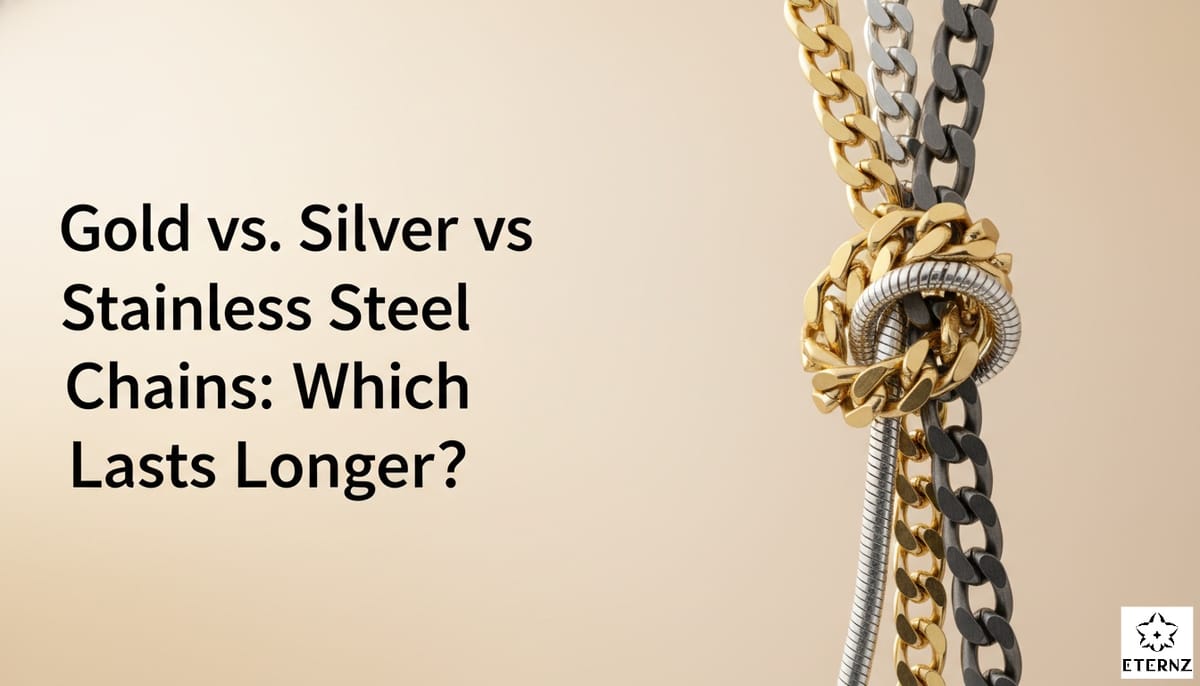
When you buy a piece of jewelry, you want to know if it will survive the test of time. A chain that looks beautiful today might snap, scratch, or turn black in just a few months depending on what it is made of.
While gold is often seen as the ultimate symbol of longevity, it is not always the most durable option for someone with an active lifestyle. Stainless steel and silver offer different levels of resistance to the environment. Choosing the right one requires looking past the price tag and understanding how these metals react to sweat, water, and daily friction.
To determine which chain lasts longer, we have to look at how they handle "wear and tear." Some materials stay shiny forever but break easily, while others are nearly indestructible but lose their luster. This guide will help you decide which material fits your daily routine so you do not waste money on a chain that fails within a year.
Before we start, let me tell you about Eternz: a trusted jewelry marketplace featuring 300+ brands. Every piece comes with authenticity certification. They offer fast, same-day delivery in major cities, and a special "WELCOME20" discount for first-time buyers.
What Does "Lasting Longer" Mean in Chains?
In the world of jewelry, lasting longer means the chain maintains its structural integrity and its original color without needing constant repair. A long-lasting chain is one that resists the three main enemies of jewelry: physical scratches, chemical tarnish, and structural snapping.
3 Factors That Decide Chain Lifespan
The lifespan of your jewelry depends on the physical properties of the metal. If a metal is too soft, it will wear down and become thin. If it is chemically reactive, it will change color.
- Scratch Resistance: This is measured by how hard the metal surface is. Harder metals like stainless steel can handle being bumped against desks or zippers without getting dull.
- Tarnish Resistance: This refers to whether the metal reacts with oxygen or sulfur. Gold is famous because it does not react, while silver is notorious for turning black.
- Structural Strength: This is the "tensile strength" of the metal. It measures how much pulling or tugging a chain can take before the links stretch or snap.
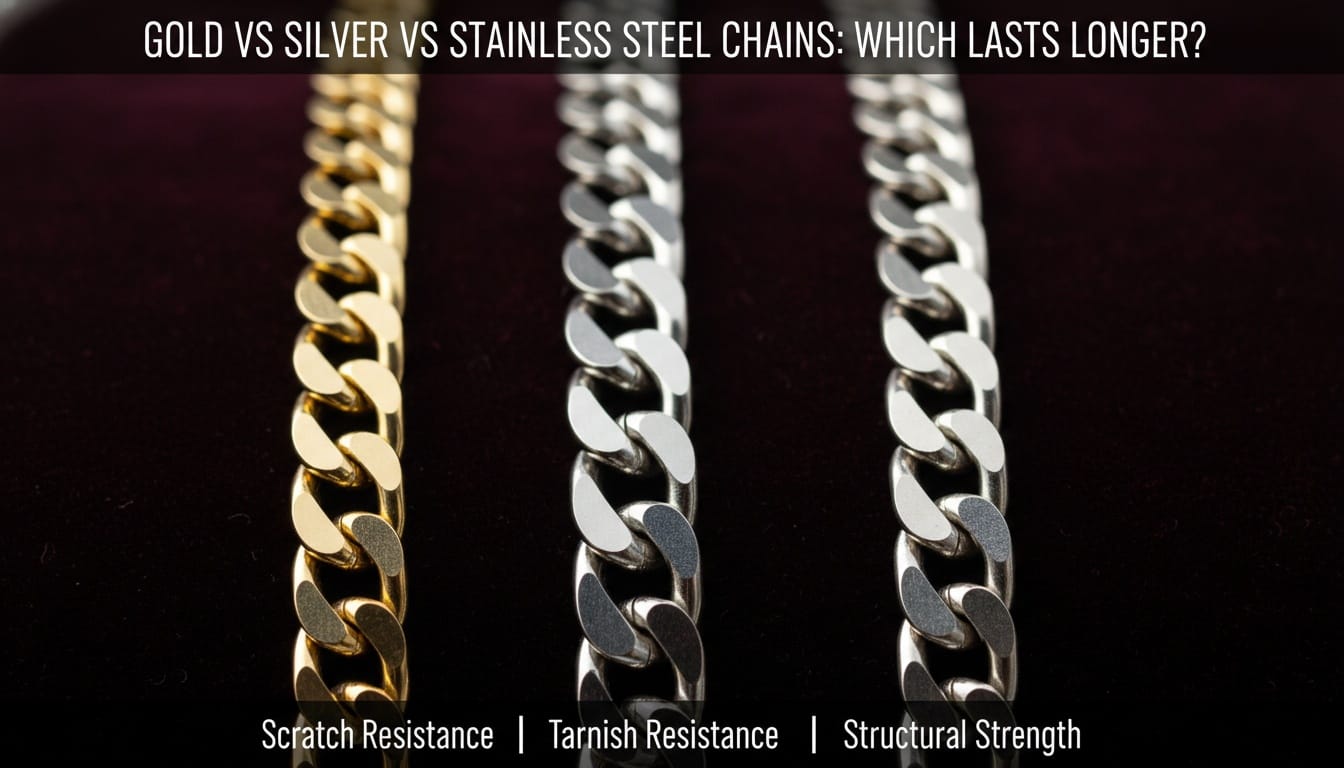
Stainless steel is the clear winner in terms of raw physical power. It has a tensile strength of approximately 500 to 700 MPa. In comparison, silver sits much lower at around 300 MPa. This means a stainless steel chain is significantly harder to break if it gets caught on a piece of clothing or pulled by a child.
Indian Conditions That Affect Chain Life
The Indian climate is particularly harsh on jewelry due to high heat and extreme humidity. These environmental factors act as catalysts that speed up the aging process of certain metals.
- Sweat and Humidity: The salt in human sweat and the moisture in the air cause silver to tarnish almost instantly in cities like Mumbai or Chennai.
- Pollution: High levels of sulfur in urban air accelerate the oxidation process, making silver and low-karat gold alloys look dull faster.
- Water Quality: Hard water used for bathing in many Indian households contains minerals that can leave deposits on chains, affecting their shine over time.
How Long Does Each Chain Type Actually Last?
Each metal has a specific "natural life" based on its chemistry. While some can last for generations as family heirlooms, others are designed for heavy-duty use in the modern world.
Gold Chains – Long-Term but Not Scratch-Proof
Gold chains can last a lifetime and beyond because gold is a chemically "noble" metal that does not rust or tarnish. However, gold is a very soft metal, which means it physically wears away over decades of constant friction.
Gold does not fade because the color is consistent throughout the metal. If you have a solid gold chain, you can wear it in the shower, the pool, or the ocean without the color changing. The downside is that gold is prone to "thinning." Over 20 or 30 years, the links of a gold chain rub against each other, slowly filing away the metal until a link becomes thin enough to snap. For those seeking investment-grade longevity, explore our solid gold collection for heirloom-quality pieces.
Silver Chains – Good Life, High Maintenance
Sterling silver chains typically have the shortest functional lifespan for daily wear because they require constant cleaning to remain wearable. Silver reacts with hydrogen sulfide in the air to create a black layer of silver sulfide.
While silver is beautiful, it is the softest of the three materials. It scratches easily and can be bent out of shape with very little force. If you do not clean a silver chain regularly, the tarnish can eventually lead to "pitting," where small holes form in the metal, permanently damaging its smooth surface. For most people in India, a daily-wear silver chain may only look its best for 5 to 10 years before the wear becomes highly visible. Learn more about why 925 sterling silver is perfect for everyday luxury in India despite its maintenance needs.
Stainless Steel Chains – Maximum Durability Winner
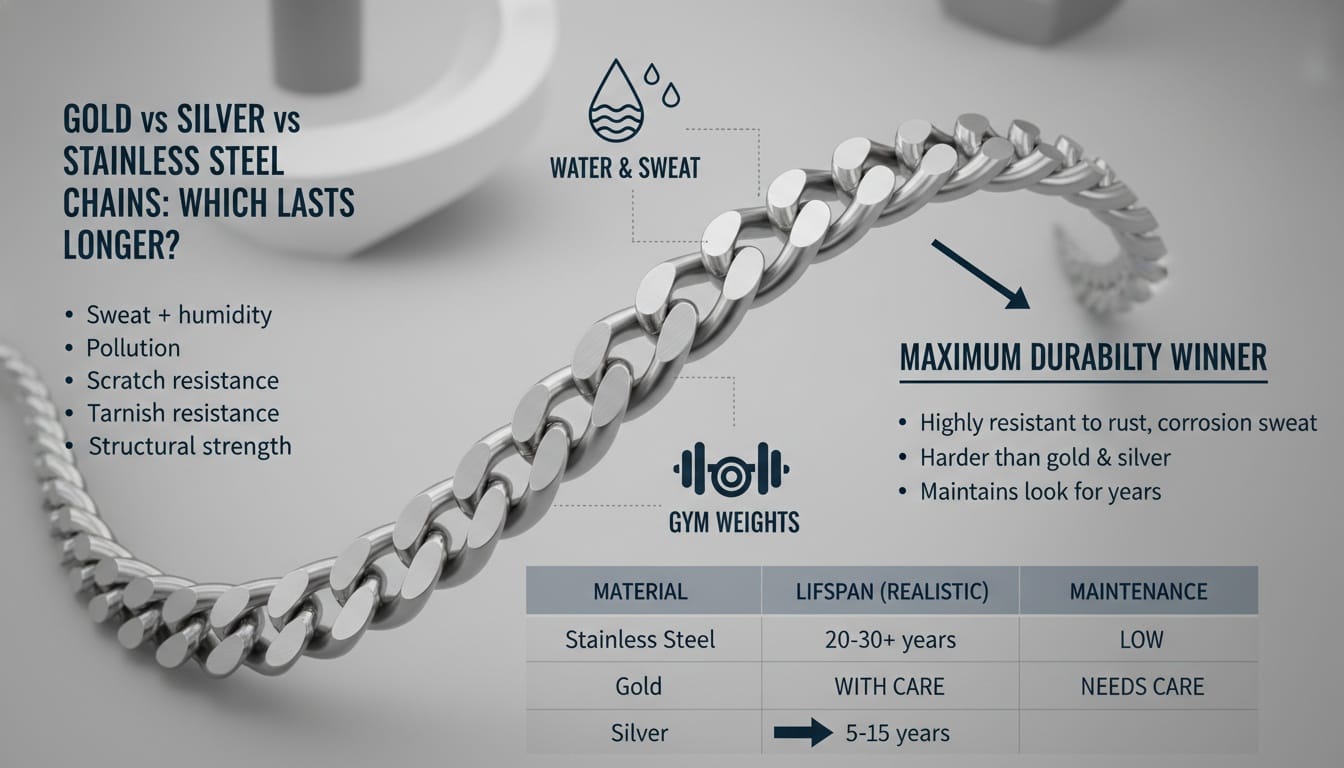
Stainless steel is the champion of longevity when it comes to physical survival. It is an alloy made specifically to resist rust, corrosion, and intense heat.
Because stainless steel is much harder than gold or silver, it maintains its "brand new" look for much longer. It does not need polishing, it does not turn black, and it is almost impossible to scratch with normal daily activity. In many cases, a high-quality 316L stainless steel chain will look exactly the same after 20 years as it did on the day you bought it. It is the only material that truly thrives in the gym, the shower, and the workplace without any special care. To keep your chain looking its best, avoid common jewelry cleaning mistakes that can damage the finish.
Gold vs Silver vs Stainless Steel – Durability Comparison
When we compare these three metals side-by-side, we see a trade-off between financial value and physical toughness. Gold holds value but is physically vulnerable. Stainless steel has less resale value but is physically dominant.
Scratch Resistance
Stainless steel is the hardest of the three, followed by gold, and then silver. On the Mohs scale of mineral hardness, stainless steel ranks around 5 to 6, while gold and silver are much lower, usually between 2.5 and 3.
| Material | Hardness Level | Daily Result |
|---|---|---|
| Stainless Steel | High | Resists scratches from keys and coins |
| Gold (14k/18k) | Medium | Will show fine "swirl" marks over time |
| Silver | Low | Scratches very easily even with soft cloths |
Tarnish & Color Retention
Tarnish is a chemical reaction that changes the color of the metal surface. Gold and stainless steel are both "tarnish-free" for different reasons. Gold is naturally unreactive, while stainless steel has a protective chromium oxide layer that prevents rust. Silver is highly reactive and will eventually turn gray or black.
Strength & Break Resistance
If you accidentally tug on your chain, the material's strength determines if it survives. Stainless steel has the highest structural integrity. Gold is denser and heavier but can be "pulled" into a different shape. Silver is the most fragile and is most likely to snap under sudden pressure.
Lifespan (Realistic)
This table shows how long each chain lasts with "normal" daily wear in a climate like India.
| Material | Expected Lifespan | Maintenance Level |
|---|---|---|
| Stainless Steel | 20 to 50+ Years | Extremely Low (Wash with soap) |
| Gold (Solid) | 30 to 100+ Years | Low (Occasional professional polish) |
| Silver | 5 to 15 Years | High (Frequent polishing required) |
Pro Tip: If you want the "forever" status of gold but the strength of steel, look for solid 14k gold rather than 22k gold. The extra alloys in 14k gold make it harder and more durable for daily wear. Dive deeper into the differences with our guide on 10k vs 14k vs 18k gold.
Which Chain Lasts Longer Based on Your Lifestyle?
Your daily habits are the biggest factor in how long your chain will last. A chain that lasts 50 years on an office worker might only last 5 years on a professional athlete or a construction worker.
Daily Wear (Gym, Sweat, Travel)
Winner: Stainless Steel
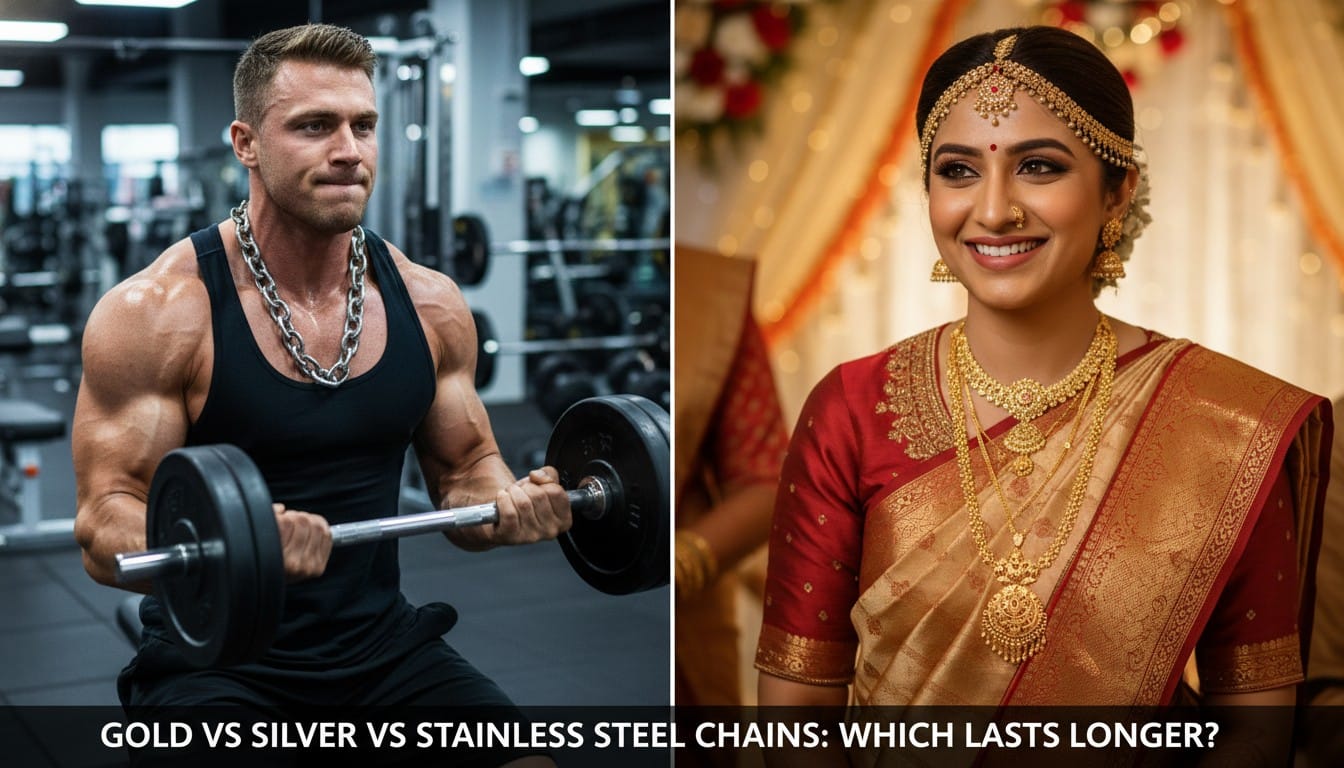
If you never want to take your chain off, stainless steel is the only logical choice. It is not affected by the salt in your sweat or the chlorine in swimming pools. It is also the best choice for travel in India because it does not attract the same level of security risk as a solid gold chain.
Occasional Wear (Events, Weddings)
Winner: Gold
For weddings and special occasions, gold is the winner. While it is softer, it does not need to withstand the friction of a gym session or the chemicals of a shower every day. Since it does not tarnish, you can leave it in a locker for months and it will still be shiny when you take it out for the next event.
Light Fashion Use
Winner: Silver
Silver is excellent for "rotational" fashion. If you like to change your style every few weeks, silver provides a premium look at a lower cost. As long as you are willing to spend five minutes polishing it once a month, it will serve you well for several years.
Why Some Chains Don’t Last (Even If Material Is Good)
Sometimes a chain breaks not because the metal is bad, but because the design is flawed. You can buy the most expensive gold in the world, but if it is designed poorly, it will not last.
The Hollow Chain Trap
In India, many gold chains are "hollow" to make them look larger while keeping the price low. These are essentially thin tubes of gold with air inside. While they look impressive, they are incredibly fragile. If a hollow chain gets dented, it cannot be fixed. If it gets pulled, it crushes like a soda can. A solid stainless steel chain will always outlast a hollow gold chain.
Poor Locking Systems
The lifespan of a chain is often limited by its clasp.
- Spring Rings: These are cheap and common but have a tiny internal steel spring that can rust or lose tension.
- Lobster Claws: These are much more durable and can be repaired easily.
- S-Hooks: Very common in Indian gold jewelry. These are durable but can "gape" open over time if the gold is too soft.
Thinness vs. Durability
Any chain thinner than 1.5mm is at high risk of snapping, regardless of the material. For a chain to truly last decades, it needs enough "mass" to handle the constant movement of your neck. Explore our chains collection to filter for thicker, more durable styles.
Myths vs Reality
There are many misconceptions about these metals that lead people to make the wrong purchase. Let's clear up the most common ones.
"Gold Chains Last Forever" – Not Fully True
While the metal lasts forever, the chain does not. Gold is heavy and soft. Over time, the weight of the pendant or the friction of the links causes the gold to wear away. A gold chain worn every day for 40 years will be significantly lighter and thinner than it was on day one.
"Stainless Steel Is Cheap Quality" – Myth
Many people associate steel with kitchen utensils, but 316L "surgical grade" stainless steel is a high-end engineering material. It is used in medical implants because it does not react with the human body. In terms of engineering and durability, it is a superior "tool" for jewelry compared to silver.
"Silver Chains Are Durable" – Partial Truth
Silver is durable in the sense that it won't shatter, but it is the most "high-maintenance" metal. If you live near the coast in India, a silver chain can turn black in a matter of weeks. Without constant care, it loses its beauty very quickly.
Which Chain Lasts Longer? (Quick Answer)
If you are looking for a definitive answer, here is the breakdown based on your priority:
- For Maximum Physical Durability: Stainless Steel is the winner. It does not scratch, does not tarnish, and is very hard to snap.
- For Long-Term Financial Value: Gold is the winner. It will never lose its color and will always be worth money, even if the links wear thin over 30 years.
- For Style on a Budget: Silver is the winner, provided you are okay with cleaning it regularly to fight tarnish.
Conclusion
When we ask which chain lasts longer, we have to distinguish between "looking good" and "staying in one piece."
If your goal is a chain that you can put on today and never think about again for the next twenty years, Stainless Steel is the objective winner. It is built to survive the sweat, humidity, and physical bumps of daily life in India without losing its mirror-like finish.
However, if you view your jewelry as an investment that should be passed down to your children, Gold is the superior choice. Its chemical stability ensures it will never rust or fade, even if it requires a bit of gentle handling and occasional repair to account for its softness.
Silver occupies the middle ground. It is beautiful and "real" precious metal, but it requires the most work to keep alive.
Final Verdict Hierarchy:
1. Best for Durability: Stainless Steel
2. Best for Generation-to-Generation Life: Gold
3. Best for Short-Term Fashion: Silver
Choose the metal that matches your activity level. If you are active, go with steel. If you are careful and want value, go with gold. All our products come with guaranteed authenticity from 300+ trusted brands.
Frequently Asked Questions
1. Which chain material is best for daily wear?
Stainless steel is the best choice for daily wear because it is highly resistant to scratches, sweat, and tarnish, making it more durable than gold or silver.
2. Does a gold chain last forever?
Solid gold chains do not tarnish and can last for generations, but gold is a soft metal that can thin or scratch over decades of constant friction and wear.
3. Why does a silver chain turn black over time?
Silver turns black because it reacts with moisture and sulfur in the air to form silver sulfide. This process is much faster in humid and polluted climates.
4. Is stainless steel more durable than gold?
Yes, stainless steel has higher tensile strength and hardness than gold, meaning it is much harder to break, bend, or scratch during heavy physical activities.
5. What is the best chain thickness for durability?
Any chain thinner than 1.5mm is at high risk of snapping. For long-lasting wear, choose a chain with thicker links and substantial weight to withstand daily movement.
6. Can I wear a stainless steel chain in the shower?
Yes, high-quality 316L stainless steel is rust-proof and can be worn in the shower, swimming pool, or gym without damage, unlike silver which tarnishes easily.
7. Which gold karat is most durable for a chain?
14k gold is the most durable for chains because it contains a higher percentage of alloy metals, making it harder than 18k or 22k gold while maintaining good color.
8. How can I make my silver chain last longer?
Store silver in airtight bags, polish regularly with a soft cloth, avoid exposure to perfumes and chemicals, and remove before swimming or showering to extend its life.
9. Does stainless steel have resale value like gold?
No, stainless steel does not have significant resale value as a precious metal. It is chosen for durability and style rather than as a financial investment.
10. What locking system is strongest for chains?
Lobster claw clasps are generally the strongest and most reliable for everyday wear, while spring rings are more prone to failure over time.