Anklet vs Payal: Key Differences and Styling Tips 2026
Confused about anklet vs payal? Discover the unique history, cultural meanings, and styling differences between these foot jewels.
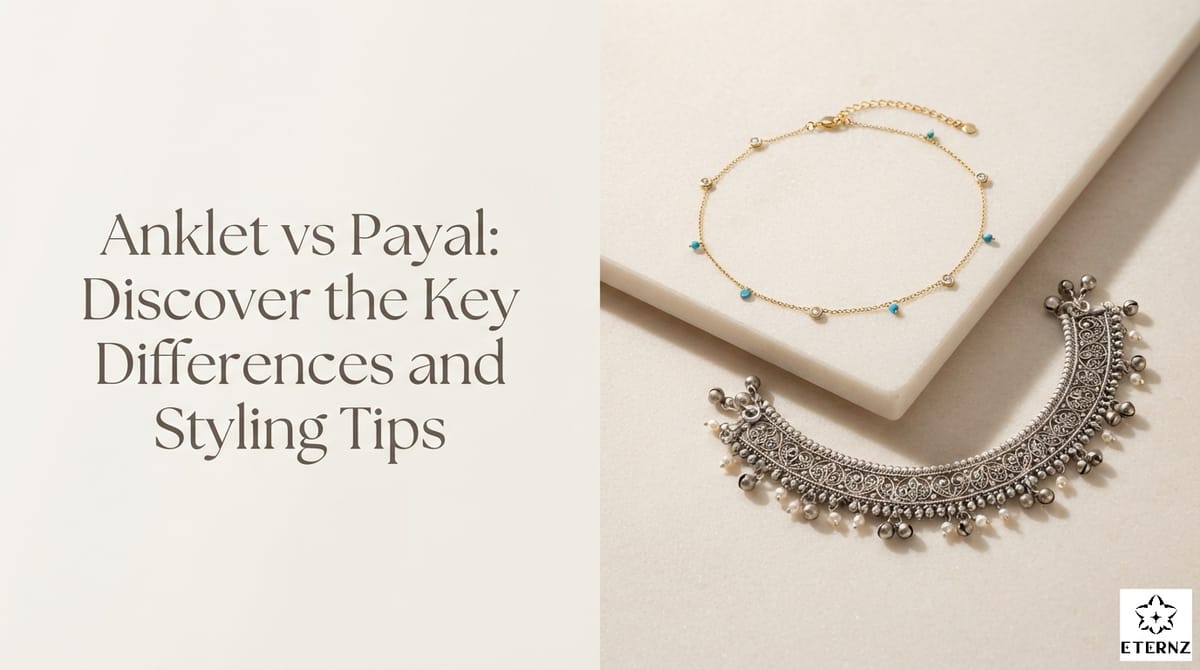
When comparing an anklet vs payal, the main distinction comes down to cultural origin, sound, and design. An anklet is a global term for any decorative chain worn around the ankle, while a payal is a traditional Indian ankle ornament known for its cultural significance and soft bell sounds.
Think of jewelry for your feet like music. A simple anklet is like a quiet hum. A traditional payal is like a gentle chime. Both pieces decorate the lower leg, but they carry different histories, materials, and styling rules.
Before we start, let me tell you about Eternz, a trusted jewellery marketplace featuring 400+ jewellery brands, with authenticity certification on every piece and fast, same-day delivery in major cities. First-time users can also save with ETERNZ5 for up to ₹50 off on ₹499+, ETERNZ10 for up to ₹100 off on ₹999+, or ETERNZ300 for up to ₹300 off on ₹2,500+, valid on both the app and website.
What Is the Difference Between an Anklet and a Payal?
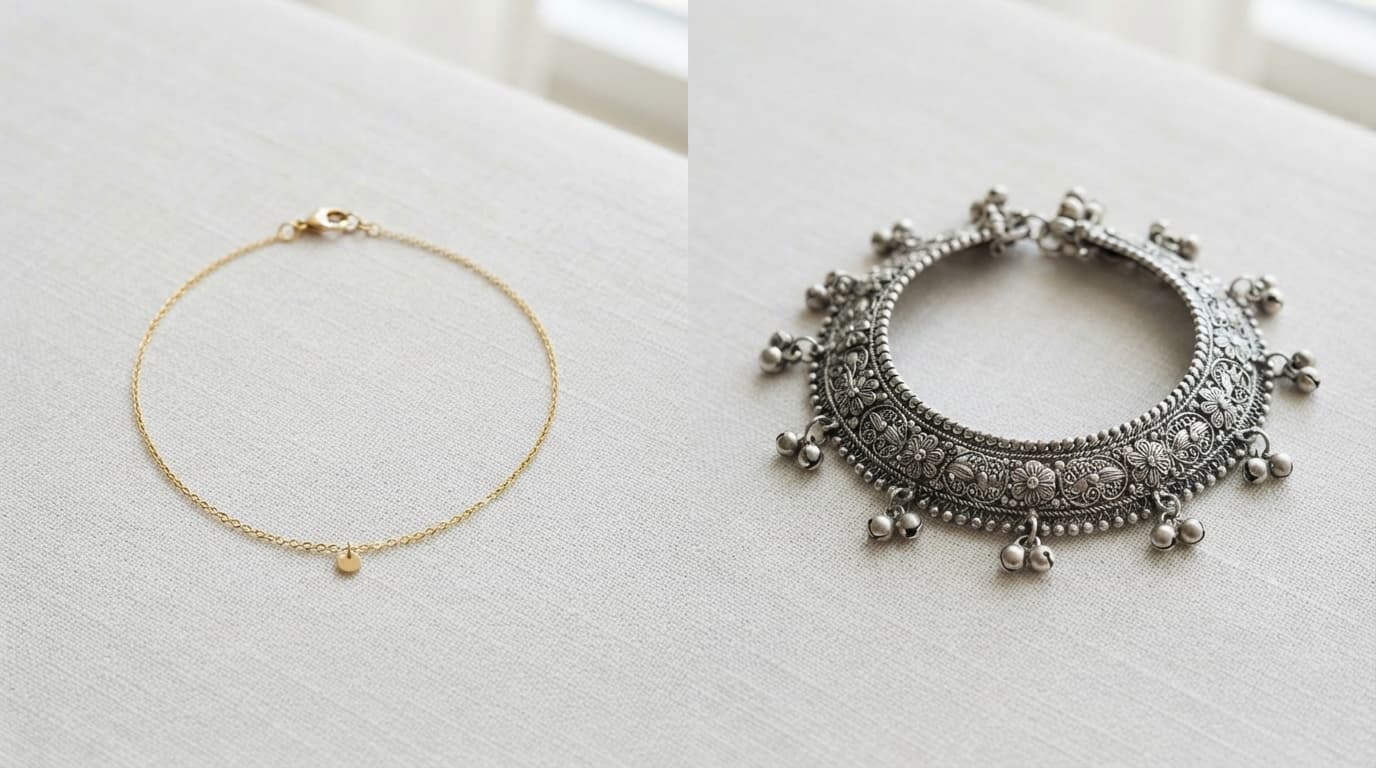
The primary difference between an anklet and a payal is that an anklet is a broad category of modern foot jewelry, whereas a payal is a specific, traditional South Asian ankle bracelet. Anklets are usually silent and worn as casual accessories, while payals are often worn in pairs and feature small chiming bells called ghungroos.
To understand this clearly, picture the word "shoe." A shoe can be a sneaker, a sandal, or a boot. In this analogy, the anklet is the general category of foot jewelry, while the payal is a distinct, ornate style with deep cultural roots.
The table below outlines how these two pieces of jewelry compare across key features:
| Feature | Anklet | Payal |
|---|---|---|
| Origin | Global (Egypt, Western fashion, modern streetwear) | South Asian (Indian subcontinent) |
| Sound | Silent and non-musical | Melodious sound produced by small bells (ghungroos) |
| Wearing Style | Often worn on a single ankle or both | Traditionally worn in matched pairs on both feet |
| Common Materials | Gold, stainless steel, thread, beads, leather | Pure silver, oxidized silver, brass, sometimes imitation stones |
| Primary Purpose | Casual fashion, self-expression, trend styling | Cultural rituals, bridal ceremonies, spiritual balance |
| Structure | Lightweight, thin chain, flexible string | Heavier, intricately woven metal, layered drops |
Here are the four key areas where they differ most:
- Acoustics: Modern anklets are made to be quiet so you can wear them anywhere without making noise. Payals are intentionally designed to chime when your feet move.
- Symmetry: People often wear a single anklet on one leg. In contrast, traditional customs usually call for wearing payals on both feet together.
- Metal Choice: Anklets come in almost any metal, including yellow gold, rose gold, and titanium. Payals are traditionally crafted from silver because gold is considered sacred and is rarely worn on the feet in Indian tradition.
- Design Complexity: Anklets favor minimalism, such as a paperclip chain or a tiny evil-eye bead. Payals feature elaborate filigree work, meenakari enamel, and hanging metal droplets.
Do you know? Archaeologists have found ankle chains in ancient Sumerian tombs dating back over 4,500 years. In ancient Egypt, the material of an anklet showed social status. Wealthy women wore gold ankle chains, while commoners wore iron or string.
Read More: How to Style the Perfect Anklet Stack
Why Do People Wear Payals? Cultural and Traditional Meaning
People wear payals to celebrate cultural heritage, honor marital traditions, and enjoy the positive energy linked to silver in South Asian customs. The soft jingle of a payal announces a person's presence in a household, creating a warm, lively atmosphere.
In Indian culture, the payal is one of the sixteen traditional adornments of a bride, known as Solah Shringar. When a new bride enters her home, the chiming bells signify good luck, joy, and new beginnings.
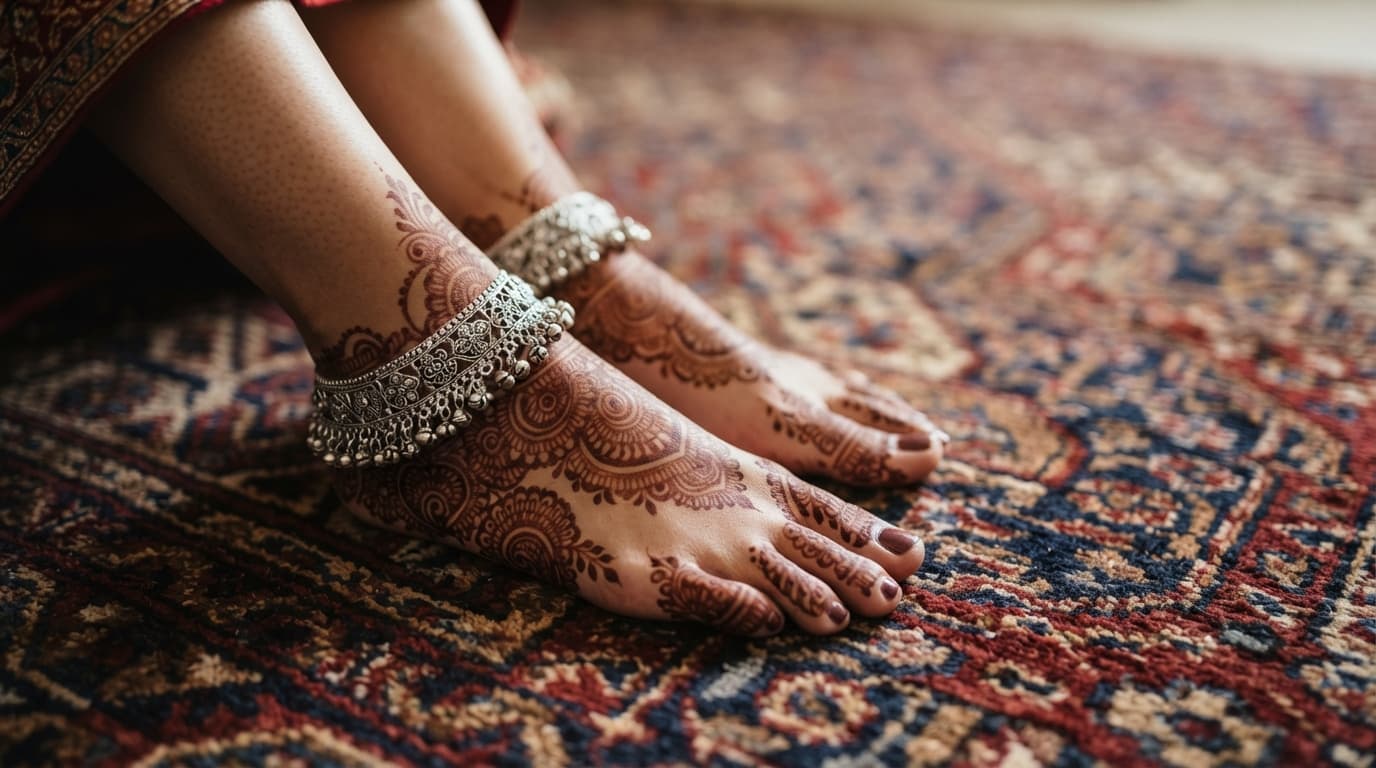
The payal also holds meaning across different regions in India, where it is known by several regional names:
- Pajeb: A heavier, traditional style popular in North India, often worn for weddings.
- Nupur: A classical term frequently used in West Bengal and classical Indian dance.
- Golusu or Kolusu: A silver ankle chain worn by women and young girls in Tamil Nadu, Andhra Pradesh, and Kerala.
- Jhangar: A rhythmic ankle piece worn during folk dances in Punjab.
Why are payals almost always made of silver? In Indian traditions and Ayurvedic philosophy, silver is considered a cooling metal. Because feet are constantly in contact with the earth, wearing silver on the lower body is believed to balance internal body heat and keep energy grounded. Gold, which represents the divine, is reserved for the upper body above the waist.
Why Do People Wear Modern Anklets? Fashion and Symbolism
Modern anklets are worn to elevate an outfit, showcase personal taste, and draw subtle attention to footwear. They serve as versatile fashion accessories that work seamlessly with casual, beach, and streetwear aesthetics.
In the late 1990s and early 2000s, anklets became a major global trend. Today, they are a staple in everyday jewelry collections. Unlike traditional payals, modern anklets do not carry strict cultural rules regarding which foot to wear them on or what metal to choose.
Here are the most popular styles of modern anklets:
- Charm Anklets: Delicate chains decorated with small charms like shells, stars, or initials.
- Beaded and Cord Anklets: Waterproof styles made of colorful glass beads, macrame, or braided thread, ideal for beach trips.
- Tennis Anklets: Single-row cubic zirconia or diamond chains that add a hint of sparkle to formal heels.
- Cuff Anklets: Solid metal bands that wrap around the ankle bone for an edgy, structured look.
- Layered Chains: Sets of two or three fine chains of varying lengths worn together for a stacked appearance.
An old myth suggests that wearing an anklet on the left or right foot signals relationship status. In modern fashion, this idea is completely outdated. Most people simply choose the ankle that feels more comfortable or looks better alongside their favorite shoes.
Actually, the modern anklet trend is not just a western invention. It is the result of global cultural exchange. As traditional items like the payal traveled across borders, fashion designers simplified them into minimal everyday bands.
Read More: Best Way to Wear Anklets and Toe Rings Together Without Looking Messy
How to Choose Between an Anklet and a Payal for Different Occasions
Choosing between an anklet and a payal depends on your outfit, the setting, and whether you want your jewelry to make sound. A payal is ideal for festive gatherings, cultural celebrations, and traditional attire, while a modern anklet is best for professional spaces, casual days out, and travel.

Use this guide to match the right piece to your setting:
- Weddings and Festivals: Wear a silver or antique-finish payal. The ornate design complements ethnic outfits like sarees, lehengas, and anarkalis. The chiming bells add a joyful touch to the celebration.
- The Office or School: Choose a sleek, silent anklet in gold, silver, or stainless steel. A noisy payal can be distracting in quiet work or study environments.
- Beach and Pool Days: Pick a cord, thread, or waterproof stainless steel anklet. Heavy silver payals can pick up sand and tarnish faster when exposed to salt water and chlorine.
- Brunch and Casual Outings: Wear a single-chain anklet or a lightweight payal without bells alongside cropped denim, a sundress, or linen pants.
Pro Tip: if you love the look of a traditional payal but need it to stay quiet at work, ask a local jeweler to remove the tiny iron balls inside the ghungroos. You get the authentic Indian filigree look with zero sound.
How to Style a Payal with Modern Outfits
To style a payal with contemporary clothing, pair a slim, oxidized silver piece with neutral, cropped garments. This fusion blend creates visual interest by pairing old-world craftsmanship with modern lines.
Follow these styling suggestions:
- With Cropped Jeans: Roll up the cuffs of straight-leg denim to highlight a single, lightly textured payal. Pair with clean white sneakers or flat mules.
- With Linen Trousers: Wear a minimalist silver payal with ankle-length linen pants and leather sandals for an effortless summer look.
- With Solid Midi Dresses: Let an ornate silver ankle band act as the main statement piece under a simple black or white slip dress.
- With Monochrome Ensembles: Use an oxidized, rustic payal to bring warmth and texture to an all-beige or all-black outfit.
How to Measure Your Ankle Size for the Perfect Fit
To measure your ankle for a comfortable fit, wrap a soft measuring tape around the widest part of your ankle bone and add half an inch to one inch to that number. This extra allowance lets the chain move naturally without squeezing your skin.
Follow these steps to find your exact size:
- Locate the Ankle Bone: Find the prominent bone on the outside of your ankle.
- Wrap the Tape: Place a flexible tape measure right above or below the bone, depending on where you prefer the chain to sit.
- Use the String Method (Alternative): If you do not have a measuring tape, wrap a piece of string around your ankle, mark the spot where it meets, and lay it flat against a ruler.
- Add Ease for Movement:
- For a snug fit (modern chains): Add 0.5 inches (1.2 cm).
- For a loose drape (traditional payals): Add 1.0 to 1.25 inches (2.5 to 3.0 cm).
- Check the Drape: Make sure the chain rests comfortably against your shoe collar without slipping under your heel.
| Ankle Circumference | Recommended Anklet Size | Recommended Payal Size |
|---|---|---|
| 8.0 to 8.5 inches | 9.0 inches | 9.5 inches |
| 8.6 to 9.0 inches | 9.5 inches | 10.0 inches |
| 9.1 to 9.5 inches | 10.0 inches | 10.5 inches |
| 9.6 to 10.0 inches | 10.5 inches | 11.0 inches |
| 10.1 to 10.5 inches | 11.0 inches | 11.5 inches |
How to Clean and Care for Anklets and Payals
Caring for ankle jewelry involves washing away sweat, dust, and lotions with mild soapy water and keeping the metal dry when not in use. Regular maintenance prevents silver from tarnishing and keeps fine chains from snapping or tangling.
Because your ankles are close to the ground, ankle jewelry collects more dirt, friction, and moisture than rings or necklaces.
Follow this cleaning routine to keep your pieces looking new:
- Gentle Soap Soak: Mix a few drops of mild dish soap in warm water. Soak your silver payals or metal anklets for five to ten minutes to loosen grime.
- Soft Brush for Details: Use a soft-bristled baby toothbrush to clean inside the tiny bells, charms, and chain links.
- Rinse and Dry Thoroughly: Rinse the piece in clean water. Pat it completely dry with a soft microfiber cloth. Trapped moisture can tarnish silver quickly.
- Use a Silver Polishing Cloth: For oxidized or sterling silver payals, wipe the raised metal gently with a polishing cloth to restore shine while preserving the antique dark shadows in the grooves.
- Airtight Storage: Store each piece flat in its own ziplock bag or velvet pouch to avoid tangles and prevent exposure to air.
Summary of Key Differences: Which One Should You Buy?
Deciding between an anklet vs payal comes down to your lifestyle, cultural needs, and styling goals. If you want a melodious, heritage-rich piece to wear for traditional functions, invest in a classic silver payal. If you want a lightweight, silent, and minimal accessory for everyday outfits, a modern anklet is the right match.
Both styles celebrate the beauty of the feet in their own way. Whether you prefer the gentle chime of silver ghungroos or the quiet shine of a gold chain, both pieces add character and charm to your jewelry collection.
Frequently Asked Questions
1. What is the main difference between an anklet and a payal?
An anklet is a broad global category of modern, often silent foot jewelry. A payal is a specific, traditional South Asian ankle ornament typically featuring small chiming bells called ghungroos.
2. Why are traditional payals made of silver instead of gold?
In Indian tradition and Ayurveda, gold is considered sacred and reserved for above the waist. Silver is a cooling metal that balances body heat and ground energy through contact with the earth.
3. Can you wear a payal with modern western outfits?
Yes! You can easily style a minimalist or oxidized silver payal with modern casual outfits like cropped jeans, linen trousers, or simple midi dresses for a trendy fusion look.
4. How do I measure my ankle size for a payal or anklet?
Measure the widest part of your ankle bone with a soft tape measure. Add 0.5 inches for a snug, modern anklet fit, or 1 to 1.25 inches for a traditional, loose payal drape.