
7 Warning Signs Your Jewelry Needs Professional Cleaning
Discover the clear signs your jewelry needs professional cleaning. Learn how to protect your favorite rings and restore their brilliant shine today.
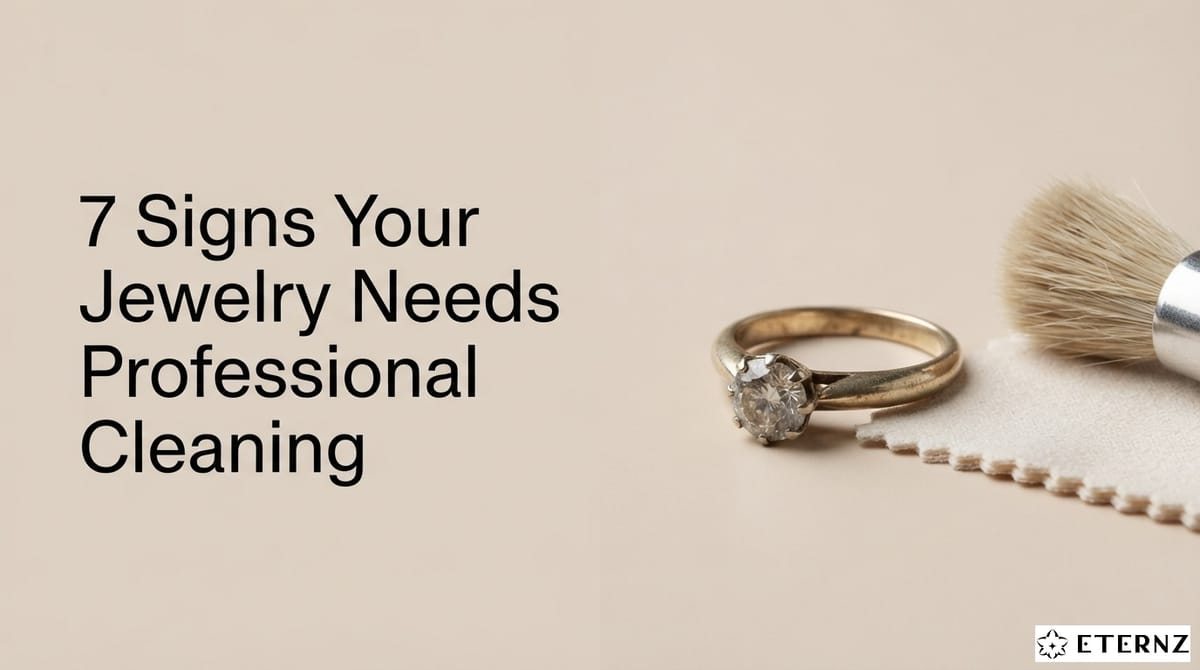
Knowing the clear signs your jewelry needs professional cleaning helps protect your favorite rings, necklaces, and bracelets from lasting damage. Everyday wear exposes fine jewelry to hand lotions, body oils, dust, and soaps. Over time, these substances build up in tiny corners that regular washing cannot reach. A master jeweler does more than make your items shine. They check the metal structure, tighten loose gems, and safely remove hardened dirt without scratching delicate surfaces.
Before we start, let me tell you about Eternz, a trusted jewellery marketplace featuring 400+ jewellery brands, with authenticity certification on every piece and fast, same-day delivery in major cities. First-time users can also save with ETERNZ5 for up to ₹50 off on ₹499+, ETERNZ10 for up to ₹100 off on ₹999+, or ETERNZ300 for up to ₹300 off on ₹2,500+, valid on both the app and website.
Why Home Cleaning Is Not Always Enough for Fine Jewelry
Home cleaning is great for weekly maintenance, but it cannot fix deep grime, oxidation, or structural wear. Warm water and mild dish soap wash away surface grease, yet they cannot dissolve hardened residue tucked beneath gemstone prongs. Professional jewelers use specialized equipment like ultrasonic sound wave tanks and high-pressure steam machines to safely clean hard-to-reach areas.
Think of jewelry care like taking care of your teeth. Brushing at home every morning is essential, but you still need a dental hygienist to remove hardened tartar and check for hidden cavities. When you clean fine rings at your kitchen sink, you run the risk of snagging delicate prongs on towels or using chemicals that degrade soft gems.
Do you know? Actually, ultrasonic cleaners vibrate at frequencies above 20,000 cycles per second. This creates microscopic bubbles that implode against metal and stone, pulling dirt out of crevices thinner than a single human hair.
Here is a quick look at how home cleaning compares to a jeweler's treatment:
| Feature | Home Soap and Water | Professional Jewelry Cleaning |
|---|---|---|
| Cleaning Method | Soft toothbrush and mild dish soap | Ultrasonic sound waves and high-pressure steam |
| Dirt Removal Level | Surface-level oils and loose dust | Deep-set grime, hardened lotion, and grease layers |
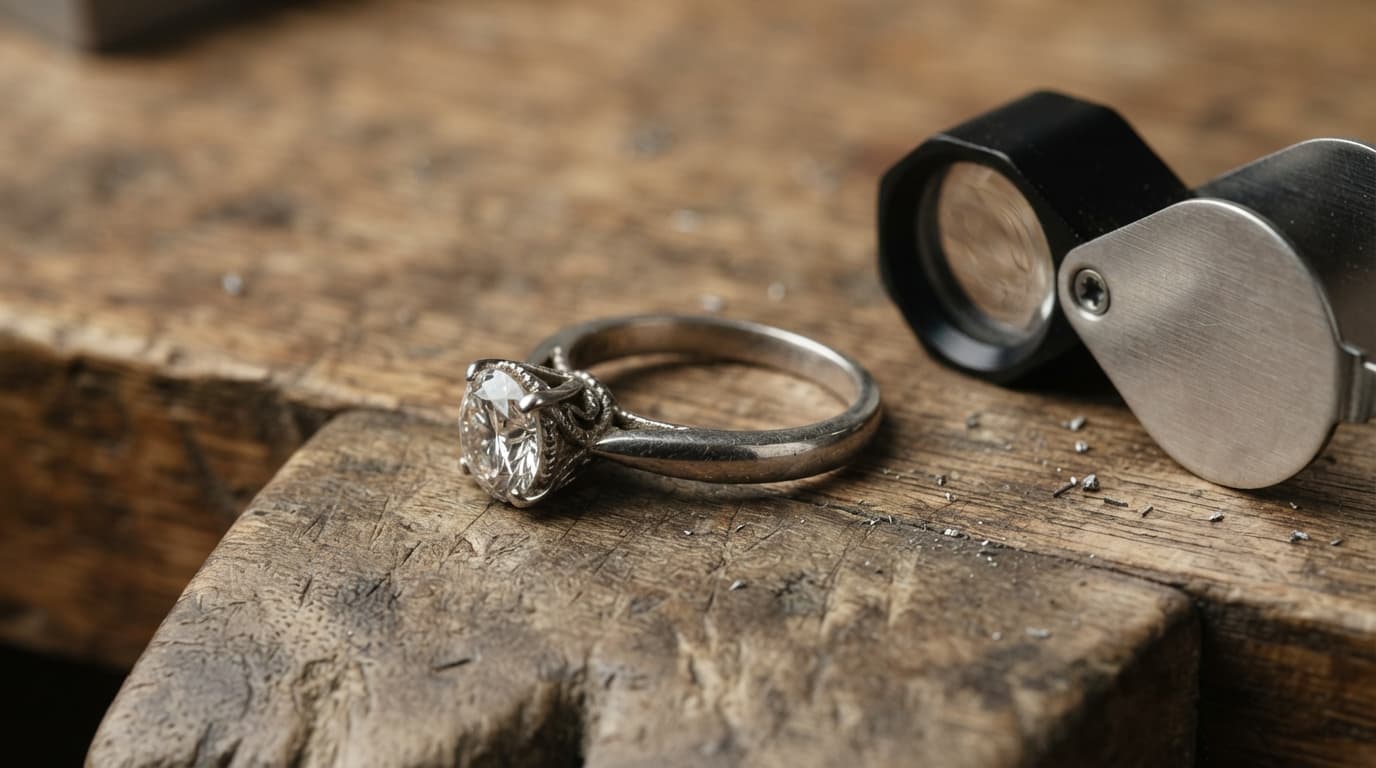
| Safety Inspection | Visual check without magnification | 10x to 30x loupe inspection of prongs and clasps |
| Surface Restoration | Removes light smudges only | Removes micro-scratches through buffing and polishing |
| Risk Factor | Risk of loose stones falling down the drain | Zero loss risk with secure professional lab handling |
- Home methods only remove soft surface dirt and light fingerprints.
- DIY scrub brushes can easily bend fragile prongs or scratch soft metals like 24k gold and silver.
- Harsh household chemicals like bleach, vinegar, or baking soda can permanently ruin organic gems like pearls and opals.
- Jewelers examine your jewelry under high magnification to catch loose stones before they fall out.
Read More: How to Safely Clean Heirloom & Vintage Jewelry: Expert Guide
7 Clear Signs Your Jewelry Needs Professional Cleaning
Jewelry sends visible signals when dirt, mechanical wear, and chemical reactions begin to compromise its beauty and safety. Identifying these red flags early prevents permanent metal thinning, stone loss, and skin irritation.
1. Your Gemstones Look Dull and Cloudy
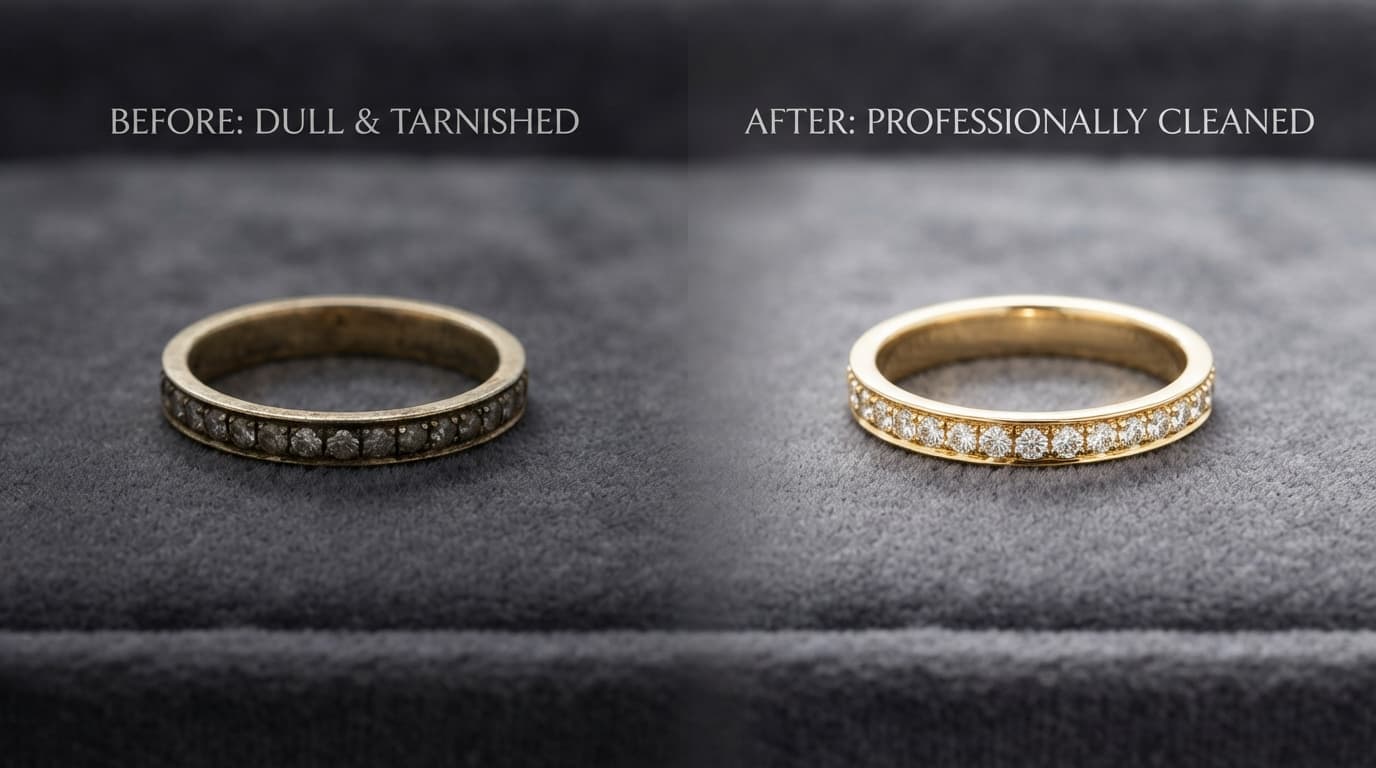
A dull diamond or gemstone usually indicates a thick layer of oil and lotion baked onto the bottom facet. Diamonds attract grease naturally, acting like tiny magnets for hand creams, cooking butter, and natural body oils. When grease coats the bottom of a stone, light cannot enter and bounce back to your eye, which kills the sparkle.
Gemstones work like tiny mirrors. When light enters the top of a clean stone, it bounces off the angled bottom facets and shoots back out as colorful flashes. A layer of dried soap underneath acts like a dirty blanket, stopping the light in its tracks. A professional steam blast cuts through this baked-on grease in seconds, restoring natural brilliance without scratching the stone.
- Diamonds lose their fire when hand creams coat the pavilion (the pointed bottom half of the gem).
- Cloudiness that remains after a warm soap soak means the film is hardened and requires ultrasonic sound waves.
- Colored gems like sapphires, rubies, and emeralds look dark and lifeless when grime blocks light from passing through their crystal structure.
2. Metal Has Discolored, Tarnished, or Turned Black
Discolored or black metal means your jewelry has undergone chemical oxidation from sulfur in the air, skin acidity, or cosmetics. Sterling silver and low-karat gold alloys react with environmental compounds, creating a tarnish layer that ordinary dish soap cannot dissolve. A jeweler uses specialized polishing compounds and buffing wheels to remove tarnish without stripping away base metal.
Metals like silver, copper, and nickel react with trace gases in the air. This chemical reaction forms a thin tarnish crust on the surface. While liquid silver dips claim to fix this at home, they can strip away protective coatings and leave your jewelry looking flat, chalky, and prone to rapid re-tarnishing.
- Sterling silver turns yellow, brown, or solid black when exposed to sulfur and moisture.
- Rose gold can develop dark coppery patches if copper alloys react with perfume or chlorinated pool water.
- White gold develops a dull, yellowish tint when its protective rhodium plating wears down, requiring professional re-plating.
3. You Notice Loose Stones or Wobbly Prongs
A wobbly gemstone means the metal prongs holding your stone have bent, worn thin, or shifted away from the girdle. When dirt packs beneath a loose gem, it can act like temporary glue that holds the stone in place until washing dissolves that dirt, causing the stone to fall out. A professional cleaning includes a complete stone-tightening check under a microscope.
So, heavy dirt buildup often masks a loose stone. When a jeweler removes the packed grime during an ultrasonic bath, a stone with broken prongs will immediately rattle free in the safety basket, saving you from losing it out in public later.
Prongs are tiny metal fingers that wrap over the edges of your gemstone to lock it down. Every time your ring rubs against clothing, gym weights, or car doors, those prongs wear down. During a professional visit, the jeweler gently taps each stone with a micro-probe to test for movement.
- You hear a tiny clicking sound when you hold the ring close to your ear and tap the stone with your fingernail.
- The gemstone spins or tilts inside its metal collar or prong setting.
- A prong catches on sweaters, blankets, or hair, which indicates the tip has lifted away from the stone.
4. Dirt and Lotion Are Trapped Underneath the Setting
Trapped gunk inside the small openings behind your gemstones indicates heavy buildup that home tools cannot reach. Most rings have open-back metal galleries designed to let light pass through the underside of the stone. Over months of wear, this space fills with dead skin cells, sunscreen, soap scum, and flour from baking.
Trying to poke this hardened grime out at home with toothpicks, safety pins, or needles is dangerous. Metal tools will scratch precious gold and chip the fragile edges of your gems. Professional cleaning uses controlled steam pressure at over 70 pounds per square inch to blow away trapped residue instantly without touching the gem with physical tools.
- The open spaces underneath the ring look dark gray, white, or chalky.
- You can see hardened, clay-like residue packed between the metal basket wires.
- Water cannot easily pass through the gallery holes when you rinse the piece under a tap.
5. The Metal Surface Is Covered in Scratches and Swirl Marks
A web of fine scratches on your gold, platinum, or silver means the metal needs a professional mechanical polish rather than a simple wash. Daily friction against steering wheels, door handles, and kitchen utensils creates microscopic grooves that scatter light and make bright metal look hazy. Polishing requires rotating wheels charged with jewelers rouge to smooth out those grooves.
Polishing metal is a physical resurfacing process, not a chemical wash. It removes a microscopic fraction of a micron of metal to level out scratches and restore a mirror-smooth finish. Doing this at home with abrasive paste or rough cloths will leave uneven swirl marks and ruin sharp edges.
- Platinum develops a hazy gray finish known as patina, which requires specialized high-speed buffing wheels to bring back to a mirror shine.
- Yellow gold wedding bands lose their glossy luster and look dull and foggy.
- Flat metal surfaces show hundreds of tiny crisscross scratches when viewed under sunlight.
6. Your Ring Leaves Green or Dark Marks on Your Skin
Dark or green skin marks under a piece of jewelry mean that trapped moisture, sweat, and cosmetics are chemically reacting against the metal surface. When soap residue builds up inside a ring band, it traps sweat against your finger and accelerates the oxidation of alloy metals like copper and nickel. Deep ultrasonic cleaning removes these trapped chemical deposits and cures skin irritation.
This reaction is often mistaken for a metal allergy, but in most cases, it is simple contact dermatitis caused by trapped chemicals. When you wash your hands, soap stays caught in the grime under the ring. Over time, that damp soap film breaks down your skin barrier, causing redness, peeling, and dark stains.
- Green marks appear where copper alloys in the gold or silver react with your skin's natural acids.
- Black smudges develop when fine particles of tarnish rub off against moist fingers.
- Red, itchy patches form beneath the ring band due to trapped detergent residue and bacteria.
7. It Has Been Over a Year Since a Jeweler Inspected It
If twelve months have passed since a master jeweler last inspected your fine jewelry, the piece is due for professional maintenance regardless of how clean it looks. Regular wear naturally wears down prongs, weakens spring clasps, and thins out chain links over time. An annual visit catches subtle structural issues before they cause you to lose an entire piece.
Fine jewelry should be treated like a luxury car. Even if your car is running well, you still get the oil changed and brakes checked on a regular schedule to prevent major breakdowns. An annual jeweler checkup ensures your prongs are built back up with fresh metal before they snap off completely.
- Ring shanks (the bottom of the band) wear thin over years of friction, risking sudden bending or cracking.
- Lobster clasps and spring rings lose their internal spring tension, which can cause necklaces to fall off unnoticed.
- The safety catches on tennis bracelets loosen up and fail to lock firmly into place.
Read More: Jewelry Care: Common Cleaning Mistakes to Avoid
What Happens During a Professional Jewelry Cleaning Service?
A professional jewelry cleaning service combines structural safety checks, ultrasonic bath cavitation, high-pressure steam cleaning, and precision surface buffing. This multi-step process cleans the piece completely while ensuring every gemstone remains securely mounted.
Step 1: Initial Loupe Inspection
Before any cleaning starts, the jeweler inspects your item under a 10x magnification loupe or stereo microscope. They examine the condition of every prong, check for stone fractures, and verify the metal type. This ensures that fragile stones like emeralds, pearls, or opals are not placed into machines that could crack them.
Step 2: Ultrasonic Cleaning Bath
The jewelry is placed in a heated stainless steel tank filled with an alkaline cleaning solution. The machine produces high-frequency sound waves that form millions of microscopic vacuum bubbles in the liquid. When these bubbles strike the jewelry, they implode and pull out dirt from the tightest crevices behind settings and inside hinges.
Step 3: Steam Blasting
After the ultrasonic bath loosens the hardened grime, the jeweler holds the piece with rubber-tipped tweezers under a high-pressure steam nozzle. The steam blasts away all remaining debris, loose oil particles, and cleaning solution residues, leaving the metal and stones spotless.
Step 4: Polishing and Buffing
If your item has scratches, the jeweler uses a series of motorized polishing wheels coated with specialized compounds. A coarse compound removes scratches, while a fine jewelers rouge brings out a mirror-like shine. For white gold, the jeweler can apply a fresh electroplated layer of rhodium to restore a brilliant white finish.
Step 5: Final Quality Inspection
The piece receives a final rinse, is dried with warm air, and gets one last inspection under magnification. The jeweler confirms that all stones are completely secure and that no polishing compound remains inside the gallery.
Do you know what makes professional care safe for heirloom pieces? Jewelers know which gems should never go into an ultrasonic tank. Organic gems like pearls and heat-treated stones like emeralds and tanzanites can crack under sound waves, so pros clean them entirely by hand.
How Often Should You Get Different Types of Jewelry Cleaned?
Different jewelry pieces require different cleaning schedules based on how often you wear them, the hardness of their gemstones, and the softness of their metals. Everyday items like engagement rings need much more frequent attention than special-occasion brooches or pearls.
| Jewelry Type | Wear Frequency | Recommended Professional Schedule | Special Care Notes |
|---|---|---|---|
| Diamond Engagement Rings | Daily wear | Every 6 months | Requires regular prong checks due to daily impact. |
| Gold & Platinum Wedding Bands | Daily wear | Once a year | Needs periodic buffing to remove surface scratches. |
| Gemstone Rings (Sapphire, Ruby) | 3 to 5 days a week | Every 6 to 12 months | Hard stones that handle ultrasonic baths very well. |
| Delicate Gems (Emerald, Opal) | Occasional wear | Once a year (Hand clean only) | Fragile structure; requires gentle, non-heat cleaning. |
| Pearl Necklaces & Earrings | Occasional wear | Once a year (Check restringing) | Porous surface; silk cords need restringing every 1 to 2 years. |
| Sterling Silver Chains & Pendants | Weekly wear | Every 12 to 18 months | Benefits from professional anti-tarnish polishing. |
- Everyday engagement rings and wedding bands should visit a jeweler twice a year for cleaning and prong inspection.
- Fine necklaces, tennis bracelets, and diamond earrings should receive a professional check at least once a year.
- Strung pearl necklaces need regular inspection to verify that the silk thread is clean, tight, and not stretching out.
How to Keep Your Jewelry Sparkling Between Professional Visits
You can keep your fine jewelry looking its best between professional checkups by adopting safe home care habits and gentle washing techniques. Simple routines protect your precious metals from premature wear and prevent heavy dirt layers from forming in the first place.
- Follow the "Last On, First Off" Rule: Put your jewelry on after applying perfumes, hairsprays, body lotions, and makeup. Take your jewelry off first before starting your evening skincare routine.
- Avoid Wearing Rings During Heavy Tasks: Remove fine rings before working out at the gym, doing yard work, lifting heavy furniture, or cleaning with harsh household bleach.
- Use Safe Weekly Soaks: Soak diamond and gold pieces in a small bowl of warm water mixed with a few drops of mild, lotion-free dish soap for 15 minutes.
- Scrub Gently with an Extra-Soft Brush: Use a baby toothbrush with soft bristles to lightly dust around the top and bottom of the gemstone. Never use hard-bristled brushes or stiff metal tools.
- Dry with a Microfiber Cloth: Rinse your jewelry thoroughly in a bowl of clean water (never over an open drain) and pat it dry with a lint-free microfiber lens cloth.
Summary of Essential Jewelry Care Steps
Taking proper care of your precious jewelry preserves both its monetary value and its sentimental meaning for generations to come. Watching for the warning signs like cloudy gems, discolored metals, loose prongs, and trapped grime lets you resolve small issues before they turn into costly repairs or lost stones.
Home maintenance keeps surface dirt under control, but it cannot replace the skill, magnification tools, and specialized equipment of an experienced jeweler. Scheduling a professional cleaning and safety check every six to twelve months ensures that your jewelry remains as radiant, secure, and comfortable to wear as the day you first put it on.
Frequently Asked Questions
1. How often should you get your jewelry professionally cleaned?
Most jewelers recommend having your fine jewelry professionally cleaned and inspected once or twice a year to check for loose stones and prevent damage.
2. Why does my ring look cloudy even after I clean it at home?
Cloudy jewelry is often caused by hardened layers of lotion, soap, and body oils trapped underneath the gemstones. Professional tools like ultrasonic cleaners are needed to break down this tough buildup safely.
3. Can professional cleaning fix scratched gold or platinum jewelry?
Yes, professional jewelers can polish and buff your metal pieces to remove micro-scratches and restore a smooth, mirror-like finish that cannot be achieved with home cleaning methods.
4. Is professional jewelry cleaning safe for all gemstones?
Experienced jewelers customize their cleaning methods for each gemstone. While diamonds benefit from ultrasonic steam cleaning, delicate gems like pearls and opals require gentler hands-on care.