The Complete Guide to the 1 3 5 Ring Stacking Rule
Master the art of ring stacking with the 1 3 5 rule. Learn how to style gold, diamond, and silver rings for Indian outfits. Read this simple guide now.
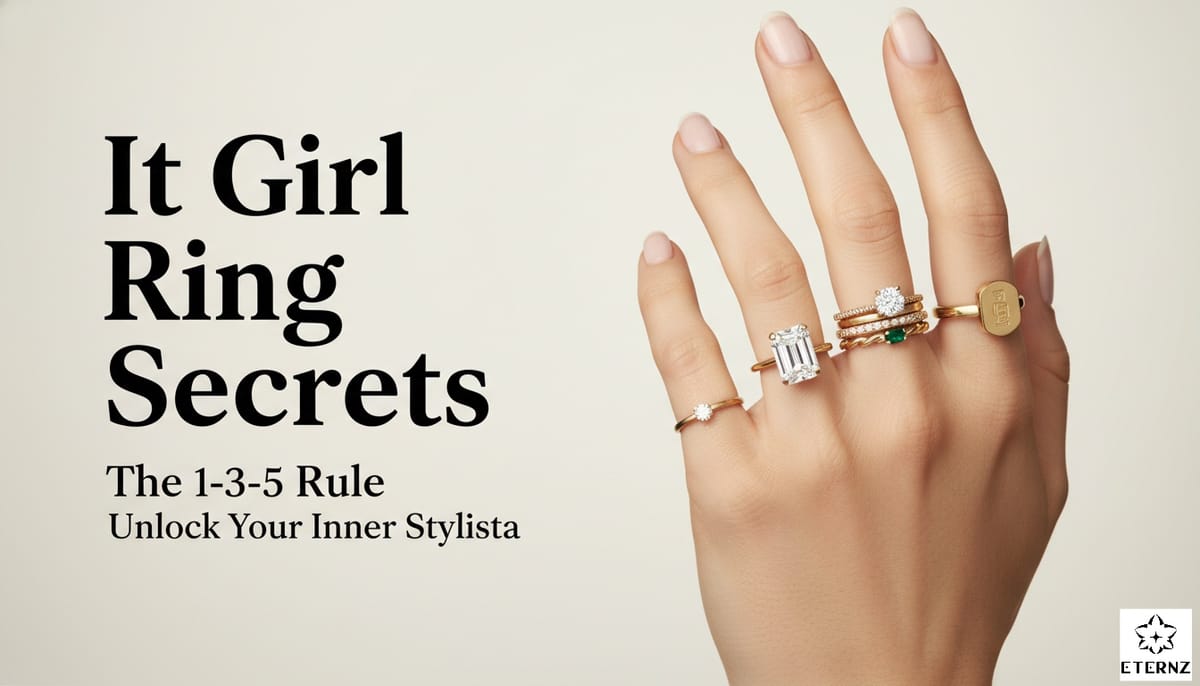
Ring stacking has become one of the biggest jewellery trends in India recently. You might see fashion influencers or "It Girls" on Instagram wearing multiple rings that look effortless and cool. You might wonder how they choose which rings go together without making it look messy. The secret is often a simple styling formula known as the 1 3 5 Ring Rule. This article will explain exactly what this rule is and how you can use it to upgrade your daily style.
This guide is written specifically for the Indian audience. We know that Indian jewellery preferences are unique. We love our gold, we cherish our diamonds, and we also enjoy modern oxidized silver. Whether you are dressing for a corporate job in Bengaluru, a college festival in Delhi, or a family dinner in Mumbai, this rule works.
By reading this article, you will learn the logic behind the 1 3 5 rule. You will understand which types of rings to buy and how to mix metals. You will also learn how to adapt this trend for traditional Indian wear like Kurtis and Sarees. We provide clear steps so you can start styling your rings today with confidence.
The Quick Answer is :
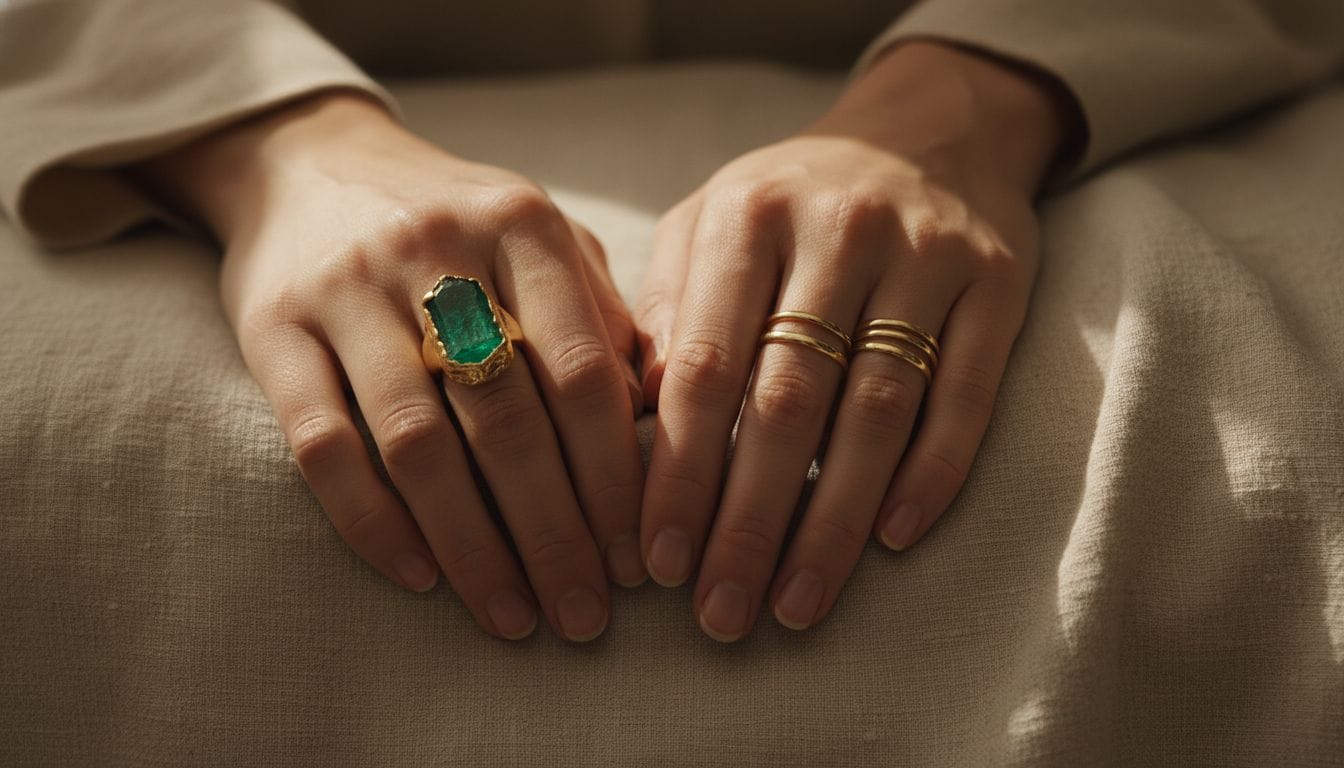
The 1 3 5 Ring Rule is a styling formula designed to create a balanced but asymmetrical look across both your hands. The rule suggests that you should wear one statement ring on one hand and stack three simpler rings on the other hand. This brings the total number of rings to five. This specific arrangement prevents your hands from looking cluttered while ensuring your jewellery makes a noticeable impact. It creates a modern vibe that looks curated rather than random.
Core Breakdown: Understanding the 1 3 5 Structure
This section breaks down exactly how the numbers work in this styling method.
The "1" (The Statement Hand)
The "1" represents the hand where you wear a single standout piece. This is usually your non dominant hand, but it does not have to be. The goal here is focus. By wearing only one ring on this hand, you draw attention to that specific piece of jewellery.
- Role: To act as the anchor of your look.
- Best Finger: The ring finger or the index finger is usually the best spot for this.
- Vibe: Bold, confident, and uncluttered.
Actually... less is more on this hand.
The "3" (The Stacked Hand)
The "3" represents the hand where you wear three distinct rings. These rings are usually lighter or thinner than the statement ring. You do not have to put all three rings on one finger. In fact, spreading them out looks better. This is where you can experiment with stackable rings and bands.
- Role: To provide visual interest and texture.
- Placement: You can place one on the index finger, one on the middle finger, and one on the ring finger. Or you can stack two on one finger and place the third on another.
- Vibe: Playful, layered, and fashionable.
The "5" (The Total Balance)
The number 5 represents the total count of rings used in this look. In the world of design and art, odd numbers are often more visually appealing than even numbers. Even numbers can sometimes look too rigid or perfect. An odd number like five keeps the eye moving and makes the styling look natural.
Do you know? The human brain finds odd numbers more interesting to look at than even numbers.
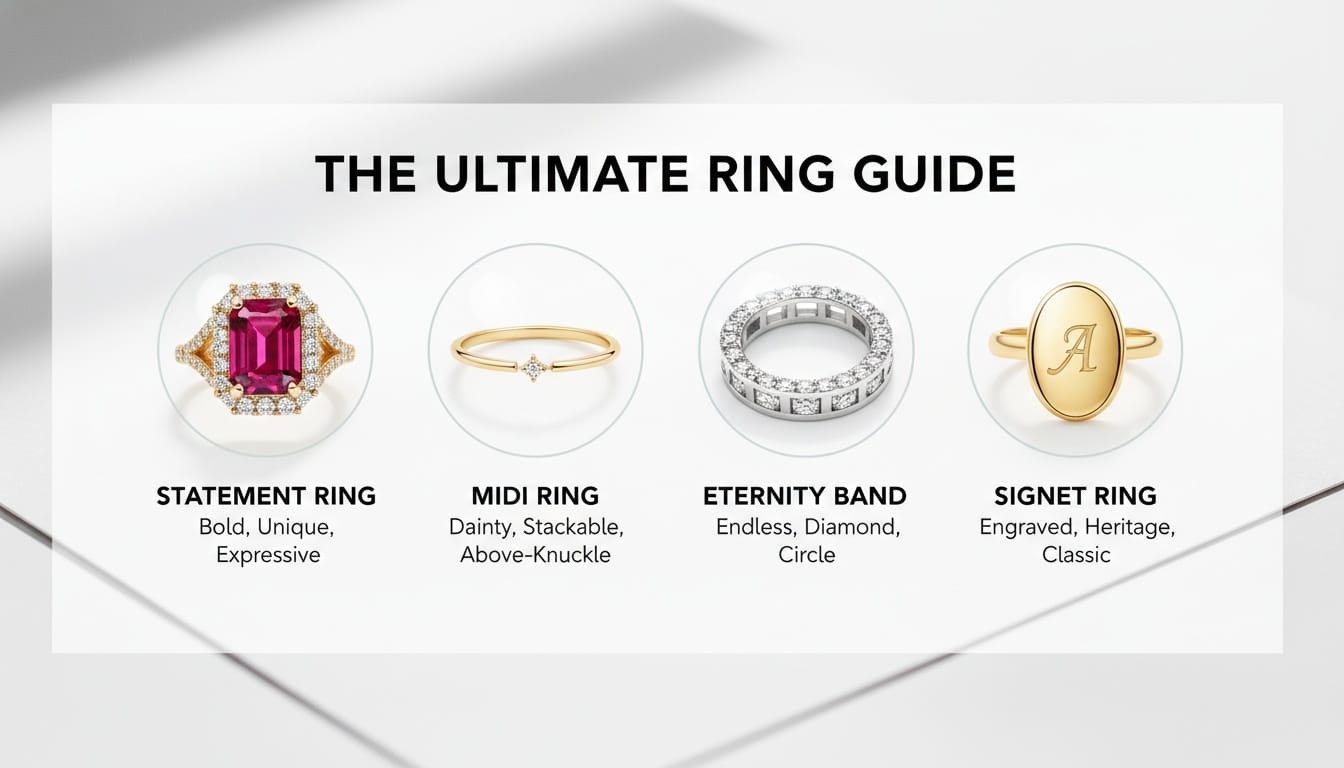
Types of Rings for the 1 3 5 Rule
To make this rule work, you need to know the different categories of rings available in the Indian market. For a deeper dive, you can read our comprehensive ring stacking guide.
1. Statement Rings (For the "1" Side)
A statement ring is a large or unique ring that grabs attention immediately. It is the hero of your outfit.
- Definition: A bold ring with a large gemstone, intricate design, or substantial width.
- Materials: In India, this could be a Kundan ring, a large Polki piece, a cocktail diamond ring, or a chunky gold design.
- Design Characteristics: It stands tall on the finger. It often has a central motif like a flower, a geometric shape, or a large colored stone.
- Indian Relevance: These are often bought for weddings or received as gifts during festivals.
- Styling Insight: Wear this alone on a finger. Do not put other rings next to it or it will look crowded.
2. Midi & Dainty Rings
Midi rings are small rings that sit above the lower knuckle of your finger. They are very trendy among Gen Z and millennials. These fall under the category of dainty rings.
- Definition: Rings sized smaller to fit the upper part of the finger.
- Materials: Usually plain gold, silver, or rose gold.
- Design Characteristics: Very thin and delicate. Some have tiny diamonds or simple shapes like hearts or stars.
- Indian Relevance: Popular in college fashion and casual office wear.
- Styling Insight: These are perfect for the "3" side of your hands. They add height to your stack without adding weight.
3. Eternity Bands
Eternity bands are rings with stones set all the way around the metal band.
- Definition: A continuous loop of diamonds or gemstones.
- Materials: White gold with diamonds or gold with cubic zirconia (American Diamond).
- Design Characteristics: Uniform width and sparkle from every angle.
- Indian Relevance: Often used as wedding bands or anniversary gifts.
- Styling Insight: These are great for stacking. You can place an eternity band at the base of a finger on the "3" side.
4. Signet Rings
Signet rings have a flat face which was historically used to seal letters with wax. Today, they are just a cool fashion statement.
- Definition: A ring with a flat, often oval or square top.
- Materials: Solid gold or silver. sometimes engraved with an initial.
- Design Characteristics: chunky but flat.
- Indian Relevance: Gaining popularity as a personalized gift option.
- Styling Insight: A signet ring works well as one of the "3" rings if the other two are very thin.
Detailed Breakdown: Materials and Indian Context
Choosing the right material is critical for the Indian climate and usage.
Gold (22k vs 18k vs 14k)
Gold is the most loved metal in India. However, for the 1 3 5 rule, you need to choose the right purity. You can read our detailed gold purity guide for more information.
- 22k Gold: This is very yellow and soft. It is great for the "Statement" ring because it looks rich and traditional.
- 18k or 14k Gold: This is harder and more durable. It is better for the thinner stacking rings on the "3" side because they won't bend easily. The color is also more subtle, which looks modern.
Diamonds and Solitaires
Many Indian women wear a solitaire engagement ring daily.
- Usage: Your engagement ring can act as the "1" in the formula.
- Advice: If you wear a heavy diamond ring on your left hand, balance it with three fun fashion rings on your right hand.
Oxidized Silver
This is a favorite for the "Boho" look or when wearing Kurtis and cotton sarees.
- Usage: Oxidized silver rings are usually chunky.
- Advice: If using silver, the "3" rings might need to be spread out across three different fingers to avoid looking too heavy.
Comparison Table: Ring Types and Best Uses
This table will help you decide which ring fits where in the 1 3 5 formula.
| Ring Type | Best Position | Material Suggestion | Best For Occasion |
|---|---|---|---|
| Cocktail / Statement | The "1" Hand | Gold with Gemstones or Polki | Weddings, Parties, Dinner |
| Solitaire | The "1" Hand | Diamond or Moissanite | Daily Wear, Office |
| Plain Band | The "3" Hand | 14k/18k Gold or Silver | Office, Casual Outings |
| Midi Ring | The "3" Hand | Rose Gold or Silver | College, Brunch with friends |
| Eternity Band | The "3" Hand | Diamond or CZ | Date Night, Festive |
How This Fits Into Indian Lifestyle
Indian women have specific needs when it comes to jewellery. We have festivals, weddings, and diverse workplaces. Here is how the 1 3 5 rule applies to us.
Daily Office Wear
For the office, you want to look professional. You do not want rings that make noise when you type on a keyboard.
- The 1 Side: Wear a simple watch and a single solitaire or a flat gold ring.
- The 3 Side: Wear three thin bands. One on the index finger, two on the ring finger. Keep them simple without hanging charms.
Worth thinking about: "Jewellery for work should whisper, not shout."
Weddings and Festivals
Indian weddings allow for heavy jewellery. This is where you can go big. For more inspiration, check out our ultimate guide to jewellery layering and stacking.
- The 1 Side: Wear a large Kundan or Polki ring. This matches perfectly with heavy Lehengas or Silk Sarees.
- The 3 Side: Stack gold bands with colored stones that match your outfit. You can even mix metals here if your outfit has both silver and gold embroidery.
Casual Kurti Look
When wearing a cotton Kurti and jeans, oxidized silver is the best choice.
- The 1 Side: A large silver ring with a mirror work design.
- The 3 Side: Three silver bands with tribal motifs. This creates a very artistic and intellectual look.
Practical Guide: How to Build Your Stack
Follow these simple steps to build your look using the 1 3 5 rule.
Step 1: Choose Your Hero
Pick the one ring that you absolutely want to wear today. This will be your "1". Place it on your non dominant hand (usually the left).
Action: Put it on your ring finger or middle finger.
Step 2: Select the Trio
Now look at your collection and pick three smaller rings. These should complement the hero ring but not copy it exactly.
Action: If your hero ring is gold, pick three gold bands. If your hero ring is silver, pick silver bands.
Step 3: Place the Trio
Distribute these three rings on your other hand (usually the right).
- Option A: Put one on the index finger, one on the middle, and one on the ring finger.
- Option B: Stack two on the ring finger and put one on the index finger.
- Option C: Put one regular ring on the ring finger, one on the middle, and add a midi ring to the middle finger.
Step 4: Check the Balance
Hold both hands out in front of you. Does one side look too heavy?
Check: If the "3" side looks heavier than the "1" side, swap one of the thick bands for a thinner one.
Actually... Balance is not about symmetry. It is about visual weight.
Common Mistakes to Avoid
Even with a rule, things can go wrong. Here are mistakes to watch out for.
Mixing Too Many Themes
Do not mix a plastic funky ring with a serious diamond ring. It looks confused. Stick to one vibe like "Classy," "Boho," or "Minimalist."
Ignoring Comfort
Do not wear rings that are too tight or pinch your skin. Also, avoid wearing rings on your thumb if you need to use your phone a lot. It gets annoying.
Forgetting Nail Polish
Your hands will attract a lot of attention with this style. Chipped nail polish can ruin the look. Make sure your nails are neat. A neutral or nude polish works best because it does not clash with the ring colors.
Overcrowding One Finger
Do not try to put all three rings on one finger if you have short fingers. It will make your finger look shorter. Spreading them out is more flattering for most Indian hand shapes.
Maintenance and Care for Stacked Rings
When you wear multiple rings, they can rub against each other. Here is how to keep them safe.
Scratches
When rings rub against each other, softer metals like 22k gold can get scratched.
Solution: Put a thin fabric spacer or just leave a small gap between stacked rings. Or, simply accept that scratches are part of the charm of gold.
Tangling
If your rings have chains or charms, they might get tangled.
Solution: Avoid charm rings for stacking. Stick to smooth bands.
Sweat and Lotion
In India's humidity, sweat can accumulate under wide rings.
Solution: Take your rings off when you get home. Wipe them with a soft cloth before storing them. Do not apply hand lotion while wearing your rings. Apply lotion first, let it dry, and then put on your jewellery.
Recommendation
If you are looking to start your ring collection or find that perfect statement piece, you need a trusted platform.
Eternz is a fantastic option for modern Indian women. They have curated jewellery from over 300+ trusted brands. The best part is that they offer authenticity certification, so you know exactly what you are buying.
Actually, shopping for rings online can be tricky because of sizing and style. Eternz solves this with their Virtual Try On feature. You can see how the ring looks on your hand before you buy it.
For readers in cities like Bengaluru, Delhi, Noida, Gurugram, Mumbai, and Pune, they even offer same day delivery. This is perfect for last minute party plans.
Use the code WELCOME20 to get a discount on your first order. It is a great way to start building your 1 3 5 collection without breaking the bank.
Frequently Asked Questions (FAQs)
1. What is the 1 3 5 Ring Rule?
The 1 3 5 Ring Rule is a styling formula designed to create a balanced but asymmetrical look across both your hands. It suggests wearing one statement ring on one hand and stacking three simpler rings on the other, bringing the total number of rings to five.
2. How do the numbers 1, 3, and 5 work in this styling method?
The '1' represents a single statement ring on one hand, the '3' represents three distinct, often thinner rings on the other hand (spread across fingers or stacked), and the '5' is the total count of rings, ensuring visual balance and interest with an odd number.
3. What types of rings are best suited for the 1 3 5 rule?
Statement rings (like Kundan, Polki, or Cocktail rings) are ideal for the '1' side. For the '3' side, midi rings, eternity bands, signet rings, or plain bands work well, allowing for layering and visual interest.
4. How can Indian women adapt the 1 3 5 rule for different occasions?
For daily office wear, choose a simple solitaire and thin bands. For weddings and festivals, opt for a large Kundan or Polki statement ring with stacked gold bands. For a casual Kurti look, oxidized silver rings with tribal motifs are a great choice.
5. Can I mix gold and silver rings in the 1 3 5 rule?
Yes, mixing metals is very trendy right now. You can wear a gold statement ring and mix gold and silver bands on the other hand. The key is to keep the style consistent, even if the colors are different.
6. Does the thumb ring count in the 1 3 5 rule?
Yes, a thumb ring counts as one of the rings. If you wear a thumb ring on the "3" side, you should only wear two other rings on that hand to keep the total at three.
7. Is this rule suitable for women with short fingers?
Absolutely. In fact, wearing rings on multiple fingers (the "3" side) rather than stacking them all on one finger helps elongate the look of the hand. Avoid very thick bands if you have short fingers.
8. Can I use artificial jewellery for this rule?
Yes, you can use high quality artificial jewellery. Brands like Giva or Palmonas offer great gold plated options that look like real gold. Just ensure the polish is good so it does not turn your skin green.
9. What if I am left handed?
The rule works the same way. Usually, people wear the "1" ring on their non dominant hand to avoid damage. If you are left handed, you might prefer wearing the "Statement" ring on your right hand and the stack on your left.
10. Can I wear a watch with this ring style?
Yes, a watch looks great with this. Wear the watch on the arm that has the "1" statement ring. This balances the visual weight because the watch adds bulk to the wrist while the single ring keeps the fingers light.
11. Is the 1 3 5 rule okay for traditional Indian weddings?
Yes, but you will likely use heavier rings. Instead of thin bands, your "3" side might consist of three medium sized Polki or gold rings. As long as one hand has fewer rings than the other, the asymmetry will look stylish.
12. Do I have to buy a pre made stack?
No, the fun of this rule is creating your own stack. You can mix a ring your grandmother gave you with a new ring you bought online. It makes the style personal and unique to you.