The Complete 2026 Guide to Ear Piercing for Indians: From First Studs to Full Ear Stacks
Planning your first or next ear piercing in India? This complete guide to ear piercing covers styles, pain, healing, aftercare, jewellery choices, risks and expert tips tailored for Indian families and fashion lovers.
Ear piercing in India is not just a style choice. It is a blend of culture, tradition and personal expression. From a baby’s first tiny gold studs to a college student’s curated ear with hoops and cuffs, almost every Indian family has a story that begins at a piercing chair or on a living room sofa.
This "The Complete Guide to Ear Piercing" hub is designed to give you the full picture so you can make informed and confident choices. We will walk through types of piercings, where to get them done safely, what hurts and what does not, how long each one takes to heal, what jewellery materials to pick and how to avoid common problems like infection or keloids.
You can also explore our complete and comprehensive Guide to Piercing.
You can also explore our complete and comprehensive Guide to Nose Piercing.
Ear Piercing in India: Culture, Belief and Fashion
In India, ear piercing mixes ancient religious rituals with modern style trends like ear stacking.
In India, ear piercing has deep roots in religious rituals, Ayurveda, astrology and regional customs. Both girls and boys are traditionally pierced in many communities. This is often done in early childhood. Many ceremonies treat it as an auspicious milestone.
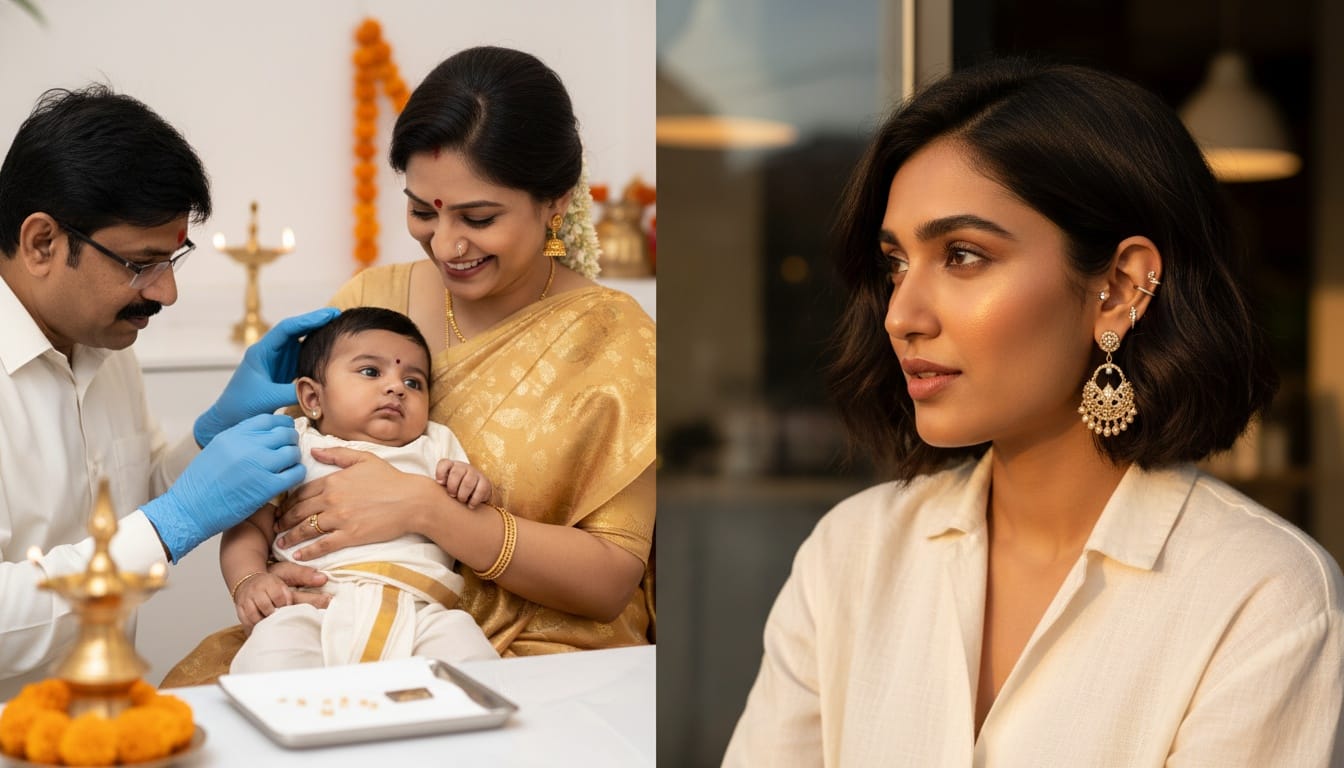
At the same time, modern India has embraced ear piercing as a fashion canvas. From minimalist gold studs for office wear to dramatic jhumkas, chandbalis and sparkling ear climbers for weddings, a single piercing can be your anchor for jewellery that completes every look. As multiple piercings and ear stacking trend on Instagram and Reels, more Indians are choosing curated ears that mix traditional jewellery with global styles. For a deep dive into this trend, explore our comprehensive ear stacking guide.
The Complete Guide to Ear Piercing: Types You Can Get
You can pierce the soft earlobe for less pain or the cartilage areas like the helix and tragus for a trendy look that takes longer to heal.
Before you rush to the studio or salon, it helps to know what each piercing is called and what to expect. Different placements feel different. They also heal at different speeds and suit different jewellery styles.
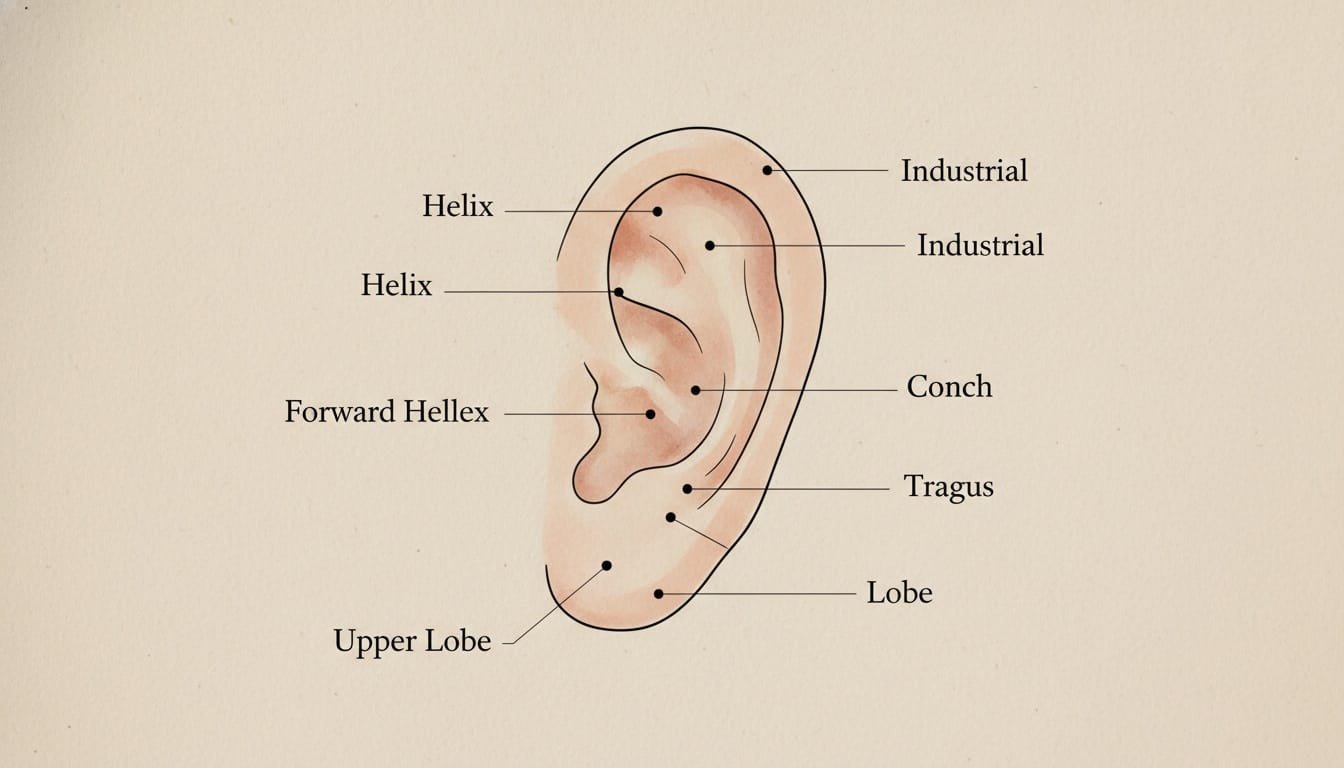
Standard lobe piercing
This is the classic first piercing on the soft and fleshy lower part of the ear.
- Usually considered the least painful because the tissue is soft.
- Typical healing time is around six to eight weeks with good aftercare.
- Perfect for daily wear gold studs, tiny diamonds, pearls, small hoops and huggies, and kids earrings.
Second and third lobe piercings
These are extra holes stacked above the standard lobe piercing.
- Pain level is similar or slightly higher than the first lobe piercing.
- Healing is still relatively quick compared with cartilage. It is often done in two to three months.
- Great for creating ear stacks with a mix of tiny studs, mini hoops and delicate chains.
Helix piercing
A helix piercing sits on the outer rim of the upper ear in the cartilage.
- Cartilage has less blood supply and heals much more slowly than soft lobe tissue.
- Healing commonly takes between three and six months and can take longer if irritated.
- Looks stunning with small hoops, cuffs, clickers and dainty gemstone rings from our wide earrings collection.
Forward helix, conch and tragus
These placements are popular in curated ear trends and suit minimalist or modern jewellery.
- Forward helix sits toward the front of the ear where the rim meets the face. Conch sits in the inner shell of the ear. Tragus is the small thick flap in front of the ear canal.
- All of these are cartilage piercings. Healing often ranges from three months to close to a year depending on care and your body.
- They pair beautifully with small gemstone studs, flat back labret jewellery and snug hoops that hug the ear.
More advanced or statement piercings
Once you are comfortable with basic placements, you may explore more adventurous styles.
- Transverse lobe piercings run sideways through the lobe with a barbell and can take several months to heal fully.
- Industrial piercings connect two cartilage points with a long bar and need careful aftercare because both entry points are under pressure.
- Stacked combinations such as double helix, conch plus lobe stack or lobe plus helix plus tragus help you build a very unique ear that still works with Indian jewellery like small kundan studs or dainty polki pieces.
| Piercing Type | Pain Level (1-10) | Average Healing Time | Best For |
|---|---|---|---|
| Standard Lobe | 2 | 6 to 8 Weeks | First timers, Kids, Heavy Earrings |
| Upper Lobe | 3 | 8 to 12 Weeks | Stacking, Minimalist Studs |
| Helix | 5 | 3 to 6 Months | Hoops, Cuffs, Rings |
| Tragus | 6 | 4 to 8 Months | Small Studs, Huggies |
| Conch | 6 | 6 to 9 Months | Statement Studs, Large Hoops |
| Industrial | 7 | 6 to 12 Months | Barbell Style, Edgy Look |
Where Should You Get Your Ears Pierced in India?
Choose a professional piercing studio or a medical clinic for the highest safety standards instead of a mall kiosk.
In Indian families, ear piercing has shifted from at home rituals to more professional setups. You will see options at jewellery stores, salons, tattoo and piercing studios and hospitals or dermatology clinics. Safety should always come before convenience or price.
Jewellery store or mall kiosk
Many Indians still get lobes pierced at jewellery counters. This is especially true for babies and small children.
- These places often use piercing guns and offer basic gold studs in safe alloys.
- Staff training and hygiene standards vary. You need to look carefully at how they clean surfaces and whether they touch tools with bare hands.
Professional piercing or tattoo studio
This is usually the best choice if you want multiple piercings, cartilage work or a curated ear.
- Reputable studios use single use sterile needles and follow strict hygiene protocols recommended by professional piercing associations and health experts.
- Piercers are more experienced with placement, anatomy and jewellery sizing. This affects both the look and healing.
Hospital or dermatologist clinic
Many parents in cities like Bengaluru, Mumbai and Chennai prefer paediatric dermatologists or ENT clinics for children.
- Doctors emphasise sterile single use needles, proper skin preparation and medical grade aftercare products.
- Clinics are especially useful if your child has a history of sensitive skin, eczema, allergies or keloids in the family.
Piercing Gun vs Needle: What Is Safer in the Indian Context?
Needles are generally safer and cleaner than guns because they are single use and cause less tissue damage.
This is one of the biggest practical questions in any The Complete Guide to Ear Piercing resource. The short version is that most experts favour needles over guns.
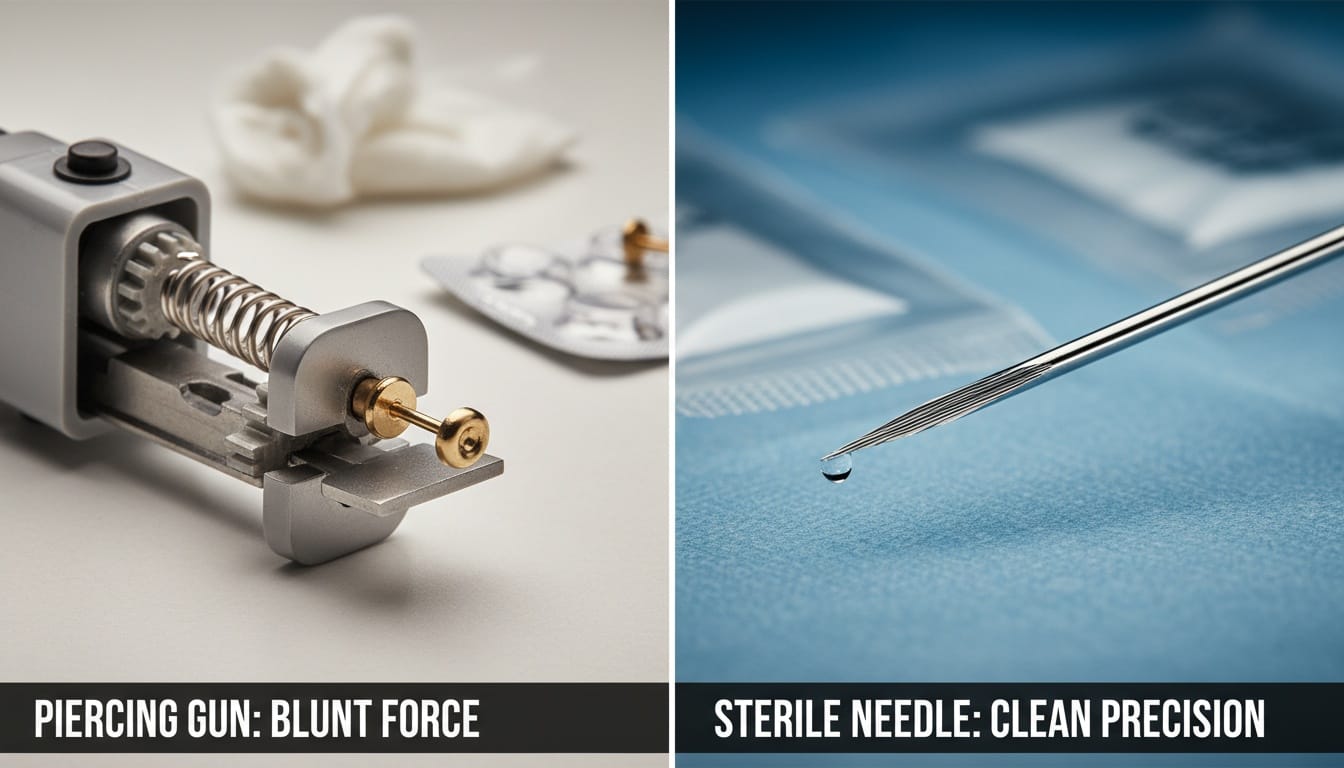
How does a piercing gun work and what are the risks?
- A typical piercing gun uses spring loaded force to push a blunt stud through your ear into a clasp.
- Traditional guns are often reused between customers and cannot be fully sterilised in an autoclave. This increases the infection risk.
- The blunt pressure can crush or shatter cartilage and cause more tissue trauma than a sharp needle cut. This is risky in helix or other cartilage areas.
- Health authorities and professional piercers caution that guns should be limited to earlobes and not used on cartilage because of the risk of serious complications.
How does a piercing needle work and why is it preferred?
- A piercing needle is hollow, sharp and single use. It creates a clean opening. Then the jewellery is inserted through that channel.
- Needles allow better control over angle and depth. This helps with long term comfort and alignment of jewellery.
- Since each needle is sterilised and used only once, the chance of passing infections between clients is significantly reduced.
- The cut is cleaner. Cartilage piercings especially tend to heal better and with fewer complications than when done with guns.
In India, many paediatric dermatologists and ENT specialists openly recommend sterile needle based piercings for both ears and nose. This is especially true for children.
How Long Does an Ear Piercing Take to Heal?
Healing takes 6 to 8 weeks for lobes but can take up to a year for complex cartilage piercings.
Healing time is not just a number. It decides when you can change jewellery, sleep on that side or get more piercings. Different sources broadly agree on these timelines with some variation person to person.
Typical healing timelines
- Earlobe piercings: usually heal in about six to eight weeks under good care.
- Upper lobe or second and third lobe piercings: may take eight to twelve weeks to feel fully settled.
- Cartilage piercings: such as helix, conch and tragus often need three to six months and sometimes up to a year to completely strengthen.
Your age, general health, diet, sleep, jewellery material and how strictly you follow aftercare can all speed up or slow down this process.
Signs your ear piercing is healing well
- Mild redness and tenderness in the first few days that slowly fades.
- Slight crusting of clear or pale yellow fluid that dries around the jewellery.
- Gradual reduction in swelling without throbbing pain or spreading redness.
If things suddenly get more painful, very red, very swollen or start to ooze thick yellow or green pus, that points to a problem rather than normal healing.
Ear Piercing Aftercare: How Do You Clean and Protect It?
Clean your fresh piercing twice a day with saline solution and avoid touching it to prevent infection.
Good aftercare is the real secret behind a beautiful and trouble free piercing. Even the most perfectly placed piercing can go wrong if you are careless with hygiene or jewellery.
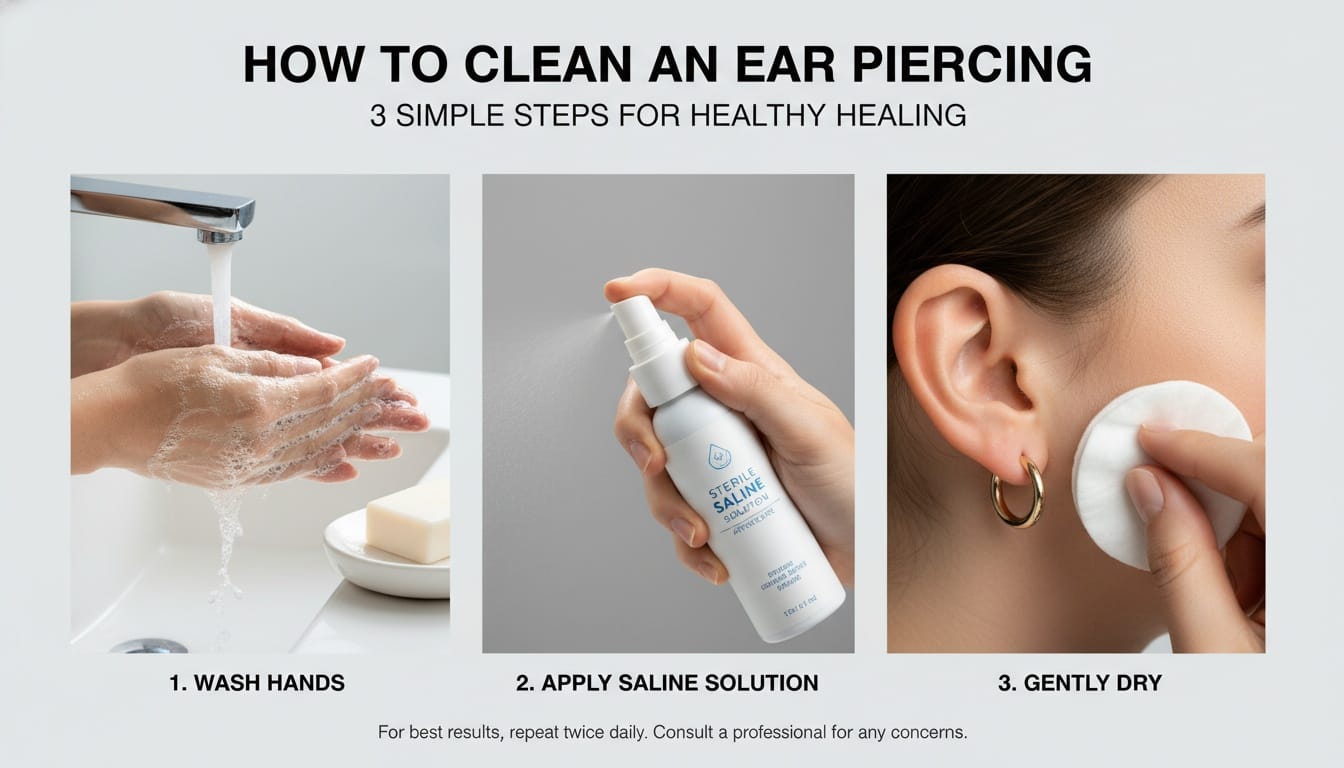
Daily care routine for new ear piercings
- Wash your hands thoroughly before touching the piercing or jewellery.
- Clean around the front and back of the piercing twice a day with saline solution or a gentle and piercer recommended cleanser.
- Gently dab away crusts with a clean cotton pad. Do not twist or rotate the jewellery aggressively.
- Keep hair, makeup, perfume and heavy oils away from the area as much as possible in the early weeks.
What should you avoid after getting your ears pierced?
- Do not remove or change the starter jewellery before the minimum healing time for that piercing type.
- Avoid swimming pools, lakes and beaches for the first couple of weeks since these can introduce bacteria.
- Try not to sleep on the fresh piercing to reduce pressure and friction. This is especially important for cartilage.
- Do not use harsh antiseptics unless a doctor or piercer specifically recommends them. They can irritate the skin and slow healing. For more tips on keeping your jewellery in top condition, read about common jewelry care mistakes to avoid.
Choosing Jewellery: Materials and Styles for Indian Ears
Stick to implant grade titanium or high quality gold for fresh piercings to avoid allergic reactions.
Jewellery is where the fun really begins. But for a new piercing, the safest material matters just as much as the design. This is particularly true in a country where gold is traditional but not always alloyed in skin friendly ways.
Best materials for fresh piercings
- Implant grade titanium and surgical steel: These are considered top tier for reducing allergic reactions.
- High quality gold and platinum: These can also be suitable if nickel content is low and the finish is smooth. Understanding 10k vs 14k vs 18k gold can help you make the best choice for both healing and long term wear.
- Sensitive skin options: If you have a history of sensitive skin or metal allergies, talk to your piercer or dermatologist about specific grades and brands. Learn why materials like 925 sterling silver are perfect for everyday luxury and sensitive skin.
- Avoid cheap fashion jewellery: Stay away from cheap metals for the first few months even if they look beautiful. Many affordable pieces mix metals that can trigger itching, rashes or full allergic reactions around the piercing.
Styling ideas for Indian outfits and occasions
- Daily wear: tiny gold or diamond studs in the first lobe, slim hoops in the second lobe and a simple titanium stud in cartilage.
- Office and college: small huggie hoops, bar studs, ear climbers and minimal cuffs from our versatile earrings collection that still feel professional.
- Weddings and festivals: layer classic jhumkas or chandbalis on the main lobe with delicate chains, cuffs or gemstone studs in higher piercings.
- Men’s styling: matte gold or steel studs, small hoops or black titanium pieces that pair well with ethnic wear, streetwear and formals. Explore our dedicated collection of studs for men for inspiration.
Ear Piercing for Babies, Kids, Teens and Adults
While babies need gentle clinic care, teens and adults must focus on strict hygiene for cartilage piercings.
The basics of safety stay the same. However, the way you plan and manage piercings can differ by age group.
Babies and young children
- Many Indian parents pierce ears in infancy to preserve tradition. Babies cannot communicate pain or discomfort, so safety and cleanliness are critical.
- Paediatric dermatologists warn that if cartilage is pierced instead of the lobe, the risk of keloids and slow healing increases. This is especially true in children with darker skin tones.
- A clinic or experienced medical professional is often the safest choice for infants and toddlers. When they are ready, you can find gentle options in our kids earrings collection.
School going children and teens
- At this age, kids start asking for second or cartilage piercings after seeing friends or influencers.
- Parents should discuss school rules, sports, and how much responsibility the child can take for regular cleaning.
- It is wise to start with lobes. Then you can add cartilage piercings once the child understands aftercare and can report any pain or change quickly.
Adults
- Adults have more control over placement, style and timing. This makes this the easiest group to manage piercings.
- However, adults can still develop keloids or infections. This happens especially if they have a personal or family history of raised scars or sensitive skin.
- Health conditions like diabetes or immune system issues should be discussed with a doctor before extensive piercing projects.
Common Ear Piercing Problems in India and How to Handle Them
If your piercing becomes very red, hot or oozes green fluid, seek medical help immediately.
Even with the best care, things sometimes go sideways. Knowing what to watch for can help you act early.
Is my ear piercing infected?
Signs that suggest an infection rather than normal healing include:
- Increasing redness, warmth and swelling around the piercing rather than gradual improvement.
- Thick yellow or green discharge. This sometimes comes with a foul smell.
- Persistent throbbing pain, fever or feeling generally unwell.
If you notice these, do not remove the jewellery on your own and do not ignore it. Clean the area gently and seek medical advice quickly. This is especially important for cartilage since infections in that area can become serious.
What are keloids and raised scars after ear piercing?
- Keloids are raised and often shiny growths of scar tissue that spread beyond the original wound. Hypertrophic scars remain within the wound boundaries but are thick and raised.
- Ear lobe piercing is one of the most common triggers of keloids. This is especially true in people with a family history and darker skin tones.
- Cartilage piercings and multiple piercings close together have a higher tendency to result in keloids.
- If you or your child has had a keloid before, consult a dermatologist before adding new piercings. Consider limiting placements to central lobe areas that tend to heal better.
Quick Checklist: The Complete Guide to Ear Piercing Essentials
Ensure you have a professional piercer, safe jewellery and a clear aftercare plan before you commit.
Before you decide on a new piercing, run through this simple checklist so you feel fully prepared.
- Have you chosen a reputable professional who uses sterile single use needles and follows proper hygiene?
- Are you clear which piercing type you want? Do you understand its typical healing time?
- Do you have starter jewellery in safe materials such as titanium, surgical steel or high quality gold?
- Are you ready to avoid swimming, heavy exercise contact, makeup and sleeping on that side for a few weeks?
- Do you know the warning signs of infection and keloids? Do you know which doctor or clinic you would visit if needed?
If you can confidently tick these off, you are in a solid position to move ahead with your next ear piercing.
So, Ear piercing in India sits at a fascinating intersection of culture, spirituality, fashion and self expression. When you combine traditional aesthetics with modern safety standards, you get the best of both worlds. You get meaningful piercings that also heal smoothly and look stunning with your jewellery wardrobe.
Use this The Complete Guide to Ear Piercing as your starting point. Then build on it with specific deep dives into jewellery styles, curated ear ideas and city wise studio recommendations. With the right piercer, safe materials, patient aftercare and a dash of creativity, every new piercing can become a tiny but powerful part of your personal style story.
Discover Your Next Favourite Piece at Eternz Ready to style your new piercing? Explore Eternz to find the perfect jewellery from 300+ trusted brands. Every piece comes with an authenticity certification so you can shop with total confidence. Not sure how it will look? Use our Virtual Try-on feature to see the jewellery on yourself before you buy. We also offer same day delivery in selected
Frequently Asked Questions About Ear Piercing (FAQs)
Common questions cover pain levels, safety of piercing guns and how to handle bumps.
1. Does ear piercing hurt a lot?
Pain is brief and manageable for most people. Lobe piercings feel like a quick pinch and are the least painful. Cartilage piercings feel sharper and may remain tender longer due to slower healing.
2. What is the typical pain level for different ear piercings?
- Lobe: Low pain (around 2/10)
- Helix: Moderate (5/10)
- Tragus or Conch: Moderate to high (6/10)
- Industrial: Higher pain (7/10)
Cartilage piercings generally hurt more than lobe piercings.
3. Is it safer to get an ear piercing with a gun or a needle?
Most professionals recommend sterile, single-use hollow needles. Needles create a clean cut with less tissue trauma, while piercing guns use blunt force and cannot be fully sterilised — especially risky for cartilage.
4. Is a piercing gun safe for my child’s ears?
Many dermatologists advise against piercing guns for children. A sterile single-use needle in a professional studio or medical clinic is generally safer and more controlled.
5. Where are the safest places to get ears pierced in India?
Professional piercing or tattoo studios that use sterile, single-use needles are considered safe. Hospital or dermatology clinics are preferred for young children or people with sensitive skin.
6. How long should I wait before changing my earrings?
- Lobe piercings: Wait at least 6–8 weeks
- Upper lobe: 8–12 weeks
- Cartilage piercings: 3–9 months or longer
Only change jewelry once the piercing feels fully healed.
7. What are the main types of ear piercings and their healing times?
- Standard lobe: 6–8 weeks
- Upper lobe: 8–12 weeks
- Helix: 3–6 months
- Tragus: 4–8 months
- Conch: 6–9 months or longer
Cartilage piercings take significantly longer than lobe piercings.
8. Can I swim after getting my ears pierced?
It is best to avoid swimming in pools, lakes, or the sea during the early healing stage. Many experts recommend waiting at least two weeks or until your piercer confirms healing progress.
9. What should I do if my ear piercing forms a bump?
Small soft bumps often result from irritation, friction, or unsuitable jewelry. Hard, growing, or itchy bumps may indicate hypertrophic scars or keloids. Switching to high-quality jewelry and consulting a dermatologist early can prevent worsening.
10. Are ear piercings safe if I have sensitive skin or allergies?
Yes, if you choose the right materials. Avoid nickel-containing alloys. Opt for implant-grade titanium, medical-grade steel, or high-purity gold to reduce allergic reactions.
11. Which ear piercing is best for beginners?
A single lobe piercing is the safest starting point. It heals fastest, has the lowest complication risk, and offers versatile styling options.
12. What is the cultural significance of ear piercing in India?
Ear piercing holds religious, Ayurvedic, and astrological importance in many Indian communities. It is often performed in childhood as an auspicious ritual and continues to evolve as a fashion statement through modern ear stacking trends.