Rashmika’s 11 Wedding Jewellery Pieces: Full List
Explore the complete list of 11 gold jewellery pieces worn by Rashmika Mandanna at her wedding. Get detailed breakdown, cultural significance, and styling tips.
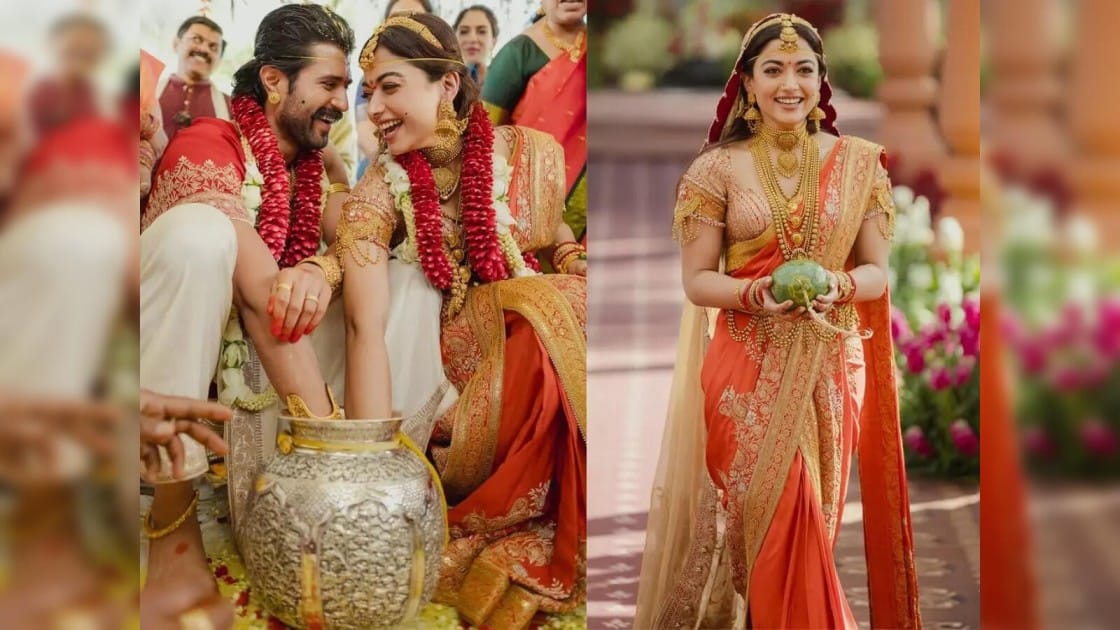
If you have been scrolling through Instagram or searching Google for the full list of jewellery worn by Rashmika Mandanna at her wedding, you are exactly where you need to be. When Rashmika married Vijay Deverakonda on February 26, 2026, at ITC Mementos in Udaipur, her bridal jewellery became the biggest talking point in Indian fashion instantly.
She wore a total of 11 distinct gold jewellery pieces, all custom-made by SHREE Jewellers from Hyderabad. These were not just random picks; they were crafted over 10 months to make her look like a "Living Goddess."
Before we start, let me tell you about Eternz: a trusted jewelry marketplace featuring 300+ brands. Every piece comes with authenticity certification. They offer fast, same-day delivery in major cities, and a special "WELCOME20" discount for first-time buyers.
This article gives you the complete, honest breakdown of every single piece, why it matters in our culture, and how you can try this look for your own wedding.
What Jewellery Did Rashmika Wear at Her Wedding?
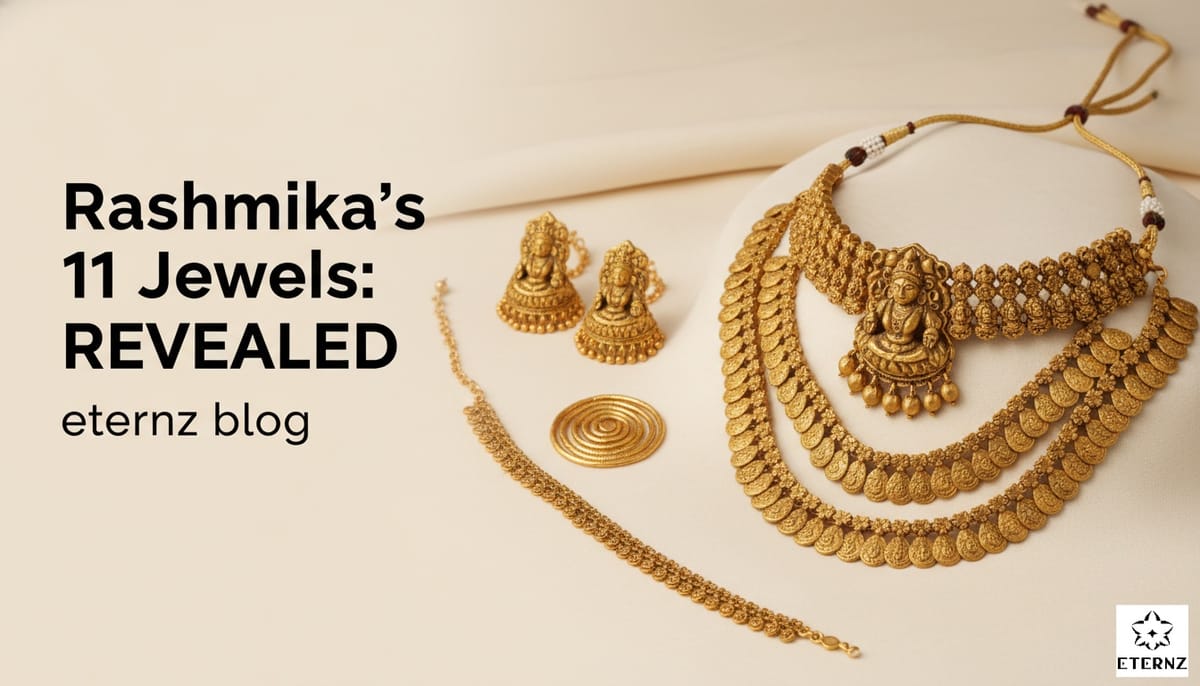
Rashmika Mandanna wore 11 custom-made temple gold jewellery pieces that featured deep Nakshi carving and Rava granulation work, finished with an antique matte polish instead of shiny gold.
The whole collection was designed by SHREE Jewellers in Hyderabad. The main idea behind her look was traditional South Indian temple art. Instead of wearing shiny, yellow gold that we often see, she chose an antique matte finish. This makes the jewellery look old, royal, and like a family treasure (legacy pieces) rather than something bought yesterday.
Her jewellery covered her from head to toe. It started with a heavy stack of necklaces and went all the way down to her anklets. The designers used techniques that give the gold a 3D effect, making the carvings of Goddess Lakshmi and flowers pop out.
The main takeaway is: Matte finish gold photographs much better than shiny gold because it does not reflect the camera flash harshly. It shows the details of the carving clearly.
Complete List of All 11 Jewellery Pieces
Here is the quick list of everything she wore. We will break down each one in detail below.
- Choker Layered with Traditional Harams (Necklace Stack)
- Statement Jhumkas (Earrings)
- Jada Billa (Braid Ornament)
- Champasaralu (Hairline Chains)
- Hathphool (Hand Jewellery)
- Mathapatti (Forehead Ornament)
- Nose Pin (Small Nose Ornament)
- Bangles (Wrist Stack)
- Bajuband (Upper Arm Band)
- Waist Belt (Kamarbandh/Oddiyanam)
- Anklets (Payals)
Detailed Breakdown of Each Jewellery Piece
Let's dive deep into every single item. If you are a bride-to-be, take notes on the "Styling Insight" sections!
1. Choker Layered with Traditional Harams
What is it? This is a set of multiple necklaces worn together, starting with a tight choker and ending with long chains (harams).
Rashmika did not just wear one necklace. She wore a "stack."
- Top Layer: A sculpted choker that sat tight against her neck. It had a carving of Goddess Lakshmi in the center.
- Middle Layers: Kasu Malas. These are chains made of small gold coins stamped with Lakshmi motifs.
- Bottom Layer: A long temple haram that went all the way down to her waist area.
The Look: The pieces were arranged carefully so that no necklace covered the other. It looked like a waterfall of gold.
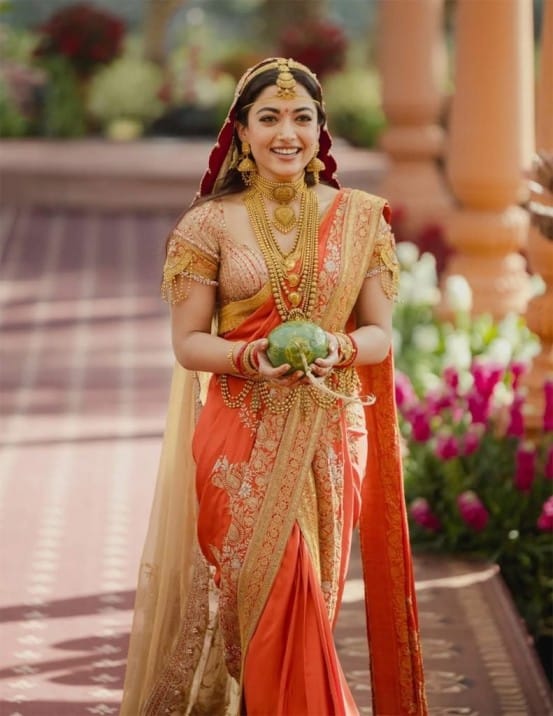
Why it works: Because Rashmika wore a rust-colored saree with a simple neckline, the heavy gold filled up the space and became the main attraction.
Styling Insight for Indian Brides: When you layer necklaces, make sure there is a gap of at least 2 to 3 fingers (about 3 cm) between each necklace. If they overlap too much, it just looks messy. You can explore different jewellery sets to find the perfect combination for your stack.
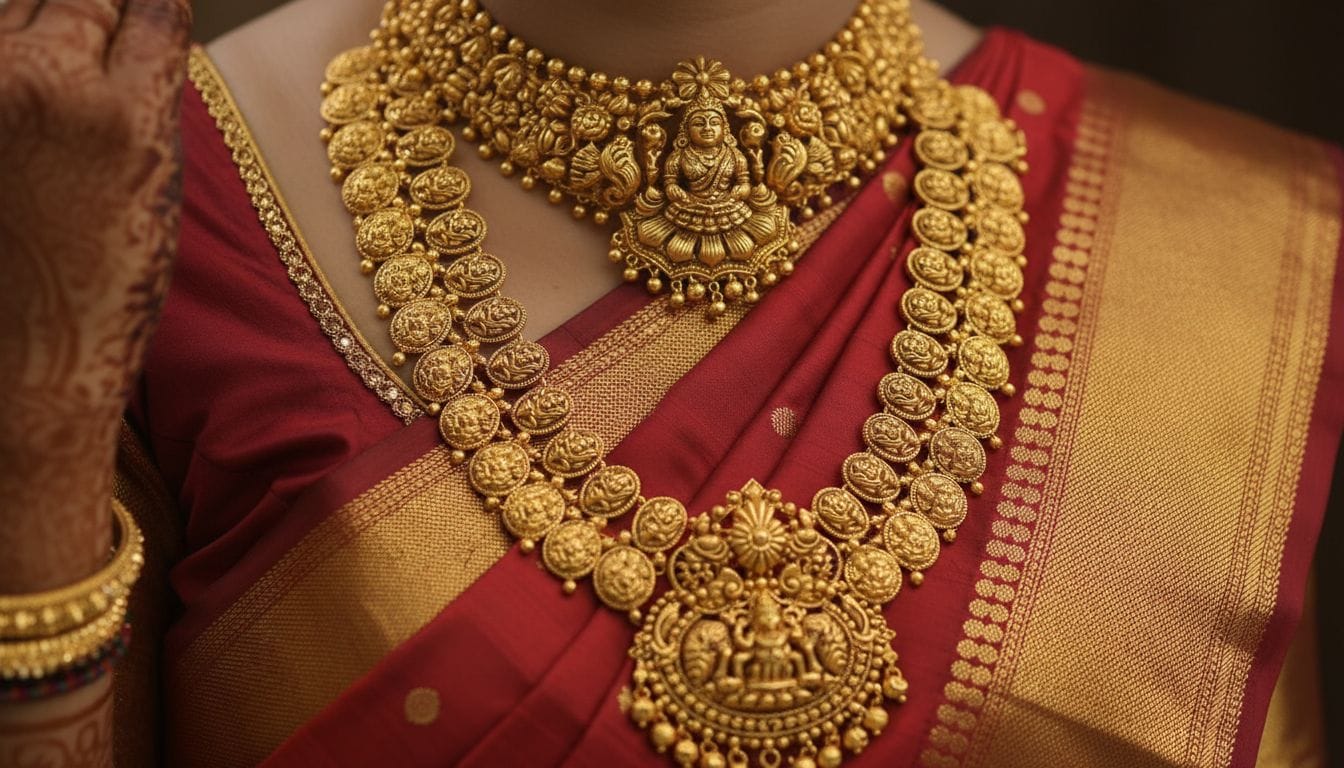
The heaviest necklace should always be the longest one. It visually anchors your look and keeps the pleats of your saree in place.
2. Statement Jhumkas
What is it? These are large, bell-shaped earrings that hang down, often connected to the hair with a gold chain.
Rashmika's jhumkas were huge! In South Indian weddings, small earrings just will not do. Her jhumkas had detailed carvings on the dome (the round part) and were attached to her hair with a gold chain. This chain is called maatal.
Why it works: The chain supports the weight of the heavy earring so the bride's earlobe does not tear or hurt. Plus, it frames the side of the face beautifully.
Styling Insight for Indian Brides: If you want to wear heavy jhumkas, always ask for the supporting chain (maatal). It saves your ears from pain during a long 4-hour ceremony.
3. Jada Billa
What is it? A long set of gold plates or discs that are decorated down the length of a long braid.
This was one of the most talked-about pieces. Since Rashmika has a Kannada background and was marrying into a Telugu family, the Jada Billa was a perfect cultural touch. It creates a line of gold running down the back.
Why it works: Wedding photos are not just taken from the front. When the bride walks during the pheres or sits for rituals, her back is visible. The Jada Billa makes the back of the hairstyle look royal.
Styling Insight for Indian Brides: You need a thick, long plait for this. If you have short hair, do not worry. Use hair extensions and weave fresh jasmine (mogra) flowers around the gold pieces for a classic look. Pair it with matching head accessories for a complete hairstyle.
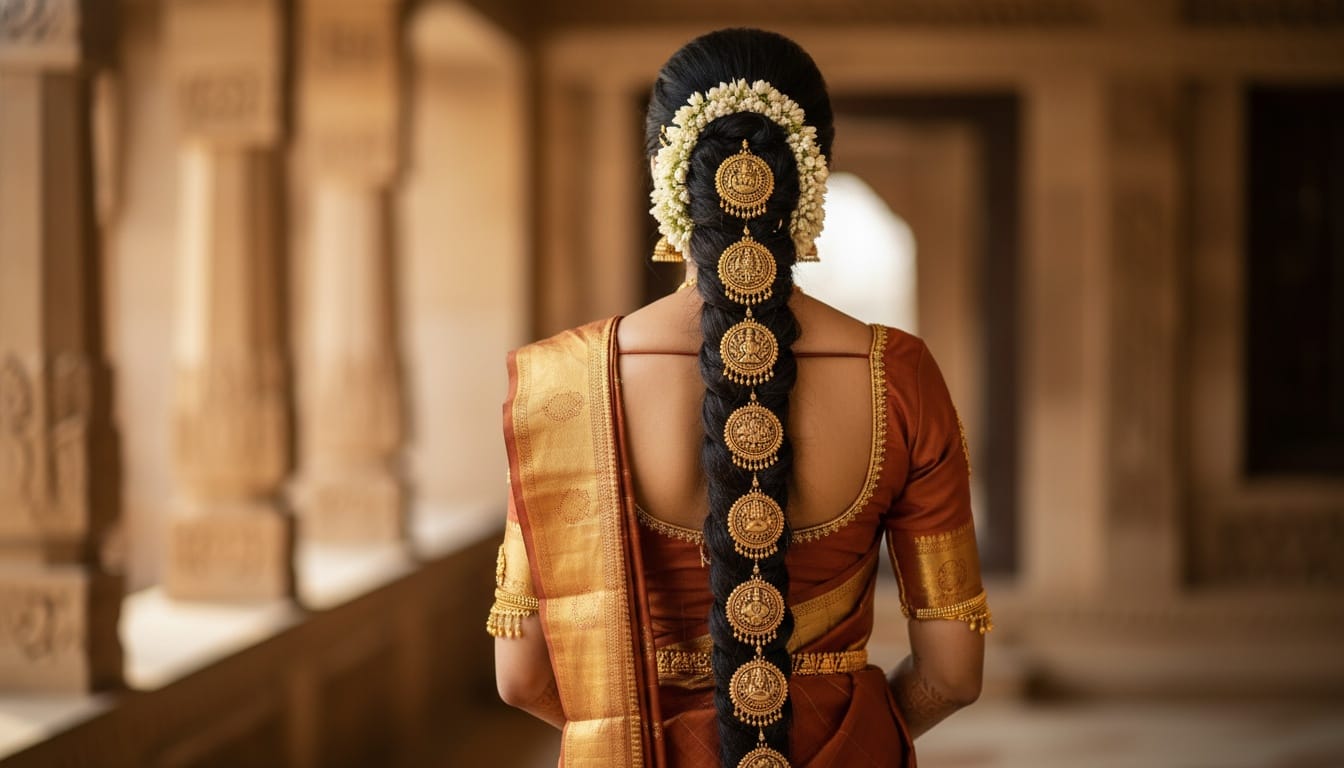
The Jada Billa is not just jewelry; it signifies that the bride is ready for the household life. It controls the hair and adds discipline and beauty to the look.
4. Champasaralu
What is it? Fine gold chains that connect the earrings to the head, running along the hairline.
Also known as champaswaralu, these are very popular in Telugu and Tamil weddings. They act like a frame for the face. In Rashmika's look, these chains connected her ear pieces to her head area, creating a "halo" effect.
Why it works: It fills the empty space between the ear and the forehead. It makes the face look smaller and more focused.
Styling Insight for Indian Brides: This looks best with a center parting (middle maang). If you have a side parting, this jewellery can look uneven.
5. Hathphool
What is it? A hand ornament that connects a ring on the finger to a bracelet on the wrist via a chain or decorative panel.
Rashmika's hathphool was not just a simple chain. It had a flat panel with carvings on the back of her hand. It bridged the gap between her bangles and her fingers.
Why it works: It makes the bride's hands look beautiful during rituals like the Kanyadaan or when exchanging rings, which are close-up photo moments.
Styling Insight for Indian Brides: Make sure the ring part fits tightly. If it is loose, the whole piece will slide sideways and look messy in photos.
6. Mathapatti
What is it? A forehead band that runs along the hairline with a central drop (tikka).
Rashmika skipped the simple Maang Tikka and went for a full mathapatti. This piece framed her forehead and met the Champasaralu chains on the side. It gave her that "Goddess" look instantly.
Why it works: It covers the forehead and draws attention to the eyes. Since Rashmika wore minimal makeup, this gold piece added the necessary brightness to her face.
Styling Insight for Indian Brides: If you have a round face, pull the mathapatti slightly back away from the hairline to elongate your face. If you have a long face, wear it lower on the forehead.
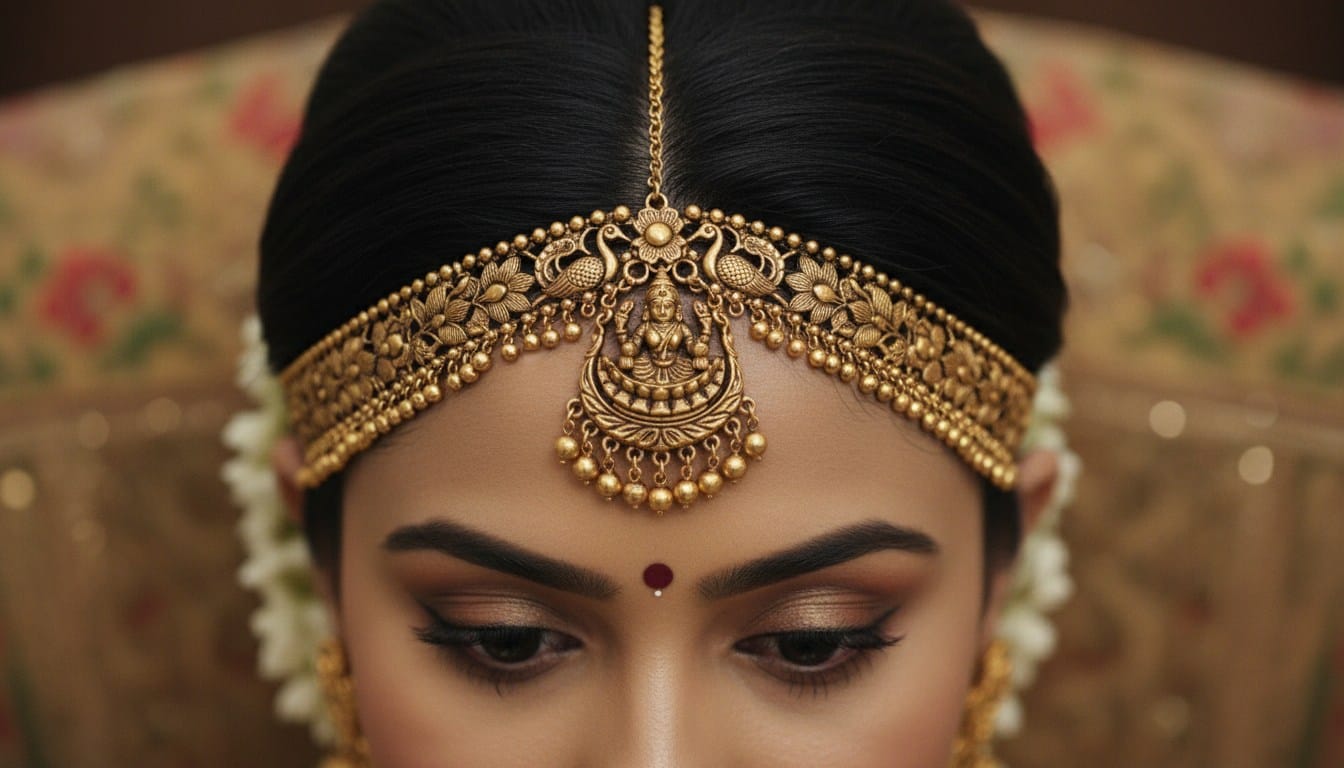
The main takeaway is: The Mathapatti is the crown of the Indian bride. It is usually the first piece of jewellery people notice when they look at your face.
7. Nose Pin
What is it? A small, delicate gold stud worn on the nostril.
Interestingly, Rashmika did not wear a giant nose ring (Nath). She chose a small, simple nose pin.
Why it works: Because she had so much heavy jewellery on her forehead (mathapatti) and ears (jhumkas), a big nose ring would have hidden her face. The small pin balanced the heavy look.
Styling Insight for Indian Brides: If you have a small nose or small face, a pin is better than a ring. It keeps your face open and smiling.
8. Bangles
What is it? A stack of gold bracelets worn on both wrists.
She wore heavy antique gold bangles mixed with kadas (thicker bangles). In South Indian culture, fully stacked hands are a sign of a married woman (Sumangali).
Why it works: It creates a rich sound and visual whenever the bride moves her hands.
Styling Insight for Indian Brides: Mix your bangles! Put the thickest ones on the ends and the thinner ones in the middle. This keeps the stack secure on your wrist.
9. Bajuband
What is it? An armlet worn on the upper arm, above the elbow.
Also called Vanki, this piece usually has a V-shape or a curve to fit the arm muscle. Rashmika's bajuband had goddess carvings on it.
Why it works: Since she wore a saree, one arm was covered by the pallu, but the other arm was visible. The bajuband decorates that bare skin on the upper arm.
Styling Insight for Indian Brides: This needs to be tight! There is nothing worse than a bajuband slipping down to your elbow during the wedding. Use a thread to tie it securely if the clasp feels loose.
10. Waist Belt (Kamarbandh)
What is it? A broad gold belt worn around the waist over the saree.
In the South, this is called Oddiyanam. It is a structured, hard belt, not a loose chain. It holds the saree pleats in place and clinches the waist. You can find similar waist belts to complete your bridal silhouette.
Why it works: It gives the bride an hourglass figure by pulling the saree in at the waist. It also breaks the color of the saree with a block of gold.
Styling Insight for Indian Brides: Wear this slightly above your hips, at the narrowest part of your waist. It helps you stand tall and supports your back during long standing rituals.
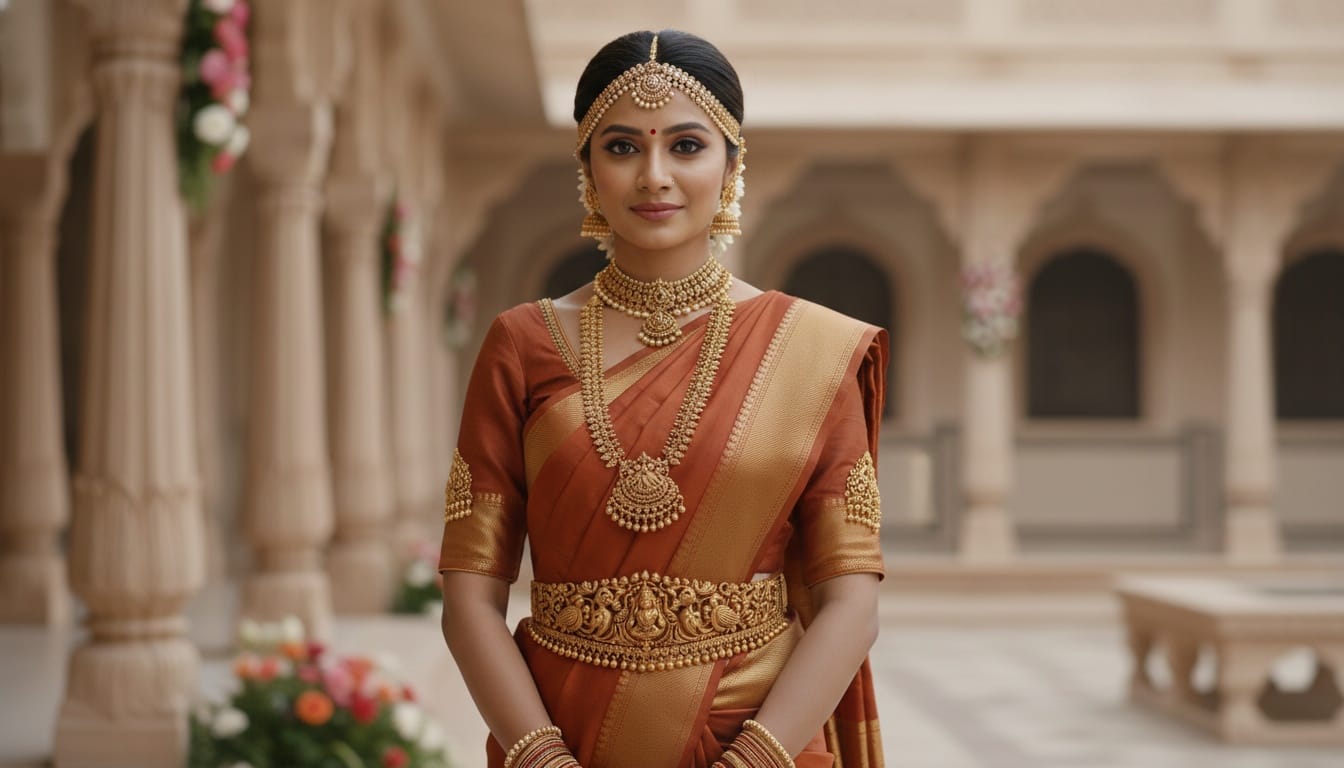
This piece is actually very practical. It keeps your heavy silk saree from slipping or opening up while you walk around the holy fire.
11. Anklets (Payals)
What is it? Chains or heavy rings worn around the ankles.
To finish the head-to-toe look, Rashmika wore matching antique gold anklets.
Why it works: In Indian weddings, the bride's feet are worshipped or touched often. Having gold on the feet completes the divinity of the look.
Styling Insight for Indian Brides: Avoid wearing these over stockings or socks. They look best on bare skin. Ensure they do not have sharp edges that could tear your silk saree at the bottom.
How the 11 Pieces Were Layered Together
You might think, "Is not 11 pieces too much?" It can be, but not if you layer them with logic.
Rashmika's stylist used a "Pyramid" technique:
- The Base: The waist belt and long haram created a wide, heavy base.
- The Middle: The neck stack filled the chest area but left the shoulders clear.
- The Top: The face jewellery (Mathapatti and Jhumkas) formed a delicate frame.
The look moved from heavy at the bottom to lighter at the top (except for the earrings). Also, because every single piece had the same antique matte finish, they looked like one big family. If she had mixed shiny gold with dull gold, it would have looked messy. For more inspiration on modern bridal looks, check out the latest Indian bridal jewelry trends.
The secret to wearing this much jewellery is the "Finish Consistency." If all pieces have the same polish and color tone, you can wear as much as you want without looking cluttered.
Do You Need All 11 Pieces for a Traditional Indian Bridal Look?
The short answer is: No.
Rashmika is a superstar, and this was a massive celebrity wedding. For a real bride, you can pick and choose.
The "Must-Haves" (Essentials):
- Necklace Stack: At least one choker and one longer chain.
- Jhumkas: Essential for the traditional look.
- Bangles: A bride without bangles is unheard of in India.
- Maang Tikka/Mathapatti: To mark the forehead.
The "Nice-to-Haves" (Region Specific):
- Waist Belt: Very important for South Indian brides, but optional for North Indian brides.
- Jada Billa: Specific to South Indian long braids.
- Champasaralu: Optional, mostly for Telugu/Tamil weddings.
The "Extras" (Luxury Add-ons):
- Hathphool: Looks great but makes eating difficult!
- Bajuband: Only needed if your blouse has short sleeves.
Why This Bridal Jewellery Style Reflects South Indian Tradition
The style Rashmika chose is called Temple Jewellery.
A Quick History Lesson: This art form started over 1,000 years ago during the Chola Dynasty. Originally, this jewellery was not made for humans. It was made only to adorn the idols of Gods and Goddesses in the temples of Thanjavur and South India.
That is why you see motifs of peacocks, lotus flowers, and Goddess Lakshmi.
Key Techniques Used:
- Nakshi: This means "carving." The goldsmith scrapes away gold to create a 3D picture.
- Rava: This means "granulation." Tiny balls of gold are soldered onto the surface to create texture.
By wearing this, Rashmika was not just following a trend. She was honoring a 10-century-old craft. To understand the difference between popular styles, you can read more about Polki vs Kundan: Differences and Value.
The main takeaway is: Modern diamond jewellery sparkles for a moment, but temple gold jewellery carries the weight of history. That is why it is considered a "legacy investment."
How Indian Brides Can Recreate This Look Thoughtfully
You do not need a movie star budget to look like a star. Here is how you can get the Rashmika look:
Face Shape Matters:
- Oval/Long Face: Go for the full Mathapatti and long Jhumkas like Rashmika.
- Round Face: Skip the heavy Mathapatti. Use a simple Tikka and wear a longer necklace to create vertical lines.
Neckline Rules:
- This much jewellery needs a simple blouse. A round neck or a boat neck works best.
- Avoid deep V-necks if you are wearing a tight choker; it leaves too much awkward skin gap.
Budget Tips:
- Real 22-karat antique gold is expensive.
- Smart Swap: Buy your main Mangalsutra or Thali in real gold. For the heavy layering pieces like the long Haram or the Waist Belt, you can buy high-quality silver gold-plated jewellery or "one-gram gold" jewellery. It looks exactly the same but costs a fraction of the price. It is also a popular choice for gifting ideas for the bride.
Final Thoughts & Where to Find Your Look
Rashmika Mandanna's wedding look has set a new standard for Indian brides. It proved that going back to our roots and wearing traditional, antique gold is timeless. Whether you want the full 11-piece set or just a beautiful pair of Jhumkas, the key is to wear it with pride.
Looking for authentic bridal jewellery without the hassle?
Check out Eternz! We bring you the best designs from over 300+ trusted brands.
Not sure if it suits you? Use our Virtual Try-on feature to see how the jewellery looks on you before you buy.
Need it fast? We offer Same Day Delivery in major cities like Bengaluru, Delhi, Noida, and Mumbai.
Worried about quality? Every piece comes with an authenticity certification.
Use code WELCOME20 for a special discount on your first order. Make your wedding day as iconic as Rashmika's!
View this post on Instagram
A post shared by Rashmika Mandanna (@rashmika_mandanna)
Frequently Asked Questions
1. What are the names of all 11 jewellery pieces Rashmika Mandanna wore?
The pieces are: Choker with Harams, Statement Jhumkas, Jada Billa, Champasaralu, Hathphool, Mathapatti, Nose Pin, Bangles, Bajuband, Waist Belt, and Anklets.
2. Who designed Rashmika Mandanna's wedding jewellery?
The entire collection was designed by SHREE Jewellers in Hyderabad. It took them 10 months to make it.
3. Can North Indian brides wear this style?
Absolutely! While pieces like the Jada Billa are very South Indian, the temple harams, jhumkas, and bangles are universally loved. Many North Indian brides now wear temple jewellery for their specialized functions like the Mehendi or the main wedding for a royal look.
4. What is the difference between Temple Jewellery and regular Gold Jewellery?
Regular gold jewellery is usually shiny (glossy) and machine-made. Temple jewellery has a dull, matte, antique finish and is hand-carved with images of deities.
5. Can I wear a nose pin instead of a nose ring with this heavy look?
Yes, as Rashmika proved, a simple nose pin can balance a very heavy headpiece. It prevents the face from looking too crowded and keeps the focus on your features.
6. How tight should a bajuband (armlet) be?
It should be snug enough to stay on your upper arm without sliding down, but not so tight that it cuts off circulation or leaves deep marks. It is better to err on the side of tighter and use a safety chain or thread to secure it.
7. Is a waist belt necessary for a South Indian wedding?
It is highly recommended. The Oddiyanam or waist belt is a classic part of the South Indian bridal trousseau. It helps manage the heavy silk saree and defines the waistline beautifully in photographs.
8. How can I prevent my heavy jhumkas from hurting my ears?
Always use the supporting chain (maatal) that hooks into your hair. This transfers the weight from your earlobe to your head. You can also use earring supports or convert them to clip-ons if you do not have pierced ears.
9. What is the significance of the Jada Billa?
The Jada Billa adorns the bride's braid and is a symbol of her beauty and marital status. It is also believed to have a protective function, watching over the bride from behind. It is a quintessential part of South Indian bridal jewellery.
10. Where can I find affordable versions of this temple jewellery?
You can explore online platforms like Eternz that offer a wide range of designs from trusted sellers. Look for antique gold finishes in silver or gold-plated metals to get the same aesthetic look without the high cost of solid gold.