Polki vs Kundan: Differences, Value, and Which Jewelry You Should Buy?
Buying bridal jewelry? Don't overpay. Learn why Polki costs 10x more than Kundan, which one has better resale value, and how to spot fakes with our expert decision framework.
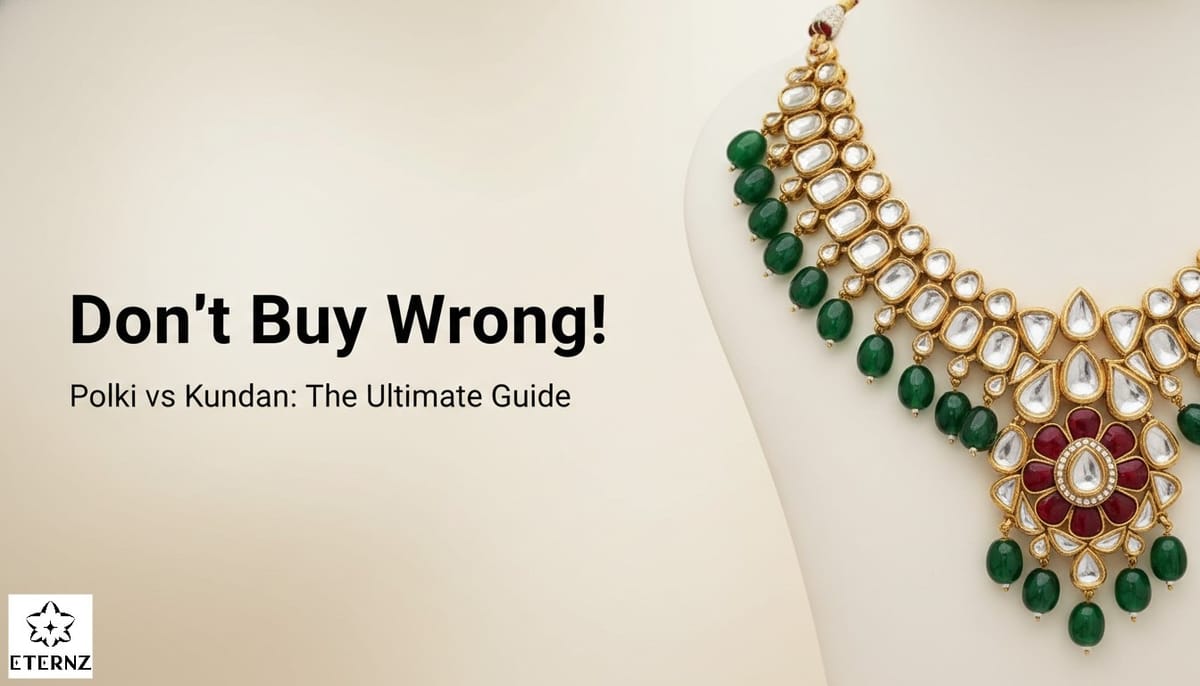
Buying bridal or festive jewelry often feels like navigating a maze, especially when jewellers throw around terms like "Jadau," "Polki," and "Kundan" interchangeably. You aren't looking for a history lesson; you need to know what you are paying for and if it's worth it.
Polki jewelry uses uncut natural diamonds, making it expensive and valuable, while Kundan uses glass or synthetic stones, offering a similar royal look at a fraction of the price.
This guide will cut through the noise, comparing their value, durability, and resale potential so you can decide exactly which set matches your budget and wedding outfit.
What We Will Cover in This Guide:
- What Polki and Kundan actually are – Materials, craftsmanship, and why the price gap exists
- Side-by-side comparison table – Stones, prices, durability, resale value, and best use cases
- Wedding-specific guidance – Which jewelry works for pheras, sangeet, mehendi, and guest attire
- Styling differences – How each looks with different lehengas, lighting, and photography
- Resale reality check – Exact percentages you'll recover when selling each type
- Authenticity tests – How to spot fake Polki and low-quality Kundan before buying
- Decision framework – Clear "Choose Polki if..." and "Choose Kundan if..." criteria based on your budget and goals
What Is Polki Jewelry?
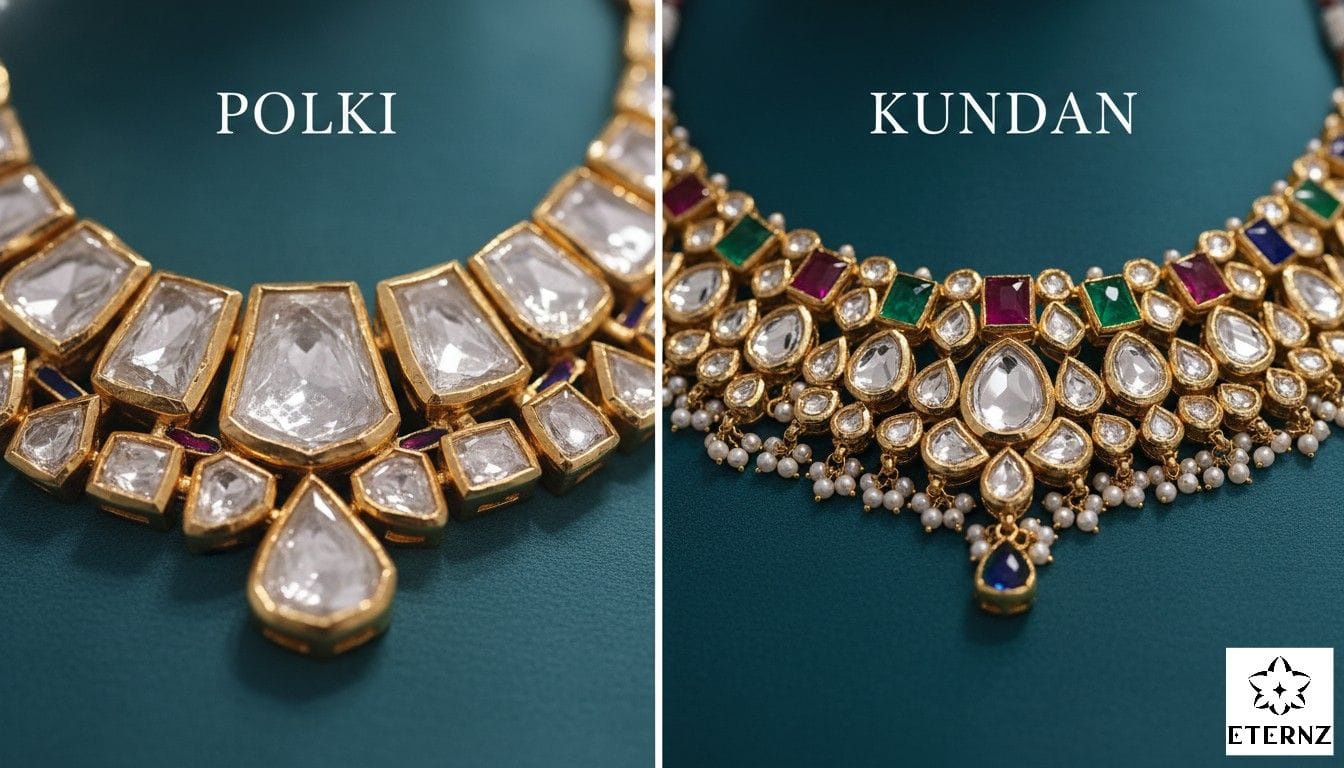
Polki uses raw, uncut diamonds in their natural state without chemical treatment.
Polki is the real deal. It is crafted using uncut diamonds that are mined from the earth and kept in their natural form—no faceting or polishing. These raw stones are set into a gold casing (usually 22K or 24K gold foil) using the traditional Jadau technique. Because it uses real diamonds, Polki has a soft, non-blinding glow that looks incredibly expensive and understated.
- Materials: Uncut natural diamonds (Polki), Gold foil, Enamel (Meenakari).
- Why It’s Expensive: You are paying for natural diamonds. The value comes from the carat weight of the stones and the purity of the gold.
- Modern Twist: In 2025, designers are mixing Polki with emeralds and rubies to break the monotony of white and gold.
Key Takeaway: Polki is an investment-grade luxury product made from natural diamonds that retain significant value over time.
What Is Kundan Jewelry?
Kundan uses glass stones set in highly refined gold foil, focusing on intricate design rather than stone value.
Kundan is about the art, not the stone. While it uses the same Jadau setting technique as Polki, the stones themselves are usually glass, synthetic gems, or sometimes semi-precious stones. The stones are set in a bed of lac (natural resin) and covered with pure molten gold foil (Kundan means highly refined gold). This allows for elaborate, heavy-looking designs that are actually lighter on the wallet.
- Materials: Glass stones ("polki-look" glass), Lac (resin), Gold foil.
- Craftsmanship: Highly detailed Meenakari (enamel work) is often found on the reverse side.
- Where It Works Best: Sangeet nights, guest attire, or for brides who want a massive, heavy look without spending 10+ lakhs.
Key Takeaway: Kundan is "costume royal" jewelry—it gives you the exact visual grandeur of a queen without the price tag of real diamonds.
Polki vs Kundan: Side-by-Side Comparison
Polki is for investment and luxury; Kundan is for fashion and short-term styling.
Below is the decision-making data you need.
Summary: If budget is no bar and you want an heirloom, buy Polki. If you want a stunning look for fewer wears, buy Kundan.
Price Difference: Why Polki Costs More Than Kundan
Polki costs 5x to 10x more than Kundan because you are buying mined diamonds versus manufactured glass.
The economics are simple:
- Diamond Cost: A single carat of Polki diamond commands a high market price. A Kundan set replaces that cost with glass, which costs negligible amounts.
- Gold Purity: Polki is set in solid gold frameworks to hold the expensive stones. Kundan uses a "Ghat" (framework) that is often hollow or filled with lac (wax) to hold the glass, meaning you get less actual gold per gram of total jewelry weight.
- Making Charges: Both involve skilled labor, but Polki requires higher insurance and security during manufacturing, driving up the "making charges" (often 20-30% of the bill).
Pricing Fact: A heavy bridal Polki set can easily cost ₹8 - ₹12 Lakhs, while a visually identical Kundan set in silver/gold plating might cost just ₹30,000 - ₹50,000.
Polki vs Kundan for Weddings
Wear Polki for your main Wedding ceremony; wear Kundan for Sangeet or Mehendi.
- For the Bride (Wedding Day): Polki is the winner. It holds up under high-resolution photography and looks regal without looking "flashy." It commands respect and signals status.
- For Pre-Wedding (Sangeet/Mehendi): Kundan is perfect. It’s colorful, fun, and if a stone falls out while dancing, it’s a ₹500 repair, not a ₹50,000 tragedy.
- For Guests: Kundan is the standard. It prevents you from outshining the bride while still looking appropriately festive.
Verdict: Invest in one timeless Polki set for the main day; use Kundan to accessorize different outfits for other functions.
Appearance & Styling Differences
Polki looks antique and understated; Kundan looks shiny and bold.
Polki Look: The diamonds have a rustic, unfinished look. They don't twinkle like solitaire diamonds; they glow like the moon.
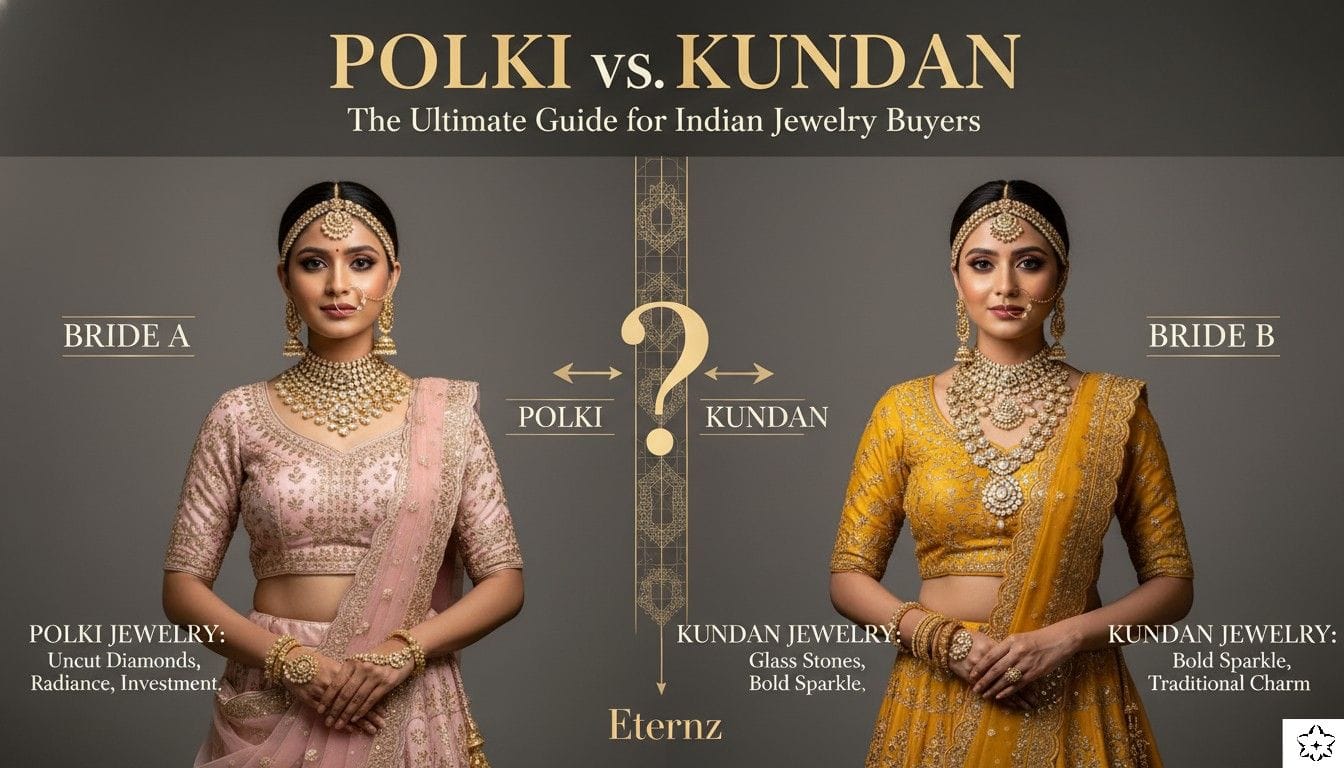
- Best Pairing: Pastel lehengas (Ivory, Blush Pink, Mint) or deep Regal Reds. The subtle shine complements intricate embroidery without fighting for attention.
Kundan Look: Because of the silver/gold foil backing under the glass, Kundan reflects light aggressively. It is shiny and bright.
- Best Pairing: Bright colors (Hot Pink, Mustard Yellow, Royal Blue). Styling trends for 2025 suggest layering a Kundan choker with a longer Polki necklace for a fusion look.
For styling inspiration, explore modern bridal necklace designs that showcase how contemporary brides are mixing both styles.
Resale Value, Longevity & Investment Perspective
Polki offers 70-80% resale value on stones; Kundan offers nearly 0% on stones.
This is the most critical financial distinction.
Polki Resale: When you sell Polki, you typically get:
- 100% of the current Gold value.
- 60% to 80% of the Polki diamond value (depending on the jeweler's buyback policy).
- Reality Check: Polki is illiquid. You often have to exchange it rather than get cash back.
Kundan Resale: When you sell Kundan, you get:
- Value of the Gold used (minus the weight of the lac and stones).
- 0% for the glass stones.
- The "loss" on a Kundan set is often 40-50% of the purchase price immediately after buying.
Investment Advice: Treat Polki as a long-term asset (heirloom). Treat Kundan as a consumption expense (like the wedding dress itself).
How to Identify Original Polki vs Kundan
Look for the "light test" and check the backing.
- The Light Test: Shine a bright light on the stone.
- Polki: The light will pass through slightly but glow warmly. You might see internal lines or "inclusions" (nature's fingerprints).
- Kundan: It will reflect light like a mirror (too shiny). It often looks "too perfect" and clear.
- The Backing:
- Real Jadau/Polki often has intricate Meenakari (enamel) work on the back to protect the gold purity.
- Cheaper Kundan might just have a plain metal back or rough finishing.
- Certification: Always ask for an IGI or GIA certification for Polki diamonds. Kundan will rarely have gem certification, only gold purity certification (BIS Hallmarking).
Which Should You Buy? (Decision Framework)
Choose based on your "Wear Count" vs. "Value Retention" goals.
Choose Polki If:
- You want an heirloom to pass down to your daughter/daughter-in-law.
- You have a budget of ₹5 Lakhs+ and want asset security.
- You prefer "Old Money" aesthetics—subtle, expensive, and timeless.
Choose Kundan If:
- You want a heavy, royal look but have a budget under ₹2 Lakhs.
- You want specific colors to match a specific lehenga (Kundan is easily customized).
- You are a guest or buying for a one-time event like a brother's wedding.
Final Verdict: Buy Polki for value; buy Kundan for variety.
Final Thoughts
The debate between Polki and Kundan isn't just about money—it's about the legacy you want to wear. At Eternz, we have observed that while 60% of brides still prefer Polki for their main wedding day, a growing number are choosing high-quality Kundan for pre-wedding functions to stay budget-smart without compromising on style.
Whether you choose the raw beauty of Polki or the artistic grandeur of Kundan, make sure it reflects you. If you're ready to explore options, our marketplace features curated jewelry collections from 250+ trusted brands to help you find your perfect set.
Ready to Shop?
Explore authentic Polki and Kundan designs:
Use code WELCOME10 for 10% off your first order
Frequently Asked Questions (FAQs)
Is Polki real diamond?
Yes. Polki is an uncut, unpolished natural diamond. It is the purest form of diamond styling, originating from the Mughal era.
Is Kundan cheaper than Polki?
Yes, significantly. Kundan uses glass or synthetic stones, whereas Polki uses real diamonds. A Polki set can cost 10 times more than a similar-looking Kundan set.
Can Polki be worn after the wedding?
Yes. Modern Polki designs are versatile. You can detach heavy chokers to wear as simpler necklaces, or pair Polki earrings with a western gown for a fusion look.
Does Polki turn black over time?
Real Polki set in 22k gold does not turn black, but the silver foil behind the diamond can oxidize if exposed to moisture/perfume. Always store it in airtight containers wrapped in cotton.