Matte Finish vs High Polish Jewelry: 7 Things to Consider
Deciding between matte finish vs high polish jewelry? Discover 7 key factors to consider, from maintenance to style, and find your perfect jewelry finish today.
TL;DR
Matte finish jewelry offers a soft, subtle, modern look with less shine and fewer visible scratches. High polish jewelry delivers a bright, reflective, classic shine but shows wear more easily. Your choice depends on your daily activity, how much time you want to spend cleaning it, and your personal style.
In this guide, you will learn:
- What makes a matte finish unique.
- Why high polish is the standard for classic jewelry.
- The seven biggest differences that affect your daily wear.
- Practical tips for maintaining both styles.
- How to choose the best finish for your personality and skin tone.
Before we start, let me tell you about Eternz: a trusted jewelry marketplace featuring 300+ brands. Every piece comes with authenticity certification. They offer fast, same-day delivery in major cities, and a special "WELCOME20" discount for first-time buyers.
What Is Matte Finish Jewelry?
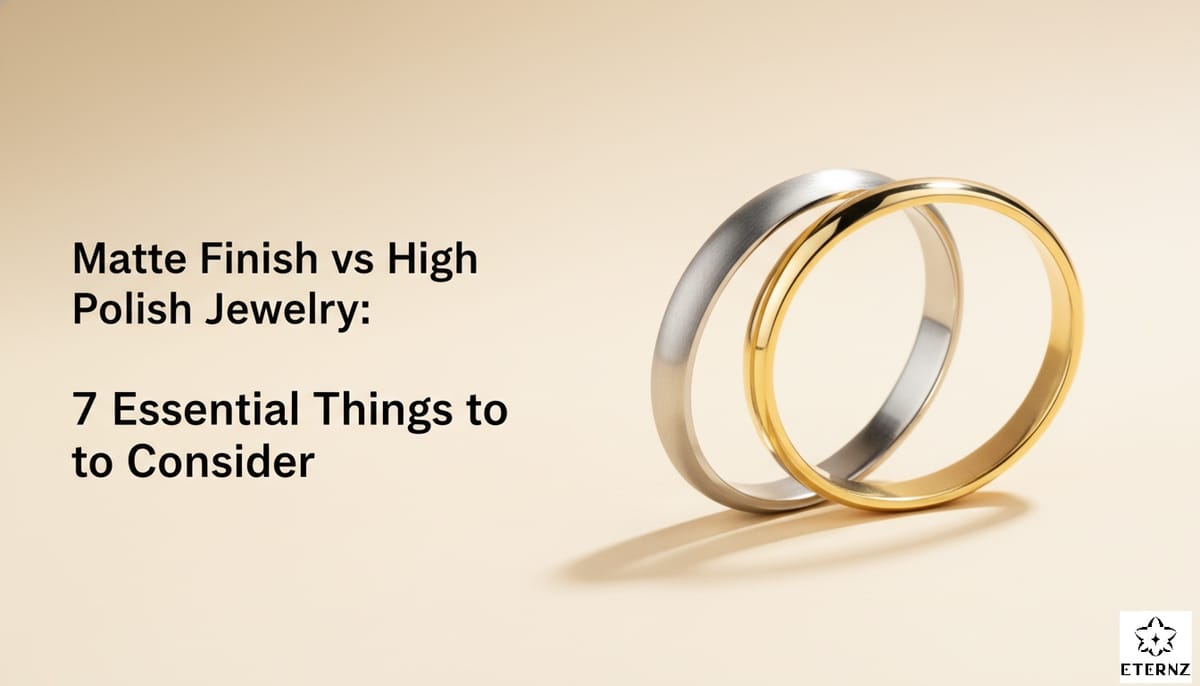
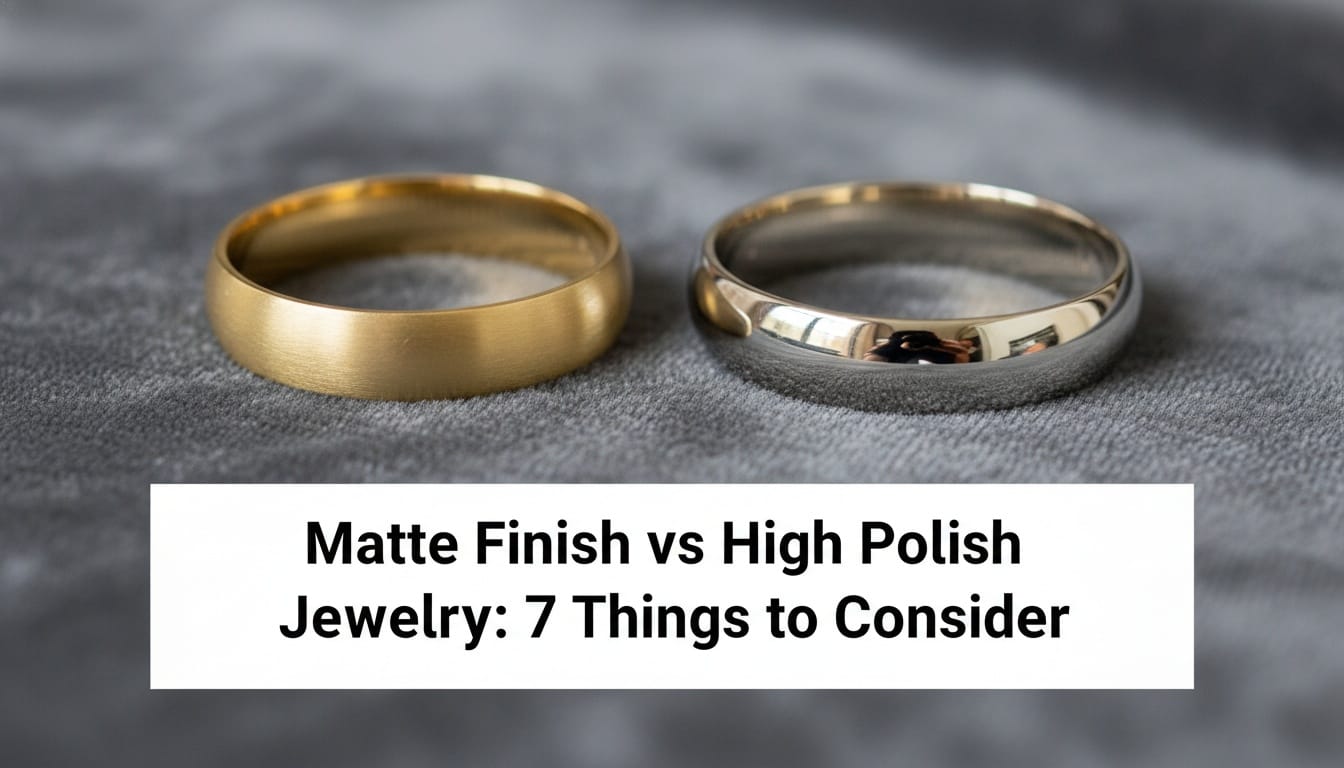
Matte finish jewelry is metal that has been treated to look soft, dull, and non-reflective. Unlike traditional shiny jewelry, it doesn't bounce light back at you, giving it a modern, understated appearance that looks almost like silk or velvet.
Think of a matte finish like a frosted window or a piece of sea glass. It is smooth to the touch, but it doesn't have that "mirror" effect. This look is achieved by intentionally roughening the surface of the metal on a microscopic level. Instead of a flat surface that reflects light in one direction, the surface is full of tiny bumps and grooves that scatter light in every direction. You can explore beautiful matte and brushed finishes in our silver jewellery collection.
The Different Types of Matte Finishes
Not all matte finishes look the same. Depending on how the jeweler treats the metal, you can get different textures:
- Satin Finish: This is the smoothest version. It has a soft glow but no distinct "lines."
- Brushed Finish: You can see tiny parallel lines on the metal, as if it were lightly scratched with a fine brush.
- Sandblasted Finish: This creates a grainy, sparkling texture that looks very contemporary and bold.
Expert jewelry designers often use matte finishes on larger pieces of jewelry. Because matte surfaces don't glare under bright lights, they allow the actual shape and design of the jewelry to be the "star" rather than just the shine.
What Is High Polish Jewelry?
High polish jewelry is the classic, mirror-like finish that most people think of when they imagine gold or silver. It is created by polishing the metal until it is perfectly smooth, allowing it to reflect light directly back to the observer.
High polish is the "gold standard" for formal jewelry, especially engagement rings and wedding bands. It looks bright, expensive, and eye-catching. Because the surface is so flat and smooth, it acts exactly like a mirror. If you look closely at a high-polished ring, you can often see your own reflection in it. Discover our gold best sellers featuring classic high polish finishes.
How High Polish is Created
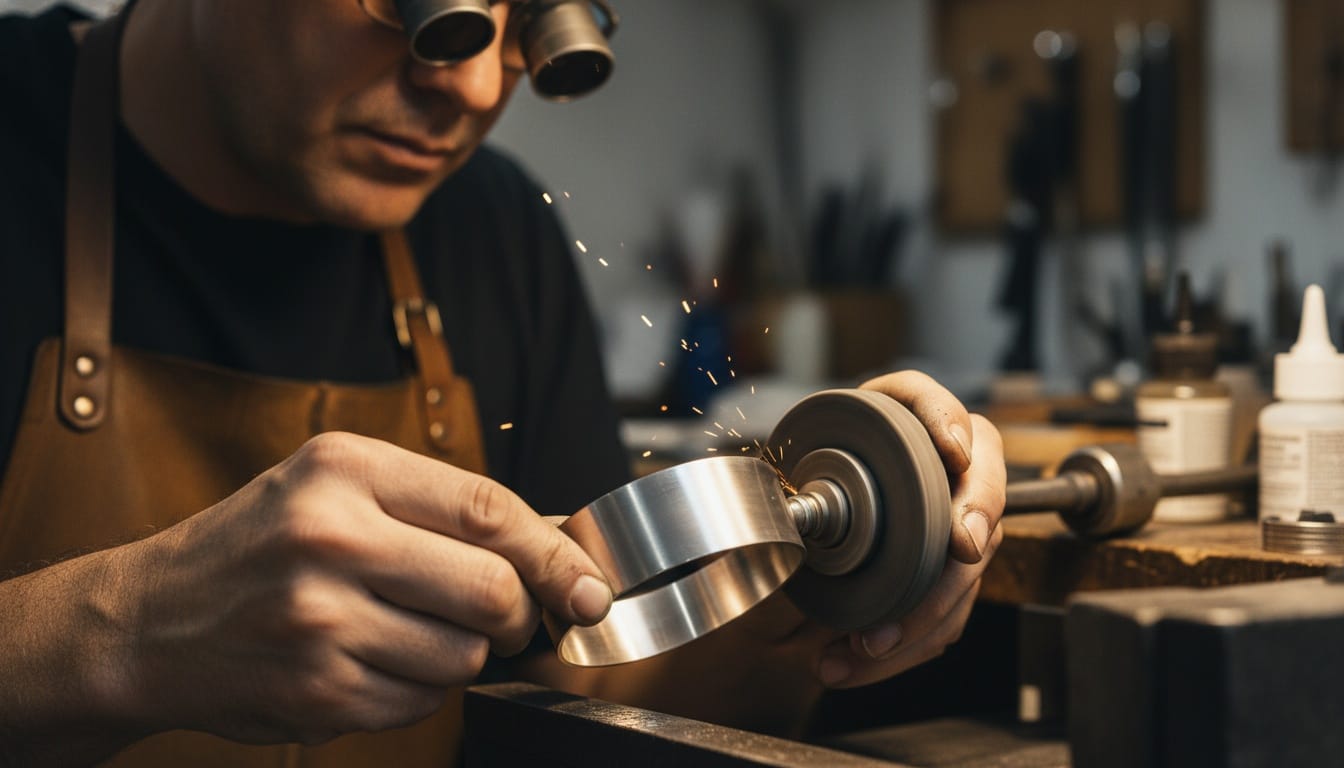
To get this look, jewelers use high-speed spinning wheels and special polishing compounds. They start with rougher materials and move to finer and finer pastes until every single tiny scratch is removed. It is a process of refinement that makes the metal look liquid and glowing.
Matte Finish vs High Polish Jewelry: 7 Things to Consider
Choosing between these two isn't just about what looks better in the store. It's about how the jewelry will fit into your life over the next five to ten years.
1. Appearance and Style
The choice between matte and high polish defines your "vibe." Matte jewelry is considered "cool and contemporary," while high polish is "traditional and glamorous."
If you wear a lot of minimalist clothing—think neutral colors, clean lines, and simple patterns—a matte finish will complement your look perfectly. It doesn't scream for attention. On the other hand, if you love dressing up and want your jewelry to be the first thing people notice, the high-shine reflective nature of high polish is unbeatable.
| Style Element | Matte Finish | High Polish |
|---|---|---|
| Visual Impact | Subtle and muted | Bold and bright |
| Fashion Match | Minimalist, Bohemian, Modern | Classic, Formal, Vintage |
| Light Interaction | Absorbs/Scatters light | Reflects light |
| Perception | Artistic and unique | Traditional and luxury |
2. Maintenance and Care
High polish jewelry requires more frequent cleaning because fingerprints and oils show up instantly on a mirror surface. Matte jewelry is better at hiding the natural oils from your skin, but it has its own unique maintenance challenges.
When you touch a high-polish ring, the oil from your finger leaves a smudge, much like a smudge on a smartphone screen. You will find yourself wiping it down often. Matte jewelry doesn't show these smudges as much, but over time, the friction of your skin and clothes can actually "polish" the matte surface, making it look shiny in some spots and dull in others. Learn how to avoid common jewelry cleaning mistakes to protect your finish.
Pro Tip: Never use a polishing cloth on matte jewelry. Polishing cloths are designed to add shine, which will ruin the textured look of a matte piece. Use only warm soapy water and a soft toothbrush.
3. Durability and Wear (The Scratch Factor)
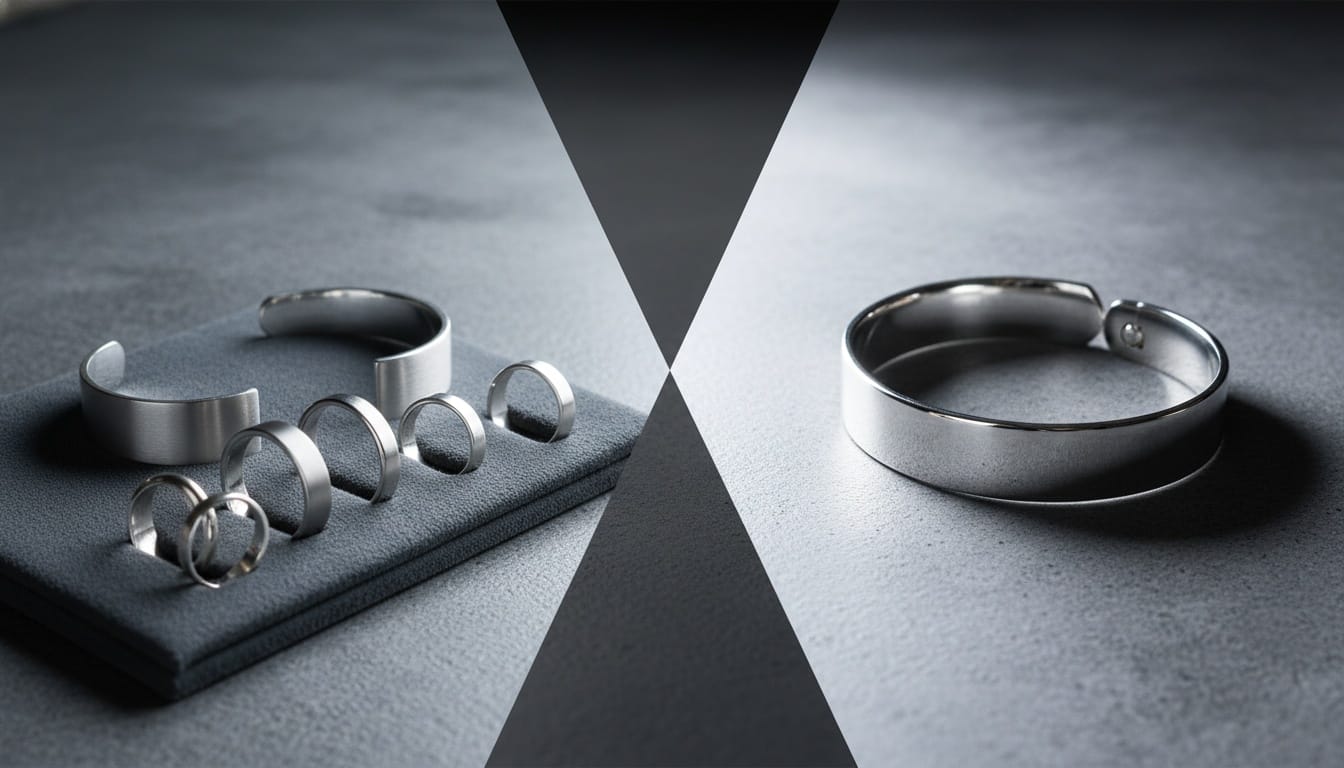
All jewelry gets scratched eventually, but how those scratches appear is the biggest difference between these two finishes. High polish shows every tiny "hairline" scratch, while matte finishes hide them by blending them into the existing texture.
Think of it like a car. If you have a perfectly shiny black car, a tiny scratch stands out immediately. If you have a car with a matte "rugged" finish, a small scratch just looks like part of the texture. However, high polish is easier to "fix." A jeweler can simply buff a shiny ring to make it look new again. Re-applying a matte finish is a more technical process that requires specific tools.
4. Occasion and Usage
Your daily routine should dictate your finish. If you work in an office or a creative field, matte jewelry offers a sophisticated touch that isn't too distracting. If you are attending a wedding or a gala, high polish provides the sparkle necessary for the occasion.
- For the Gym/Active Lifestyle: Matte is better. It handles the "bumps" of life without looking beat up.
- For Professional Settings: Matte looks more "designer" and less "prom." Explore our daily wear earrings for professional yet stylish options.
- For Romance/Engagements: High polish is the traditional choice because it symbolizes a "bright" future and looks stunning under candlelight. Browse our wedding rings collection for classic high shine pieces.
5. Skin Tone and Light Reflection
How jewelry looks on you depends on how the light bounces off the metal and hits your skin. High polish can sometimes look "harsh" on very fair skin because the reflection is so bright. Matte finishes provide a "soft focus" effect that tends to be very flattering for all skin tones.
Because matte jewelry has a "soft glow," it blends more naturally with the skin. High polish creates a sharp contrast. If you want your jewelry to look like an extension of yourself, go matte. If you want it to stand out as a separate, glowing accessory, go high polish. For a deeper understanding of what suits you best, read our guide on matching jewellery to your skin tone.
6. Trend vs Timelessness
High polish jewelry has been popular for thousands of years; it is the definition of timeless. Matte finishes, while they have existed for a long time, have seen a massive surge in popularity recently due to the rise of "industrial" and "minimalist" fashion trends.
If you are buying a piece of jewelry that you want to pass down to your grandchildren, high polish is the "safe" bet because it never goes out of style. However, if you want to feel current and fashion-forward right now, matte is the way to go.
7. Cost and Value
Generally, the price of the metal (the weight of the gold or silver) is the same regardless of the finish. However, the cost of "upkeep" can differ.
High polish jewelry is very easy for any local jeweler to refurbish for a small fee. Matte jewelry often requires being sent back to the original designer or a specialist to get that specific "sandblasted" or "brushed" look back once it starts to wear down. In the resale market, high polish is often easier to sell because it is the more "standard" preference for the general public.
| Factor | Matte Finish | High Polish |
|---|---|---|
| Resale Ease | Moderate | High |
| Repair Cost | Can be higher (specialized) | Low (standard tools) |
| Longevity of Finish | Wears shiny over time | Scratches over time |
| Initial Cost | Same as high polish | Standard pricing |
How to Decide Between Matte Finish and High Polish?
If you are still stuck, ask yourself these three questions:
- Does the sight of a tiny scratch on your phone or car drive you crazy?
If yes, choose Matte. It hides the "wear and tear" of life much better. - Do you want your jewelry to "pop" in photos and under restaurant lights?
If yes, choose High Polish. It is designed to capture and reflect light. - Do you prefer a "raw/natural" look or a "luxury/refined" look?
Natural = Matte.
Refined = High Polish.
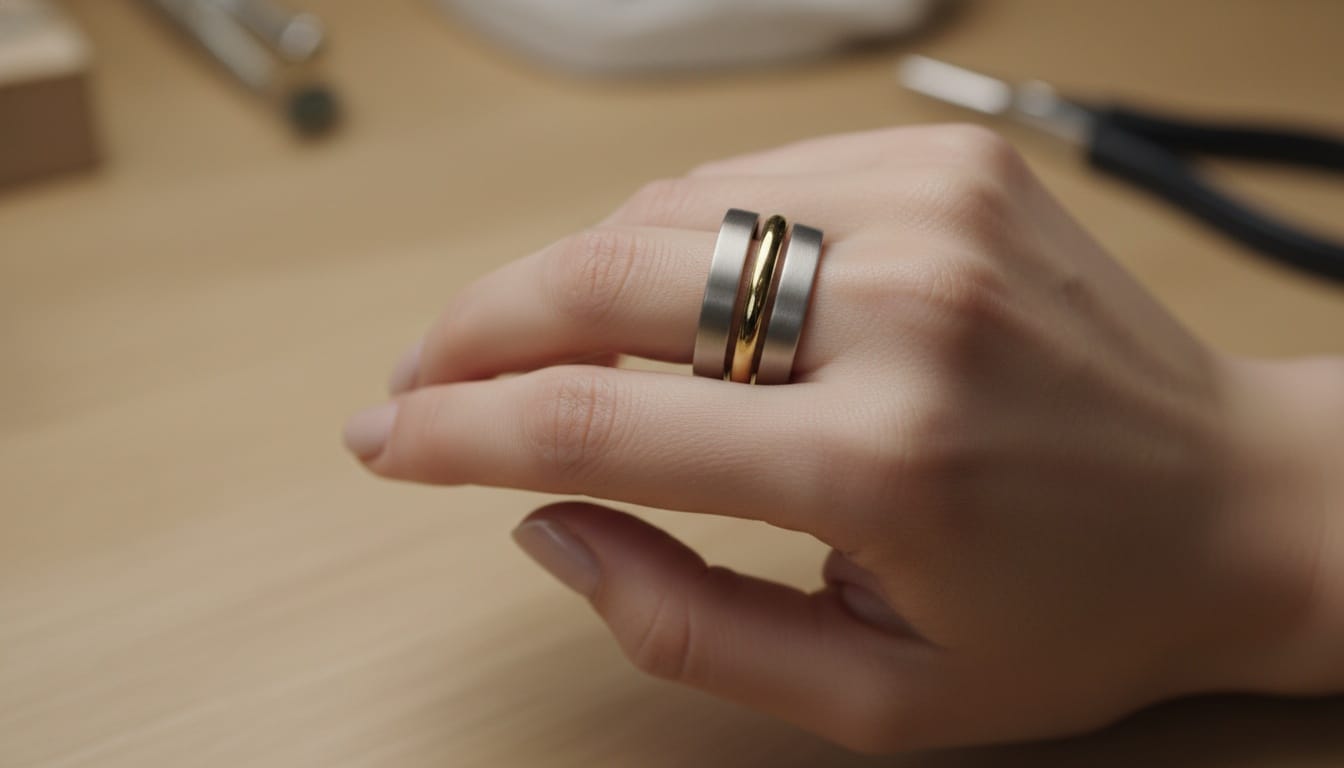
Many people choose a high-polish finish for their engagement ring (the "show" piece) and a matte finish for their wedding band (the "daily" piece). This creates a beautiful contrast when the two are worn together.
Can You Combine Both Matte Finish and High Polish?
You don't actually have to choose just one. "Mixed finish" jewelry is a massive trend where a single piece of jewelry has both styles. For example, a ring might have a matte center band with high-polish edges.
This is a great "best of both worlds" solution. The matte part hides the scratches that happen on the top of the ring, while the shiny edges provide that classic "sparkle" when you move your hand. It adds a layer of depth and artistic detail that a single finish can't match.
Proper Care for Matte Finish and High Polish Jewelry
Regardless of which finish you pick, you need to treat them differently to keep them looking their best.
For Matte Jewelry:
- Avoid Lotions: Creams and lotions can get stuck in the tiny "pores" of a matte finish, making it look greasy and dull.
- Gentle Cleaning: Use a mild dish soap and a very soft brush.
- No Buffing: If you rub it too hard with a cloth, you will accidentally start to polish it, making it shiny.
For High Polish Jewelry:
- Microfiber is Your Friend: Keep a small microfiber cloth (like the ones for glasses) in your bag to wipe away fingerprints.
- Remove During Work: If you are gardening, lifting weights, or cleaning with chemicals, take the ring off. These activities cause the "micro-scratches" that dull the shine.
- Professional Steam: Every year, take it to a jeweler for a professional steam clean and a light buffing to restore the mirror look.
Wrapping Up
Choosing between a matte finish and a high polish jewelry piece is a personal journey. There is no "right" answer—only the answer that fits your lifestyle.
Matte finish jewelry is the quiet, confident choice. It is perfect for the person who wants something unique, modern, and low-maintenance. It tells a story of subtle elegance and hides the bumps and bruises of daily life with ease.
High polish jewelry is the celebration choice. It is for the person who loves the history of fine jewelry and wants to catch every ray of light in the room. While it requires a bit more "TLC" to keep it looking perfect, the reward is a timeless glow that never fails to impress.
Whichever you choose, remember that jewelry is an expression of you. Don't be afraid to break the rules or mix and match until you find the look that feels like home.
Frequently Asked Questions
1. Can you change a matte finish to high polish later?
Yes, a professional jeweler can polish a matte piece to a high-shine finish or re-texture a polished piece back to matte using specialized abrasive tools and techniques.
2. Does matte finish jewelry scratch easily?
All jewelry scratches, but matte finishes are better at hiding small scratches because they blend into the existing texture. However, deep scratches may still be visible.
3. Which finish is better for an engagement ring?
High polish is the traditional choice for engagement rings as it maximizes light reflection and sparkle. However, matte finishes are increasingly popular for those seeking a modern, unique, or minimalist look.
4. Why did my matte jewelry become shiny over time?
This happens due to natural friction from skin and clothing, which acts as a gentle buffing agent. A jeweler can easily restore the original matte texture through sandblasting or brushing.
5. Can I wear matte and high polish jewelry together?
Absolutely. Mixing matte and high polish pieces creates visual interest and texture. Many fashion-forward individuals layer both finishes for a dynamic, curated look.
6. Which finish requires less daily maintenance?
Matte finish requires less daily maintenance because it hides fingerprints and smudges better than high polish, which needs frequent wiping to maintain its mirror shine.
7. Is matte finish more expensive than high polish?
No, the initial cost is generally the same for both finishes. The difference lies in the metal weight and purity, not the surface treatment applied to it.
8. How do I clean matte jewelry without damaging it?
Use warm water with a few drops of mild dish soap and a very soft toothbrush. Gently scrub, rinse thoroughly, and pat dry with a soft cloth. Never use polishing cloths or harsh chemicals.
9. Which finish looks better on darker skin tones?
Both finishes look beautiful on darker skin tones. High polish creates striking contrast and brightness, while matte offers a soft, sophisticated glow that blends elegantly.
10. Can a jeweler restore a scratched high polish ring?
Yes, high polish rings are very easy to restore. A professional jeweler can buff out surface scratches and repolish the ring to its original mirror-like condition for a reasonable fee.