Is it safe to buy jewellery online in India?
Thinking of buying gold or diamond jewellery online? Learn how safety works, what to check, and how to pick trusted platforms in India.
TL;DR:
Yes, it is generally safe to buy jewellery online in India if you choose reputed platforms, check BIS hallmarking and third party certifications, use secure payment methods, and understand return and refund policies. Online jewellery shopping is growing rapidly as consumers shift from purely trust based local jewellers to verified digital marketplaces with certifications, buyer protection and convenient delivery.
What we are going to cover:
- Is it safe to buy jewellery online in India today
- How Indian consumer behaviour around jewellery is changing
- Market size, data and online adoption trends
- Future of online jewellery shopping in India
- Key risks to be aware of and how to avoid them
- Laws and regulations that protect you as a buyer
- Trusted places to buy jewellery online, including marketplaces like Eternz, Amazon, Flipkart and Myntra
- Actionable safety checklist before you place an order
- FAQs around authenticity, safety and best platforms
Is It Safe to Buy Jewellery Online in India?
The big question many buyers Google today is: Is It Safe to Buy Jewellery Online in India? This is a natural concern because jewellery is high value, emotional and traditionally bought from trusted offline jewellers.
The good news is that with stronger BIS hallmarking rules, consumer protection laws, stricter e commerce compliance and curated marketplaces, buying jewellery online in India can be safe if you know what to look for. The risk today comes less from the concept of online shopping itself and more from choosing the wrong seller or ignoring basic verification steps.
Online jewellery shopping in India: why it is growing?
Online jewellery shopping in India has moved from a niche behaviour to a mainstream option, especially in metros and Tier 1 and 2 cities. Reports estimate the Indian jewellery market at around 90 to 95 billion USD in the mid 2020s, with steady growth expected through 2030 and beyond. As e commerce expands, a growing share of this spending is shifting online, driven by convenience, wider choice and transparent pricing.
E commerce platforms report strong double digit growth in precious jewellery categories such as gold, diamonds and lab grown diamonds, indicating that consumers are increasingly comfortable making high ticket jewellery purchases online. Younger buyers and working professionals, who already shop fashion and electronics online, are now extending that behaviour to everyday and occasion jewellery.
Indian consumer behaviour in jewellery shopping
Trust based buying culture
Jewellery buying in India has always been deeply trust driven. Families often stick to the same local jeweller for decades, relying on reputation, word of mouth and personal relationships rather than formal certifications. Gold and diamond purchases are typically linked to weddings, festivals and long term savings, which makes trust even more critical.
Because purity is hard to judge by eye, many legacy buyers still depend on jeweller assurances rather than objective testing, although mandatory hallmarking is changing this. As awareness about BIS hallmarking and diamond grading bodies like IGI and GIA grows, consumers are gradually shifting from blind trust to verification based trust.
Shift from offline to online
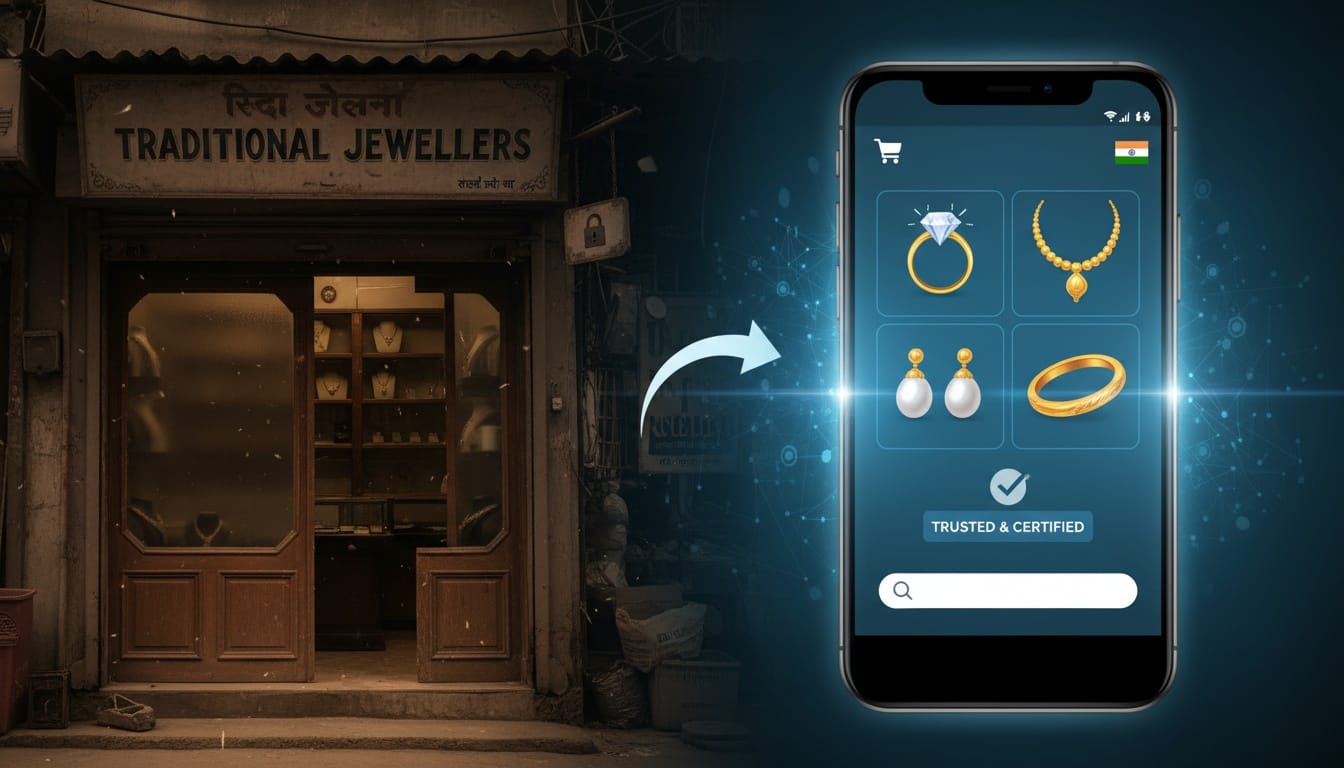
The shift from offline only to hybrid online plus offline behaviour is happening in stages. Studies show that a majority of consumers now begin their search online, even if they eventually buy in store. E commerce and brand websites allow them to compare designs, prices and purity levels before shortlisting a few pieces or brands.
Online jewellery platforms are also bridging the trust gap using detailed product information, certifications, generous trial and return policies, and omnichannel experiences such as home trials or experience stores. Vertical marketplaces like Eternz position themselves specifically around trust, curation and verified brands, which directly addresses Indian buyers’ traditional need for reassurance.
What the data says: market size and online adoption
The Indian jewellery market is one of the largest globally, with estimates placing its value around 90 to 95 billion USD in the mid 2020s. Forecasts suggest the market could reach roughly 146 to 151 billion USD by early to mid 2030s, at a compound annual growth rate of about 5 to 6 percent. This growth is driven by rising incomes, urbanisation, wedding demand and a shift to branded and design led jewellery.
Within this, the online share, while still a minority of total jewellery sales, is growing faster than offline. Industry stakeholders estimate that online channels account for under 15 percent of jewellery sales today but expect this to increase steadily as technology and trust improve. Data from major platforms shows year on year growth in precious jewellery sales on e commerce, sometimes close to 100 percent in specific categories on large marketplaces.
| Market Metric | Estimated Value (Mid 2020s) | Projected Value (Mid 2030s) |
|---|---|---|
| Total Market Size | 90 to 95 Billion USD | 146 to 151 Billion USD |
| Annual Growth Rate | 5 to 6 percent | Expected steady climb |
| Online Share | Under 15 percent | Growing rapidly |
| Main Drivers | Urbanization, Weddings | Digital payments, Gen Z buyers |
Future projection: growth of e commerce jewellery
Growth of online jewellery
India’s broader e commerce market is already well over 100 billion USD and continues to expand, which naturally lifts online jewellery as a category. As consumers get used to buying everything from groceries to gadgets online, jewellery is benefiting from the same digital habit, supported by try at home, AR try on and hassle free returns.
Analysts expect online jewellery to grow faster than the overall jewellery market because it is starting from a smaller base and is supported by structural enablers like digital payments, logistics networks and rising smartphone penetration even in smaller cities. This creates room for both established jewellery brands and online first players to acquire digital first customers.
Role of digital marketplaces
Digital marketplaces are central to this growth story. General marketplaces like Amazon, Flipkart and Myntra have scaled jewellery categories by offering everything from affordable fashion pieces to certified gold and diamond products. These platforms combine discovery, ratings, returns and seller vetting, which creates a baseline level of safety for buyers who follow best practices.
At the same time, vertical jewellery marketplaces such as Eternz focus completely on jewellery, curating hundreds of verified brands across silver, fashion jewellery, gold, diamonds and lab grown diamonds in one trusted environment. Eternz positions itself as a Nykaa like model for jewellery, combining strict brand verification, quality checks, AI driven discovery and fast delivery to simplify an otherwise fragmented market. For buyers who want the variety of a marketplace without compromising on curation and trust, such platforms can be a very strong option.
Is It Safe to Buy Jewellery Online in India Today?
The answer is: it is as safe as the platform, seller and precautions you choose. Reputed brands and marketplaces that follow BIS hallmarking, use recognised diamond labs, offer secure payment gateways and provide transparent return policies can be as safe or safer than some unorganised offline sellers.
However, unsafe experiences still occur when buyers purchase from unknown websites, social media DMs or unverified sellers that lack proper certification, contact details or customer reviews. To shop safely, you must combine the legal protections available in India with your own due diligence moves, which we will cover in the risk and safety sections below.
Risks and challenges in buying jewellery online
1. Fake jewellery and poor certification
The most obvious risk is receiving jewellery that is not as pure or genuine as advertised. Issues include under karat gold, non hallmarked items, non certified diamonds or misleading product images. Even on large marketplaces, some third party sellers may list products with incomplete or inaccurate information.
India’s hallmarking system is meant to prevent this, but counterfeit or improperly marked items can still appear from non compliant sellers. If you buy from unverified websites or sellers who do not display BIS hallmarking details, lab certificates, or clear specifications, you increase the risk of getting substandard jewellery.
2. Payment fraud and digital scams
Separate from product authenticity is the risk of payment fraud or cyber crime. Fraudsters sometimes create look alike websites, phishing links or fake social media pages that mimic known brands and then steal card or UPI details. India has seen a significant rise in digital fraud complaints, prompting the Reserve Bank of India to propose additional safeguards such as time lags on high value online payments and stronger consumer compensation norms.
If buyers click on suspicious links, pay through unknown gateways or share OTPs, they can lose money even if they never receive any jewellery. These risks are typically higher outside established e commerce ecosystems, which generally implement better security, fraud detection and dispute resolution.
3. Return and refund complications
Jewellery is a tactile and visual product, so it is common for buyers to feel that a piece looks different from expectations once it arrives. Without clear return or exchange policies, this can turn into a negative experience. Some sellers restrict returns on customised pieces or charge high making charge deductions on refunds, which can erode trust.
Consumer protection rules require e commerce platforms to clearly disclose return, refund, exchange and warranty policies, but actual practices can still vary across sellers. Choosing platforms that highlight no questions asked returns, free resizing or transparent deductions can significantly reduce post purchase friction.
Risk vs safety checklist table
Below is a quick reference table mapping common risks to what you should do to stay safe when you buy jewellery online in India.
| Risk / concern | What it means | How to stay safe |
|---|---|---|
| Fake or low purity gold | Gold karatage lower than advertised, no BIS hallmark | Buy only BIS hallmarked gold, verify HUID through the BIS Care app, avoid non hallmarked sellers. |
| Non certified diamonds | Diamonds without IGI, GIA or equivalent certification | Check for IGI/GIA or similar certificates, avoid vague "certified" claims without lab name. |
| Misleading product photos | Product looks very different from images or video | Prefer 360 degree views, videos and detailed dimensions, check customer photos and reviews. |
| Payment fraud / phishing | Fake websites or links capturing card or UPI details | Type URLs directly, look for HTTPS, use trusted gateways, never share OTPs, follow RBI cyber safety advice. |
| Poor return / refund experience | Difficult returns, hidden charges, slow refunds | Read return policy before buying, prefer platforms with clear jewellery friendly policies and support. |
| Unknown or unverified sellers | No address, GST, customer care or reviews | Stick to reputed brands and curated marketplaces like Eternz or leading e commerce sites. |
Laws and regulations in India that protect jewellery buyers
BIS hallmarking system
India’s hallmarking framework is the core protection for gold and silver jewellery buyers. The Bureau of Indian Standards (BIS) introduced a gold hallmarking scheme in 2000 and a silver scheme in 2005 to certify purity. Over time, hallmarking has been made mandatory for most gold jewellery sold in the country, including online sales.
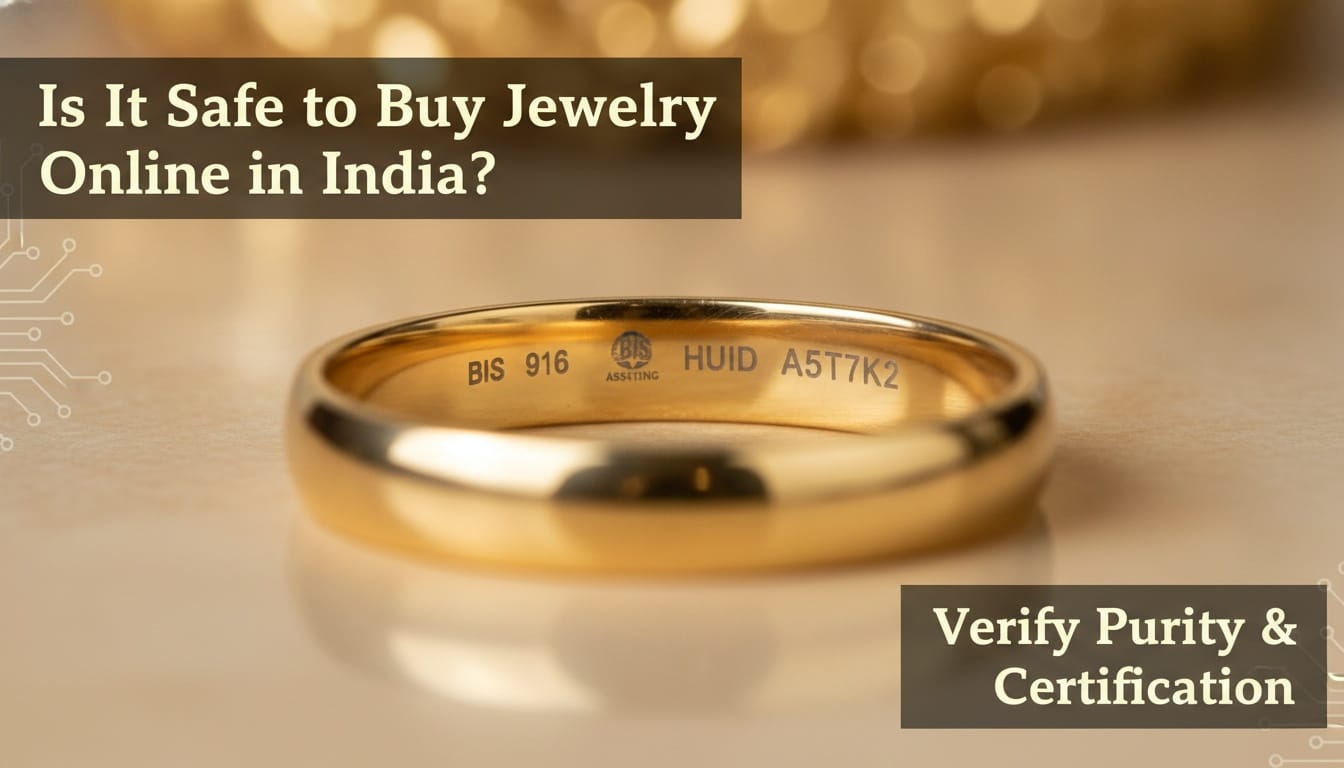
Since April 2023, BIS has required a six digit Hallmark Unique Identification (HUID) on each hallmarked gold item, which buyers can verify using the BIS Care mobile app. Hallmarked pieces carry the BIS logo, purity grade, jeweller identification and assaying centre details, giving you a verifiable trail of authenticity that does not depend only on a jeweller’s word.
Consumer Protection Act and e commerce rules
The Consumer Protection Act 2019 and the Consumer Protection (E commerce) Rules 2020 extend traditional consumer rights to online purchases. The rules require e commerce platforms to provide clear seller details, display accurate product information and maintain robust grievance redressal mechanisms. Every e commerce entity must appoint a grievance officer, acknowledge complaints within a specified time and ensure transparent disclosure of return, refund and warranty policies.
For marketplace models, the rules specifically require platforms to verify key seller details such as addresses and GST registration, and to prominently display information that helps consumers make informed decisions. This regulatory environment means that when you buy jewellery on compliant platforms, you have legal recourse if claims are misleading or services are deficient.
RBI and digital payments safety
The Reserve Bank of India has issued detailed guidelines to limit customer liability in unauthorised electronic transactions and continues to propose stronger safeguards against digital fraud, reflecting the rise in cyber crime complaints. Banks are required to implement robust fraud detection systems, and customers can have their liability reduced or eliminated if they promptly report unauthorised transactions.
More recently, RBI has discussed measures such as time lags on high value digital payments and improved compensation frameworks for small value frauds, which further protect online shoppers. These protections benefit jewellery buyers who typically make higher value online payments through cards, UPI or net banking.
Trusted options to buy jewellery online in India
When you want to buy jewellery online in India safely, choosing the right type of platform is half the job done. Below are the main categories and how they compare.
1. Trusted national jewellery brands
Many established jewellery brands in India now offer full fledged online stores. These brands usually:
- Sell BIS hallmarked gold and certified diamond jewellery
- Provide transparent purity and weight information for each product
- Offer store pick up, video consultations or home try options
Brands highlighted in industry reports and e commerce partnerships include large pan India jewellers and digital first leaders who combine certification with omnichannel experiences. For buyers who already know and trust a brand from offline stores, shifting to that brand’s own website or app is often the easiest way to begin online jewellery shopping.
2. Online first jewellery brands
Online first brands specialise in web led and app led discovery with modern designs, everyday wear collections and strong digital experiences. They focus heavily on:
- Detailed product pages with multiple images and 360 degree views
- Clear karatage and certification information
- Free shipping, easy exchanges and sometimes home trials
Several such brands appear in curated marketplaces and are known for lab grown diamonds, minimalistic designs and silver or fashion jewellery collections. Because they are built natively for digital, they often lead the way in AR try on, recommendation engines and AI powered personalisation.
3. Large general marketplaces: Amazon, Flipkart, Myntra
Mainstream e commerce platforms like Amazon, Flipkart and Myntra have become strong channels for both precious and fashion jewellery. They offer:
- Thousands of designs across price points and materials
- Seller ratings and reviews to assess trustworthiness
- Platform level buyer protection, payments security and returns support
For example, operators report high growth in precious jewellery categories such as gold, diamonds and lab grown diamonds on these platforms, supported by trusted brands and verified sellers. Buyers still need to filter for high rated sellers, check hallmark and certification details and read reviews carefully, but the marketplace infrastructure adds a solid layer of safety.
4. Eternz: a curated jewellery marketplace built for trust
Among specialised options, Eternz stands out as a vertical jewellery marketplace designed specifically to solve trust and fragmentation issues in the Indian jewellery market. Founded by an experienced e commerce leader, Eternz curates over 300 brands across silver, fashion jewellery, gold, diamonds and lab grown diamonds, all within one platform.
Unlike open marketplaces where any seller can list, Eternz applies a curation first approach, onboarding only verified brands and subjecting products to rigorous quality checks, including lab verification for purity and wear testing for fashion jewellery durability. The platform also uses AI driven personalisation and virtual try ons, and offers fast delivery and expanding same day service in key cities such as Bengaluru, Mumbai, Delhi and Gurugram, which further enhances buyer confidence.
For a consumer asking if it is safe to buy jewellery online in India, using a focused marketplace like Eternz that is built around trust, curation and quality control can provide a strong middle path between single brand sites and broad general marketplaces.
Practical checklist: how to safely buy jewellery online in India
Use this quick checklist every time you are about to buy jewellery online in India:
- Verify purity and certification
- For gold: Check for BIS hallmark, karatage and HUID, and verify via the BIS Care app.
- For diamonds: Look for IGI, GIA or equivalent lab certificates, ideally with report numbers you can verify.
- Evaluate the seller or platform
- Prefer reputed brands, known retailers or curated marketplaces such as Eternz, or large platforms like Amazon, Flipkart and Myntra.
- Check for full contact details, GST information, about page, and active social media or reviews.
- Check product detail quality
- Look for high quality images from multiple angles, videos and clear mention of metal weight, purity, stone specs and dimensions.
- Avoid listings that use only generic descriptors like "premium quality" without specific technical information.
- Read return, refund and exchange policies before buying
- Confirm return window, whether refunds are to source or store credit, and any deductions on making charges.
- Be extra careful with customised or engraved pieces where returns may be restricted.
- Use secure, traceable payment methods
- Pay through trusted gateways on HTTPS sites, and avoid direct transfers to unknown accounts.
- Never share OTPs or card PINs with anyone, even if they claim to be from the platform or bank.
- Document your purchase
- Save invoices, certificates, screenshots of product pages and order confirmations so you have a record if something goes wrong.
Conclusion: a balanced verdict
Putting everything together, buying jewellery online in India is safe but conditional. The safety does not come automatically from the internet itself, it comes from the layers of regulation, platform practices and your own diligence as a buyer. When you choose BIS hallmarked, certified jewellery from reputed brands or curated marketplaces, use secure payments and read policies, online purchases can be as reliable as traditional store buys, with the added advantages of choice and convenience.
If you ignore red flags, buy from unverified websites or trust social media pages with no credentials, the risks of fake jewellery and payment fraud increase significantly. For modern Indian consumers who are comfortable with e commerce but still value trust deeply, platforms that foreground authenticity, curation and compliance such as Eternz, along with leading national brands and major marketplaces, offer a pragmatic path to safe online jewellery shopping.
FAQs on Buying Jewellery Online in India
1. Is it really safe to buy jewellery online in India?
Yes, buying jewellery online in India is generally safe when you choose trusted brands or curated marketplaces that follow BIS hallmarking and proper certifications. Secure payments and clear return policies further reduce risk.
2. How can I verify the authenticity of gold jewellery bought online?
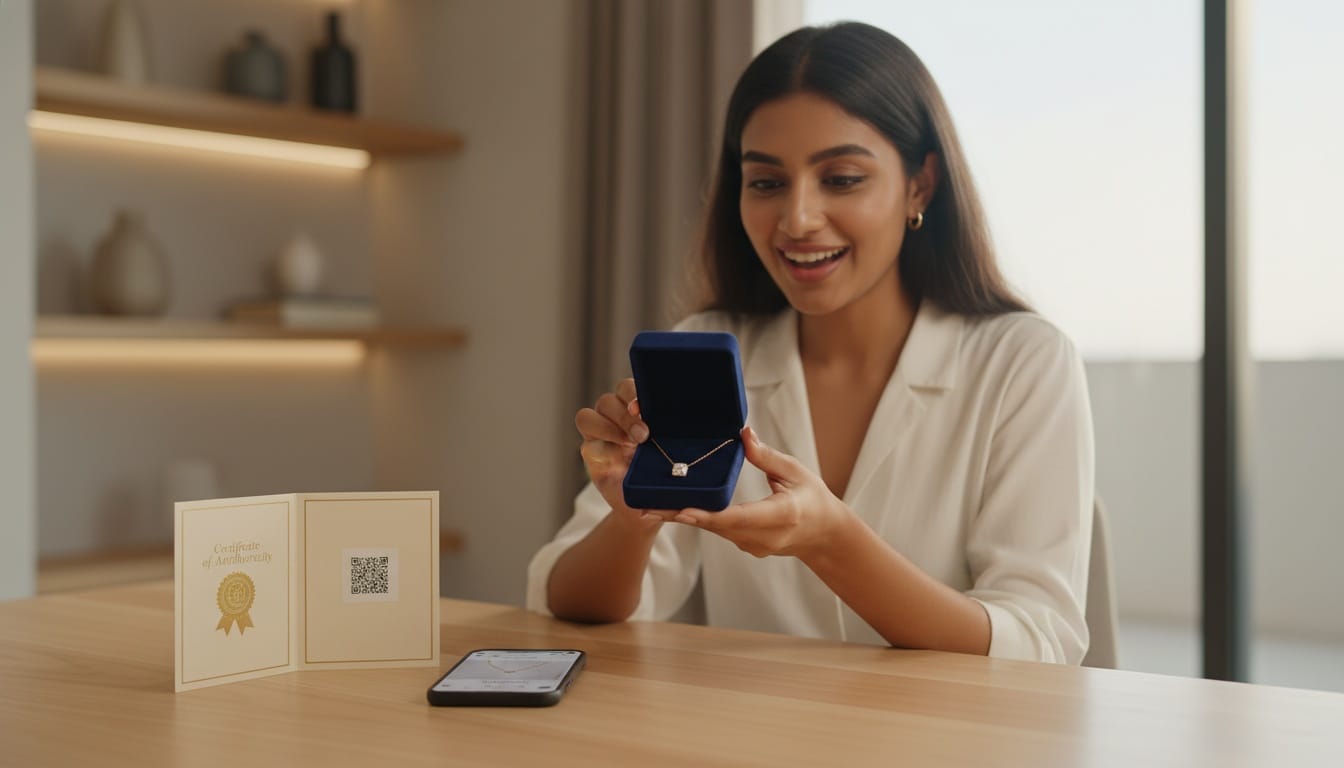
Check for the BIS hallmark which includes the logo, purity mark and HUID number. You can verify the HUID using the BIS Care app and should always receive a detailed invoice with purity and weight.
3. How do I verify diamond jewellery purchased online?
Look for certificates from recognised labs like IGI or GIA and verify the report number on their official website. Make sure the certificate matches the product details and keep it safe for future reference.
4. Which platform is best for buying jewellery online in India?
There is no single best platform. Curated jewelry marketplaces like Eternz, trusted jewellery brands, and large platforms like Amazon or Flipkart all offer different benefits depending on your needs for trust, variety or discovery.
5. What should I do if I suspect fraud or receive fake jewellery?
Get the jewellery checked by a trusted jeweller or lab and compare it with the provided certification. Report the issue to the platform and seller, and escalate to your bank or cyber crime portal if needed.