How to Clean Jewellery After Holi Safely: Your Complete Guide for Sparkling Results
Safely remove Holi colour from your gold, silver, and artificial jewellery at home. This guide shares easy methods to clean your precious pieces and restore their shine after the festival of colours.
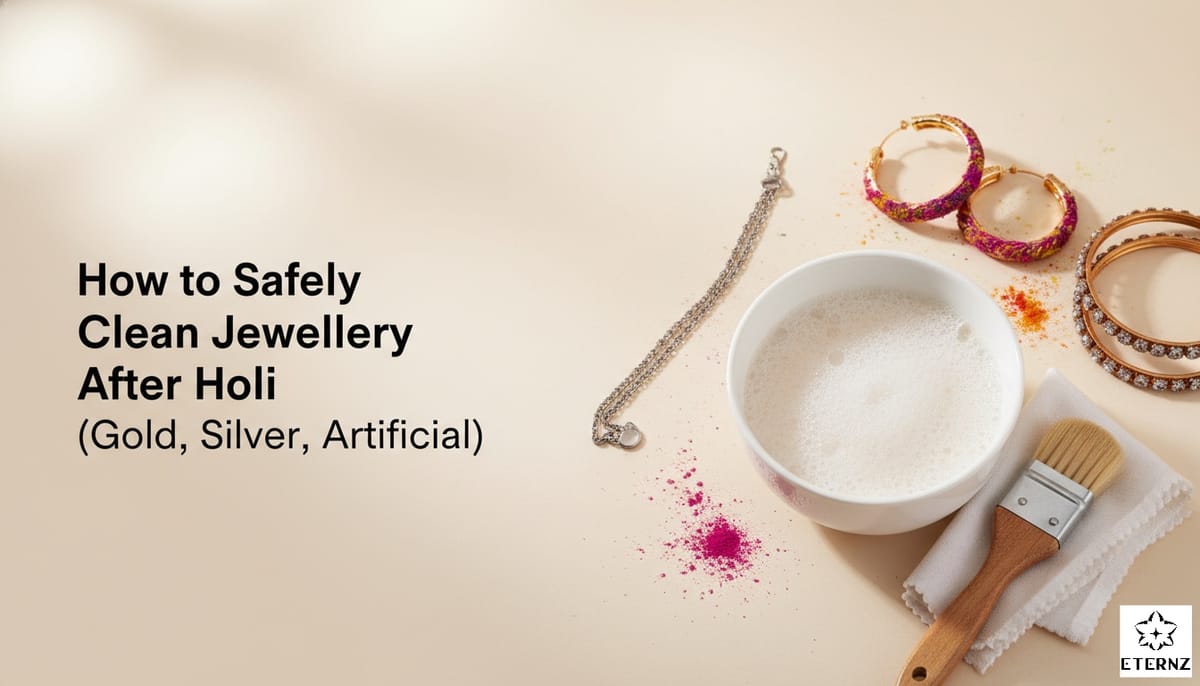
Holi is the festival of colours, joy, and let's be honest, a little bit of mess! We all love the fun of throwing gulal (coloured powder), but our jewellery does not. Whether it is your favourite gold chain, a sparkling diamond ring, or trendy artificial earrings, Holi colours can leave stubborn stains.
You might worry that your precious pieces are ruined forever. But don't panic! Most Holi stains are temporary. With the right cleaning methods, you can make your jewellery shine like new again.
This guide will tell you exactly how to clean every type of jewellery safely at home. No fancy tools needed, just simple things from your kitchen.
The Golden Rule: Check Your Colour Type First
Before you start scrubbing, figure out if the stain is from organic (natural) or synthetic (chemical) colour. Organic colours wash off easily with water, but synthetic colours need a gentle oily base to lift them without damaging the metal.
Is it Organic or Synthetic?
- Organic Gulal: Usually made from flowers or vegetables (like beetroot or turmeric). It feels smooth and washes off with just water.
- Synthetic Colour: These are brighter, shiny, and sometimes gritty. They contain chemicals and dyes that stick hard. They need a "helper" like oil or mild soap to come off.
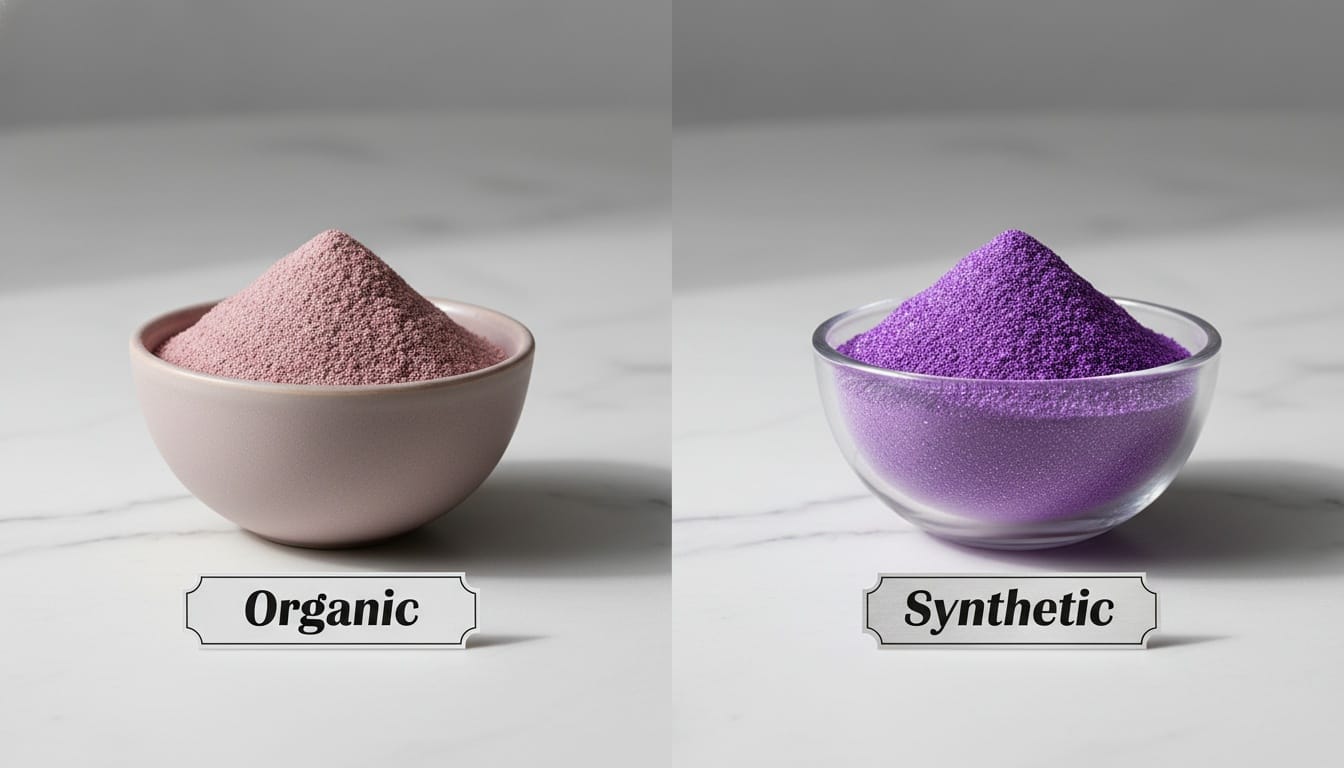
Basically: KNOW YOUR STAIN. If water doesn't work instantly, stop. You need a better method, not harder scrubbing.
How to Clean Gold Jewellery After Holi
Gold is a soft metal, so never use rough scrubbers or hot boiling water. The safest way to remove Holi colour from gold is to soak it in lukewarm water mixed with a few drops of mild dish soap for 15 minutes, then brush gently.
Gold is durable, but it can get scratched. Here is the step-by-step method:
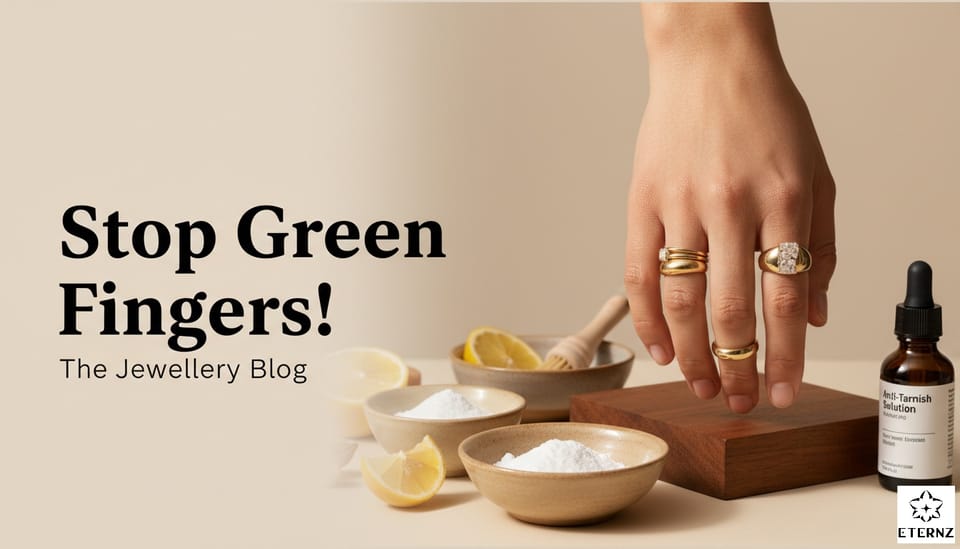
- The Soak: Mix 1 cup of lukewarm water (not hot!) with 3-4 drops of mild liquid dish soap (like Pril or Vim liquid).
- The Wait: Put your gold chains, bangles, or rings in this water. Let them sit for 15-20 minutes. This softens the dried colour.
- The Brush: Use a very soft toothbrush (a baby toothbrush is best). Gently brush the intricate corners where colour hides.
- The Rinse: Wash under cool running water.
- The Dry: Pat dry with a soft cotton cloth or a microfiber towel.
Caution: Do not use toothpaste on gold! It is too rough and acts like sandpaper, taking away the shine over time.
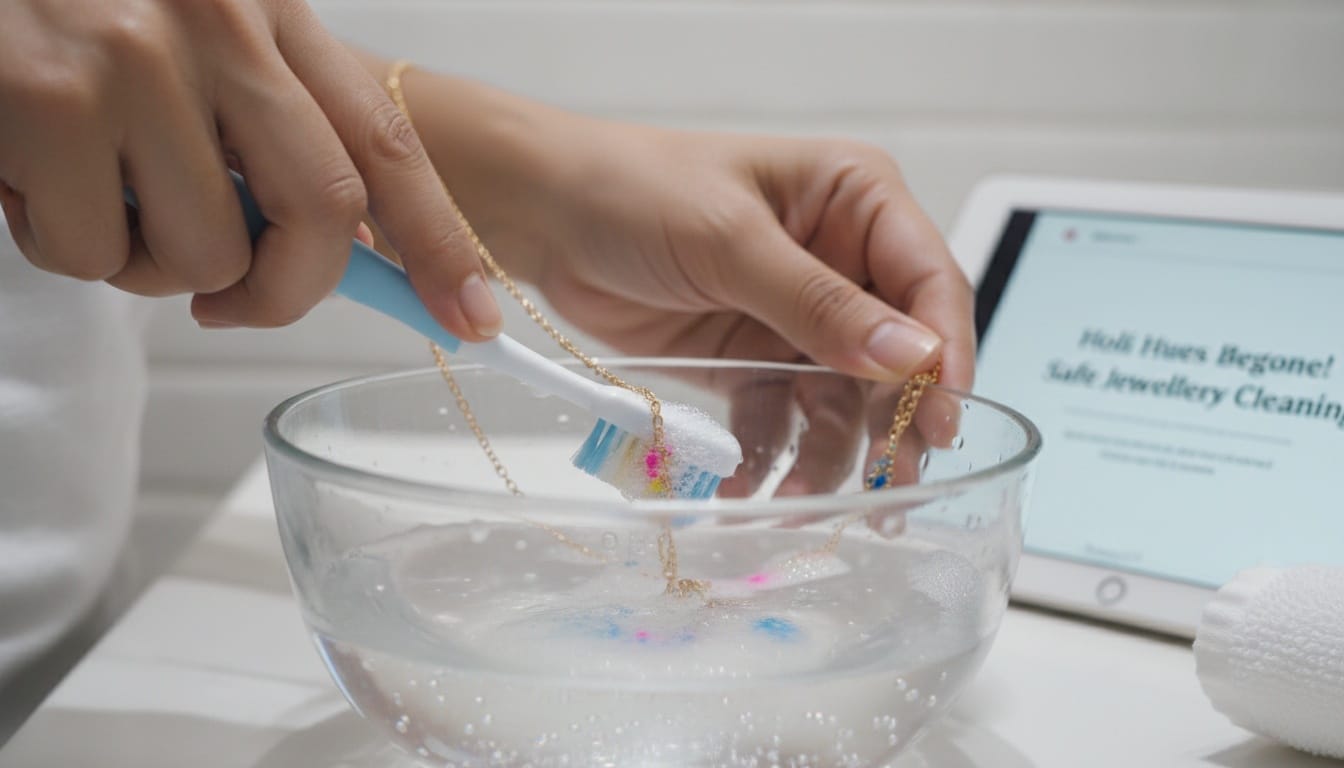
So, to sum it up: SOAK AND BRUSH. Warm soapy water and a baby toothbrush are your gold jewellery's best friends.
How to Clean Silver Jewellery After Holi
Silver turns black (tarnishes) quickly when it touches Holi colours and water. To clean it, use a special "bath" of baking soda and aluminium foil, but only for plain silver without stones.
Silver is tricky because it reacts with the chemicals in the colour. You might see black spots or a dull grey layer.
Method for Plain Silver (Chains, Anklets, Idols):
- Line a Bowl: Take a glass bowl and cover the inside with a sheet of aluminium foil (shiny side up).
- Add Ingredients: Put your silver items on the foil. Sprinkle 1 tablespoon of baking soda over them.
- Pour Water: Pour hot (not boiling) water over the jewellery. You will see bubbles! This is a chemical reaction cleaning the silver.
- Wait and Rinse: Let it sit for 5-10 minutes. Remove the silver with tongs (it might be hot), rinse with cool water, and wipe dry.
For more insights on why silver is such a great choice for daily wear, you can read about why 925 sterling silver is perfect for everyday luxury in India.
Method for Silver with Stones:
Do NOT use the baking soda method. It can damage the glue or the stones. Instead, use the same Mild Soap Method mentioned for gold. This is especially important for delicate pieces like silver anklets or bangles that may have gemstones.
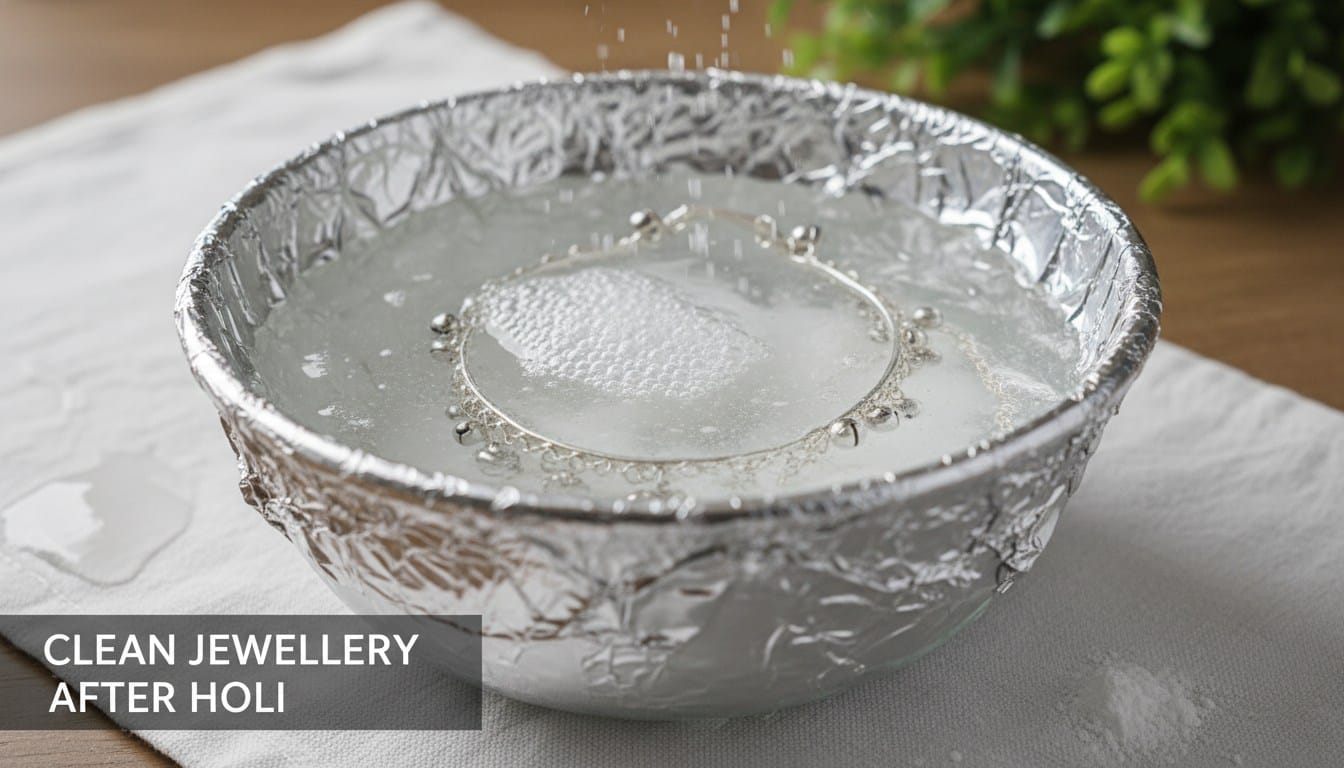
Basically: BUBBLES DO THE WORK. For plain silver, baking soda and foil work like magic. For stone silver, stick to soap.
How to Clean Diamonds and Hard Gemstones After Holi
Diamonds, Rubies, and Sapphires are hard stones, but the metal holding them is delicate. Use a mixture of window cleaner (like Colin) and water to cut through the grease and colour without harming the stone.
Holi colours often contain grease or oil. Diamonds love to attract grease, which makes them look dull.
- The Mix: Mix ½ cup of water with 1 teaspoon of ammonia-based glass cleaner (like Colin).
- The Soak: Soak the ring or earrings for 10 minutes. This is safe for your favourite diamond pieces.
- The Gentle Touch: Use a soft brush to clean behind the stone. This is where colour dust usually gets stuck.
- Rinse: Rinse well and dry with a lint-free cloth.
Note: This is safe for Diamonds, Rubies, and Sapphires. Do NOT use this for Emeralds, Opals, or Pearls.
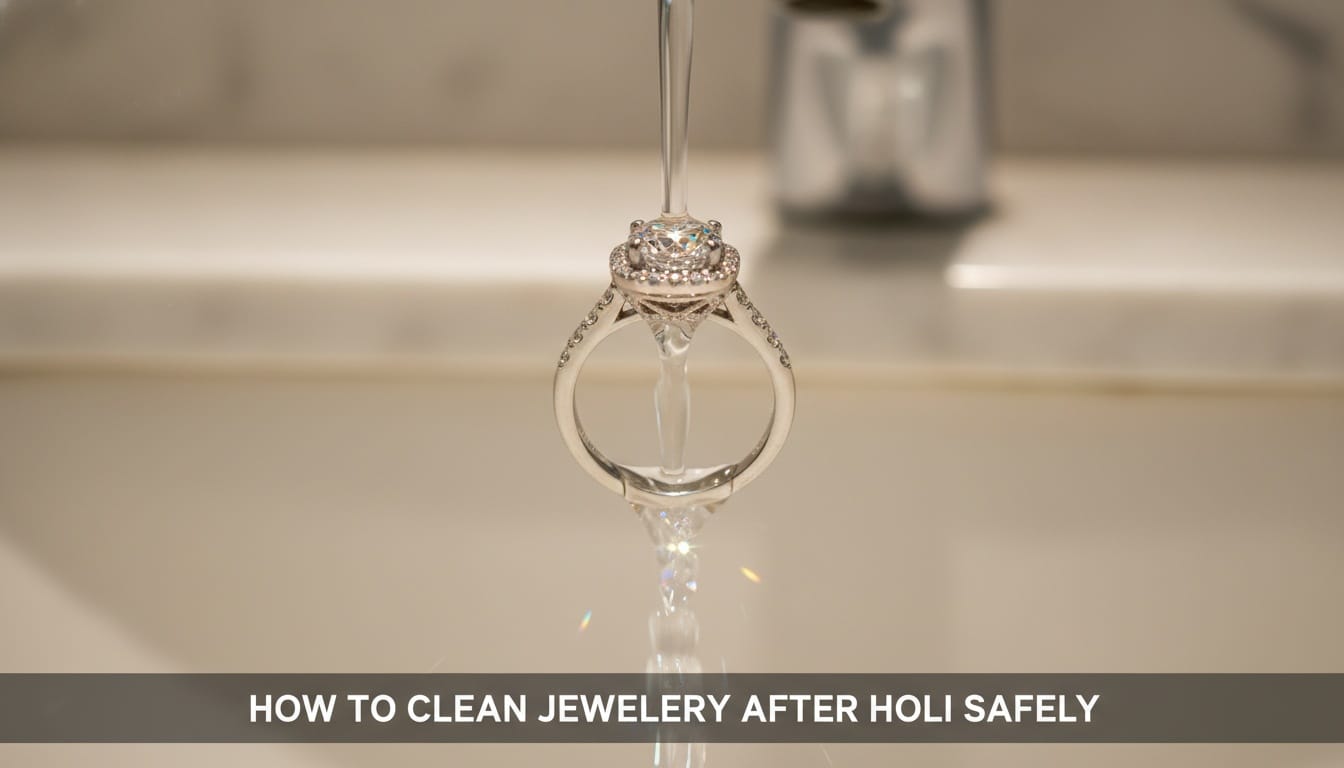
So, you know what? CUT THE GREASE. Glass cleaner helps diamonds sparkle, but make sure you rinse it off completely.
The Danger Zone: Pearls, Corals, and Soft Stones
Never soak pearls, coral, or opals in water or use vinegar/lemon juice. These stones are porous (like a sponge) and will absorb the dirty water, rotting from the inside out. Wipe them gently with a damp cloth only.
This is where most people make mistakes. Pearls are organic gems. They are very sensitive to acids and water.
- NO Vinegar: It will eat away the shiny surface of the pearl.
- NO Soaking: The string inside the pearl necklace will get wet and weak, eventually breaking.
The Safe Cleaning Method:
- Make a Solution: Mix a tiny drop of baby shampoo in a cup of water.
- Dip a Cloth: Dip a soft makeup brush or a cotton cloth into the water. Squeeze it out so it is just damp, not dripping wet.
- Wipe: Gently wipe each pearl or stone individually.
- Dry Immediately: Use a dry, soft cloth to wipe them dry right away. Lay the necklace flat on a towel to air dry completely before putting it in a box.
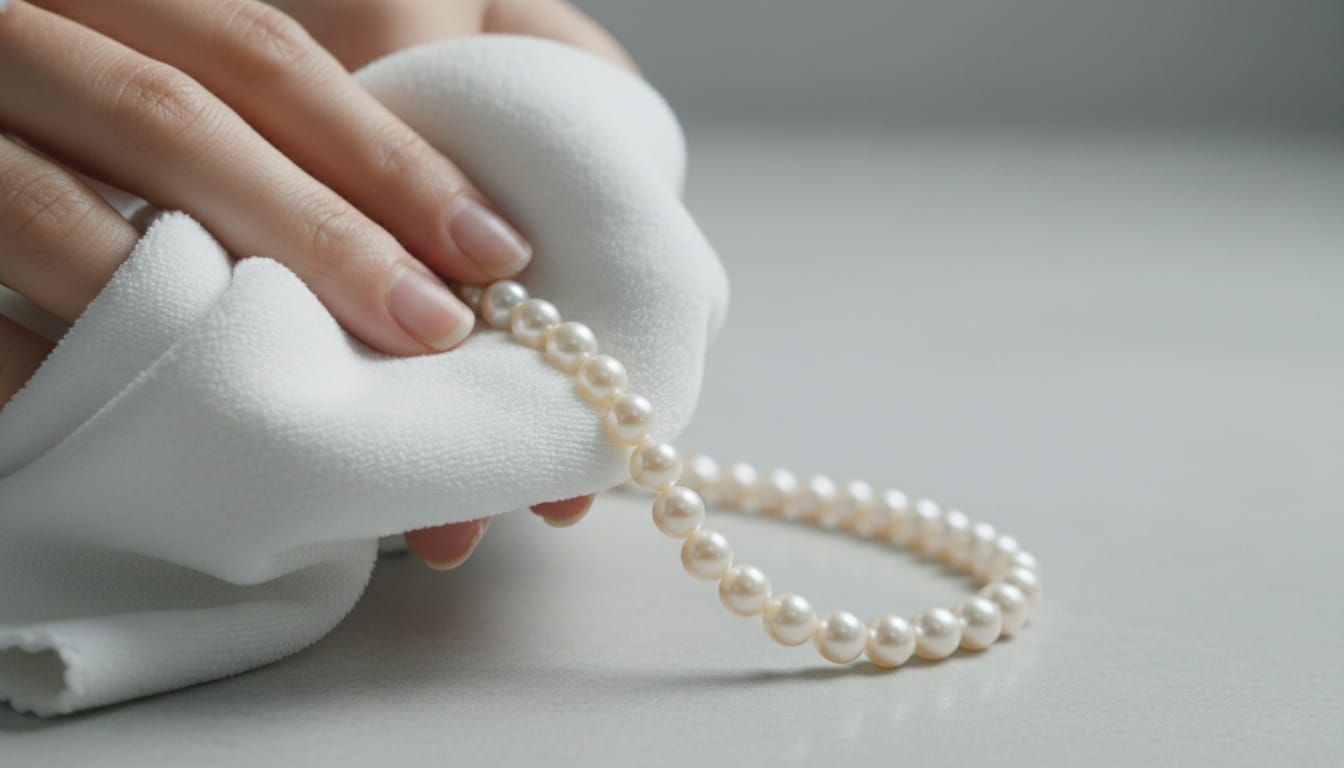
In a nutshell: WIPE, DON'T SOAK. Pearls are thirsty sponges. Keep them away from bowls of water and harsh acids.
How to Clean Artificial and Fashion Jewellery After Holi
Artificial jewellery often relies on glue and polish that can peel off if scrubbed too hard. The best trick is to use a baby wipe or a cotton bud dipped in baby oil to gently lift the colour stains without removing the gold/silver plating.
Fashion jewellery is trendy, but it is not as tough as real gold. Water can make it rust, and scrubbing can peel off the colour.
- The Baby Wipe Trick: Alcohol-free baby wipes are amazing for this. They are wet enough to clean but not wet enough to cause rust. Gently wipe the bangle or earring.
- The Cotton Bud Method: If the stain is stubborn, dip a cotton earbud in a little coconut oil or baby oil. Rub it gently on the stain. The oil helps lift the colour. Wipe away the oil immediately with a dry tissue.
Warning: Do not use nail polish remover! It will strip the shine right off your artificial jewellery.
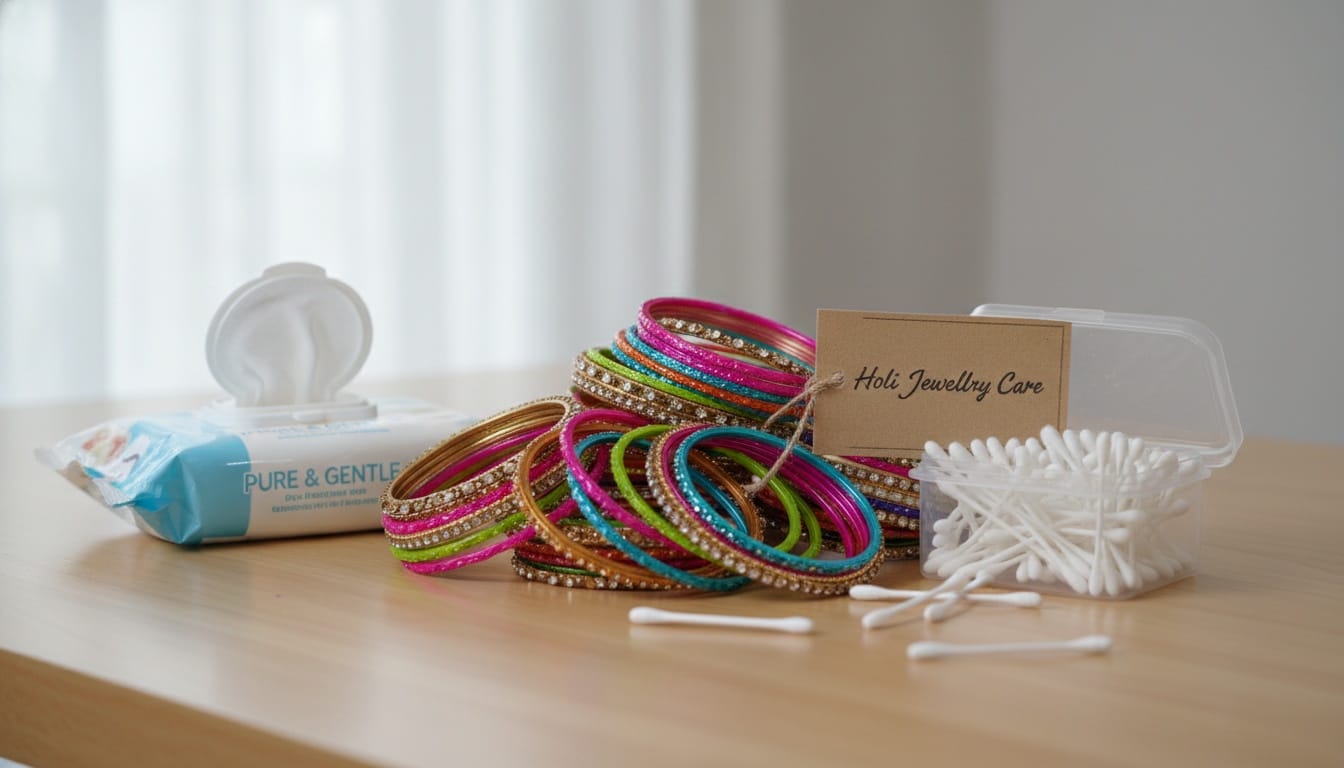
Basically: GENTLE IS KEY. Treat artificial jewellery like delicate skin. Use baby wipes or oil, and keep them dry to prevent rust.
Big Mistakes to Avoid (The "Don't Do It" List)
To keep your jewellery safe, never use hot boiling water, toothpaste, or harsh cleaners like bleach. These can cause permanent damage like cracking stones, loosening glue, or scratching the metal.
Here is a quick checklist of what to avoid:
| Don't Use | Why It's Bad |
|---|---|
| Boiling Water | It can shock gemstones and make them crack. It also melts glue in artificial jewellery. |
| Toothpaste | It is abrasive (scratchy). It creates tiny scratches where dirt will stick later. |
| Lemon/Vinegar | The acid damages pearls, corals, and artificial plating. |
| Paper Towels | They are made of wood pulp and can actually scratch soft gold and silver. Use cotton cloth instead. |
| Sanitizer | The alcohol in sanitizer can ruin the finish of gems and artificial polish. |
For a deeper dive into preserving your valuables, check out this expert guide on jewelry care and common cleaning mistakes to avoid.
So, to sum it up: KITCHEN CAUTION. Just because it cleans your sink doesn't mean it should clean your ring. Stick to mild soap and water.
Smart Trends for 2026: The Matte Finish & Protection
In 2026, matte finish and "temple" style jewellery are very popular, partly thanks to celebrity weddings like Rashmika Mandanna's. This antique look hides scratches better but traps colour dust easily, so it needs extra gentle brushing.
Did you know? After Rashmika Mandanna's wedding in early 2026, the "Antique Matte" finish became a huge trend in India. Unlike shiny gold, this finish is dull and textured.
- Why it's tricky for Holi: The rough texture traps fine colour powder (gulal) very easily.
- How to clean it: You cannot polish it hard, or you will ruin the matte look. Use the Soak and Brush method but be extra patient. You might need to repeat the soaking process twice to get the dust out of the textures.
Pro Tip for Next Year: Before playing Holi, apply a thin coat of transparent nail polish on artificial rings (on the inside band) to prevent skin stains. For real jewellery, it is best to store them safely in your locker while you play.
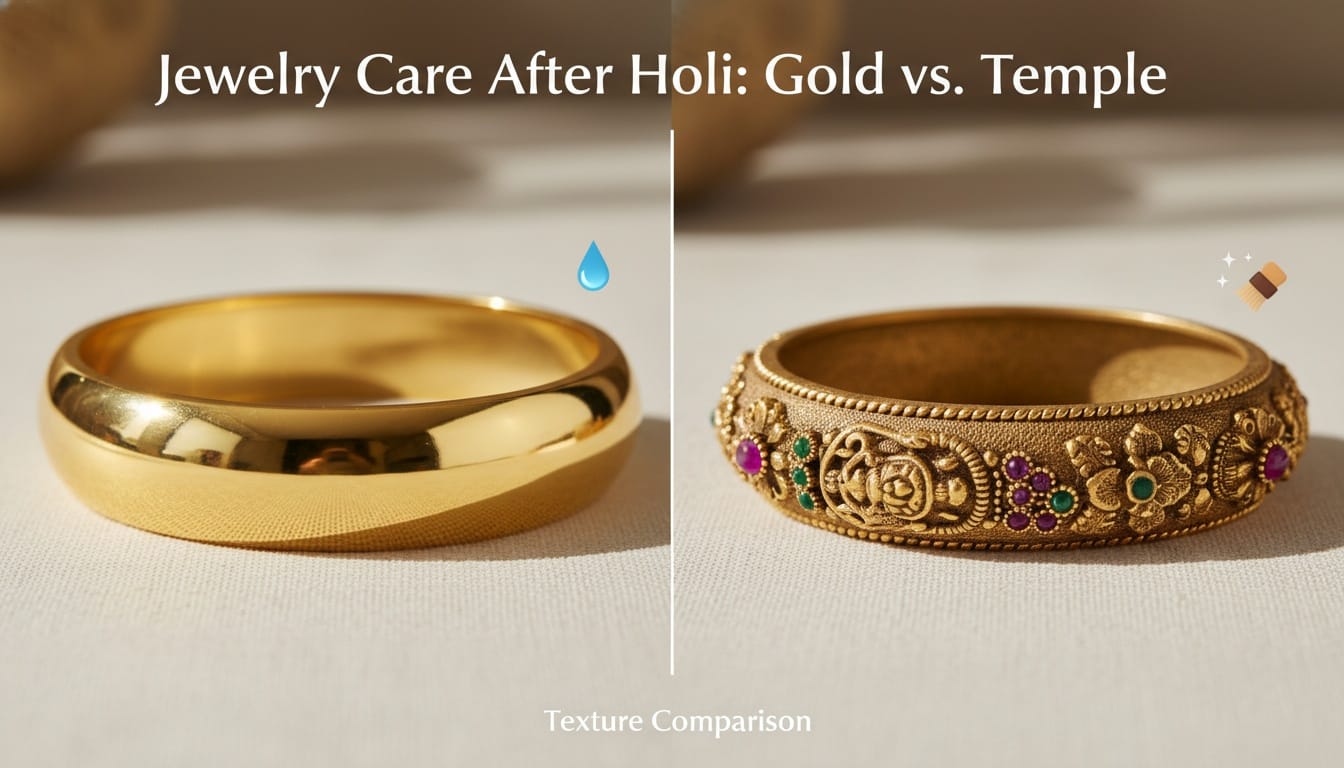
Basically: TEXTURE TRAPS DUST. Trendy matte jewellery looks royal but holds onto colour powder. Be patient and brush gently.
Special Care for Indian Jewellery Types
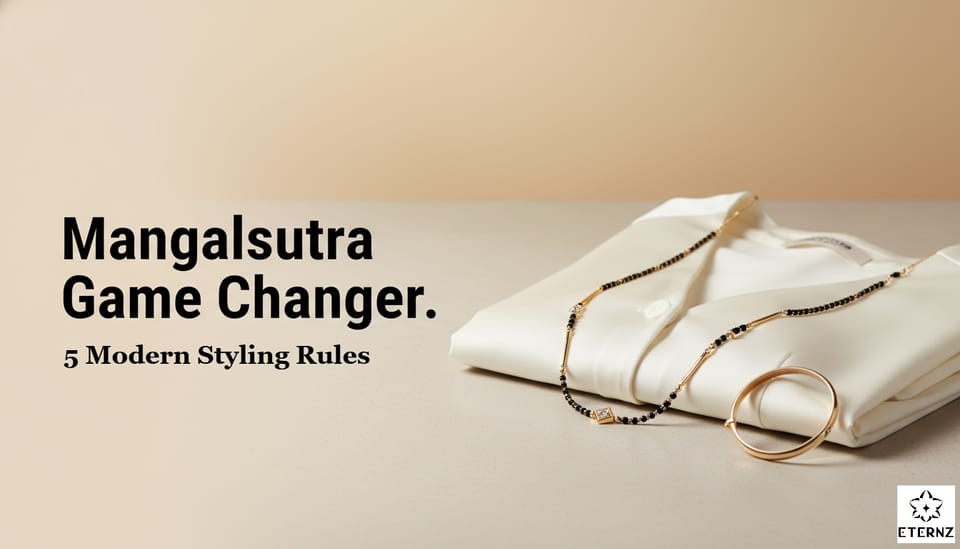
Indian jewellery often has unique designs that need special attention. The Mangalsutra, for example, is worn every day and can accumulate Holi colour in its black beads and gold pendant. Clean it using the gold method, but be very gentle around the thread. If the thread looks worn, it might be time to get it restrung.
For modern designs like bracelet mangalsutras, you can follow the same care instructions as you would for a regular gold bracelet, ensuring the clasp and any stones are cleaned without harsh chemicals.
If you are dealing with very old or sentimental items, you might want to read this expert guide to clean heirloom and vintage jewelry for professional advice.
Where to Find Safe, Trendy Jewellery: Eternz
If you are looking for jewellery that is certified, trendy, and delivered quickly, you need to check out Eternz.
Eternz is a trusted jewelry marketplace with over 300 brands, offering everything from gold to fashion jewellery. They offer same-day delivery in major cities and cool features like Virtual Try-On so you know exactly how a piece looks before you buy.
Why Choose Eternz?
- Massive Collection: They have 300+ trusted brands all in one place. You can find real gold, silver, and trendy fashion pieces.
- Certified Authenticity: You don't have to worry about fakes. Every piece comes with an authenticity certification.
- Try Before You Buy: Their Virtual Try-On feature is a lifesaver. You can use your phone camera to see how those earrings or necklaces look on you instantly.
- Super Fast Delivery: Forgot a gift? No problem. Eternz Now offers Same Day Delivery in cities like Bengaluru, Delhi, Noida, Mumbai, and Gurgaon.
A Special Treat for You
If you are shopping for the first time, use the code WELCOME20 to get a discount on your first order. It's a great way to replace any old, damaged pieces with something sparkling and new!
In a nutshell: SHOP SMART. Eternz brings the jewellery store to your phone with trust, speed, and a great discount code: WELCOME20.
Final Thoughts
Holi is about making memories, not worrying about stains. By following these simple tips, checking your colour type, using mild soap, and avoiding harsh chemicals, you can ensure your jewellery survives the festival as beautifully as you do.
Remember, patience is key. Don't rush to scrub. Let the soapy water do the hard work. And if you ever feel a piece is too delicate or valuable, the best safety measure is simply to keep it in the box while you play!
Happy Cleaning and Happy Shopping!
Frequently Asked Questions
1. Can I use toothpaste to clean my gold ring after Holi?
No, you should avoid using toothpaste on gold. It is abrasive and can create tiny scratches on the soft metal, making it lose its shine over time.
2. How do I remove Holi stains from pearl earrings?
Do not soak them. Dip a soft cloth in a solution of water and a tiny drop of baby shampoo, wring it out until just damp, and gently wipe the pearls. Dry them immediately with a soft cloth.
3. Will baking soda damage my silver jewellery with stones?
Yes, the baking soda and foil method is only for plain silver without any stones, as the chemicals and heat can loosen the glue or damage the gemstones.
4. Is it safe to use sanitizer to clean diamond rings?
No, the alcohol in sanitizers can be harsh on the metal setting and the finish of the diamond, especially if it has any coating. Stick to mild soap or glass cleaner.
5. How do I clean artificial jewellery that got wet during Holi?
Pat it dry immediately with a soft cloth. If stains remain, use a baby wipe or a cotton bud dipped in baby oil to gently lift the colour. Ensure it is completely dry before storing to prevent rust.
6. What is the best way to clean a mangalsutra after Holi?
Follow the gold cleaning method with lukewarm soapy water, but be very gentle around the black beads and the thread. Rinse well and pat dry. If the thread is damaged, take it to a jeweller for restringing.
7. Why did my silver turn black after playing Holi?
Silver reacts with sulphur and chemicals present in synthetic Holi colours. This causes tarnishing, which appears as a black or dull grey layer on the metal.