
Gold Coins or Jewellery: Which One Pays You Back Better?
Wondering if you should buy gold coins or jewellery for investment? We analyze resale value, making charges, and returns to help you decide.
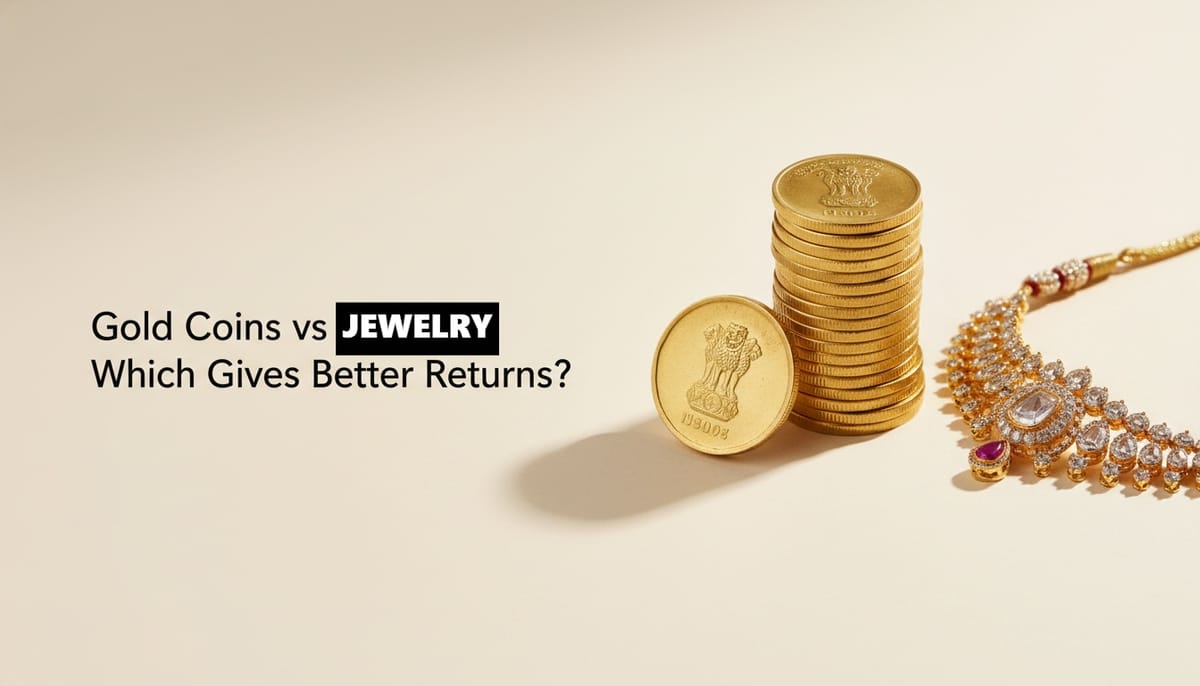
Buying gold is a tradition that is deeply rooted in every Indian household. It serves as a symbol of wealth and acts as a safety net during tough financial times. However, when you stand at the jewellery counter with your hard earned money, a common confusion arises. Should you buy gold coins that sit in a locker or gold jewellery that you can wear? This decision affects how much money you get back when you eventually sell it.
This article provides a detailed comparison between gold coins and gold jewelry from an investment perspective. We will look at purity, making charges, resale value, and tax rules in India. You will understand exactly which option puts more money back in your pocket. This guide is written to help you make a smart financial choice without getting lost in complicated jargon.
Quick Answer
Gold coins pay you back better than jewellery in almost every financial scenario. The primary reason is that gold coins have very low making charges (usually 1% to 4%) compared to jewellery (8% to 25% or more). When you sell jewellery, you lose the money you paid for making charges and stones. Coins are also typically 24K purity, which holds the highest value. Jewellery provides the benefit of usage, but for pure return on investment, coins are the superior choice.
Core Breakdown: Understanding Gold Investment
The Financial Structure of Gold Coins
Gold coins are designed specifically for investment and savings purposes. They are manufactured to store value rather than to serve as fashion accessories.
Definition and Purity Gold coins are solid pieces of precious metal. In India, they are usually sold in 24 Karat purity (99.9% pure) or sometimes 22 Karat. Because they do not require intricate designs or soldering, the gold content is extremely high. You buy them strictly for the weight of the gold.
Making Charges and Cost The cost to produce a coin is very low. Manufacturers stamp them out using machines. This means the making charge is minimal. If you buy a 10 gram coin, you pay the price of gold plus a very small manufacturing fee. This fee is much lower than what you pay for necklaces or bangles.
Resale Efficiency When you sell a gold coin, you get a price very close to the current market rate of gold. There is no deduction for "wastage" or design loss. Banks in India sell coins but do not buy them back. However, jewellers will readily buy back gold coins. If the coin is in its original tamper proof packaging, you get the best rate.
Gold coins are like raw cash. You pay for gold, not design. They are cheap to make and easy to sell without losing much money.
The Financial Structure of Gold Jewellery
Gold jewellery is bought for adornment, social status, and cultural celebrations like weddings. It serves a dual purpose of investment and fashion.
Definition and Purity Jewellery is rarely made of 24K gold because pure gold is too soft to hold a shape. Most Indian jewellery is 22K (91.6% pure) or 18K (75% pure) for diamond settings. The remaining percentage consists of other metals like copper or silver to provide strength.
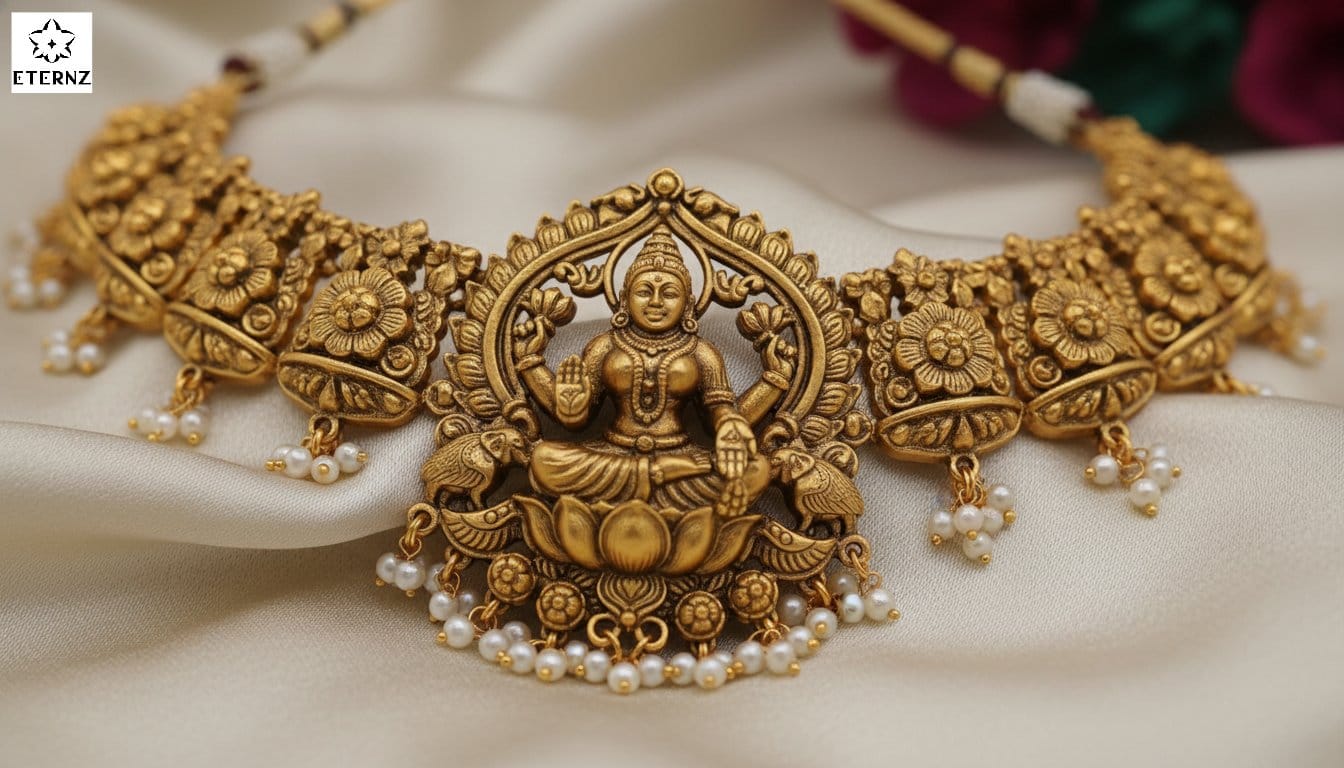
Making Charges and Wastage Jewellery requires craftsmanship. Skilled workers spend hours or days creating a piece. You pay for their labor. This is called the making charge. It can range from 8% for simple chains to over 25% for temple jewellery. Additionally, stones or gems add to the cost but often have zero resale value unless they are certified high quality diamonds.
Resale Deductions When you sell jewellery, the jeweller will melt it to check purity. You lose the entire amount you paid for making charges. You also lose the tax paid on the original purchase. If the jewellery has stones, their weight is deducted from the total weight. This significantly reduces your cash back amount.
Pro Tip: Jewellery is an expense for fashion, not just an investment. You lose money on labor and design fees when you sell it.
Comparing Making Charges and Wastage
Making charges are the single biggest factor that destroys your profit in gold jewellery. This section explains exactly how much you lose.
The Cost Difference Imagine gold is trading at ₹70,000 per 10 grams. If you buy a coin, you might pay 2% making charges. Total cost is ₹71,400. If you buy a necklace, you might pay 20% making charges. Total cost is ₹84,000.
The Selling Difference When gold price rises to ₹80,000 per 10 grams after a few years: For the coin, you get approx ₹80,000. Profit is ₹8,600. For the necklace, you get approx ₹80,000 (only for the gold weight). You actually lose ₹4,000 compared to your purchase price because you paid so much extra initially.
Wastage Explained Wastage is an old term used by jewellers to cover gold lost during cutting and polishing. Modern machine made jewellery has very little wastage, but many jewellers still charge for it. This is an extra cost that does not exist with minted coins.
High making charges on jewellery can eat up all your profits. Coins have low fees, so you keep more of the profit when prices rise.
Purity Standards: 24K vs 22K
Purity determines the cash value of your gold. The higher the purity, the more money you get per gram. For a detailed breakdown of gold purities, you can read our complete guide on 24K vs 22K vs 18K vs 14K Gold.
24 Karat (Coins) 24K is the purest form of gold available. It is 99.9% gold. It has a distinct bright yellow color. Bars and coins are typically 24K. This purity commands the highest market price.
22 Karat (Jewellery) 22K is standard for jewellery. It contains 91.6% gold. The other 8.4% is other metals. When you sell 22K gold, you are paid only for the 91.6% gold content. You are not paid for the copper or silver mixed in it. This means for every 10 grams of jewellery, you are only holding about 9.16 grams of actual gold value.
18 Karat (Stone Jewellery) Stone studded jewellery is often 18K. This is only 75% gold. The resale value of this category is the lowest among the three types.
Coins are usually 100% pure gold value. Jewellery is diluted with other metals, so you get paid for less gold weight.
Liquidity and Ease of Selling
Liquidity means how fast and easily you can convert your gold into cash.
Selling Coins Gold coins are extremely easy to sell. Every jeweller accepts them. If you buy from a reputed brand with tamper proof packing, the jeweller might not even need to melt it to verify. The process is instant. However, remember that banks will sell you coins but RBI rules prevent them from buying them back. You must sell to a jeweller or a gold buying company.
Selling Jewellery Selling jewellery is a longer process. The buyer will check for hallmarks. They will likely melt the piece to check purity if it is old or unbranded. They will remove all stones. You might have to visit the same jeweller you bought it from to get the best exchange rate. If you go to a new jeweller, they might deduct an extra percentage.
Coins are like a universal currency. You can sell them anywhere easily. Jewellery requires more checking and negotiation.
Indian Market Context: Weddings and Gifts
In India, gold is not just money. It is an emotion. This section explores why people still buy jewellery despite lower returns.
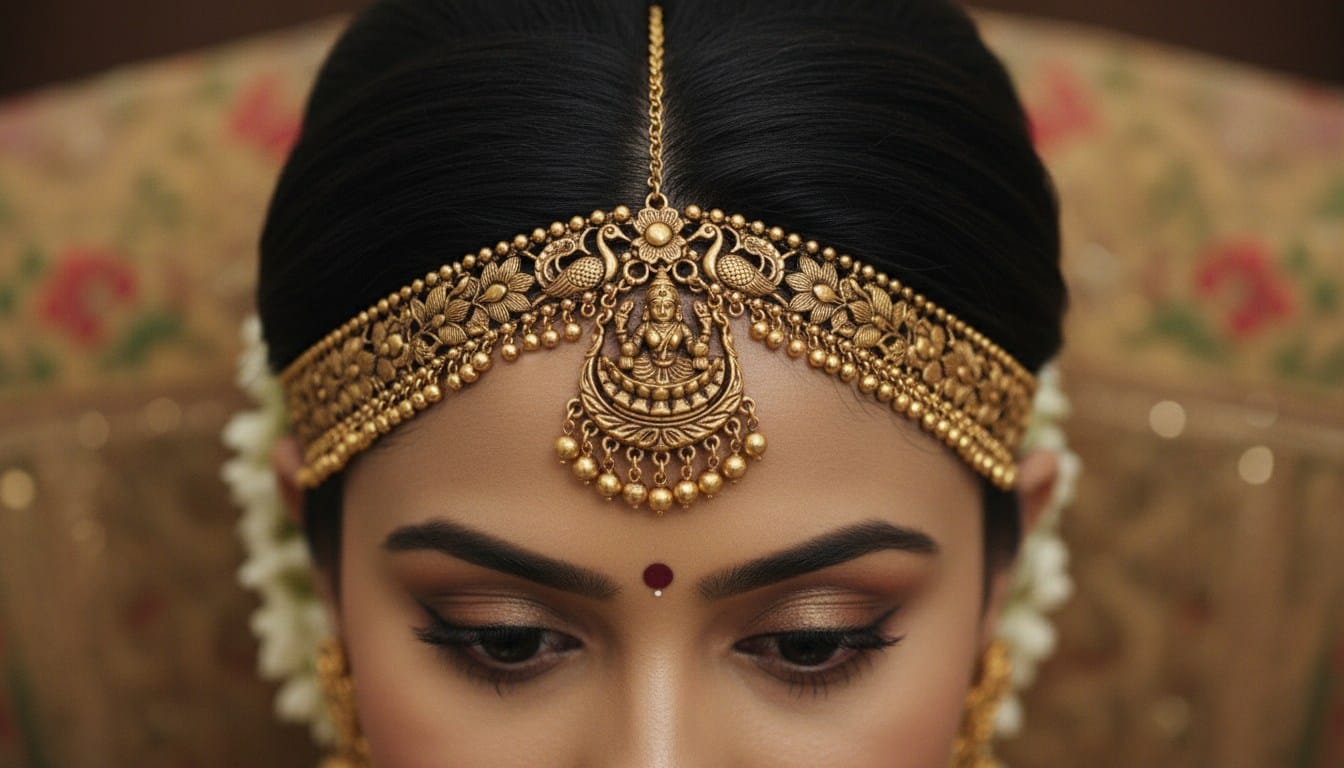
The Wedding Requirement You cannot wear gold coins to a wedding. Jewellery is essential for Indian bridal trousseaus. It represents status and parental blessing. In this context, the "return on investment" is social and emotional, not just financial. The utility value of wearing the gold for 20 years offers a benefit that coins cannot give. You can explore a wide range of necklace sets for such occasions.
Gifting Purpose Coins make excellent gifts for festivals like Dhanteras or Akshaya Tritiya because they fit various budgets. You can buy a 0.5 gram coin or a 50 gram coin. Jewellery usually requires a higher budget and knowledge of the receiver's taste and size. You can also browse a full selection of idols and coins for auspicious occasions.
If you need to wear it, buy jewellery. If you only want to save money for the future, buy coins.
Comparison Table: Gold Coins vs. Jewellery
This table gives you a clear side by side look at the differences.
| Feature | Gold Coins | Gold Jewellery |
|---|---|---|
| Primary Purpose | Pure Investment | Adornment and Fashion |
| Purity | 24K (99.9%) | 22K (91.6%) or 18K (75%) |
| Making Charges | Low (1% to 4%) | High (8% to 25%+) |
| Resale Value | High (Near market rate) | Lower (Deductions apply) |
| Utility | Locker storage only | Wearable asset |
| Liquidity | Very High | High (but with process) |
| Maintenance | None required | Cleaning and repair needed |
Alternatives: Digital Gold and Sovereign Gold Bonds
Physical gold has competitors. You should know about them before buying.
Sovereign Gold Bonds (SGB) These are government securities. They are the best form of paper gold. You get interest (2.5% per year) plus the appreciation of gold price. There is no risk of theft and no making charges. However, there is a lock in period.
Digital Gold You can buy gold for as low as ₹1 on payment apps. It is stored in a vault. It is convenient but often has a spread (difference between buy and sell price) of 3% to 6%, which can be higher than coin making charges.
Pro Tip: SGBs are actually the best for returns, but if you want physical gold in your hand, coins are the winner over jewellery.
To understand the broader market context, you might find it interesting to explore why gold and silver prices are soaring in 2026.
Practical Guide: How to Buy Smart
Follow these steps to ensure you do not get cheated when buying gold.
- Always Check for Hallmark Never buy gold without the BIS Hallmark. It guarantees purity. Look for the HUID code on the piece. This is a 6 digit code that tracks the jewellery.
- Negotiate Making Charges Jewellers often have room to discount making charges. Never accept the first price they quote for labor. For coins, look for schemes or discounts during festivals.
- Buy Back Policy Ask the jeweller: "What will you pay if I sell this back to you tomorrow?" If they say they will deduct 10%, walk away. A good policy has minimal deductions for exchange.
- Keep the Invoice The tax invoice is your proof of purchase. It contains the weight and purity details. You will need this when you sell the gold to prove ownership and date of purchase.
The hallmark is your safety guarantee. Never buy gold without seeing that tiny triangle stamp.
How to Maintain Your Gold
Protecting your investment is important. Knowing how to clean your pieces regularly without damaging them is key for jewellery.
Storage Keep coins in their original sealed packaging. Opening the package can reduce the resale value because the buyer cannot verify it instantly.
Cleaning Jewellery Soak jewellery in mild soapy warm water. Use a soft brush. Do not use harsh chemicals. Regular cleaning keeps the shine but does not affect the gold weight.
Security For large quantities, use a bank locker. Home safes are good for small amounts, but bank lockers offer better security for long term storage.
Don't open the coin packet! Keeping it sealed makes it much easier to sell later for a good price.
Conclusion
The verdict is clear. If your goal is strictly financial return, gold coins are the better choice. They have higher purity, lower costs, and better resale value. You lose very little money on making charges.
However, gold jewellery offers the joy of wearing it. It is an emotional investment. If you buy jewellery, accept that you are paying a premium for the art and usage.
For the modern Indian buyer, a mix is often best. Buy coins for your future savings and buy jewellery for your present happiness. Always buy BIS Hallmarked gold to ensure your money is safe.
Recommendation When you are ready to buy authentic jewellery or coins, trust is everything. You should explore Eternz. They bring you over 300 trusted brands in one place. Every piece comes with an authenticity certification, so you never have to worry about purity.
They also offer a cool Virtual Try-on feature, so you can see how a piece looks on you before buying. If you live in cities like Bengaluru, Delhi, Noida, or Mumbai, you can even get same day delivery.
Use the code "WELCOME20" to get a discount on your first order. It is a smart way to start your gold collection safely and conveniently.
If you are considering modern options, you might also want to read about whether lab grown diamonds are a good investment in 2026.
Frequently Asked Questions
1. Which provides better financial returns, gold coins or gold jewellery?
Gold coins generally offer better financial returns than jewellery because they have significantly lower making charges (1-4% vs. 8-25%+) and are typically 24K pure, losing less value upon resale.
2. What are 'making charges' and how do they impact gold jewellery as an investment?
Making charges are the labor costs for crafting jewellery. They are a significant expense (8-25% or more) that is entirely lost when you sell the jewellery, directly reducing your potential returns or causing a loss.
3. What is the purity difference between gold coins and jewellery?
Gold coins are usually 24 Karat (99.9% pure), offering the highest gold content. Most gold jewellery is 22 Karat (91.6% pure) or 18 Karat (75% pure), as pure gold is too soft, meaning less actual gold content per gram.
4. Is it easier to sell gold coins or gold jewellery?
Gold coins are generally easier and quicker to sell, accepted by most jewellers at a price very close to the market rate. Selling jewellery often involves a longer process with deductions for making charges, stones, and purity verification.
5. Can I sell gold coins back to the bank?
No, banks in India are allowed to sell gold coins but RBI regulations prohibit them from buying them back. You must sell them to a jeweller or a gold recycling center.
6. Is 22K gold coin good for investment?
While 22K coins exist, 24K coins are better for investment. 24K is 99.9% pure, meaning you are holding maximum gold value per gram compared to 22K which has other metals mixed in.
7. Do making charges apply to gold coins?
Yes, but they are very low. Making charges for coins usually range from 1% to 4%, whereas jewellery making charges start from 8% and can go up to 25% or more.
8. Is it better to buy gold bars or coins?
For small investors, coins are better because they offer high liquidity. Bars are larger (often 100g or 1kg) and harder to sell quickly if you only need a small amount of cash.
9. How much GST do I pay on gold?
You have to pay 3% GST on the total value of the gold and making charges. This applies to both coins and jewellery.
10. Does gold jewellery lose value over time?
The gold itself gains value as market rates rise. However, you lose the money paid for making charges and stones. So, the overall profit is lower compared to coins.
11. What is the HUID code?
HUID stands for Hallmark Unique Identification. It is a 6-digit alphanumeric code stamped on gold jewellery to verify its purity and trace its origin. It protects you from fraud.
12. Can I convert my gold coins into jewellery later?
Yes, most jewellers allow you to exchange gold coins for jewellery. You will get 100% of the gold value of the coin, but you will have to pay the making charges for the new jewellery piece.