The Complete 2026 Guide to Nose Piercing in India: Styles, Pain, Aftercare & Jewellery
Thinking about getting your nose pierced in India? This complete guide to nose piercing covers styles, pain level, healing time, aftercare, jewellery choices, and expert tips so you can flaunt your nath with confidence.
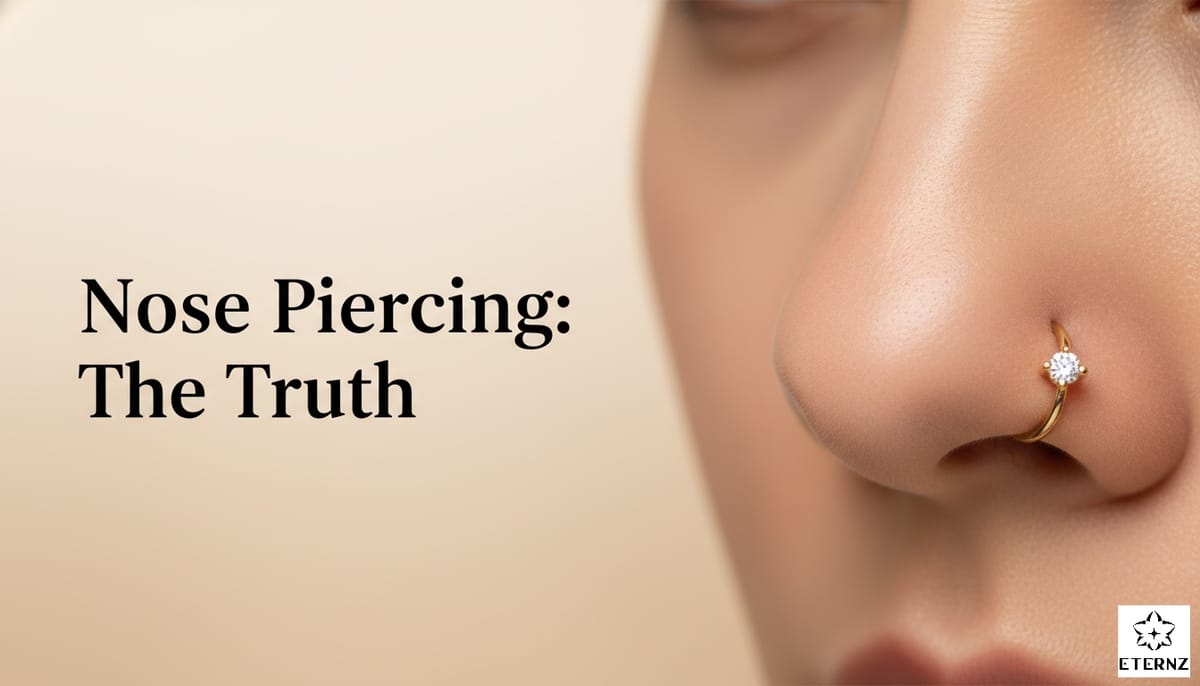
If there is one tiny piece of jewellery that can completely change the vibe of your face, it is a nose piercing. In India, it is not just a style choice, it is culture, tradition, beauty ritual, and self expression, all rolled into one. From a delicate gold stud on a college student to a bold bridal nath at a big fat shaadi, nose piercings have a place in almost every stage of Indian life.
This The Complete Guide to Nose Piercing is written for Indian readers who want the real picture that friends and family do not always tell you. We will walk through the pain, the process, the healing time, the jewellery, and all the small but crucial details that decide whether your piercing becomes your favourite accessory or a nagging headache.
Settle in, grab a chai, and let us dive into everything you need to know before, during, and after your nose piercing.

You can also explore our complete and comprehensive Guide to Piercing.
You can also explore our complete and comprehensive Guide to Ear Piercing.
Why Nose Piercing Matters So Much In India
Nose piercings in India blend deep cultural traditions regarding marriage and health with modern fashion statements. They are not just jewelry but a sign of womanhood, regional identity, and increasingly, personal style for all genders.
For Indians, a nose piercing is rarely just an impulse decision. It comes loaded with meaning.
- In many regions, a nose stud or ring is seen as a symbol of marriage, femininity, and prosperity.
- Ayurveda and traditional beliefs often link the left nostril to reproductive health, which is why many women still choose that side.
- Nose pins have become a unisex style move now, with more Indian men and non binary folks experimenting with subtle or edgy designs.
On top of that, Instagram, Bollywood, regional cinema, and music videos constantly showcase celebrities in everything from tiny diamond nose pins to dramatic septum rings. No wonder teens and young adults see it as the easiest way to refresh their look without a big commitment.
It serves as a bridge between the old world and the new. You might see a grandmother wearing a traditional heavy gold ring next to her granddaughter wearing a sleek silver hoop. Both are valid, and both are beautiful. This dual purpose is why the trend never really fades away in our country.
The Complete Guide to Nose Piercing: Quick Overview
This guide covers everything from choosing the right piercing spot and understanding pain levels to picking safe jewelry and proper aftercare. It serves as a roadmap to ensure your piercing experience is safe, stylish, and free from infection.
Before we dig into the details, here is what this hub page will help you with:
- Understanding different types of nose piercings that suit Indian face shapes and lifestyles
- Knowing how much it hurts and what really happens in the chair
- Getting a realistic healing timeline based on medical and piercing experts
- Learning proper aftercare so you avoid bumps, scars, and infections
- Picking safe nose jewellery metals in the Indian climate, especially if you have sensitive skin
- Styling ideas to match your Indian outfits, from daily kurtis to bridal lehengas
- Answers to the most common Indian style questions such as which side looks better, whether office dress codes allow it, and more
By the end, The Complete Guide to Nose Piercing will give you enough clarity to decide if now is the right time to get pierced and how to do it the smart way.
Types of Nose Piercings Popular in India
The most popular types are the classic nostril piercing on the side, the edgy septum piercing in the middle, and the high nostril piercing. Your choice depends on your face shape, pain tolerance, and how visible you want the jewelry to be.
You might think a nose piercing is just a simple tiny hole in the nostril. In reality, there are multiple placements, each with its own vibe and healing pattern.
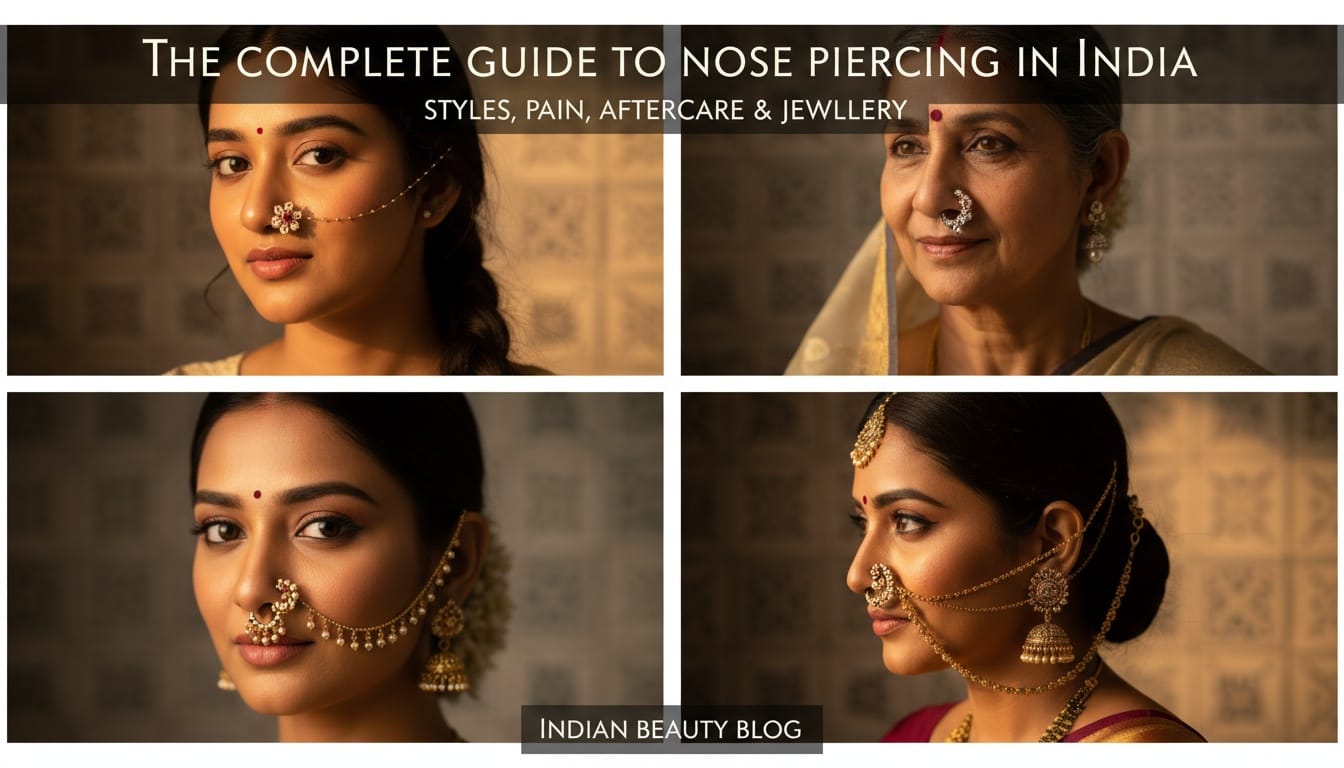
Classic Nostril Piercing
This is the most common one in India.
- Placed on the soft part of either the left or right nostril
- Can hold a small stud, screw, L shaped pin, or a thin hoop
- Works on almost all face shapes and is office friendly if you keep it minimal
Most people in India who say they want a nose piercing are referring to this classic nostril piercing, which pairs perfectly with our range of elegant nose pins. It is versatile and heals reasonably well because the tissue is soft.
High Nostril Piercing
This sits slightly higher up on the nostril, closer to the bridge of the nose.
- Looks more modern and edgy
- Usually suits smaller, subtle studs rather than large hoops
- Can be combined with a regular nostril piercing for a double nose pin look
High nostril piercings can be a bit trickier to place and may take longer to heal fully compared to standard nostril piercings. Because the tissue is thicker up there, the pain might be slightly higher, and you need a skilled piercer to get the angle right.
Septum Piercing
The septum piercing goes through the thin tissue between your nostrils, not the actual cartilage.
- Can carry a horseshoe ring, a circular barbell, or a dainty clicker
- Easy to hide by flipping it inside, which is handy if your office or family is conservative
- Gives a boho or alternative aesthetic seen often on influencers and artists
Septum piercings usually feel better on the surface in a few weeks, though the internal healing still takes months. When you're ready to style it, our collection of septum jewellery offers plenty of options. This piercing is great because it does not leave a visible scar on the outside of your nose if you ever decide to remove it.
Bridge And Other Experimental Piercings
Bridge piercings across the upper nose and multiple stacked piercings are rare in India and fall in the experimental category. They are more prone to rejection and are usually chosen by people already familiar with body piercings.
If you are getting your very first piercing and you live with family, a simple nostril piercing is by far the easiest and least controversial starting point.
| Piercing Type | Pain Level (1-10) | Healing Time | Visibility |
|---|---|---|---|
| Standard Nostril | 3-4 | 4-6 Months | Medium |
| High Nostril | 5-6 | 6-9 Months | Low/Medium |
| Septum | 4-5 | 3-6 Months | High (Hidden option) |
| Bridge | 4-5 | 3-6 Months | Very High |
Which Side Of The Nose Should You Pierce In India?
Tradition and Ayurveda suggest the left side for women due to connections with reproductive health, but modern fashion allows you to choose either side based on your "good side" or facial symmetry. There is no strict medical rule, so personal preference is key.
The side debate is almost a family tradition in itself.
Cultural And Traditional Factors
In many Indian cultures, especially in North India and parts of Maharashtra, the left side is preferred for women because of a traditional belief that it is connected to reproductive health and smoother childbirth. This is also the side traditionally chosen for a bridal nath. Even if you are not personally religious, elders in the family might push for the left side out of habit.
In some South Indian communities, the right side is more common, or even both sides are pierced. So, tradition varies depending on where you are from.
Face Shape And Aesthetic Considerations
From a modern aesthetic point of view, you can simply pick the side that balances your features better.
- If you have a statement mole, hair parting, or dimple on one side, some people like to balance it by piercing the other side.
- If you have a slightly tilted nose, your piercer might suggest the side that visually looks more symmetrical.
- The Selfie Test: Take selfies from both sides of your face. Which side do you prefer? That is usually the best side to pierce because it is the side you show the world most often.
Ultimately, there is no right or wrong answer. In urban India, people happily choose either side or even both.
How Much Does A Nose Piercing Hurt?
Most people rate nose piercing pain as a 3 or 4 out of 10, similar to a sharp pinch or a quick injection that makes your eyes water. The actual pain lasts only a few seconds, though the area may feel warm and tender for a few days afterward.
Let us be honest. It will hurt, but not the end of the world kind of hurt.
- Most people describe the pain as a sharp pinch that lasts a few seconds, followed by a warm, throbbing sensation for a little while.
- Septum piercings can feel intense for a moment since the area is quite sensitive, but the pain usually reduces quickly after the jewellery is in.
- Your eyes will likely water. This is not crying; it is a natural reflex because the nose is connected to the tear ducts.
Your pain tolerance, your cycle, sleep, stress level, and even whether you have eaten something all play a role in how you experience it.
A good Indian piercer will usually talk you through the process, ask you to breathe deeply, and finish the actual piercing in seconds.
Pain Comparison Chart:
- Ear Lobe: 2/10 (Mild sting)
- Nose Nostril: 3-4/10 (Sharp pinch + watery eyes)
- Upper Ear Cartilage (Helix): 4-5/10 (Throbby pinch)
- Septum: 4-5/10 (Intense pinch, fast relief)
The Complete Guide to Nose Piercing: Step by Step Experience
A professional piercing involves cleaning the spot, marking the placement with a pen, and using a sterilized needle to create the hole quickly. The process is fast and sanitary, avoiding the blunt force trauma caused by piercing guns.
Knowing what to expect removes half the fear. Here is how a typical appointment plays out in a reputable studio in India.
- Consultation And Marking
- You discuss placement, side, and jewellery style with your piercer.
- They clean the area and mark a tiny dot where the piercing will sit.
- You will usually get a mirror to check if you like the positioning. Do not be afraid to ask them to move the dot if you don't like it.
- Sterilisation And Setup
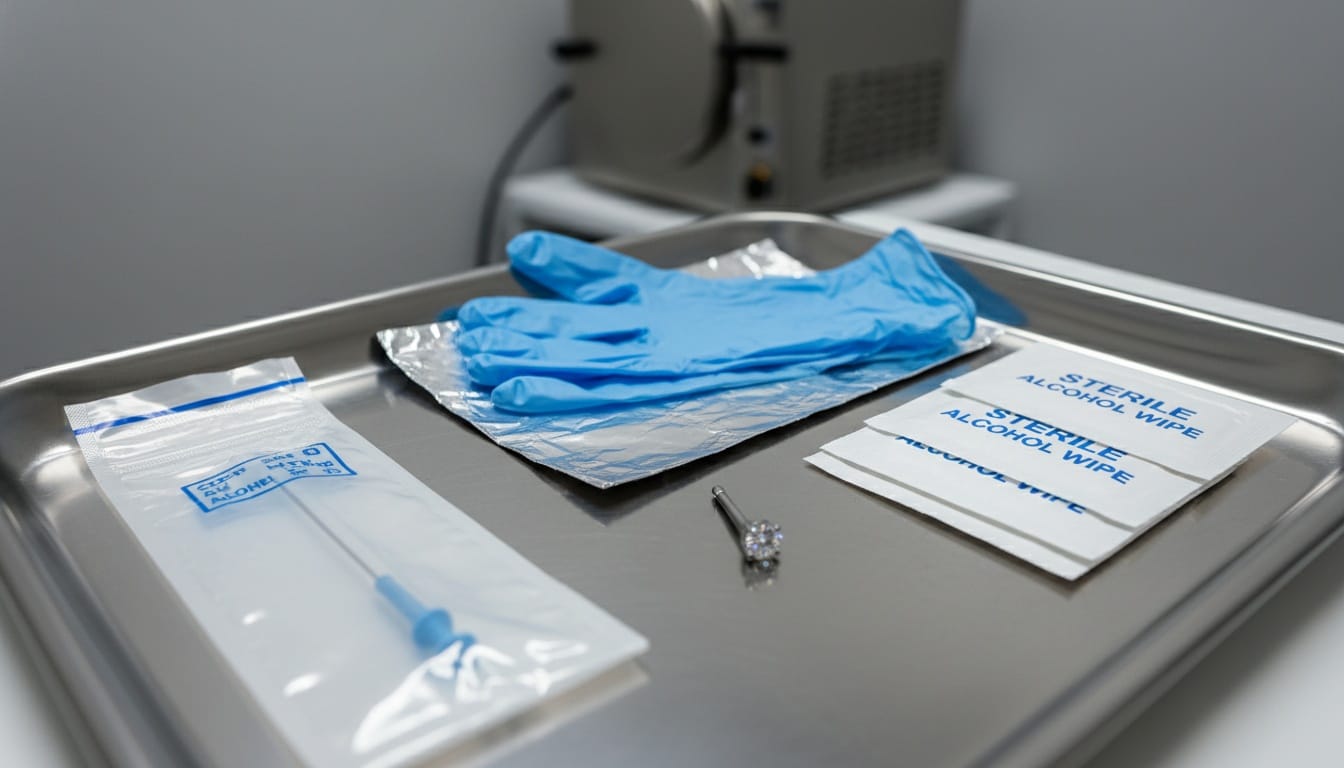
- The piercer should open a fresh sterilised needle in front of you. This is crucial for safety.
- Gloves, a clean workspace, and sanitised jewellery are non negotiable.
- Why avoid guns? Avoid places that use piercing guns for noses since they can cause more trauma, are harder to clean properly, and may increase the risk of complications. Guns force the jewelry through the skin, while needles make a clean, sharp incision.
- The Actual Pierce
- You will be asked to breathe in and out steadily.
- In one swift movement, the needle passes through and is followed by the jewellery.
- The whole thing, from needle to jewellery, often finishes in under a minute.
- Basic Aftercare Instructions
- Most studios will give you verbal aftercare advice and sometimes a small printed card. The details may vary slightly, but the principles are the same worldwide.
Healing Time For Nose Piercings In India
A nose piercing takes about 2 to 4 months to heal completely, though it may look fine on the outside after just a few weeks. Consistency in cleaning and avoiding touch is vital to ensure the inner tissue heals without bumps or infections.
Here is where expectations usually clash with reality. People assume it will heal in a few weeks. In truth, a nose piercing heals in layers and stages.
Realistic Healing Timeline
Based on dermatology and piercing sources:
- Initial Phase (Week 1-2): Redness, tenderness, and minor swelling.
- Surface Healing (Week 6-8): For many people, the outer surface feels calmer. The skin around the jewelry looks normal.
- Deep Healing (Month 4-6): Full internal healing for most nostril piercings generally takes around 4 to 6 months with proper care. The tissue inside the hole needs this time to toughen up.
- Septum Specifics: Septum piercings often feel better on the outside within 6 to 8 weeks, but complete internal healing can take up to 6 months or more depending on your skin and care routine.
So if you are wondering how many days it takes for a nose piercing to heal, the honest answer is that days only cover the very early phase. The deep tissue needs months to fully stabilise.
Signs Your Piercing Is Healing Well
You can relax when you notice:
- Mild swelling and redness that gradually reduces
- A stable, comfortable feeling most days
- No fresh bleeding or pus like discharge
- The jewelry moves freely when you clean it (though you should not force it to move).
It is still normal to have occasional sensitivity or dryness even a couple of months in, especially in dry winters or if your mask or dupatta rubs against it.
Aftercare: How To Look After Your New Nose Piercing
Clean the piercing twice daily with saline solution, wash hands before touching it, and keep makeup away from the open wound. Avoiding harsh chemicals and not playing with the jewelry are the two most important rules for preventing infection.
Here is where many people go wrong. Good aftercare is what separates a smooth journey from a months long frustration.
Daily Cleaning Routine
Widely recommended aftercare advice includes:
- Saline Soak: Clean your piercing twice a day with a sterile saline solution or a mild salt water soak. (Mix 1/4 teaspoon of non iodized salt in a cup of warm distilled water).
- Clean Hands: Always wash your hands before touching the area. This is the number one rule.
- Gentle Drying: Gently pat dry with clean tissue or a soft cotton pad instead of using the same towel for your whole face. Towels can harbor bacteria and snag the jewelry.
- No Strong Chemicals: Avoid harsh antiseptics like Dettol or Savlon unless a healthcare professional specifically tells you to use them, since they can irritate the delicate healing tissue and dry it out.
Things You Should Avoid
For the first few months, try your best to:
- Avoid twisting or constantly playing with the jewellery. It destroys the healing tissue.
- Keep makeup, foundation, and compact powder away from the piercing area.
- Skip swimming pools and hot tubs that may contain germs.
- Avoid sleeping with your face buried in the pillow on the pierced side.
These small changes reduce friction and prevent clogged pores, which in turn lowers the chance of infections or bumps. Once healed, proper cleaning will keep your jewellery sparkling. For more on that, check out our guide on common jewelry care mistakes to avoid.
Common Problems And How To Handle Them
Common issues include irritation bumps, redness, and minor infections caused by touching or snagging the jewelry. Most bumps go away with saline soaks and patience, but persistent pain or pus requires a visit to a doctor or piercer.
Even with good care, tiny issues can pop up. Spotting them early is key.
Nose Piercing Bump Or Tiny Bubble
Many people notice a small, raised bump near the jewellery. It can be a simple irritation bump, a small local infection, or hypertrophic tissue. This is very common and often happens if the jewelry gets snagged on a towel.
Experts usually advise:
- Sticking to gentle saline soaks
- Avoiding constant fiddling or changing jewellery too early
- Not popping, squeezing, or scratching the bump
- Consulting a piercer or dermatologist if it persists or worsens
Tea tree oil is sometimes suggested online, but strong essential oils can irritate sensitive Indian skin, so it is safer to use them only under proper medical guidance.
Infection Signs
Watch out for:
- Yellow or greenish pus
- Increasing redness, warmth, and pain around the piercing
- Fever or feeling generally unwell
If you suspect infection, do not remove the jewellery on your own. Reach out to a doctor or experienced piercer. Removing jewellery while the hole is still open can trap infection inside, causing an abscess.
Keloids And Scarring
True keloids are thick, raised scars caused by excess collagen production and can be difficult to treat. Some people, especially those with a family history of keloids or deeper skin tones, are more prone to such scarring. Many bumps are misidentified as keloids, so it helps to get a dermatologist’s opinion before panicking.
If you already know you are extremely prone to keloids from past piercings or injuries, discuss it with a skin specialist before getting your nose pierced.
| Symptom | Possible Cause | Action Step |
|---|---|---|
| Small red bump | Irritation / Snagging | Stop touching it, use saline soaks. |
| Hot, red, throbbing | Infection | See a doctor immediately. |
| Itchy skin | Metal Allergy / Dryness | Switch to Titanium jewelry or check cleaning solution. |
| Hard, growing lump | Keloid | Consult a dermatologist. |
Best Metals For Nose Jewellery In The Indian Climate
The best metals for fresh piercings are implant grade titanium and solid gold (14k or 18k) because they are hypoallergenic and safe for sensitive skin. Avoid nickel, silver, and plated jewelry initially as they often cause allergic reactions and tarnish.
Between humidity, sweat, pollution, and sensitive skin, the metal you choose can make or break your experience.
Safe Metals For Fresh Piercings
Dermatologists and body jewellery experts often recommend:
- Implant grade titanium: This is the gold standard. It is lightweight, does not rust, and almost no one is allergic to it.
- Surgical stainless steel (such as 316L): Good for many, but can contain trace amounts of nickel.
- High quality 14 carat or 18 carat gold: Pure enough to be safe, but strong enough to hold shape.
In the Indian context, many people love starting directly with a tiny gold stud. That is fine as long as it is genuine solid gold of good quality rather than cheap, thin plated pieces that can chip or flake.
Metals To Be Careful With
People with sensitive skin are more likely to react to jewellery that contains:
- Nickel: A very common cause of jewellery allergy found in cheap metals.
- Copper based alloys: Can turn skin green.
- Silver (for fresh piercings): Silver oxidizes (turns black) when it touches wound fluid. It is great for healed piercings but risky for new ones as it can stain the skin permanently.
If you often get rashes or itching from earrings, belts, or watch straps, you might have sensitive skin and should stick to hypoallergenic materials. This is why understanding metals like 925 sterling silver is perfect for everyday luxury in India and for sensitive skin, specifically once your piercing is fully healed.
Nose Jewellery Styles That Work Beautifully For Indians
Indian styles range from minimal diamond studs and thin hoops for daily wear to elaborate naths and septum rings for weddings. Choosing the right style depends on the occasion, your outfit, and how fully your piercing has healed.
Here is the fun part. Once your piercing has healed, you can treat your nose like a tiny style playground.
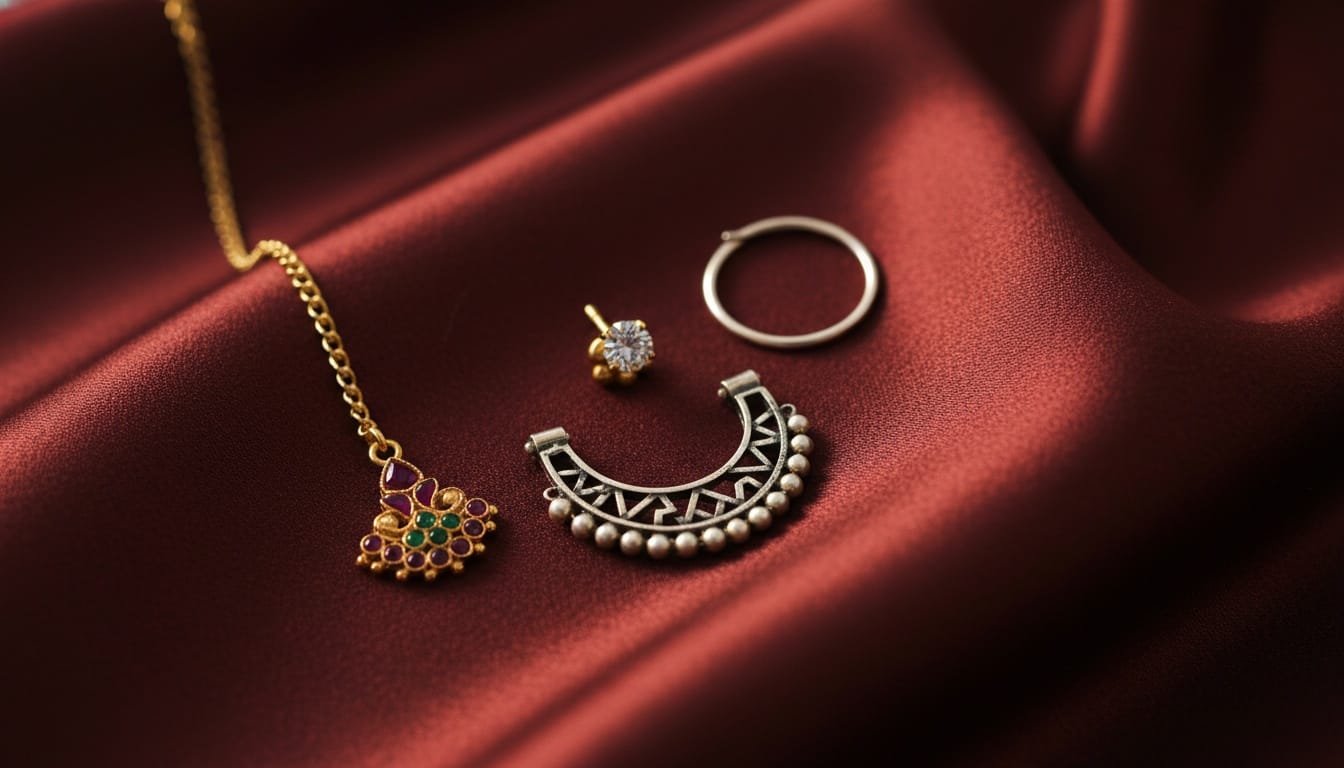
Classic Indian Staples
- Simple gold or diamond nose pin: For daily wear and office. It adds a spark without being distracting.
- Traditional Maharashtrian nath: For weddings and festivals. These are often clip-ons or require a healed piercing to support the weight.
- Delicate ring: For a slightly boho but still elegant look.
These coordinate effortlessly with other jewellery pieces like mangalsutras, jhumkas, bangles, and anklets, letting you build a cohesive jewellery story around your outfits.
Minimalist And Modern Choices
If you prefer a softer, more contemporary look:
- Micro studs: That are almost like a tiny sparkle on the nostril.
- Thin seamless hoop: In silver, white gold, or titanium.
- Gemstones: A small gemstone that matches your birthstone or bridal colour palette.
These styles work especially well with fusion wear, from jeans and kurtis to Indo western gowns.
Septum Jewellery For Indian Faces
For septum piercings, you can:
- Wear a horseshoe that flips inside for office and flips out for parties.
- Try a decorative clicker with minimal design for subtle drama.
- Experiment with oxidised styles to complement handloom sarees and tribal silver jewellery.
The key is balance. If your nose piece is loud, let your earrings and neckpiece stay softer, and vice versa. To discover more ways to harmonize your look, explore our guide on how to find your perfect match: a guide to popular jewellery styles.
Where To Get Your Nose Pierced In India
With nose piercings being so common, you will find options everywhere, from tiny local shops to luxury jewellers and professional piercing studios.
What A Good Studio Should Offer
Look for:
- A dedicated piercing area that looks clean and professional
- Piercers who use single use, sterilised needles
- Jewellery made of good quality metals suitable for fresh piercings
- Clear, confident answers to your questions about pain, healing, and aftercare
Many jewellery brands that focus on body piercing now offer medically informed guides around healing and safe metals, which can be reassuring for first timers.
Avoid walking into any place that looks like piercing is a side business rather than a serious service.
Cost Of Nose Piercing And Jewellery In India
Prices naturally vary by city and how premium the brand or studio is, but a rough idea helps you budget.
- Basic studio fee for a needle nose piercing in many Indian cities can be somewhere in the range of a few hundred to a couple of thousand rupees, often including simple starter jewellery.
- High quality gold or titanium nose jewellery can cost from a few hundred rupees for simple designs to several thousands for diamond or designer pieces, both online and at branded stores.
Think of it as a long term investment. A well crafted gold stud or hypoallergenic titanium ring that you can wear comfortably daily is worth more than three cheap pieces that irritate your skin.
Lifestyle Tips So Your Piercing Survives Daily Indian Life
Indian life is full of tiny things that keep touching your face, from dupattas to helmets. A few tweaks can protect your fresh piercing.
- While your piercing is new, be careful when taking off and putting on tight T shirts and kurtis.
- If you ride a two wheeler, adjust your helmet gently so the padding does not catch on the jewellery.
- Be mindful when draping sarees, dupattas, or stoles across your face.
- During skincare and makeup, go light around the piercing, avoiding heavy foundation directly on the site until it has healed properly.
Once your piercing is well healed, these things become second nature, and you will automatically protect it without overthinking.
Conclusion
In India, a nose piercing is far more than one small hole in your skin. It is a mix of childhood dreams, family expectations, cultural symbolism, and your personal style story. When done thoughtfully, it becomes that one piece of jewellery you feel half dressed without.
The Complete Guide to Nose Piercing you have just read is meant to be your starting hub. Use it to choose the right side and style, pick a hygienic studio, understand the real healing timeline, and select jewellery that keeps your skin happy instead of angry. From there, every time you slip on a tiny gold nose pin for office or a grand nath for a wedding, you will know you did the homework behind that small sparkle.
Frequently Asked Questions About Nose Piercing (FAQs)
1. What are the most popular types of nose piercings in India?
The most common types are the classic nostril piercing (traditional and widely accepted), the high nostril piercing (a modern variation), and the septum piercing (trendy and can be hidden).
2. Which side of the nose is traditionally pierced in India?
Traditionally, many North Indian cultures prefer the left side for women due to Ayurvedic beliefs linked to reproductive health. Today, the choice is personal and varies by region and style preference.
3. How painful is a nose piercing?
Most people rate it 3–4 out of 10. It feels like a sharp pinch that lasts a few seconds, followed by mild tenderness.
4. Does a nose piercing hurt more than an ear piercing?
It usually feels slightly sharper than an earlobe piercing because the nose has thicker tissue, but the discomfort is brief and manageable.
5. How long does a nose piercing take to heal?
A nostril piercing typically takes 4 to 6 months to heal fully. Even if it looks healed on the outside, inner healing continues for months.
6. When can I change my first nose stud?
It is safest to wait at least 2–3 months, ideally closer to 4 months. Consult your piercer before changing jewelry.
7. Why are nose piercings culturally significant in India?
They symbolize marriage, femininity, prosperity, and regional identity in many Indian communities and also carry traditional Ayurvedic associations.
8. Can I get a nose piercing if I have sensitive skin?
Yes, but choose hypoallergenic metals like titanium, surgical stainless steel, or solid gold to reduce irritation risk.
9. Is piercing with a gun safe for the nose?
Needle piercing is recommended. Piercing guns can cause more tissue damage and are harder to sterilize properly.
10. Will a septum piercing be noticeable at work or home?
Many septum rings can be flipped inside the nose for a subtle look, but workplace rules and family preferences should be considered.
11. Can a nose piercing leave a permanent mark?
It may leave a tiny faint mark after removal. Visibility depends on healing, duration worn, and skin type.
12. Can I try a fake nose ring before getting pierced?
Yes. Clip-on or magnetic nose rings let you experiment with the look before committing to a real piercing.