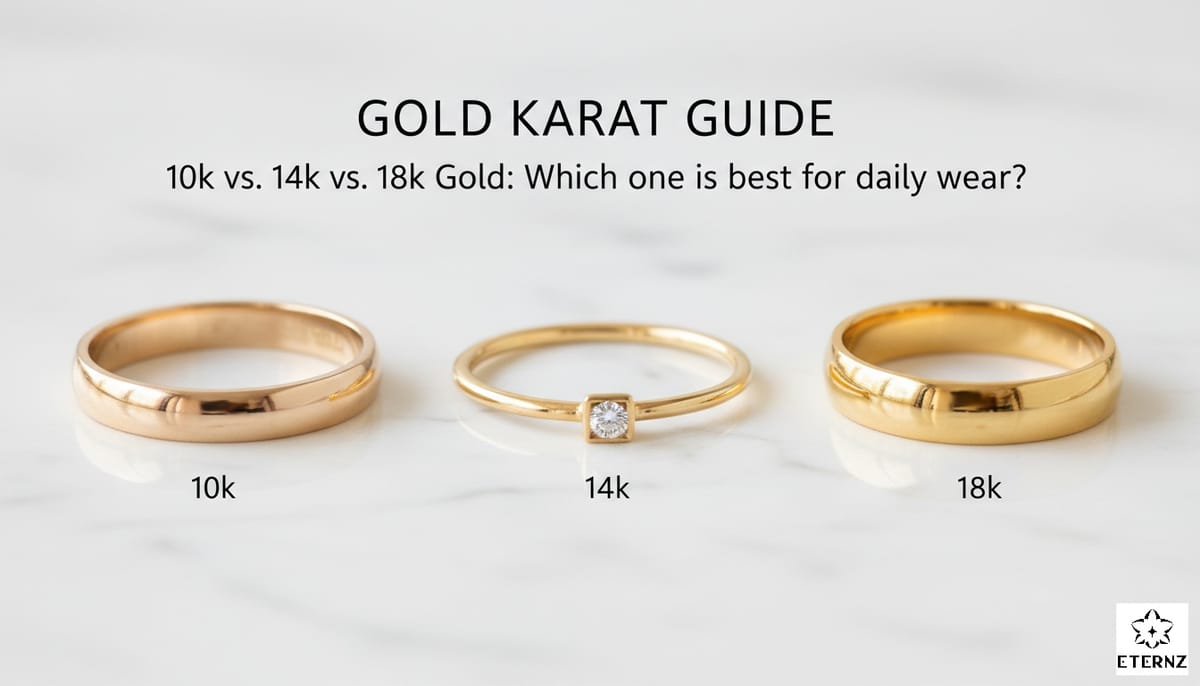
10k vs. 14k vs. 18k Gold: Which one is best for daily wear? The Ultimate Guide for Smart Shoppers
Confused about gold purity? We break down the battle of 10k vs. 14k vs. 18k Gold: Which one is best for daily wear? Discover the perfect mix of shine, price, and durability for your everyday jewelry.
You just bought a shiny new gold ring. You love it. You wear it to work, to the gym, and while doing the dishes. Then, a week later, you look down and see a scratch. A big, ugly scratch right across the band. Heartbreak! We have all been there. You assumed gold was gold, right? Well, not exactly.
When you are shopping for jewelry that you plan to wear every single day, purity matters a lot. But more purity isn't always better. In fact, pure gold is actually soft like clay. That is why jewelers mix it with other metals to make it strong enough for your busy life. But how do you choose?
This guide is going to clear up the confusion. We are going to tackle the big question of 10k vs. 14k vs. 18k Gold: Which one is best for daily wear? and help you pick the piece that matches your lifestyle and your budget. For a deeper dive into all gold purities including 22K and 24K, read our complete 2025 Gold Purity Guide.
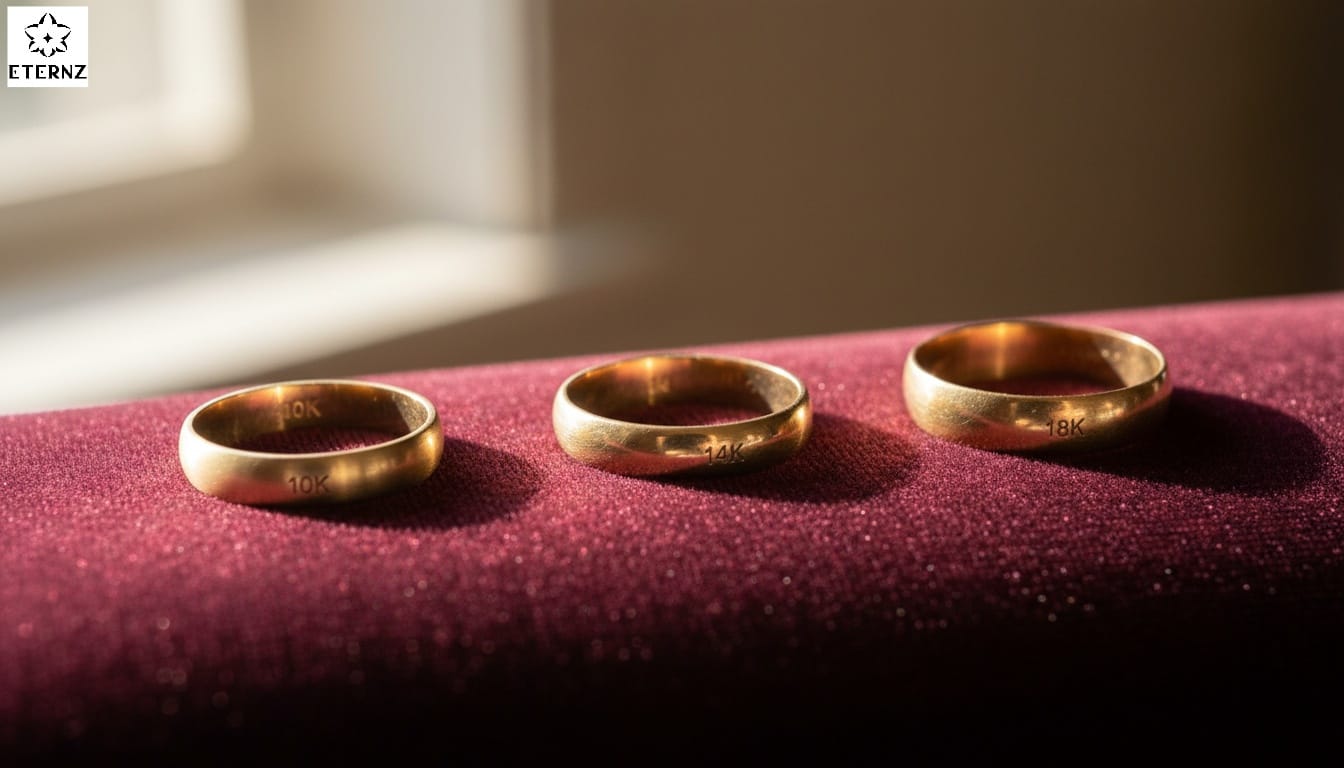
What does "Karat" actually mean in jewelry?
A Karat tells you exactly how much pure gold is in your jewelry compared to other metals like copper, silver, or zinc.
Think of gold like a cake recipe. Pure gold, or 24k, is the flour. But you can't make a cake with just flour; it falls apart. You need eggs and butter (the alloy metals) to hold it together. The lower the karat number, the less gold "flour" is in the mix, but the harder the "cake" becomes.
- 24k: 100% Gold (Too soft for jewelry)
- 18k: 75% Gold (Rich and prestigious)
- 14k: 58.3% Gold (The durable middle ground)
- 10k: 41.7% Gold (The toughest option)
Did you know? The term "Karat" comes from the word "carob." In ancient times, merchants used carob seeds on balance scales to measure the weight of gold because the seeds were so consistent in size!
Why is 10k gold considered the toughest cookie?
10k gold is the strongest option on the market because it contains more alloy metals than actual gold.
If you are someone who works with their hands, lifts weights, or is just generally clumsy (it happens!), 10k is your best friend. Since only 41.7% of it is gold and the rest is harder metals like zinc or nickel, it is incredibly difficult to scratch or bend.
The Pros of 10k Gold
- Price: It is the cheapest option. You get the gold look for a fraction of the price of 18k.
- Durability: You can practically hammer a nail with it. It resists scratches better than any other type.
The Cons of 10k Gold
- Color: It looks a bit pale. It lacks that deep, rich yellow glow you see in Indian wedding jewelry.
- Allergies: This is a big one. Because it has more "other" metals, it is more likely to cause skin irritation if you have a nickel allergy.
Why is 14k gold called the perfect middle ground?
14k gold balances durability and beauty perfectly, making it the most popular choice for engagement rings in the West and office wear in India.
This is the sweet spot. It has nearly 60% pure gold, so it still has a nice warm yellow color, but it has enough alloy metals to keep it from scratching the second you touch a door handle. When people ask about 10k vs. 14k vs. 18k Gold: Which one is best for daily wear?, the answer for 90% of people ends up being 14k.
The Pros of 14k Gold
- Value: You get a lot of gold content without paying the premium prices of 18k or 22k.
- Look: It looks very similar to 18k to the naked eye. Unless you are a jeweler, you might not spot the difference.
The Cons of 14k Gold
- Maintenance: It still needs a polish now and then, though not as often as higher karats.

Is 18k gold too soft for everyday use?
18k gold is durable enough for daily wear like earrings or necklaces, but you need to be careful with rings.
In India, we love high karat gold. 22k is standard for weddings, but 18k is the modern standard for diamond jewelry. It contains 75% pure gold. That gives it a stunning, rich yellow color that looks expensive because, well, it is.
However, because it is mostly soft gold, it will scratch. If you wear an 18k ring while gardening or washing dishes, it will lose its shine faster than 14k.
The Pros of 18k Gold
- Purity: It is hypoallergenic. Less nickel means less itching for sensitive skin.
- Prestige: It holds its value better over time.
- Beauty: The color is vibrant and warm.
The Cons of 18k Gold
- Softness: It dents and scratches easier.
- Cost: It is significantly more expensive than 14k or 10k.
How do the prices compare in Rupees?
Price is usually the deciding factor for most shoppers, with 10k being the most budget friendly and 18k being a luxury investment.
Let's look at the numbers. While gold rates change daily, the difference in price percentages stays the same.
| Gold Karat | Gold Content | Estimated Price Factor | Best Use Case |
|---|---|---|---|
| 10k | 41.7% | Most Affordable | Rough daily use, budget gifts |
| 14k | 58.3% | Mid Range (The Sweet Spot) | Engagement rings, office wear |
| 18k | 75.0% | Premium / Expensive | Fine jewelry, special occasions |
If a 10k ring costs roughly ₹15,000, that same ring in 14k might cost ₹22,000, and in 18k it could jump to ₹30,000 or more.
Which gold color lasts the longest?
The color of gold (Yellow, White, or Rose) doesn't change the hardness much, but it does affect maintenance.
- Yellow Gold: This is the natural color. It requires the least maintenance. If you scratch it, it is still yellow underneath.
- White Gold: This is yellow gold mixed with white metals and dipped in Rhodium. For daily wear, the Rhodium plating will wear off after a year or two, and you will see a yellowish tint coming through. You will need to get it "dipped" again.
- Rose Gold: This gets its pink color from copper. Copper is tough! Believe it or not, Rose Gold is often slightly more durable than Yellow Gold because copper is such a strong metal.
Expert Tip: For items you never take off, like a Mangalsutra or a wedding band, Yellow Gold or Rose Gold in 14k is usually the smartest choice. White gold requires trips to the jeweler for maintenance.
Not sure which color suits you? Read our 2026 Skin Tone & Jewelry Guide.
Does lower karat gold tarnish faster?
Yes, lower karat gold like 10k can tarnish over time because it contains more copper and silver, which react with oxygen.
High karat gold (18k and up) almost never tarnishes. It might get dirty, but it won't turn black or green. 10k gold, however, has less than half gold content. The other metals in the mix can react with perfume, sweat, and air.
If you choose 10k for daily wear, you might notice it darkening slightly after a few years. A quick polish usually fixes this, but it is something to keep in mind. 14k is much more resistant to tarnishing than 10k.
Keep your pieces shining for years with this expert guide on safely cleaning jewelry.
Who should you trust when buying daily wear jewelry?
Buying jewelry online can be scary, so you need to look for curated platforms that verify the authenticity of every piece.
This is where Eternz comes into the picture. As curators of High Jewelry, they specialize in bringing you verified, high quality pieces from top designers.
When you buy from a platform like Eternz, you aren't just guessing if the gold is real. You get certification and style all in one place. Whether you decide on the durability of 14k or the luxury of 18k, buying from a trusted source ensures you get exactly what you pay for.
How to care for your daily gold jewelry?
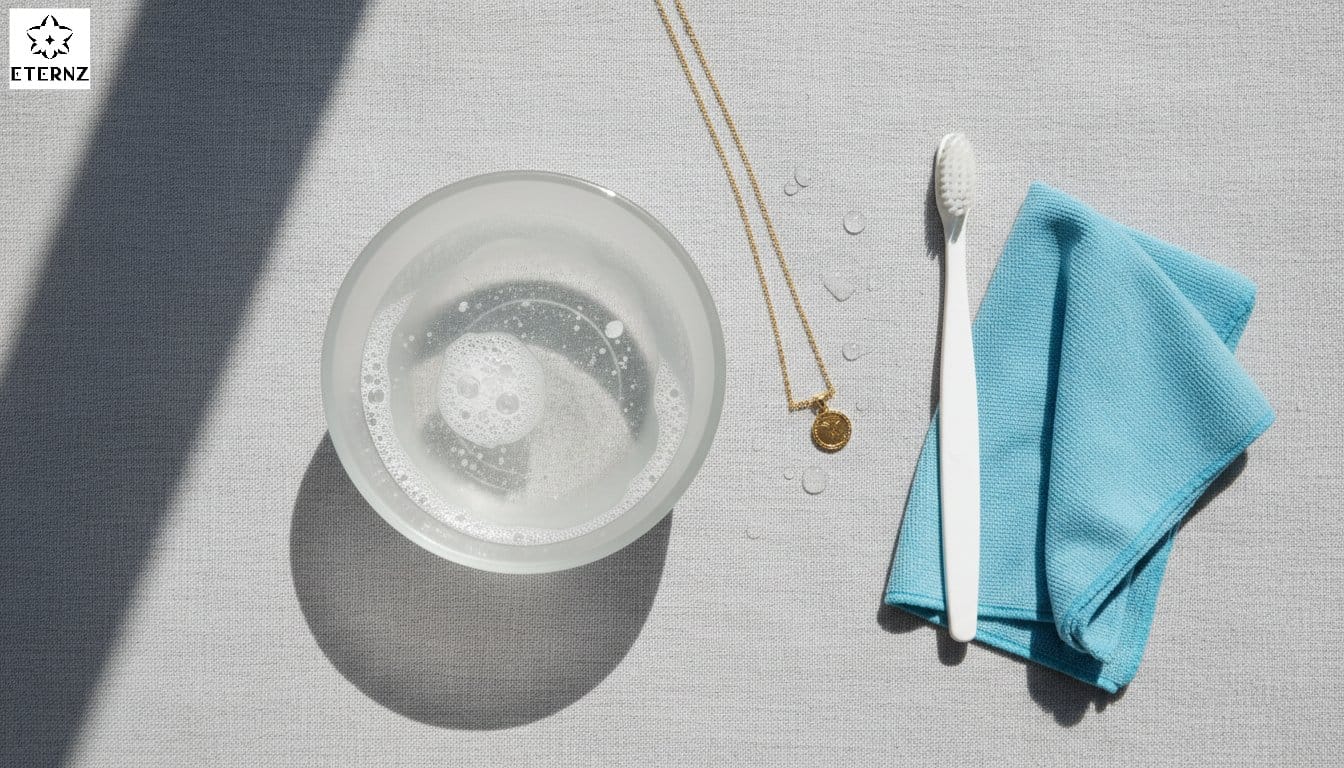
Simple cleaning with warm water and mild soap is all you need to keep your gold shining bright.
You don't need fancy machines. Here is a quick routine to keep your daily pieces looking new:
- The Soak: Mix warm water with a few drops of mild dish soap.
- The Wait: Let your jewelry sit in there for 15 minutes. This loosens the dirt and oil.
- The Brush: Use a super soft toothbrush (like a baby toothbrush) to gently scrub.
- The Rinse: Rinse with water and dry with a soft cotton cloth.
Do this once a month, and your 14k or 18k pieces will sparkle like the day you bought them.
Can you wear gold in the shower?
You can wear 14k and 18k gold in the shower, but you should avoid wearing it in the pool.
Water itself isn't the enemy. The chemicals are.
- Shower: Tap water and soap are usually fine for 14k and 18k. 10k might tarnish faster with constant exposure to water.
- Pool: Chlorine is bad news. It can weaken the structure of the gold alloys over time, eventually causing prongs to break.
- Ocean: Salt water can leave a film on your jewelry that makes it look dull. If you swim in the ocean, rinse your jewelry with fresh water immediately after.
Final thoughts on choosing your gold
So, we return to the big question. 10k vs. 14k vs. 18k Gold: Which one is best for daily wear?
Here is the honest truth. If you are on a tight budget or buying a ring for a teenager who might bang it around, go for 10k. It is tough and affordable.
If you want that rich, luxurious feel and have the budget for it, 18k is beautiful. Just treat it with a little care.
But for most of us, 14k is the champion. It gives you the rich gold look, it withstands the daily grind of typing, cooking, and living, and it doesn't hurt the wallet as much as 18k. It is the smart money choice for jewelry you never want to take off.
Whatever you choose, wear it with confidence!
Frequently Asked Questions (FAQs)
1. What is the main difference between 10k, 14k, and 18k gold?
The primary difference is gold purity:
- 10k gold = 41.7% pure gold
- 14k gold = 58.3% pure gold
- 18k gold = 75% pure gold
The remaining percentage consists of alloy metals like copper, silver, nickel, or zinc, which increase durability and strength.
2. Is 10k gold good for sensitive skin?
Usually, no.
10k gold often contains higher amounts of alloy metals such as nickel, which can trigger skin irritation in sensitive individuals.
If you have sensitive skin, 14k or 18k gold is generally a safer choice because they contain more pure gold and fewer reactive metals.
3. Does 14k gold fade over time?
No.
14k gold does not fade because the gold is mixed throughout the metal — it is not a surface coating like gold-plated jewelry.
However, it may collect dirt or oils over time, and professional cleaning can restore its shine.
4. Which gold karat is most durable for daily wear?
10k gold is the most durable because it contains the highest percentage of strong alloy metals.
If you want a balance of durability and color, 14k gold is the most practical option for everyday jewelry, especially engagement and wedding rings.
5. Why is 14k gold the most popular choice for engagement rings?
14k gold offers:
- Strong durability for daily wear
- Rich gold color without being overly soft
- Better resistance to scratching compared to 18k
It provides the ideal balance between beauty and practicality.
6. Which is better for a wedding ring: 14k or 18k gold?
It depends on lifestyle:
- 14k gold is better for active individuals or hands-on jobs because it resists scratches better.
- 18k gold is ideal if you prefer a richer yellow tone and have a lower-impact daily routine.
7. Can 10k, 14k, and 18k gold rings be resized?
Yes.
All solid gold rings (10k, 14k, and 18k) can typically be resized by a professional jeweler, depending on the design and structure of the ring.
8. What is the resale value difference between 10k, 14k, and 18k gold?
Resale value increases with gold purity:
- 18k gold has the highest resale value
- 14k gold has moderate resale value
- 10k gold has the lowest resale value
Because resale pricing is based primarily on pure gold content, higher karat gold retains more intrinsic value.
9. Does higher karat gold scratch more easily?
Yes.
The higher the gold purity, the softer the metal.
- 18k gold scratches more easily than 14k
- 14k scratches more easily than 10k
This is why lower karat gold is preferred for everyday wear jewelry.
10. Which gold karat looks the most yellow?
18k gold has the richest and warmest yellow color because it contains the highest percentage of pure gold.
10k gold appears slightly paler due to the higher proportion of alloy metals.